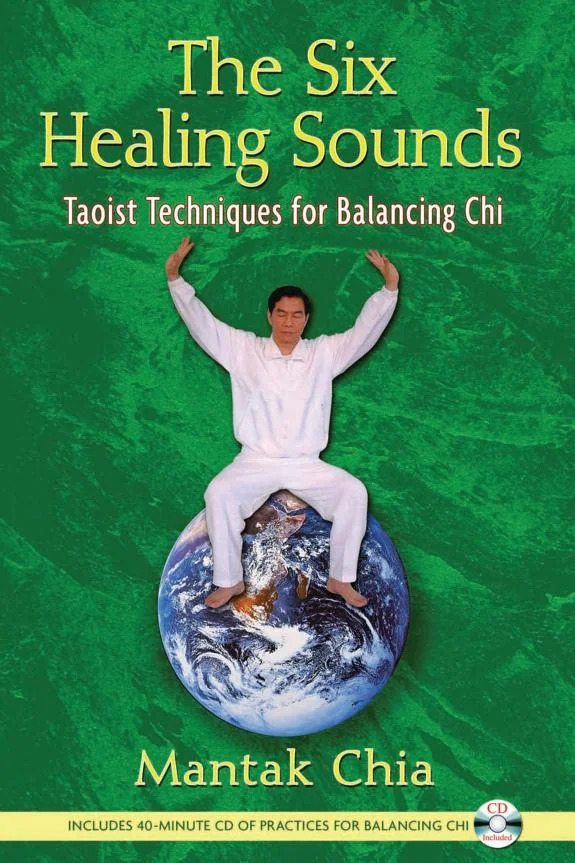
The Six Healing Sounds
 78
78

The Six Healing Sounds
Mantak Chia’s *The Six Healing Sounds* offers a practical entry point into a sophisticated Taoist healing modality. The book’s strength lies in its clear articulation of the sound-emotion-organ correlations, making an esoteric concept digestible for Western practitioners. Chia’s explanation of the 'Sigh' for the Lungs, designed to release grief, provides a concrete example of the system’s therapeutic intent. However, the text sometimes leans towards overly simplified explanations of complex energetic principles, potentially glossing over the nuanced energetic cultivation required for deeper mastery. A limitation is the lack of detailed instruction on advanced applications or potential contraindications for specific health conditions. Nevertheless, for those seeking to integrate sound-based self-healing into their wellness routine, this work serves as a valuable primer.
📝 Description
78
Mantak Chia's 2009 book details the Six Healing Sounds, an ancient Taoist system for physical and emotional health.
The Six Healing Sounds system, as presented by Mantak Chia in 2009, is a Taoist practice that uses specific vocalizations to address the internal organs and their associated emotions. Each of the six sounds corresponds to an organ – Liver, Heart, Spleen, Lungs, and Kidneys – and is designed to neutralize negative emotional energies and internal toxins. The practice aims to create a balance within the body's energy channels, promoting overall well-being.
This book is for individuals interested in natural health methods, mind-body integration, and traditional Chinese medicine. It offers practical techniques for those involved in Qigong, martial arts, or anyone seeking to improve stress management and self-awareness. The system is particularly useful for managing emotional imbalances and enhancing organ vitality through sound and breathwork.
The Six Healing Sounds are part of a long Taoist tradition that views the human body as a reflection of the cosmos. These sonic practices, refined over centuries and documented in classical texts, were historically integrated with alchemical and medical knowledge. The Taoists understood that specific vibrations could influence not only physical health but also the energetic and emotional states of individuals, aiming for a state of harmony within oneself and with the universe.
💡 Why Read This Book?
• Learn the specific vocalizations and postures for each of the Six Healing Sounds, directly applying Taoist principles for liver, heart, spleen, lung, and kidney health as detailed in the book's core methodology. • Understand the precise emotional counterparts to each organ—anger for the liver, excessive joy for the heart—and how the associated healing sounds transmute these states, a concept central to Chia's 2009 publication. • Discover how to integrate these sounds into a daily practice for improved sexual vitality and emotional balance, moving beyond mere physical health to encompass holistic energetic well-being as presented in the text.
⭐ Reader Reviews
Honest opinions from readers who have explored this book.
❓ Frequently Asked Questions
What are the Six Healing Sounds and their purpose?
The Six Healing Sounds are ancient Taoist vocalizations designed to cleanse and balance the energy of specific internal organs. Each sound corresponds to an organ (Liver, Heart, Spleen, Lungs, Kidneys) and its associated negative emotion, aiming to restore health and emotional equilibrium.
Who developed the Six Healing Sounds system?
The system of the Six Healing Sounds was developed by ancient Chinese Taoist masters over centuries. Mantak Chia, a renowned Taoist master, brought this practice to a wider audience with his first publication on the subject in 2009.
How do the sounds affect emotions?
Each sound is believed to neutralize or transform a specific negative emotion linked to an organ. For example, the sound for the Lungs helps release grief, while the sound for the Liver addresses anger.
Are there physical postures associated with the Six Healing Sounds?
Yes, the practice typically incorporates specific hand positions and body postures that complement the vocalizations. These physical movements enhance the flow of Qi (vital energy) and direct the sonic vibrations to the intended organs.
Can the Six Healing Sounds improve sexual health?
According to Taoist principles outlined in the book, by balancing the Kidney organ system and its associated energies, the practice can contribute to increased sexual pleasure and vitality.
Is this practice suitable for beginners?
Yes, *The Six Healing Sounds* is presented as an accessible practice for beginners interested in Taoist healing arts. The book provides clear instructions for implementing the sounds and postures.
🔮 Key Themes & Symbolism
Organ-Emotion Correlation
The central theme posits that each major internal organ is intrinsically linked to a specific emotion. For instance, anger is tied to the Liver, and fear to the Kidneys. This work details how imbalances in organ energy manifest as emotional disturbances, and conversely, how chronic emotional states can damage organ function. Understanding this connection is crucial for the practice, as the sounds are designed to address both the physical organ and its energetic emotional counterpart.
Sonic Alchemy
This theme explores the transformative power of sound as a form of energetic medicine. The Six Healing Sounds are not merely vocalizations but specific vibrational frequencies that resonate with and cleanse the energetic field of each organ. The practice aims to convert discordant energies (negative emotions, toxins) into harmonious ones, akin to alchemical transmutation, thereby purifying the body's subtle energy systems and promoting profound healing.
Holistic Well-being
The book emphasizes a holistic approach to health, integrating physical vitality, emotional equilibrium, and sexual energy. The Six Healing Sounds are presented as a method to achieve this integration by addressing the interconnectedness of the body's systems. By harmonizing the organs and their associated emotions, practitioners can expect improvements not only in physical health but also in mental clarity, emotional resilience, and heightened sensual awareness.
Taoist Energetic Cultivation
This theme situates the Six Healing Sounds within the broader context of Taoist internal alchemy and energy cultivation (Qigong). It highlights the importance of Qi (vital energy) flow and how the sounds, coupled with specific postures and breathing, facilitate this flow. The practice is a form of self-directed energetic cultivation aimed at longevity, health, and spiritual development, reflecting ancient Taoist philosophies of aligning with natural cosmic principles.
💬 Memorable Quotes
Direct passages from the work, attributed to the author.
“Each organ has a specific vibration and associated emotion.”
— This core tenet underscores the fundamental principle of the Six Healing Sounds: that physical health and emotional states are not separate but dynamically interconnected through energetic frequencies linked to internal organs.
“The sounds cleanse the organs of negative emotions.”
— This highlights the therapeutic mechanism. The practice uses specific vocal tones to act as energetic antidotes, clearing the organs of energies like anger, fear, or grief that disrupt their healthy function.
“By practicing the sounds, we promote optimal health.”
— This speaks to the efficacy and goal of the system. Regular application of the Six Healing Sounds is presented as a direct pathway to enhancing physical vitality and preventing illness.
“Increased sexual pleasure is a benefit of balanced Kidney energy.”
— This points to a specific, often desired outcome linked to the practice, emphasizing the connection between the Kidney organ system, its associated Qi, and reproductive/sexual vitality within Taoist theory.
“Emotional balance is achieved through sonic cleansing.”
— This interpretation emphasizes the dual action of the sounds: they not only benefit the physical organ but also work to harmonize the emotional landscape by neutralizing detrimental feelings.
🌙 Esoteric Significance
Tradition
This practice firmly belongs to the Taoist tradition, specifically within the lineage of internal alchemy (Neidan) and medical Qigong. It aligns with Taoist cosmology, which views the body as a microcosm reflecting the macrocosm, governed by vital energy (Qi) and influenced by Yin and Yang principles. The Six Healing Sounds are a practical application of these principles, aiming to harmonize the body's internal energetic landscape, much like other Taoist practices focus on cultivating longevity and spiritual development through energetic manipulation.
Symbolism
The primary symbolism lies in the direct correspondence between sound, emotion, and organ. The sounds themselves—shhh, haa, whooo, sss, chü, and xü—are sonic keys unlocking energetic patterns. The associated colors (green, red, yellow, white, blue, black) further symbolize the elemental and energetic qualities of each organ system, acting as visual anchors to aid the practitioner's focus and energetic intention during the practice.
Modern Relevance
Contemporary practices in sound healing, somatic therapy, and mind-body medicine often echo the principles found in the Six Healing Sounds. Therapists and wellness practitioners are increasingly exploring how vocalization and specific frequencies can influence physiological and emotional states. Thinkers and practitioners in fields like bioenergetics and energy psychology draw upon similar concepts of energetic resonance and transformation, demonstrating the enduring relevance of these ancient Taoist techniques in modern holistic health paradigms.
👥 Who Should Read This Book
• Individuals seeking to deepen their understanding of mind-body connections within a Taoist framework, particularly those interested in how emotions directly impact physical health. • Practitioners of Qigong, Tai Chi, or other energy cultivation arts looking to expand their repertoire with a specific sound-based healing modality. • Those experiencing chronic stress, emotional imbalances, or seeking natural methods to enhance organ vitality and overall well-being.
📜 Historical Context
The principles behind the Six Healing Sounds trace back to ancient Taoist medical and contemplative traditions, likely evolving over centuries. While specific foundational texts like the *Huangdi Neijing* (Yellow Emperor's Inner Canon), dating to the Han Dynasty (206 BCE – 220 CE), established correlations between organs, emotions, and elements, the explicit articulation of these six specific sounds as a healing modality likely solidified within later Taoist schools. This system contrasts with contemporary Western medical approaches that primarily focus on physiological mechanisms, emphasizing instead a psychosomatic and energetic view of health. Mantak Chia's 2009 publication brought this sophisticated internal alchemy practice to a global audience, making it accessible outside of traditional master-disciple lineages. Reception has generally been positive among practitioners of Qigong and Taoist arts, though it remains a niche practice compared to more widely known forms of meditation or exercise.
📔 Journal Prompts
The Liver's association with anger: how does this sound practice offer an alternative to suppression or expression?
Reflect on the Kidney sound (xü) and its connection to fear; identify a personal experience where this might be applied.
Consider the Lung sound (sss) and its role in releasing grief; what physical sensations accompany this emotional release for you?
Analyze the Heart sound (haa) and its potential to transform excessive joy into balanced enthusiasm.
Evaluate the Spleen sound (whooo) in relation to worry; how does this vocalization alter the energetic state associated with anxiety?
🗂️ Glossary
Qi (Chi)
The fundamental vital life force or energy believed to flow through all living things in Taoist philosophy. Its smooth and balanced circulation is essential for health.
Taoism
An ancient Chinese philosophy and religion emphasizing living in harmony with the Tao, the fundamental principle of the universe. It encompasses various practices for health, longevity, and spiritual development.
Neidan
Taoist internal alchemy, a system of practices aimed at cultivating and transforming the body's vital energies (Qi) to achieve spiritual enlightenment and physical immortality.
Organ Resonance
The concept that each internal organ vibrates at a specific frequency, which can be influenced and harmonized through corresponding sounds or other energetic modalities.
Six Healing Sounds
A specific set of six vocalizations developed by ancient Taoist masters, each linked to a major organ and designed to cleanse, balance, and heal that organ and its associated emotional state.
Emotional Alchemy
The Taoist practice of transforming negative or imbalanced emotions into positive, harmonious states through specific techniques, such as the Six Healing Sounds.
Holistic Health
An approach to well-being that considers the interconnectedness of the physical, mental, emotional, and spiritual aspects of an individual, aiming for balance across all dimensions.
This book appears in 1 collection
🔮 Readers Also Liked
Browse all →







From the “Taoism” Collection
View all →





More Free Occult Philosophy Books
View all →