Ghost Ship
 75
75

Ghost Ship
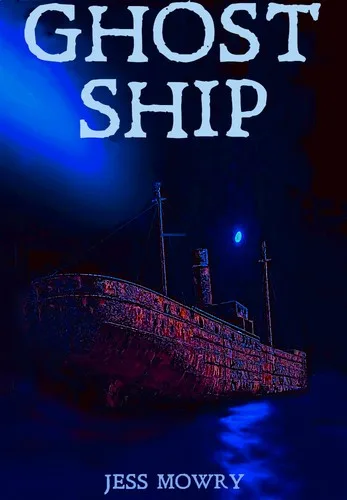
Jess Mowry’s *Ghost Ship* offers a disquieting atmosphere, eschewing overt scares for a more insidious creep of unease. The novel’s strength lies in its deliberate pacing and the way it renders the intangible almost palpable. Mowry excels at evoking a sense of profound isolation, particularly in passages describing the ship’s vast, empty corridors where the silence itself seems to hum with unspoken histories. A limitation, however, is the narrative’s deliberate opacity, which, while contributing to the mystery, can at times feel frustratingly elusive. The concept of the ship itself as a psychic echo chamber, a place where past traumas linger and manifest, is particularly compelling. Ultimately, *Ghost Ship* succeeds as a mood piece, a spectral presence that lingers long after the final page.
📝 Description
75
Jess Mowry's 2016 novel *Ghost Ship* explores the porous boundaries between the material and the spectral.
Published in 2016, Jess Mowry's *Ghost Ship* is a novel that moves beyond conventional genre classifications. It examines the uncanny and the liminal, inviting readers into spaces that exist between the known and the unknown. The book does not rely on typical horror elements; instead, it offers a fluid narrative that questions perception and reality. Its prose is meant to be intellectually stimulating, appealing to those who seek a departure from predictable story structures. The work focuses on psychological depth and symbolic resonance, encouraging contemplation of internal states and external manifestations.
*Ghost Ship* fits within a post-genre literary trend that prioritizes atmosphere and thematic inquiry. This approach aligns with contemporary authors who blur genre lines and explore existential themes through ambiguous environments and mysterious phenomena. Mowry's narrative functions as a literary artifact, prompting consideration of how meaning and experience are conveyed across perceived divides. The novel concerns itself with the nature of presence and absence and the way the unexplained impacts the human psyche.
Emerging in 2016, *Ghost Ship* arrived during a time when speculative fiction increasingly questioned established genre boundaries. This period saw a rise in literature that explored existential themes and ambiguous environments, moving away from strict adherence to traditional forms. Mowry’s work can be seen as part of this trend, using a narrative that foregrounds atmosphere and thematic depth. It addresses concepts like presence and absence, and how internal psychological states can shape the perception of external, possibly spectral, phenomena.
💡 Why Read This Book?
• Gain insight into the concept of psychic residue as explored in the 'empty corridors' passages, understanding how environments can absorb and re-emit emotional imprints. • Experience Mowry's unique approach to atmospheric dread, distinct from conventional horror, by examining the deliberate pacing and evocative prose used in the 2016 publication. • Consider the narrative function of liminal spaces, as the ship itself becomes a metaphor for the threshold between life and death, the real and the imagined.
⭐ Reader Reviews
Honest opinions from readers who have explored this book.
❓ Frequently Asked Questions
What are the main themes explored in Jess Mowry's Ghost Ship?
The primary themes include the nature of presence and absence, the fluidity of reality, and the psychological impact of the unexplained. The book also examines how spectral phenomena can be linked to internal states and perception.
When was Ghost Ship by Jess Mowry first published?
Jess Mowry's *Ghost Ship* was first published in 2016, placing it within a contemporary literary context interested in genre-bending and atmospheric narratives.
Is Ghost Ship a horror novel?
While it contains elements of the uncanny and supernatural, *Ghost Ship* is not a traditional horror novel. It leans more towards literary fiction with a focus on psychological depth and atmosphere rather than overt scares.
What kind of reader would enjoy Ghost Ship?
Readers who appreciate nuanced literary fiction, psychological exploration, symbolic narratives, and a departure from conventional plot structures would find *Ghost Ship* engaging.
Does the book have a specific setting or time period?
The book primarily centers around a "ghost ship," creating a contained and often disorienting setting. The specific time period is not rigidly defined, contributing to its timeless, spectral quality.
What makes the ship in Ghost Ship 'ghostly'?
The ship is 'ghostly' not necessarily due to traditional specters, but through its atmosphere of lingering presence, the manifestation of past traumas, and its function as a psychic echo chamber.
🔮 Key Themes & Symbolism
Liminality and Transition
The narrative consistently operates in states of in-betweenness. The 'ghost ship' itself is a vessel for transition, neither fully in the world of the living nor entirely departed. This theme is explored through ambiguous settings and characters who exist on the fringes of perception. Mowry uses the ship as a metaphor for the threshold between consciousness and subconscious, life and death, inviting contemplation on the nature of passage and what remains when physical form is lost.
Psychic Echoes and Environmental Memory
A core concept is that environments, particularly the ship, can absorb and retain emotional and psychic energy. Past events and the feelings associated with them leave imprints that can manifest to those sensitive enough to perceive them. This is not about traditional hauntings but a subtler form of memory embedded within the fabric of the place itself, suggesting that trauma and intense experience leave indelible marks on reality.
Perception and Subjectivity
The book challenges the reader's certainty about what is real. Phenomena described are often filtered through subjective experience, blurring the lines between external events and internal psychological states. Mowry explores how our own fears, memories, and desires can shape our perception of the world, making the 'ghostly' occurrences potentially reflections of the characters' inner lives rather than objective occurrences.
The Narrative Vessel
The ship serves as a literal and metaphorical vessel. It carries its history, its spectral remnants, and the narrative itself. The act of reading becomes akin to boarding this vessel, beginning a journey through its shadowed decks and echoing chambers. The book suggests that stories, like ships, are containers for experience, capable of transporting readers across vast conceptual oceans.
💬 Memorable Quotes
Direct passages from the work, attributed to the author.
“The silence hummed with a thousand unheard conversations.”
— This highlights the theme of psychic echoes, suggesting that even in apparent stillness, the environment retains the resonance of past events and presences, a constant, low-level hum of residual energy.
“It was a ship built of memory, sailing on a sea of forgetting.”
— This interpretation frames the vessel as a construct of the past, existing in a state of perpetual movement yet disconnected from the present, adrift in a vastness where identities and histories can dissolve.
“The air itself felt heavy, thick with what had been left behind.”
— This conveys the palpable sense of atmosphere and the lingering presence of past occupants or events. The 'heaviness' suggests a burden or imprint that affects the sensory experience of the space.
“Was it a ship, or the ghost of a ship?”
— This question captures the core ambiguity of the narrative, probing the nature of reality and existence. It forces contemplation on whether the perceived entity is a physical object or a lingering essence.
“Every creak was a word spoken in a language no longer understood.”
— This emphasizes the decay of communication and meaning over time. The sounds of the ship are interpreted as remnants of a lost discourse, unintelligible yet indicative of past life and purpose.
🌙 Esoteric Significance
Tradition
While not explicitly tied to a single esoteric lineage, *Ghost Ship* draws from a broad undercurrent of Western esoteric thought concerning psychic residue and the imprint of consciousness on place. It echoes concepts found in psychogeography and certain interpretations of hauntings that suggest environments can absorb and replay emotional or traumatic events, a notion present in fields from Theosophy to more modern paranormal investigation theories.
Symbolism
The 'ghost ship' itself functions as a potent symbol of transition and the subconscious. Its empty, echoing corridors represent the liminal spaces within the psyche, where forgotten memories and unresolved emotions reside. The very act of sailing on an unknown sea symbolizes the journey through the unconscious mind, a perilous but potentially useful voyage into deeper meaning of the self.
Modern Relevance
Contemporary practitioners of ambient literature and psychological horror find resonance in Mowry's atmospheric approach. Thinkers exploring the phenomenology of space and the concept of 'hauntology' – the idea of lingering specters of the past in the present – can see parallels in the book's depiction of environmental memory. Its focus on subjective experience also aligns with current trends in introspective and emotionally driven narrative forms.
👥 Who Should Read This Book
• Readers interested in the concept of environmental memory and psychic residue, seeking literary examples of how places can absorb and reflect past events. • Students of comparative literature and genre studies, particularly those examining the evolution of speculative fiction and the blurring of boundaries in contemporary writing. • Individuals drawn to atmospheric, character-driven narratives that prioritize mood and psychological depth over conventional plot mechanics.
📜 Historical Context
Jess Mowry's *Ghost Ship*, published in 2016, arrived in a literary climate increasingly receptive to narratives that blurred genre distinctions, particularly between literary fiction and speculative elements. This period saw a rise in works exploring atmosphere and psychological states, exemplified by authors like Jeff VanderMeer, whose *Annihilation* (2014) similarly presented an uncanny environment with ambiguous rules. *Ghost Ship* can be seen as part of this post-genre trend, eschewing traditional horror or supernatural tropes for a more introspective and atmospheric exploration of the uncanny. While not directly engaging with a specific school of thought, it resonated with a growing readership interested in existential themes and the subjective experience of the inexplicable, moving away from the more overtly occult or spiritualist texts of earlier eras.
📔 Journal Prompts
The ship's empty corridors and the "thousand unheard conversations" they contain.
Reflect on the sensation of "heavy air" as described in the text.
Consider the ambiguity between a physical ship and a "ghost of a ship."
Analyze the role of subjective perception in experiencing the uncanny.
How does the narrative function as a "vessel of memory"?
🗂️ Glossary
Psychic Residue
The concept that intense emotions or significant events can leave an energetic imprint on a physical location, which can then be perceived by sensitive individuals.
Liminal Space
A transitional place or state, existing on the threshold between two distinct conditions (e.g., between wakefulness and sleep, life and death).
Environmental Memory
The idea that a place or object can retain a form of memory or record of past events, often manifesting as subtle atmospheric changes or sensory impressions.
Subjective Experience
An individual's personal perception and interpretation of events or reality, influenced by their unique consciousness, history, and emotional state.
Atmospheric Dread
A pervasive sense of unease and foreboding created through mood, setting, and tone, rather than explicit threats or shocks.
Hauntology
A philosophical concept referring to the persistence of the past and its spectral influence on the present, often manifesting as a sense of loss or anachronism.
Narrative Vessel
A metaphor for a story that contains and transports ideas, experiences, or emotions, much like a ship carries passengers or cargo.
🔮 Readers Also Liked
Browse all →









More by Jess Mowry
All books →

More Free Occult Philosophy Books
View all →