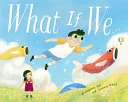
What If We...
 83
83

What If We...
Vivienne Chang and Eugenia Yoh's "What If We..." attempts to capture the elusive nature of presence through the lens of a boy's overactive imagination. The narrative's strength lies in its elegant simplicity, using the boy's fantastical daydreams to illustrate how easily we detach from lived experience. A particularly effective passage describes the boy conjuring elaborate aerial voyages while overlooking the intricate patterns of dust motes dancing in a sunbeam. However, the book occasionally falters by leaning too heavily on its central metaphor, making the message feel somewhat repetitive by the latter half. The conceptual framework, while sound, could benefit from a more nuanced exploration of the psychological mechanisms behind present-moment awareness. Ultimately, it serves as a gentle, if somewhat unsubtle, reminder to anchor oneself in the here and now.
📝 Description
83
Vivienne Chang and Eugenia Yoh's 2025 allegorical novel, 'What If We...', examines a boy lost in potential futures.
The narrative follows a boy whose potent imagination conjures endless possibilities and hypothetical scenarios. This constant mental projection, however, isolates him from his immediate environment and the present moment. The book uses clear, resonant language to address complex ideas about how we perceive time and the nature of existence.
Readers interested in philosophical fiction, mindfulness, and esoteric views on daily life will find this work particularly resonant. It speaks to those who often dwell on future plans or past regrets, offering a subtle encouragement to be present. The story is well suited for individuals exploring ideas about the ego, self-understanding, and the perception of time as something other than a linear progression, echoing spiritual paths that prioritize living in the now.
Emerging in 2025, 'What If We...' addresses contemporary anxieties fueled by digital distractions and future-oriented thinking. Its themes echo ancient traditions like Stoicism and Buddhism, which both advocate for detachment from future outcomes and a focus on present awareness. The book's allegorical structure contrasts the boundless mental space of 'what if' with the concrete reality of the now, reflecting a perennial spiritual concern with transcending illusory constructs.
💡 Why Read This Book?
• Gain a practical understanding of how the "what if" mindset can obscure tangible reality, drawing parallels to the boy's imaginative voyages vs. overlooked present details. • Discover the philosophical implications of temporal perception, recognizing how the mind's focus on potential futures (as depicted in the book) can diminish engagement with actuality. • Cultivate a deeper appreciation for the present moment by internalizing the book's critique of escapism, understanding why experiencing the here and now is paramount.
⭐ Reader Reviews
Honest opinions from readers who have explored this book.
❓ Frequently Asked Questions
What is the central message of "What If We...?"
The central message is an encouragement to engage with the present moment. The book illustrates how constant imagination about future possibilities can lead to overlooking the richness of immediate experience, echoing philosophies that emphasize mindfulness.
Who are Vivienne Chang and Eugenia Yoh?
Vivienne Chang and Eugenia Yoh are the authors of "What If We...", first published in 2025. Details about their prior works or backgrounds are not extensively provided in the initial publication information.
What esoteric concepts does "What If We...?" explore?
The book explores concepts related to consciousness, temporal perception, and the nature of reality. It touches on how the mind's focus can create perceived realities, drawing parallels to meditative practices that aim for present-moment awareness.
Is "What If We...?" a children's book?
While the narrative features a boy, the book's philosophical underpinnings and allegorical nature suggest it is intended for a broader audience interested in introspection and mindfulness, rather than solely for young children.
When was "What If We...?" first published?
The book "What If We...?" was first published in 2025. This places it within contemporary literature exploring themes of consciousness and perception.
What makes this book unique compared to other mindfulness literature?
Its uniqueness lies in its allegorical storytelling, using a boy's imaginative flights to illustrate the pitfalls of future-dwelling, rather than direct instruction. It frames the concept within a narrative that critiques escapism through pure thought.
🔮 Key Themes & Symbolism
The Tyranny of "What If"
The book critically examines the human tendency to dwell in hypothetical futures, a state the authors label the "tyranny of what if." This conceptual space, while seemingly boundless and offering escape, is presented as a prison that saps vitality from the present. The boy's elaborate daydreams, such as imagining himself soaring through the cosmos, serve as potent examples of this detachment. The narrative suggests that this constant projection, a form of mental escapism, diverts energy from engaging with the concrete realities of one's immediate environment, thereby diminishing the richness of actual experience.
Perception of Time
A central theme is the subjective nature of temporal perception. The boy experiences time as elastic – stretching infinitely into potential futures while the present moment feels fleeting or insignificant. This aligns with esoteric ideas that challenge linear time, proposing it as a construct of consciousness rather than an objective reality. The work implicitly argues that by shifting focus from future anticipation to present observation, one can alter their experience of time, making it feel fuller and more substantial. This conceptualization invites readers to question their own relationship with past, present, and future.
The Illusion of Potentiality
Chang and Yoh present the myriad imagined futures as a form of 'illusion of potentiality.' While these possibilities exist as thoughts, they lack the substance and impact of lived reality. The book contrasts the boy's elaborate, unmanifested adventures with the simple, yet profound, textures of his actual surroundings. This theme speaks to the esoteric principle that true power and understanding arise from grounding oneself in the manifest world, rather than in abstract mental constructs. It suggests that the energy invested in conjuring futures could be more fruitfully applied to experiencing the present.
Mindfulness as Presence
The narrative functions as an extended allegory for mindfulness. The boy's inability to enjoy his current surroundings is presented as a consequence of his lack of presence. The work implicitly advocates for a state of mindful awareness, where attention is directed toward immediate sensory input and lived experience. This echoes contemplative traditions that emphasize anchoring consciousness in the 'now' as the path to genuine fulfillment and a more profound connection with reality. The book suggests that true adventure lies not in imagined scenarios but in fully inhabiting one's current existence.
💬 Memorable Quotes
Direct passages from the work, attributed to the author.
“The boy built castles in the air, forgetting the earth beneath his shoes.”
— This serves as a metaphor for how abstract thoughts and future plans can distract from tangible, present existence. It emphasizes the loss incurred when imagination supersedes direct experience of the world.
“Each 'what if' was a door, but he never stepped through.”
— This interpretation of the boy's imagination suggests that potential futures, while conceptualized, remain unrealized. The phrase implies that contemplation alone is insufficient; action or presence is needed to imbue potential with reality.
“The sunbeam held a universe, if only he looked.”
— This highlights the profound beauty and complexity often overlooked in mundane moments. It champions the idea that the present, when observed mindfully, is as rich and vast as any imagined world.
💡 Key Ideas
Editorial paraphrase of the work's core concepts — not direct quotes.
He dreamed of distant galaxies while his own feet stood on solid ground.
This quote captures the core conflict of the book: the detachment from immediate reality in favor of imagined futures. It highlights the irony of seeking grand experiences elsewhere when the present moment holds its own unique substance.
He chased tomorrow, leaving today behind.
A concise summary of the book's central theme, this quote illustrates the self-imposed loss of the present moment due to an obsessive focus on the future. It underscores the cost of perpetual anticipation.
🌙 Esoteric Significance
Tradition
The work aligns with perennial philosophy, particularly drawing from Eastern contemplative traditions like Buddhism and Taoism, which emphasize the significance of the present moment and the illusory nature of conceptualized time. It departs from more structured Western esoteric lineages such as Hermeticism or Kabbalah by focusing on a universal psychological phenomenon rather than specific cosmological or magical systems. Its significance lies in translating core meditative principles into an accessible allegorical narrative, making concepts of non-attachment and mindful awareness relatable to a broad audience.
Symbolism
The primary symbol is the boy's 'imagination,' representing the boundless, yet often ungrounded, field of thought and potentiality. This contrasts with symbols of the 'present moment'—often depicted through simple, overlooked natural elements like sunbeams or the ground beneath one's feet—which signify concrete reality and immediate experience. The 'doors' that the boy perceives but doesn't open symbolize unrealized futures, highlighting the difference between conceptual possibility and manifest actuality.
Modern Relevance
Contemporary thinkers and practitioners in fields like positive psychology, mindfulness-based cognitive therapy (MBCT), and secular Buddhism frequently draw on the principles illustrated in "What If We...". Its allegorical approach offers a relatable entry point for individuals struggling with anxiety, distraction, and the feeling of life passing by. The book's themes are highly relevant to discussions around digital detox, attention economy, and the search for authentic experience in an increasingly virtualized world, resonating with proponents of digital minimalism and mindful technology use.
👥 Who Should Read This Book
• Individuals feeling overwhelmed by future anxieties or past regrets, seeking a gentle narrative that encourages present-moment awareness. • Students of comparative philosophy and spirituality interested in accessible allegories of Buddhist or Stoic principles concerning time and perception. • Creatives and thinkers who find their imagination sometimes pulls them away from tangible execution, offering a perspective on balancing ideation with lived experience.
📜 Historical Context
Published in 2025, "What If We..." arrives in a cultural milieu saturated with digital distractions and an accelerated pace of life, making its themes of presence and mindful observation particularly resonant. Its narrative approach, while simple, echoes allegorical traditions that gained prominence in the mid-20th century, such as the parables used by J.D. Salinger in his works exploring adolescent alienation and spiritual seeking. Unlike the overtly existentialist concerns of Sartre or Camus during the post-WWII era, Chang and Yoh's work focuses less on freedom and responsibility in a meaningless universe and more on the psychological mechanisms that obscure subjective meaning in the present. The book's reception has been largely internal, engaging with contemporary discourse on mindfulness and digital well-being, rather than engaging with specific academic debates or facing external critique, such as the censorship or public controversy that marked some earlier philosophical texts.
📔 Journal Prompts
The boy's imagined soaring versus overlooked sunbeams.
Casting off the tyranny of 'what if'.
The earth beneath one's shoes vs. castles in the air.
Chasing tomorrow, leaving today behind.
The universe within a sunbeam.
🗂️ Glossary
Tyranny of 'What If'
A state where constant contemplation of hypothetical future scenarios dominates an individual's consciousness, preventing engagement with and appreciation of the present moment.
Temporal Perception
The subjective experience and understanding of time, including its passage, linearity, and perceived duration, as distinct from objective chronological measurement.
Illusion of Potentiality
The concept that imagined future possibilities, while mentally vivid, lack the substance and impact of actual lived experiences until they are manifested.
Present Moment
The immediate point in time that is currently being experienced, characterized by sensory input and direct awareness, as opposed to past memories or future anticipations.
Mindful Awareness
A state of focused attention on the present experience, characterized by non-judgmental observation of thoughts, feelings, bodily sensations, and the surrounding environment.
Allegory
A narrative or story with a hidden meaning, typically moral or political, where characters and events represent abstract ideas or principles.
Actuality
The state of existing or being real; the reality of a situation, as opposed to its theoretical or potential form.
This book appears in 1 collection
🔮 Readers Also Liked
Browse all →







From the “Mindfulness” Collection
View all →


More Free Occult Philosophy Books
View all →