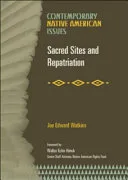
Sacred Sites and Repatriation
 79
79

Sacred Sites and Repatriation
Joe Watkins’ "Sacred Sites and Repatriation" offers a necessary, if somewhat dry, exposition of a fraught subject. The book’s strength lies in its methodical presentation of arguments from multiple viewpoints, particularly highlighting the Native American perspective, which has historically been sidelined in these debates. Watkins’ detailed analysis of legal frameworks, such as NAGPRA, grounds the discussion in tangible realities. A limitation, however, is the work's sometimes academic detachment, which can obscure the deeply felt spiritual and emotional weight of repatriation for Indigenous peoples. The chapter discussing the definition and importance of 'sacred sites' is particularly illuminating, moving beyond mere geographical markers to underscore their role in ongoing spiritual practice and cosmology. While it avoids easy answers, the book provides a solid foundation for understanding the core conflicts and aspirations surrounding cultural heritage restitution. It serves as a valuable, if unembellished, primer on a critical issue.
📝 Description
79
Published in 2009, Joe Watkins' Sacred Sites and Repatriation examines the protection and restitution of Indigenous sacred lands and artifacts.
Joe Watkins' 2009 book, Sacred Sites and Repatriation, critically examines the ongoing discussions around the protection and return of Indigenous sacred sites and artifacts. The work directly addresses the spiritual, cultural, and legal consequences of these issues, particularly for Native American communities. Watkins meticulously details the viewpoints of various groups, including tribal nations, government bodies, archaeologists, and museum professionals. This book is of value to scholars, students, and practitioners in Indigenous studies, cultural heritage management, law, anthropology, and religious studies. It functions as a resource for understanding repatriation claims, the role of sacred sites in Indigenous cosmologies, and the ethical considerations in managing and returning cultural property. It also speaks to activists and community members involved in land rights and cultural preservation.
While not strictly an esoteric text in the vein of occult rituals or magical practices, this book engages with a profound aspect of Indigenous spiritual traditions: the deep connection between land, identity, and the sacred. It discusses how specific sites are considered living entities integral to spiritual practices, a concept that resonates with many earth-centered spiritualities and pagan traditions that emphasize animism and the sanctity of place. The book's focus on the restitution of cultural heritage also touches on the spiritual importance of ancestral connections and the integrity of traditional cosmologies.
💡 Why Read This Book?
• Understand the spiritual and cultural significance of land to Indigenous peoples, as explored through the concept of sacred sites, a cornerstone of Indigenous identity and practice since time immemorial. • Grasp the legal and ethical dimensions of repatriation, particularly the implications of NAGPRA (1990) for the return of cultural artifacts and ancestral remains. • Gain insight into the diverse perspectives within the repatriation debate, from tribal nations to academic institutions, as presented in the detailed examination of differing viewpoints.
⭐ Reader Reviews
Honest opinions from readers who have explored this book.
❓ Frequently Asked Questions
What is the primary focus of Joe Watkins' "Sacred Sites and Repatriation"?
The book's primary focus is the complex and often contentious issue of repatriation, specifically as it relates to Native American sacred sites and cultural artifacts. It explores the legal, cultural, and spiritual dimensions of these issues from various perspectives.
When was "Sacred Sites and Repatriation" first published?
The book was first published in 2009, placing its analysis within the context of ongoing debates and legal frameworks surrounding Indigenous rights and cultural heritage management that had been developing throughout the late 20th century.
Which Native American law is significantly discussed in relation to repatriation?
The Native American Graves Protection and Repatriation Act (NAGPRA), enacted in 1990, is a central piece of legislation discussed in the book. It addresses the repatriation of human remains and cultural items to lineal descendants and culturally affiliated tribes.
Does the book only present the Native American perspective on repatriation?
No, the book is noted for exploring the issue from multiple sides, detailing the perspectives of Native American communities, government agencies, archaeologists, and museum professionals involved in the repatriation debate.
What is the significance of 'sacred sites' as discussed in the book?
The book emphasizes that sacred sites are more than just geographical locations; they are integral to Indigenous spiritual practices, cultural continuity, and identity, representing living connections to ancestors and the divine.
Who would benefit most from reading "Sacred Sites and Repatriation"?
Scholars, students, and professionals in Indigenous studies, anthropology, law, religious studies, and cultural heritage management, as well as activists and community members involved in cultural preservation, would find this book particularly valuable.
🔮 Key Themes & Symbolism
Sovereignty and Cultural Patrimony
The work critically examines the assertion of Indigenous sovereignty as it intersects with the control and ownership of cultural patrimony. It details how repatriation is not merely about the return of objects but a fundamental aspect of self-determination and the re-establishment of spiritual and cultural connections severed by historical injustices. Watkins highlights the inherent rights of Indigenous peoples to their ancestral lands and the tangible and intangible heritage they contain, challenging colonial frameworks that have historically defined ownership.
The Living Nature of Sacred Sites
A core theme is the understanding of sacred sites as dynamic, living entities crucial to Indigenous cosmologies and ongoing spiritual practices, rather than static historical relics. The book emphasizes that these locations are integral to cultural continuity, serving as focal points for ceremony, healing, and the transmission of traditional knowledge. Watkins argues for a rethinking in how these sites are perceived by external institutions, advocating for recognition of their enduring spiritual significance and the responsibilities associated with their stewardship.
Interrogating Colonial Frameworks
Watkins' analysis consistently interrogates the limitations and biases of Western legal, academic, and museological frameworks when applied to Indigenous cultural heritage. The book scrutinizes how concepts of ownership, preservation, and scientific study, developed within Eurocentric paradigms, have often conflicted with Indigenous epistemologies and customary practices. It calls for a decolonization of approaches to heritage management, advocating for Indigenous-led processes and the prioritization of Indigenous perspectives in all matters concerning sacred sites and repatriation.
The Repatriation Debate
This theme dissects the complex debate surrounding repatriation, presenting arguments from various stakeholders. It covers the legal battles, ethical considerations, and practical challenges involved in returning artifacts and human remains. The work details the efforts of Native American communities to reclaim their heritage and the responses from institutions like museums and universities, highlighting the ongoing tension between preservationist ideals and the rights of source communities to their cultural legacy.
💬 Memorable Quotes
Direct passages from the work, attributed to the author.
“Sacred sites are not merely geographical markers; they are integral to the spiritual existence and continuity of Indigenous peoples.”
— This statement underscores the book's central argument that Indigenous sacred places hold profound living significance, extending far beyond historical or archaeological value. They are vital to ongoing spiritual practice and cultural identity.
“Repatriation is intrinsically linked to the assertion of Indigenous sovereignty and self-determination.”
— This interpretation emphasizes that the return of cultural heritage is viewed not just as an act of restitution but as a fundamental component of Indigenous nations reclaiming their autonomy and right to govern their own cultural resources.
“The Western scientific gaze has often objectified Indigenous cultural elements, divorcing them from their living context.”
— This highlights a critique of how academic and museum practices, rooted in Western traditions, have historically treated Indigenous artifacts and sacred knowledge as mere objects of study, detached from their original spiritual and communal significance.
“The stewardship of sacred sites is an ancestral responsibility that continues in the present.”
— This concept suggests that the care and protection of sacred lands are not solely historical duties but ongoing obligations passed down through generations, emphasizing a continuous relationship between Indigenous peoples, their lands, and their spiritual practices.
💡 Key Ideas
Editorial paraphrase of the work's core concepts — not direct quotes.
Understanding the debate requires acknowledging the diverse and often conflicting interests of tribal nations, government bodies, and academic institutions.
This paraphrase points to the book's methodical approach in presenting the complexity of the repatriation issue by detailing the various, often competing, viewpoints held by different stakeholders involved.
🌙 Esoteric Significance
Tradition
While not explicitly aligned with a single esoteric lineage, Watkins' work speaks to traditions that emphasize the sacredness of the Earth and the interconnectedness of all life, such as certain strands of animism, shamanism, and Indigenous spiritualities. It challenges the Cartesian dualism prevalent in Western thought, which separates the material from the spiritual, advocating instead for a holistic worldview where land and spirit are inseparable. The focus on ancestral knowledge and the living power of place aligns with a broader Neopagan and earth-centered spiritual movement that gained traction in the late 20th century.
Symbolism
The primary 'symbol' explored is the sacred site itself, which functions as a nexus of spiritual power, ancestral memory, and communal identity. The book also implicitly engages with the symbolism of artifacts, viewing them not as inert objects but as carriers of spirit, history, and sacred power. The concept of 'repatriation' itself becomes symbolic of restoration, healing, and the reclaiming of spiritual integrity for Indigenous communities, representing a return to balance and wholeness that was disrupted by colonial imposition.
Modern Relevance
Contemporary thinkers and practitioners in environmental ethics, decolonization studies, and Indigenous resurgence movements draw heavily on the principles articulated in "Sacred Sites and Repatriation." Activists advocating for land rights, cultural preservation, and Indigenous sovereignty find intellectual support in Watkins' arguments. Furthermore, scholars and spiritual seekers interested in earth-based spirituality, Indigenous epistemologies, and ethical museum practices continue to reference this work as a foundational text for understanding the profound relationship between land, culture, and spirit.
👥 Who Should Read This Book
• Indigenous community members and leaders seeking legal and academic validation for their ongoing struggles to protect sacred sites and reclaim cultural heritage. • Scholars and students of anthropology, religious studies, Native American studies, and law looking for a comprehensive overview of the repatriation debate and its ethical dimensions. • Cultural heritage professionals, museum curators, and policymakers needing to understand the complexities and legal frameworks surrounding the restitution of Indigenous artifacts and the recognition of sacred lands.
📜 Historical Context
Joe Watkins' "Sacred Sites and Repatriation" emerged in 2009, a period where the discourse on Indigenous rights and cultural heritage had been significantly shaped by earlier developments. The passage of the Native American Graves Protection and Repatriation Act (NAGPRA) in 1990 was a landmark event, providing a legal framework for the return of Native American human remains and artifacts from federal institutions. This era also saw a growing critical engagement with post-colonial theory within academia, questioning the ethics of Western institutions holding Indigenous cultural property. While the book engages with these legal and theoretical shifts, it also highlights the persistent challenges and controversies surrounding repatriation and the protection of sacred lands. Contemporary scholars like Vine Deloria Jr. had already laid crucial groundwork in critiquing Western approaches to Indigenous spirituality and land rights, providing an intellectual backdrop against which Watkins' work can be situated.
📔 Journal Prompts
The concept of sacred sites as living entities, not just historical locations.
Native American sovereignty and its connection to cultural patrimony.
The ethical considerations of institutional possession versus community stewardship.
The spiritual significance of land in Indigenous cosmologies.
The impact of NAGPRA (1990) on repatriation efforts.
🗂️ Glossary
Sacred Site
A geographical location imbued with spiritual significance and importance for Indigenous peoples, often used for ceremony, prayer, healing, or as a connection to ancestral spirits and cosmology.
Repatriation
The process of returning cultural artifacts, funerary objects, and human remains to their rightful owners or descendant communities, particularly Indigenous peoples from whom they were taken.
NAGPRA
Acronym for the Native American Graves Protection and Repatriation Act (1990), a U.S. federal law requiring federal agencies and institutions that receive federal funding to return Native American cultural items and human remains to lineal descendants and culturally affiliated tribes.
Cultural Patrimony
Objects, sites, and knowledge that are considered by a group of people to be of cultural and spiritual importance, often passed down through generations and integral to identity and heritage.
Indigenous Sovereignty
The inherent right of Indigenous peoples to govern themselves, control their lands and resources, and maintain their cultural identities and practices, free from external domination.
Epistemology
The theory of knowledge, especially with regard to its methods, validity, and scope. In this context, it refers to Indigenous ways of knowing and understanding the world, often contrasting with Western scientific or philosophical approaches.
Stewardship
The responsible overseeing and care of something, particularly natural resources or cultural heritage, often implying a deep ethical and spiritual commitment to its preservation and well-being.