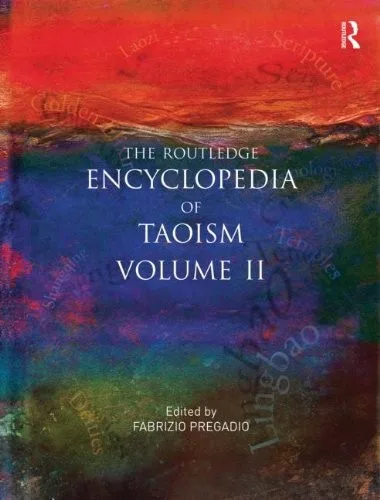
The Routledge Encyclopedia of Taoism : Volume Two
 78
78

The Routledge Encyclopedia of Taoism : Volume Two
Fabrizio Pregadio's "The Routledge Encyclopedia of Taoism: Volume Two" continues the ambitious project of cataloging the vast terrain of Taoist thought and practice. The entries, as expected from Routledge, are scholarly and meticulously researched, offering precise definitions and historical context. I found the detailed examination of the *lingbao* scriptures particularly illuminating, providing a clear lineage for a significant body of Taoist literature often overlooked in broader surveys. However, the sheer density of information, while a strength for specialists, can present a barrier for newcomers. The work assumes a significant prior knowledge, and its encyclopedic format naturally leads to a somewhat fragmented reading experience rather than a narrative flow. Despite this, the clarity of the academic prose and the breadth of coverage make it an authoritative, if demanding, reference.
📝 Description
78
This 2018 reference work details Taoist concepts, figures, texts, and practices.
Volume Two of The Routledge Encyclopedia of Taoism continues the scholarly compilation of entries on this ancient Chinese tradition. It provides detailed information on a wide array of subjects related to Taoism, covering its historical development, philosophical ideas, and ritual expressions. The encyclopedia is structured to be a thorough reference for academic research and serious personal study.
Its entries cover key Taoist concepts like *qi*, *wu wei*, and *yin* and *yang*. The work also examines foundational texts such as the *Daodejing* and *Zhuangzi*, as well as later scriptures and distinct schools like Quanzhen and Zhengyi. The encyclopedia aims to present a systematic documentation and analysis of a complex spiritual and philosophical system.
Originating in ancient China, Taoism traces its roots to figures like Laozi and texts such as the *Daodejing*. This encyclopedia situates Taoism within Chinese intellectual and religious history, noting its interactions with Confucianism, Buddhism, and folk religions. It documents a spiritual and philosophical system that has evolved over centuries, offering a systematic academic approach to its study.
💡 Why Read This Book?
• Gain a detailed understanding of specific Taoist schools and their canonical texts, such as the *lingbao* scriptures, offering insights not readily available in general overviews. • Explore the historical evolution of Taoist practices and philosophies, with entries referencing key figures and foundational texts like the *Daodejing* from its earliest attestations. • Grasp the intricacies of core Taoist concepts like *wu wei* and *qi* through precise, scholarly definitions and contextual explanations, enhancing your comprehension of their role in the tradition.
⭐ Reader Reviews
Honest opinions from readers who have explored this book.
❓ Frequently Asked Questions
What specific Taoist schools are extensively covered in Volume Two?
Volume Two delves into various Taoist schools, including detailed examinations of the Quanzhen and Zhengyi traditions, as well as the development and significance of the *lingbao* scriptures.
When was Fabrizio Pregadio's "The Routledge Encyclopedia of Taoism" first published?
The encyclopedia was first published in 2026, with Volume Two being a continuation of this comprehensive scholarly endeavor.
Does the encyclopedia discuss the concept of 'immortality' in Taoism?
Yes, the work explores the Taoist pursuit of immortality, examining its philosophical underpinnings and various practices associated with achieving longevity or spiritual transcendence.
Are foundational Taoist texts like the Daodejing discussed?
Absolutely. Foundational texts such as the *Daodejing* and the *Zhuangzi* are central to the encyclopedia's exploration of Taoist philosophy and history.
Is this encyclopedia suitable for beginners in Taoist studies?
While comprehensive, the encyclopedia is geared towards advanced students and scholars due to its depth and academic rigor. Beginners might find introductory texts more accessible initially.
What role do concepts like 'qi' play in the encyclopedia's entries?
The concept of *qi*, or vital energy, is fundamental and is explored across numerous entries, illustrating its importance in Taoist cosmology, medicine, and spiritual practice.
🔮 Key Themes & Symbolism
Taoist Cosmology and Metaphysics
This volume meticulously unpacks the foundational cosmological principles of Taoism, focusing on concepts such as the Tao itself, the interplay of *yin* and *yang*, and the vital energy known as *qi*. It traces the development of these ideas from classical texts like the *Daodejing* through later scriptural traditions. The metaphysical framework presented helps readers understand the Taoist worldview as a dynamic system of interconnected forces and transformations, offering a scholarly perspective on the nature of reality as understood within this tradition.
Scriptural Traditions and Texts
A significant focus is placed on the diverse body of Taoist scriptures, with particular attention given to the *lingbao* corpus. The encyclopedia provides historical context, textual analysis, and summaries of key doctrines found within these sacred writings. It highlights the evolution of Taoist scripture, distinguishing between early philosophical texts and later religious compilations, thereby offering a nuanced understanding of the textual foundations that have shaped Taoist practice and belief over centuries.
Practices and Paths of Cultivation
Volume Two explores the myriad practices associated with Taoism, ranging from meditative techniques and internal alchemy to ritual observances and ethical guidelines. It examines the concept of *wu wei* (non-action) not merely as a philosophical stance but as a practical approach to living in harmony with the Tao. The encyclopedia details various methods employed by practitioners seeking spiritual realization, longevity, or union with the divine, providing a comprehensive overview of the active dimension of Taoist traditions.
Historical Development and Schools
The work charts the historical trajectory of Taoism, identifying key periods, influential figures, and the emergence of distinct schools of thought and practice. It contextualizes Taoism within the broader religious and philosophical range of China, noting its interactions with Confucianism and Buddhism. Understanding these historical dynamics is crucial for appreciating the diversity and adaptability of Taoism, as presented through detailed entries on various lineages and their specific contributions.
💬 Memorable Quotes
Direct passages from the work, attributed to the author.
“The concept of *wu wei* signifies a mode of action aligned with natural spontaneity.”
— This interpretation highlights that 'non-action' in Taoism is not passivity but a skillful engagement with the world that follows the natural flow of existence, avoiding forced or artificial interventions.
“*Qi* is the fundamental substance and animating force pervading the cosmos.”
— This statement emphasizes *qi*'s central role in Taoist philosophy as the essential material and energetic principle that constitutes and animates all things in the universe.
“The *lingbao* scriptures represent a significant development in Taoist religious history.”
— This highlights the importance of the *lingbao* texts, indicating that they marked a crucial phase in the evolution of Taoist doctrine, ritual, and organization from earlier philosophical traditions.
“The *Daodejing* and *Zhuangzi* serve as primary philosophical anchors.”
— This points to the foundational status of these two classical texts, underscoring their enduring influence on Taoist thought and practice across subsequent centuries and diverse schools.
“Taoist practice often involves the cultivation of internal energies.”
— This interpretation suggests that many Taoist traditions emphasize introspective methods aimed at refining and directing one's vital force (*qi*) for spiritual and physical well-being.
🌙 Esoteric Significance
Tradition
While Taoism itself is a broad religious and philosophical tradition, this encyclopedia engages with its esoteric dimensions, which often overlap with broader Hermetic and alchemical studies. It situates practices like internal alchemy and the pursuit of longevity within a lineage that, while distinctly Chinese, shares conceptual resonances with Western esoteric paths focused on transformation and union with the divine. The work provides scholarly grounding for understanding these practices as integral to Taoism's spiritual core.
Symbolism
Key symbols explored include the *yin* and *yang* duality, representing the fundamental complementary forces that govern the cosmos and human existence. The concept of *qi* (vital energy) is also central, visualized through various energetic flows and centers within the body in practices like internal alchemy. The encyclopedia illuminates how these symbols are not mere representations but are active principles within Taoist cosmology and practice, guiding practitioners toward balance and spiritual attainment.
Modern Relevance
Contemporary Western practitioners of Qigong, Tai Chi, and various forms of meditation often draw directly or indirectly on Taoist principles and practices documented in works like this encyclopedia. Furthermore, scholars of comparative religion and those interested in the history of consciousness and spiritual technologies find its detailed analyses of internal alchemy and cosmology indispensable for understanding the enduring appeal and adaptability of Taoist traditions in the modern world.
👥 Who Should Read This Book
• Advanced students and academic researchers of East Asian religions and philosophies requiring detailed, authoritative information on Taoist history, texts, and concepts. • Practitioners of Taoist-derived arts like Tai Chi, Qigong, or internal alchemy seeking a deeper scholarly understanding of the theoretical and historical underpinnings of their disciplines. • Comparative religion scholars interested in the specific development and esoteric dimensions of Chinese spiritual traditions, particularly the *lingbao* scriptures and classical Taoist metaphysics.
📜 Historical Context
The publication of "The Routledge Encyclopedia of Taoism" in 2026 situates its second volume within a contemporary academic landscape deeply engaged with the systematic study of Chinese religions and philosophies. This era follows decades of increased scholarly attention to Taoism, moving beyond earlier sinological approaches that often focused solely on the *Daodejing*. The encyclopedia builds upon the work of scholars like Kristofer Schipper and Michel Strickmann, who significantly advanced the understanding of Taoist textual traditions and religious practices in the late 20th century. It emerges in a scholarly environment where comparative religion and the history of esoteric traditions are robust fields. Unlike earlier periods where Taoism might have been overshadowed by Buddhism or Confucianism in academic discourse, the late 20th and early 21st centuries have seen a dedicated effort to document and analyze its complex history and diverse schools, including the flourishing of the *lingbao* and Quanzhen traditions.
📔 Journal Prompts
The concept of *wu wei* and its practical application in daily life.
The role of *qi* in Taoist cosmology and personal cultivation.
Historical evolution of the *lingbao* scriptures.
Understanding the *yin* and *yang* dynamic in personal interactions.
Reflections on the pursuit of immortality within Taoist traditions.
🗂️ Glossary
Tao (Dao)
The fundamental principle and source of all existence in Taoism, often translated as 'the Way.' It is considered ineffable, immanent, and transcendent.
Qi (Chi)
The vital life force or energy that animates all things in the universe according to Taoist philosophy and traditional Chinese medicine.
Wu Wei
A core Taoist concept often translated as 'non-action' or 'effortless action.' It signifies acting in accordance with the natural flow of the Tao without force or striving.
Yin and Yang
Two complementary and interdependent cosmic forces or principles whose dynamic interplay underlies all phenomena in the universe.
Lingbao
A major scriptural corpus and tradition within religious Taoism, emerging around the 4th century CE, known for its syncretic elements and emphasis on ritual.
Daodejing
The foundational text of Taoism, traditionally attributed to Laozi, comprising 81 short chapters of aphoristic verses on the Tao and its principles.
Quanzhen
A major school of religious Taoism that emerged in the 12th century, emphasizing monasticism, celibacy, and internal alchemy.
🔮 Readers Also Liked
Browse all →









More by Fabrizio Pregadio
All books →


More Free Occult Philosophy Books
View all →