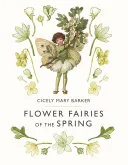
Flower Fairies of the Spring
 82
82

Flower Fairies of the Spring
Cicely Mary Barker's *Flower Fairies of the Spring* presents a singular vision of nature's enchantment. The enduring appeal lies in the meticulous detail of her watercolor work and the simple, evocative verses. Each illustration, like the depiction of the Speedwell Fairy perched delicately on its namesake bloom, offers a miniature world. The strength of this collection is its consistent, gentle aesthetic that has charmed generations since its initial publication. However, a limitation for the contemporary esoteric reader might be its lack of explicit occult doctrine; the magic here is implicit, drawn purely from nature's cycles and perceived spirit presences. The work explores the concept of plant spirits, a theme that echoes older animistic beliefs, but without deeper theoretical framing. It remains a beautiful, accessible entry point into nature-based fae lore.
📝 Description
82
Cicely Mary Barker's Flower Fairies of the Spring first appeared in print in 1923.
Cicely Mary Barker's book presents delicate watercolor illustrations and poems, linking fairies to specific spring blossoms and plants. This edition revives her signature style, showing charming depictions of nature spirits. The work builds a whimsical, nature-based mythology where flora and elemental beings merge. It appeals to those who appreciate art, poetry, and fantasy rooted in nature. Readers interested in early 20th-century children's literature and botanical illustration will find resonance here, particularly those drawn to imaginative art and simple verse that evokes natural beauty.
Barker's original work emerged in 1923, a time when interest in fairies and folklore was growing. Her illustrations focused on an innocent, nature-centric fairy lore, grounded in botanical accuracy. The book's central idea is the personification of spring flowers as distinct fairy beings, each acting as a spirit guardian or embodiment of a particular plant. This emphasizes the close connection between the natural world and a magical sphere, suggesting these fairies are vital forces in the spring ecosystem.
Cicely Mary Barker's Flower Fairies emerged during a period of renewed interest in spiritualism and folklore. While figures like Arthur Conan Doyle explored more theatrical fairy encounters, Barker's work offered a gentler, nature-focused perspective. Her approach aligns with a tradition of nature mysticism, where elemental spirits are seen as active participants in the natural world. The book suggests an underlying magical vitality within plants, a concept familiar in earth-based spiritual practices that honor the inherent life force of flora.
💡 Why Read This Book?
• Engage with Cicely Mary Barker's unique botanical fairy art, first published in 1923, to experience a specific early 20th-century artistic approach to nature spirits. • Discover how simple, rhyming verse can evoke the essence of spring flora, offering a different poetic sensibility than more complex esoteric texts. • Connect with the concept of plant personification, seeing each fairy as intrinsically tied to its specific flower, fostering a unique appreciation for botanical symbolism.
⭐ Reader Reviews
Honest opinions from readers who have explored this book.
❓ Frequently Asked Questions
When was the original Flower Fairies book by Cicely Mary Barker first published?
The first book in Cicely Mary Barker's Flower Fairies series was originally published in 1923, establishing the enchanting style that continues to be celebrated.
What is the artistic style of Cicely Mary Barker's illustrations?
Barker's illustrations are characterized by delicate watercolor paintings, often featuring children dressed as fairies, intricately detailed and closely observing botanical accuracy.
Does 'Flower Fairies of the Spring' contain complex magical rituals?
No, this book focuses on gentle, nature-based enchantment and poetic descriptions of fairies associated with spring flowers, rather than explicit magical practices or rituals.
What kind of poetry can I expect in this book?
The poetry consists of simple, charming verses, typically rhyming couplets or quatrains, that describe the fairy and its connection to a specific spring plant.
Is this book suitable for children?
Yes, the book is widely considered suitable for children due to its gentle themes, beautiful illustrations, and accessible poetry, though its appeal extends to adults interested in fairy lore.
Where does Cicely Mary Barker draw inspiration for her fairies?
Barker drew inspiration from observing real children and flowers, grounding her fantastical creations in the natural world and botanical studies of the time.
🔮 Key Themes & Symbolism
Botanical Personification
The central theme is the personification of specific spring flora as individual fairy beings. Each fairy is not merely associated with a flower but embodies its essence, spirit, and cycle of growth. This concept aligns with animistic traditions that perceive inherent life and consciousness within the natural world. Barker’s work visually translates this by depicting fairies intrinsically linked to the plants they represent, such as the Primrose Fairy nestled within its namesake flower, reinforcing the idea that the vitality of the plant is inseparable from its fairy counterpart.
Nature's Gentle Magic
This collection emphasizes a subtle, inherent magic found within the natural world, particularly during the spring season. The enchantment is not derived from overt spells or arcane knowledge but from the perceived life force and beauty of flowers and the gentle presence of their fairy guardians. This perspective encourages an appreciation for the quiet wonders of nature, fostering a sense of connection and reverence for the environment. The magic is presented as an intrinsic quality of blooming life, accessible through observation and imagination.
Early 20th Century Fairy Revival
The Flower Fairies series emerged during a period of renewed interest in folklore and the supernatural, particularly in Britain following World War I. While some contemporaries explored spiritualism or more elaborate fairy mythologies, Barker’s work offered a distinctively gentle, nature-focused, and artistically refined interpretation. Her approach resonated with a desire for innocent fantasy and a connection to the natural world, distinguishing her contribution from more sensational or complex occult narratives of the era.
Artistic Representation of Nature Spirits
Barker’s illustrations serve as a primary mode of conveying her concept of nature spirits. Her detailed watercolors capture the delicate forms of flowers and insects alongside the whimsical figures of the fairies. The artistic style itself, with its soft hues and precise rendering, contributes to the ethereal and believable quality of her fairy world. This focus on visual representation offers a unique way to engage with the idea of elemental beings tied to specific botanical forms.
💬 Memorable Quotes
Direct passages from the work, attributed to the author.
“The Primrose Fairy”
— This title represents the core concept of plant personification, where a specific flower is given a fairy identity, suggesting an inherent spirit within the botanical form.
“Speedwell Fairy”
— The name itself implies a fairy intrinsically connected to the speedwell plant, embodying its characteristics and acting as its guardian spirit within nature's cycles.
“Illustration of fairy on a dandelion”
— The visual representation reinforces the theme of fairies inhabiting and embodying specific plants, demonstrating the artistic interpretation of nature spirits tied to flora.
“The first book published in 1923”
— This factual anchor grounds the series historically, placing Barker's unique vision within the context of early 20th-century interest in folklore and illustration.
💡 Key Ideas
Editorial paraphrase of the work's core concepts — not direct quotes.
Bluebells, like little fairy bells
This line poetically links the physical form of the bluebell flower to the idea of fairy bells, suggesting a subtle connection and resonance between the natural object and the magical realm.
🌙 Esoteric Significance
Tradition
Barker's work aligns most closely with nature-based animism and certain currents within modern paganism that emphasize the spiritual essence of the natural world. While not explicitly rooted in a structured esoteric system like Hermeticism or Kabbalah, it taps into the universal concept of elemental spirits or nature sprites (like the elementals described by Paracelsus). It represents a gentle, artistic interpretation of the idea that plants and flowers possess their own consciousness and spiritual guardians, accessible through aesthetic appreciation and imaginative connection.
Symbolism
The primary symbolism lies in the direct association of each fairy with a specific spring flower. For instance, the Bluebell Fairy embodies the ephemeral beauty and delicate structure of the bluebell, while the Primrose Fairy represents the early, resilient bloom that signals the end of winter. These personifications act as symbols for the vital forces and unique energies present in each plant, suggesting that nature itself is imbued with spirit and intelligence.
Modern Relevance
Contemporary pagan traditions, particularly those focused on green witchcraft, eco-spirituality, and elemental magic, frequently draw inspiration from Barker's aesthetic and conceptual framework. Her work provides a visually accessible entry point for understanding the concept of nature spirits and the sacredness of flora. Modern practitioners may use her illustrations in devotional practices, meditations, or as visual aids for connecting with the energies of specific plants during the spring season.
👥 Who Should Read This Book
• Aspiring nature mystics and animists seeking gentle artistic expressions of plant consciousness. • Collectors of early 20th-century children's literature and botanical art interested in a unique historical perspective on fairy lore. • Individuals exploring simple, nature-focused spiritual practices who appreciate visual representations of elemental beings tied to flora.
📜 Historical Context
Cicely Mary Barker's *Flower Fairies of the Spring* originates from a lineage tracing back to 1923, a period marked by a significant resurgence of interest in fairy lore and the occult. This era saw figures like Sir Arthur Conan Doyle championing spiritualism and the existence of fairies, fueled partly by the controversial Cottingley Fairies photographs. Barker's contribution, however, stood apart. While contemporaries engaged with more complex spiritual or occult theories, Barker focused on a gentle, nature-based fairy realm, grounded in precise botanical illustrations. Her work presented an accessible, innocent form of enchantment, contrasting with the more dramatic or philosophical explorations of the supernatural common at the time. Unlike some folklorists who focused on historical or anthropological aspects, Barker’s approach was primarily artistic and imaginative, creating a distinct niche that appealed widely and continues to hold sway.
📔 Journal Prompts
The Primrose Fairy's emergence
The symbolic significance of bluebells
Identifying the spirit of the Speedwell Fairy
Nature's gentle magic in spring
The art of botanical personification
🗂️ Glossary
Flower Fairy
A type of nature spirit or elemental being depicted as intrinsically linked to a specific type of flower or plant, embodying its essence and characteristics.
Botanical Illustration
Artistic representations of plants that aim for accuracy in detail, form, and color, often used in scientific or educational contexts but also valued for aesthetic qualities.
Animism
The belief that natural objects, phenomena, and the universe itself possess souls or consciousness; a spiritual worldview where spirits inhabit all aspects of nature.
Elemental Spirits
In esoteric traditions, beings believed to embody the fundamental elements of nature (earth, air, fire, water), often associated with specific natural phenomena or locations.
Personification
The attribution of a personal nature or human characteristics to something nonhuman, or the representation of an abstract quality in human form.
Spring Flora
The plant life that blooms or becomes prominent during the spring season, often symbolizing rebirth, renewal, and growth.
Nature-based enchantment
A form of magic or spiritual influence derived directly from the observation and connection with the natural world, rather than from codified rituals or arcane texts.