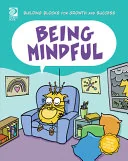
Being Mindful
 71
71

Being Mindful
April Hart’s ‘Being Mindful’ presents a pragmatic approach to introducing children to mindfulness, framed within a relatable classroom scenario. The strength of the work lies in its clear depiction of techniques like body scans and visualization, making abstract concepts tangible for a young audience. Its primary limitation, however, is the somewhat earnest tone that, while intended to be encouraging, occasionally borders on didactic. The passage where Ms. Silver guides students to "visualize their frustrations as storm clouds passing overhead" is particularly effective, offering a concrete metaphor for emotional detachment. While the book successfully demonstrates *how* to practice mindfulness, its exploration of the deeper *why* remains somewhat superficial, likely by design for its target demographic. It serves as a competent primer on practical application.
📝 Description
71
April Hart's 2023 book introduces mindfulness techniques through a narrative about a teacher and her students.
In 'Being Mindful,' April Hart presents mindfulness practices tailored for young people. The story follows Ms. Silver, a teacher dealing with a distracted classroom, who decides to introduce her students to mindfulness. The book describes specific exercises she uses, such as guided body scans, focused breathing, and visualizing emotions as external things.
The narrative shows these techniques in action, illustrating how children can learn to use them for managing their moods and attention. The main goal is to give young readers practical skills for self-regulation. Hart uses a story format to help children understand mindfulness and apply it in their daily lives, both inside and outside of school.
While presented as a secular guide for children, 'Being Mindful' draws from contemplative traditions that emphasize present moment awareness and non-judgmental observation. These practices have roots in Buddhist meditation, particularly Vipassanā, which cultivates insight through focused attention on sensory experience and mental states. The book adapts these ancient principles into accessible exercises for a modern, younger audience, framing self-awareness as a tool for everyday well-being.
💡 Why Read This Book?
• Learn concrete mindfulness techniques like body scans and visualization, directly mirroring Ms. Silver’s classroom methods in ‘Being Mindful,’ to manage your own focus. • Understand how to apply emotional regulation strategies, such as visualizing emotions as passing storm clouds, to navigate daily challenges as depicted in the book’s relatable storyline. • Gain practical tools for improving concentration and reducing irritability by observing how the students in ‘Being Mindful’ re-engage with their math lesson.
⭐ Reader Reviews
Honest opinions from readers who have explored this book.
❓ Frequently Asked Questions
What specific mindfulness techniques are explained in 'Being Mindful'?
The book explains techniques such as body scans, deep breathing exercises, and visualizing emotions, as demonstrated by Ms. Silver to her students.
Is 'Being Mindful' suitable for very young children?
Yes, the relatable storyline and practical examples are designed for young readers, making complex concepts accessible and engaging for children.
What is the primary goal of introducing mindfulness in the book?
The main goal is to help students, and by extension young readers, manage their focus, emotions, and irritability, particularly in challenging situations like a disruptive classroom environment.
When was 'Being Mindful' first published?
The book was first published in 2025, making it a contemporary exploration of mindfulness for a young audience.
How does the book make mindfulness relatable?
It uses a narrative format where a teacher, Ms. Silver, introduces mindfulness strategies to her students during a difficult lesson, showing the practices in action.
Can readers apply the strategies from 'Being Mindful' to their own lives?
Absolutely. The book explicitly aims for readers to see the strategies in practice and learn how to apply them to their own experiences with focus and emotions.
🔮 Key Themes & Symbolism
Emotional Regulation
The work explores the nascent stages of emotional regulation for young minds. Through Ms. Silver's guidance, students learn to identify and manage feelings of irritability, often exacerbated by external factors like a storm. The narrative illustrates how recognizing emotions, rather than suppressing them, is the first step toward control, a foundational concept in many esoteric traditions concerning the mastery of the lower self.
Concentration and Focus
A core theme is the cultivation of focus, presented as essential for learning and well-being. The challenge of concentrating on mathematics highlights the difficulty many face in sustained attention. The introduction of mindfulness techniques serves as a practical method for enhancing mental clarity and presence, aligning with contemplative practices found across various esoteric schools that aim to quiet the discursive mind.
Mindfulness as a Tool
Hart positions mindfulness not merely as a philosophical concept but as a toolkit of actionable strategies. Body scans, deep breathing, and visualization are presented as accessible practices that can be integrated into daily routines. This pragmatic approach carries the Hermetic principle of "as above, so below," suggesting that inner states can be influenced by deliberate external or internal actions.
Inner Landscape Visualization
The concept of visualizing emotions, such as seeing frustrations as passing storm clouds, offers a powerful symbolic representation. This technique allows individuals, particularly children, to create a sense of detachment from overwhelming feelings. This symbolic approach to understanding and managing the inner world is a common thread in esoteric psychology and meditative practices.
💬 Memorable Quotes
Direct passages from the work, attributed to the author.
“Visualizing emotions as storm clouds passing overhead.”
— This represents the practice of externalizing and observing feelings without judgment. It allows for a detachment that can reduce the intensity of negative emotions, a key step in mastering one's internal state.
“No one can focus on the math lesson.”
— This highlights the pervasive nature of distraction and lack of presence. It sets the stage for the necessity of mindfulness techniques to restore order and cognitive function.
“Ms. Silver introduces them to mindfulness.”
— This signifies the key moment where a structured approach to mental and emotional well-being is formally introduced, moving beyond reactive classroom management.
“They practice strategies such as body scans, deep breathing, and visualizing emotions.”
— This enumerates the specific, actionable techniques taught, grounding the abstract concept of mindfulness in concrete practices.
“Readers will see these strategies in practice and learn how to apply them to their own lives!”
— This underscores the book's didactic purpose: to provide practical, transferable skills for self-regulation and improved well-being beyond the narrative context.
🌙 Esoteric Significance
Tradition
While not explicitly tied to a single esoteric lineage, 'Being Mindful' draws implicitly from traditions emphasizing self-awareness and mental discipline, such as Hermeticism and various contemplative schools. It carries the Hermetic focus on understanding and mastering the internal world as a prerequisite for external influence and well-being. The emphasis on practical, repeatable techniques aligns with the 'as above, so below' principle, suggesting that inner states are malleable through directed practice.
Symbolism
The 'storm clouds' metaphor for emotions is a potent symbol, representing the transient and externalizable nature of feelings. This allows the practitioner to observe them without being consumed, a common esoteric practice for detaching from the ego or lower self. The classroom itself can be viewed as a microcosm, symbolizing the wider world where focus and inner peace must be cultivated amidst external distractions and internal turbulence.
Modern Relevance
This work contributes to the modern esoteric resurgence by making foundational contemplative practices accessible to a younger generation. Thinkers and practitioners in fields like Integral Psychology and contemporary Hermeticism often emphasize the importance of early cultivation of self-awareness. Its approach provides a gateway, potentially leading readers to explore deeper esoteric texts and practices concerning consciousness, energy, and the mind-body connection.
👥 Who Should Read This Book
• Parents and educators seeking to introduce children to foundational concepts of emotional intelligence and focus, using relatable scenarios. • Young readers who experience difficulties with concentration, anxiety, or managing strong emotions, offering them practical coping strategies. • Individuals interested in the pedagogical application of mindfulness and its potential for early intervention in developing self-regulation skills.
📜 Historical Context
Published in 2025, 'Being Mindful' emerges in an era saturated with popular mindfulness literature, building upon trends that gained significant traction in the early 21st century. While contemporary psychology and wellness industries have widely adopted mindfulness, its roots are deeply embedded in ancient contemplative traditions, including Buddhist meditation and Hermetic self-mastery practices. The book's approach, focusing on practical application for children, can be seen as a modern iteration of pedagogical methods aimed at cultivating inner discipline, a concern present in educational philosophies since the Enlightenment. Its direct engagement with schools carries the broader societal integration of mental wellness practices, a movement that gained momentum following figures like Jon Kabat-Zinn’s development of Mindfulness-Based Stress Reduction (MBSR) in the late 1970s. Unlike purely secular approaches, Hart's work implicitly draws from the esoteric understanding of the mind's influence on external reality, a perspective often contrasted with purely materialistic scientific viewpoints.
📔 Journal Prompts
The storm clouds visualization and its impact on classroom irritability.
Body scan practice effectiveness during the math lesson.
Ms. Silver's role in fostering a mindful environment.
Applying deep breathing to personal moments of distraction.
Identifying personal 'storm clouds' and how to observe them.
🗂️ Glossary
Mindfulness
A mental state achieved by focusing one's awareness on the present moment, while calmly acknowledging and accepting one's feelings, thoughts, and bodily sensations.
Body Scan
A mindfulness technique involving bringing one's attention to different parts of the body, noticing any sensations without judgment.
A relaxation technique that emphasizes slow, deep breaths to calm the nervous system and increase oxygen flow, promoting a state of relaxation.
Visualization
The practice of forming mental images or scenarios, often used in mindfulness to help manage emotions or achieve specific mental states.
Irritability
The state of being easily annoyed or made angry; a common emotional response to stress or discomfort.
Focus
The ability to concentrate one's attention or energy on a particular subject or activity.
Self-Regulation
The ability to manage one's emotions, thoughts, and behaviors effectively in different situations.
This book appears in 1 collection
🔮 Readers Also Liked
Browse all →








From the “Mindfulness” Collection
View all →








More Free Occult Philosophy Books
View all →