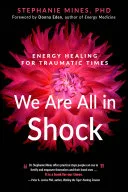
We Are All in Shock
 80
80

We Are All in Shock
Stephanie Mines' "We Are All in Shock" offers a compelling framework for understanding how deeply ingrained shock impacts our capacity for freedom and vitality. The strength of the book lies in its accessible integration of psychology, neurobiology, and energy medicine, providing a holistic lens on trauma. Mines' assertion that "Each person can learn to recognize and resolve their shock experience" is particularly empowering. However, the book sometimes leans towards broad pronouncements about universal shock without always detailing the specific neurobiological mechanisms in sufficient depth for a lay reader unfamiliar with energy medicine. A standout concept is the idea of 'shock residue' and its pervasive influence, which the work explores with considerable nuance. The book ultimately serves as a valuable, if occasionally abstract, guide for those seeking energetic pathways to healing.
📝 Description
80
Stephanie Mines asserts in "We Are All in Shock" that shock is a universal human experience.
Stephanie Mines' "We Are All in Shock" examines how unaddressed shock conditions limit individual freedom and natural vitality. The book details how these experiences, whether confronted alone or with help, are key to restoring health and latent potential. Mines structures the book to guide readers through energy healing methods for trauma. These methods draw from psychology, energy medicine, and neurobiology, offering practical ways for personal change. The goal is to give individuals the tools to clear the energetic and psychological marks left by shock.
The central idea is 'shock residue', the lasting energetic and physiological imprint of traumatic events. The text explains how to find and release this residue using energy techniques. This process is often subtle and non-linear, differing from cognitive or talk therapies.
This work engages with traditions focused on psychological and energetic healing. Its principles align with post-war trauma studies, somatic experiencing, and energy psychology movements that emerged in the late 20th century. The book emphasizes a less conventional approach to healing, one that acknowledges subtle energetic shifts and physiological imprints beyond purely cognitive understanding.
💡 Why Read This Book?
• You will learn to identify and release 'shock residue,' a concept central to Mines' work, allowing you to move beyond the energetic imprints of past traumas that may be limiting your freedom. • You will gain practical energy healing techniques grounded in neurobiology and psychology, offering a unique approach to reclaiming your health and potential that differs from standard therapeutic models. • You will explore the original publication context of 2020, understanding how contemporary energy medicine and psychology were synthesized by Stephanie Mines to address widespread trauma.
⭐ Reader Reviews
Honest opinions from readers who have explored this book.
❓ Frequently Asked Questions
What is 'shock residue' according to Stephanie Mines?
'Shock residue' refers to the energetic and physiological imprint left by traumatic experiences. Stephanie Mines explains in 'We Are All in Shock' that this residue can limit our freedom and health if not addressed through specific healing modalities.
What disciplines does Stephanie Mines integrate in 'We Are All in Shock'?
Stephanie Mines integrates psychology, energy medicine, and neurobiology. This multidisciplinary approach aims to provide a comprehensive understanding of how shock affects the body and mind.
When was 'We Are All in Shock' first published?
Stephanie Mines' 'We Are All in Shock' was first published on September 1, 2020, positioning it within contemporary discussions on trauma and healing.
How does this book help readers resolve shock experiences?
The book guides readers to recognize their shock experiences and offers energy healing techniques to clear conditioning that decreases freedom. It emphasizes proactive resolution, sometimes with help, sometimes alone.
What is the goal of clearing shock conditioning?
The primary goal, as outlined by Mines, is to restore 'buoyancy'—a state of greater freedom, health, and potential. Clearing shock conditioning aims to release limitations imposed by past traumas.
Is 'We Are All in Shock' a purely psychological text?
No, 'We Are All in Shock' moves beyond purely psychological frameworks by incorporating principles from energy medicine and neurobiology, offering a unique synthesis for understanding and healing trauma.
🔮 Key Themes & Symbolism
The Pervasiveness of Shock
Mines posits shock not as an isolated event but as a pervasive conditioning that affects individuals and potentially collective consciousness. The work explores how unaddressed shock can create limitations, impacting our capacity for joy and freedom. This theme challenges the common notion of 'snapping out of it,' suggesting a deeper energetic and neurological entanglement with past traumatic experiences that requires specific modalities for resolution.
Energy Healing Modalities
Central to the book is the application of energy medicine principles to trauma resolution. Mines details how energetic imbalances resulting from shock can be identified and cleared. This involves techniques that work with the body's energetic field to release stored tension and trauma imprints, aiming for a holistic restoration of health and vitality beyond conventional therapeutic approaches.
Reclaiming Freedom and Potential
The ultimate goal articulated in 'We Are All in Shock' is the reclamation of personal freedom and inherent potential. By understanding and resolving shock experiences, individuals can shed the conditioning that diminishes their capacity for 'buoyancy'—a metaphor for ease, resilience, and authentic living. The book empowers readers to actively participate in their healing process.
Neurobiological Underpinnings of Trauma
Mines grounds her energy healing work in contemporary neurobiology, explaining how traumatic shock impacts neural pathways and physiological responses. This integration provides a scientific basis for the energetic techniques, demonstrating how shifts in energetic states can correlate with changes in brain function and stress responses, offering a bridge between esoteric practices and scientific understanding.
💬 Memorable Quotes
Direct passages from the work, attributed to the author.
“Mines' goal is to empower the reader to clear out the conditioning that decreases our freedom to live with buoyancy.”
— This statement frames the book's purpose as actively dismantling limiting patterns. 'Buoyancy' serves as a powerful metaphor for a state of ease, resilience, and unhindered living, achievable through the energetic and psychological clearing processes detailed.
“Have you tried to 'snap out of it' but just can't seem to?”
— This rhetorical question immediately connects with readers experiencing persistent trauma symptoms. It validates the difficulty of overcoming shock through sheer willpower and signals that the book offers alternative, deeper methods for healing.
“Dr. Stephanie Mines”
— While not a quote, the repeated use of 'Dr. Stephanie Mines' reinforces her authority and the academic grounding of her work. It suggests a rigorous, evidence-informed approach to the often-intangible subject of energy healing and trauma.
💡 Key Ideas
Editorial paraphrase of the work's core concepts — not direct quotes.
Each person can learn to recognize and resolve their shock experience, sometimes alone, other times with help.
This quote highlights the core thesis of empowerment and agency. It suggests that trauma resolution is an accessible process, not solely reliant on external professionals, and that individuals possess an innate capacity for healing, adaptable to different support needs.
We Are All in Shock shows how you can move past traumas—grounded in psychology, energy medicine, and neurobiology—to reclaim your health and potential through energy healing.
This summarizes the book's methodological approach and promise. It emphasizes the multidisciplinary foundation and the ultimate benefit: regaining health and potential via energy healing techniques specifically designed to address trauma.
🌙 Esoteric Significance
Tradition
While not explicitly tied to a single historical esoteric lineage like Hermeticism or Gnosticism, Mines' work draws from and contributes to the broader field of consciousness studies and subtle energy paradigms. It aligns with modern esoteric thought that seeks to integrate ancient wisdom with contemporary scientific understanding, particularly in areas of mind-body connection and energetic healing, echoing themes found in Theosophy's exploration of subtle bodies and energy flows.
Symbolism
The concept of 'shock residue' itself functions symbolically, representing the energetic imprints left by trauma. 'Buoyancy' serves as a potent symbol for liberation, resilience, and a return to a natural state of well-being, contrasting with the heaviness and stagnation often associated with unaddressed shock. The act of 'clearing' these residues symbolizes purification and renewal.
Modern Relevance
Mines' approach is highly relevant to contemporary fields like somatic psychology, trauma-informed care, and integrative health. Thinkers and practitioners exploring the impact of collective trauma, ancestral healing, and the efficacy of non-ordinary states of consciousness for healing often reference or employ similar energy-based methodologies. Her work informs current dialogues on resilience and post-traumatic growth.
👥 Who Should Read This Book
• Individuals experiencing persistent effects of trauma who seek complementary or alternative healing modalities beyond traditional talk therapy. • Practitioners of energy medicine, bodywork therapists, and coaches looking to deepen their understanding of trauma's energetic components and integrate new techniques. • Researchers and students of consciousness studies, psychology, and integrative health interested in the intersection of neurobiology, energy medicine, and trauma resolution.
📜 Historical Context
Published in 2020, "We Are All in Shock" emerged during a period of heightened global awareness regarding trauma, accelerated by events like the COVID-19 pandemic. Stephanie Mines' work engages with a lineage of thought extending from early 20th-century psychoanalysis's grappling with shell shock and subsequent developments in trauma theory by figures like Bessel van der Kolk. It also reflects the growing acceptance and integration of energy medicine practices, which gained traction throughout the late 20th century, challenging purely biomedical models. This book can be seen in dialogue with somatic experiencing pioneers like Peter A. Levine, who also explored the body's role in trauma resolution. The reception of such works often highlights the tension between established psychological paradigms and newer, more holistic or energetic approaches to healing.
📔 Journal Prompts
Shock residue patterns observed in daily life.
Buoyancy as a personal metric for well-being.
Energy healing techniques for releasing conditioning.
Recognizing personal shock experiences.
The integration of psychology and energy medicine.
🗂️ Glossary
Shock Residue
The energetic and physiological imprint left by traumatic experiences that can continue to influence behavior, emotions, and physical health if not consciously addressed and released.
Conditioning
Learned patterns of thought, behavior, and energetic response, often stemming from past experiences like shock, which can limit freedom and natural functioning.
Buoyancy
A state of energetic lightness, resilience, and freedom from the weight of past traumas, allowing for a more natural and unhindered experience of life.
Energy Medicine
A field that uses the body's energy systems to support health and well-being, often involving techniques to balance, energize, and clear the body's subtle energy pathways.
Neurobiology
The scientific study of the nervous system, including its structure, function, development, and how it relates to behavior and psychological processes, particularly as affected by trauma.
Resolution
The process of actively addressing and releasing the effects of shock and trauma, leading to a restoration of balance, health, and freedom.
Reclaiming Potential
The act of regaining access to one's inherent capacities and possibilities that may have been obscured or diminished by the impact of unresolved shock or trauma.