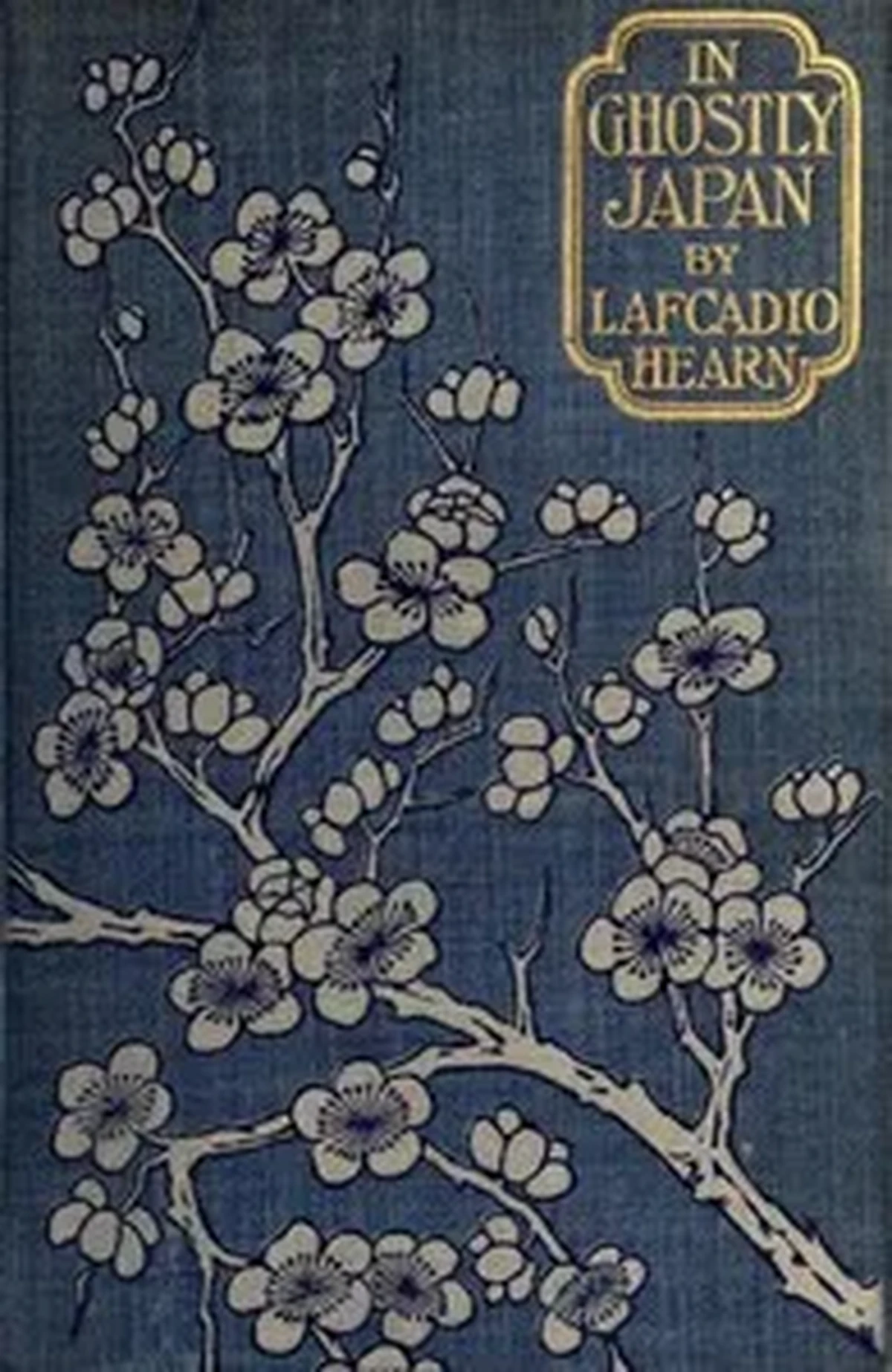
In Ghostly Japan
 80
80

In Ghostly Japan
Lafcadio Hearn's "In Ghostly Japan" offers a compelling glimpse into the phantom-haunted landscapes of late 19th-century Japan, rendered through the eyes of a foreigner deeply attuned to its cultural subtleties. Hearn excels at evoking a palpable sense of atmosphere; his prose conjures misty graveyards and lonely farmhouses with an almost tactile quality. The strength of the collection lies in its faithful, yet artful, transcription of oral traditions, preserving tales of vengeful spirits and lingering attachments that might otherwise have faded. However, the work's primary limitation is its framing for a Western audience, occasionally leading to explanations that verge on the anthropological rather than purely narrative. The story of 'The Corpse-Rider' is particularly effective, showcasing Hearn's talent for building dread and exploring the unsettling relationship between the living and the deceased. Ultimately, Hearn provides a valuable, albeit filtered, portal into a Japan where the supernatural was an integral part of the social fabric.
📝 Description
80
Lafcadio Hearn's "In Ghostly Japan," published in 1899, gathers Japanese ghost stories and folklore.
This collection presents Japanese ghost stories and folklore as retold by Lafcadio Hearn, who lived in Japan for many years. Hearn, an Irish-Greek writer, immersed himself in Japanese culture and its spiritual beliefs. The book is not a scholarly study but a literary adaptation of oral traditions. Its purpose was to communicate the atmosphere and core of Japanese supernatural beliefs to a Western readership.
The stories are suited for readers interested in folklore, comparative mythology, and supernatural narratives that reveal cultural understanding. Those who enjoy atmospheric tales and the examination of cultural anxieties through the uncanny will find this book appealing. Students of Japanese literature and cultural history can also find value in Hearn's early work, which aimed to connect Eastern and Western views on the spectral.
Published in 1899, the book appeared during a time of significant Western interest in the East. Japan was undergoing modernization after the Meiji Restoration, but Hearn chose to focus on preserving and sharing its older, mystical cultural aspects. This period saw figures like Helena Blavatsky popularizing Eastern spiritual ideas in the West, creating an audience receptive to Hearn's ghost stories.
Published in 1899, "In Ghostly Japan" emerged when Western interest in Eastern spirituality was growing. Hearn's work tapped into this fascination, presenting Japanese folklore that touched upon concepts like karma and reincarnation. This period saw a rise in movements like Theosophy, which sought to synthesize Eastern and Western spiritual traditions. Hearn's collection, while literary, reflects a broader cultural moment where the supernatural and the spiritual aspects of non-Western cultures held significant appeal for Western audiences, offering a glimpse into beliefs about the afterlife and the persistent influence of the past.
💡 Why Read This Book?
• Understand the cultural anxieties of Meiji-era Japan through its spectral narratives, learning how stories of ghosts reflected societal shifts post-1868. • Explore the Buddhist concept of karma and its manifestation in Japanese folklore, as Hearn illustrates the consequences of past actions on present-day spirits. • Experience Hearn's evocative prose, discovering how he captures the unique atmosphere of Japanese supernatural tales, exemplified in chapters like "The Soul of the Great Bell."
⭐ Reader Reviews
Honest opinions from readers who have explored this book.
❓ Frequently Asked Questions
When was Lafcadio Hearn's "In Ghostly Japan" first published?
"In Ghostly Japan" was first published in 1899, offering readers a collection of Japanese ghost stories and folklore from the late 19th century.
What is the primary focus of "In Ghostly Japan"?
The book focuses on retelling Japanese ghost stories and folklore, aiming to convey the atmosphere and spiritual beliefs of Japan to a Western audience through literary adaptation.
What cultural context is important for understanding "In Ghostly Japan"?
The Meiji Restoration in 1868 is crucial, as Hearn documented the older, mystical traditions of Japan during a period of rapid modernization and Westernization.
Does "In Ghostly Japan" include scholarly analysis or purely literary retellings?
It primarily features literary retellings of oral traditions, though Hearn's background allows for some cultural commentary woven into the narrative fabric.
What are some of the recurring themes in the ghost stories?
Recurring themes include karma, reincarnation, the persistent connection between the living and the dead, and the interplay between the spiritual and material worlds.
Who was Lafcadio Hearn?
Lafcadio Hearn was an Irish-Greek writer who spent many years living and teaching in Japan, becoming a significant interpreter of Japanese culture for the West.
🔮 Key Themes & Symbolism
The Living Dead
Hearn's collection frequently explores the liminal space between life and death, where spirits linger due to unfinished business, strong attachments, or karmic debts. These are not merely spectral apparitions but entities deeply connected to their former lives, often seeking resolution or enacting justice. The narratives illustrate a worldview where the departed are an active presence, influencing the living world through their continued existence and unresolved emotions, reflecting a profound cultural understanding of the afterlife.
Karma and Reincarnation
Buddhist principles of karma and reincarnation are subtly woven into the fabric of many tales. Hearn shows how past actions ripple through generations, affecting not only the souls of the deceased but also their living descendants. The stories often serve as cautionary examples, demonstrating the inescapable consequences of one's deeds and the cyclical nature of existence, where death is not an end but a transition point within a larger cosmic order.
Atmosphere and Cultural Immersion
Hearn masterfully captures the specific atmosphere of rural and traditional Japan, imbuing his retellings with a sense of place and cultural authenticity. The stories are deeply rooted in the landscape—lonely temples, misty mountains, ancient forests—creating an environment where the supernatural feels not just possible but natural. This immersion allows readers to grasp the pervasive influence of folk beliefs and superstitions on daily life and psychology in the era.
The Blurring of Worlds
A central esoteric concept in "In Ghostly Japan" is the permeability between the material and spiritual realms. Ghosts, spirits, and yokai are not necessarily intrusions from another dimension but part of a continuum that coexists with human life. Hearn's work suggests a reality where the veil is thin, and spiritual phenomena are an accepted, if sometimes feared, aspect of existence, deeply integrated into the Japanese worldview and its religious practices.
💬 Memorable Quotes
Direct passages from the work, attributed to the author.
“The dead, being dead, are very apt to be forgotten.”
— This statement highlights the poignant contrast between the spectral persistence of ghosts in Japanese folklore and the human tendency to move on from loss, underscoring the stories' exploration of memory and enduring spiritual ties.
“There are many things in Japan which are not to be understood by foreigners.”
— This reflects Hearn's own position as an outsider attempting to bridge cultural divides, acknowledging the profound depth and unique logic of Japanese beliefs that resist easy Western interpretation.
“The whole world is a spirit-world.”
— This interpretation speaks to the fundamental esoteric view that the physical realm is permeated by unseen spiritual forces and presences, a concept central to many of the tales Hearn recounts.
“The true ghost is one that has a mission.”
— This suggests that the spectral figures in Hearn's stories are often driven by purpose, whether it be seeking justice, warning the living, or fulfilling a karmic obligation, rather than being mere random hauntings.
“The stories are not always pleasant, but they are true.”
— This implies Hearn's commitment to presenting the authentic spirit of Japanese folklore, even its darker and more unsettling aspects, as reflections of genuine cultural beliefs and psychological realities.
🌙 Esoteric Significance
Tradition
Hearn's work engages with folk Buddhism and Shinto, which form the bedrock of Japanese spirituality, rather than a formal esoteric lineage like Hermeticism or Kabbalah. His retellings emphasize concepts like karma, reincarnation, and the permeable boundary between the living and the dead, aligning with universal animistic and spiritualist currents. The collection reflects a worldview where the spiritual is not separate but interwoven with the mundane, a common characteristic of many indigenous and Eastern spiritual traditions.
Symbolism
The recurrent motif of the ancestral shrine symbolizes the enduring connection between the living and their departed kin, serving as a physical anchor for spiritual remembrance and veneration. Water, often depicted as a boundary or a place of transition, frequently features in tales of spirits crossing over or manifesting from watery depths, representing purification, the subconscious, or the liminal space between worlds. The lingering scent of incense or a specific flower can act as a spiritual signifier, a subtle clue that the presence of the unseen is near.
Modern Relevance
Contemporary practitioners of Shinto-inspired animism and those interested in Buddhist psychology find resonance in Hearn's depictions of the spiritual landscape. His work continues to inform modern explorations of comparative mythology and folklore, particularly concerning ancestor veneration and the integration of the supernatural into daily life. Thinkers and artists exploring themes of hauntology, memory, and the uncanny often draw upon Hearn's atmospheric portrayals of spectral presence and the persistence of the past.
👥 Who Should Read This Book
• Students of comparative folklore and mythology seeking authentic, atmospheric retellings of supernatural tales from a specific cultural context. • Readers interested in the intersection of religion and daily life in historical Japan, particularly the influence of Buddhist and Shinto beliefs on the perception of spirits. • Aspiring writers and storytellers looking for examples of evocative prose and effective pacing in crafting tales of the uncanny and the spectral.
📜 Historical Context
Published in 1899, "In Ghostly Japan" emerged during a period of significant Western interest in Japanese culture, known as Japonisme, which intensified after Japan's opening to the West. The Meiji Restoration in 1868 had initiated rapid modernization, yet Hearn, an Irish-Greek writer who had settled in Japan, focused on preserving and interpreting its traditional folklore and spiritual beliefs. This was a time when figures like Helena Blavatsky were popularizing Eastern philosophies in the West through the Theosophical Society, creating a receptive audience for tales of the supernatural and the exotic. While Westerners were fascinated by Japan, their understanding was often filtered through exoticism. Hearn's work stood out for its deep immersion and empathetic portrayal, though it still framed these narratives for a foreign readership. Contemporary authors like Pierre Loti also explored Eastern themes, but Hearn's focus on the vernacular and the spectral offered a distinct, often darker, perspective on Japanese spiritual life.
📔 Journal Prompts
The persistent presence of spirits in Japanese folklore, as depicted by Hearn.
The karmic consequences illustrated in the tale of 'The Soul of the Great Bell.'
The role of ancestral shrines in maintaining connections between the living and the dead.
Hearn's description of the atmosphere in a haunted Japanese setting.
The concept of the world as a 'spirit-world' in the context of specific ghost stories.
🗂️ Glossary
Yokai
A broad category of supernatural entities in Japanese folklore, including spirits, demons, monsters, and other strange beings, often encountered in Hearn's narratives.
Kami
Deities or spirits in Shinto belief, often associated with natural phenomena, places, or ancestors. While not always explicitly named, their presence informs the spiritual landscape.
Karma
A core Buddhist concept referring to the principle of cause and effect, where actions in this life influence future lives. Hearn's stories often illustrate its workings.
Reincarnation
The belief that the soul or spirit, after biological death, begins a new life in a new body. This concept underpins many Japanese folk tales of returning spirits.
Obon
A Japanese Buddhist festival honoring the spirits of one's ancestors. It involves rituals and traditions that welcome ancestral spirits back to the world of the living.
Jizo
A popular bodhisattva in Japanese Buddhism, often depicted as a small statue, who is believed to protect children and travelers, and sometimes aids souls in the afterlife.
Shikigami
A type of spirit or familiar in Japanese folklore, often created through occult means, that can be sent to spy on or curse individuals. Mentioned in tales of sorcery.
🔮 Readers Also Liked
Browse all →









More by Lafcadio Hearn
All books →



More Free Occult Philosophy Books
View all →