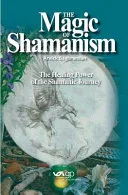
The Magic of Shamanism
 71
71

The Magic of Shamanism
Arvick Baghramian's "The Magic of Shamanism" attempts to bridge the gap between the uninitiated and the experienced practitioner, a commendable but challenging endeavor. The book succeeds admirably in demystifying core shamanic concepts, particularly the mechanics of spirit journeying and the role of the shaman as intermediary. Baghramian's explanation of soul retrieval, for instance, is presented with a clarity that avoids overly academic jargon, making it comprehensible for newcomers. However, the work occasionally falters when attempting to address therapeutic applications. While the blurb suggests astonishing results, the text itself offers more theoretical grounding than practical, step-by-step guidance for therapists, leaving the reader wanting more concrete examples of implementation. The book's strength lies in its foundational explanations; its limitation is a slight overpromise on the practical therapeutic integration for professionals. Nevertheless, it remains a valuable resource for understanding the essence of shamanic practice.
📝 Description
71
Arvick Baghramian's 2023 book examines shamanism beyond simplistic depictions.
This book details the practice and philosophy of shamanism, moving past common misunderstandings to address its core tenets, rituals, and worldview. It explains the shaman's role as a mediator between the physical and spirit worlds, a healer, and a guardian of knowledge. The text is structured for both newcomers to shamanic concepts and those already familiar with them, offering ways to deepen their understanding of shamanism's practical uses, especially in therapeutic settings.
The book places shamanic practices within global human history, noting their endurance and adaptation across different cultural eras. It acknowledges the long, independent history of these traditions and their interactions with other spiritual and philosophical movements over millennia. Key concepts discussed include the spirit world, soul retrieval, journeying, and the use of plant allies. The text clarifies how shamans engage with non-ordinary reality for insight, healing, and balance, stressing the personal nature of shamanic experience and the value of direct spiritual encounters.
Shamanism represents one of humanity's oldest spiritual paths, predating recorded history and found across diverse cultures. This book situates such traditions within a lineage of direct spiritual experience, contrasting it with dogma-based religions. It highlights the shaman's function as a conduit to non-ordinary reality, a role historically pursued for healing, insight, and maintaining cosmic balance. The text connects these ancient practices to enduring human spiritual inquiry, showing their persistent relevance.
💡 Why Read This Book?
• Gain a foundational understanding of shamanic principles, including the spirit world and the shaman's role, directly from Baghramian's clear explanations that map the terrain for beginners. • Explore the concept of soul retrieval, a specific shamanic healing technique detailed in the book, and understand its potential therapeutic implications. • Discover how shamanic practices have historically served as a form of therapy, referencing the book's exploration of ancient healing modalities distinct from modern clinical approaches.
⭐ Reader Reviews
Honest opinions from readers who have explored this book.
❓ Frequently Asked Questions
What is the primary goal of "The Magic of Shamanism"?
The book aims to introduce readers to shamanism, whether they are complete novices or possess some prior knowledge, offering a deeper understanding of its scope and therapeutic uses.
Is "The Magic of Shamanism" suitable for absolute beginners?
Yes, the book is explicitly designed to meet the needs of those who know nothing about shamanism but are interested in learning more about its core concepts and practices.
Can therapists benefit from reading "The Magic of Shamanism"?
Absolutely. The book caters to therapists seeking to broaden their understanding of ancient healing forms and explore their potential for remarkable results in practice.
When was "The Magic of Shamanism" first published?
The first publication date for "The Magic of Shamanism" by Arvick Baghramian was August 24, 2015.
What are some key concepts covered in the book?
Key concepts include the spirit world, soul retrieval, shamanic journeying, and the role of shamans as mediators and healers between realms.
Does the book discuss specific shamanic rituals?
Yes, the book details various shamanic rituals and practices, explaining their significance and application within the shamanic worldview.
🔮 Key Themes & Symbolism
Spirit World and Journeying
The book elucidates the shamanic conception of the spirit world as a parallel reality accessible through altered states of consciousness. It details the practice of 'journeying,' where the shaman travels to these realms to interact with spirit guides and power animals. This exploration emphasizes direct experience over dogma, presenting the spirit world not as a metaphor but as a tangible, albeit non-ordinary, dimension vital for healing and guidance.
Soul Retrieval
A central healing modality discussed is soul retrieval, a technique aimed at recovering lost or fragmented parts of the soul, believed to be a common cause of illness or imbalance. The text explains the process by which shamans identify and reclaim these soul parts, integrating them back into the individual to restore wholeness. This concept highlights shamanism's focus on addressing the energetic and spiritual roots of dis-ease.
The Shaman's Role
Baghramian outlines the complex role of the shaman within their community, functioning as a healer, diviner, and spiritual guide. The shaman acts as a bridge between the human world and the spirit realms, accessing insights and energies necessary for communal well-being. This section emphasizes the responsibility and ethical considerations inherent in shamanic practice, particularly concerning the use of spiritual power.
Therapeutic Applications
The book extends its discussion to the practical applications of shamanism in therapeutic settings, acknowledging its potential to achieve significant results. It presents shamanic healing as a complementary or alternative approach capable of addressing deep-seated issues that may not respond to conventional methods, thereby offering a unique perspective for practitioners seeking broader healing modalities.
💬 Memorable Quotes
Direct passages from the work, attributed to the author.
“Shamanism is not about belief, but about experience.”
— This highlights the experiential and direct nature of shamanic practice, contrasting it with faith-based systems. It suggests that understanding comes from personal engagement with the spirit world rather than adherence to doctrine.
“The spirit world is as real as this one, just accessed differently.”
— This phrase underscores the shamanic view of multiple realities coexisting. It suggests that the unseen realms are not imaginary but are perceived through specific methods of consciousness, such as shamanic journeying.
“Shamans act as intermediaries for healing and guidance.”
— This concise statement captures the essence of the shaman's function within their community. It emphasizes their role in facilitating communication and energy exchange between the mundane and spiritual dimensions.
💡 Key Ideas
Editorial paraphrase of the work's core concepts — not direct quotes.
Lost soul parts can manifest as depression or chronic illness.
This is a paraphrase of a core concept in soul retrieval therapy. It connects spiritual disunity to tangible physical and emotional ailments, framing illness as a spiritual imbalance.
Therapeutic potential lies in ancient, direct methods.
This paraphrased concept points to the value of shamanic practices for modern healing. It suggests that time-tested, experiential techniques offer unique benefits for contemporary therapeutic challenges.
🌙 Esoteric Significance
Tradition
While shamanism is a pan-cultural phenomenon predating formal esoteric traditions, Baghramian's work engages with its principles in a manner that speaks to modern esoteric thought. It aligns with traditions that emphasize direct spiritual experience, nature-based spirituality, and the existence of non-ordinary realities. It departs from strictly codified systems like Hermeticism or Kabbalah by prioritizing personal journey and empirical encounter with the spirit world, yet shares a common goal of accessing deeper knowledge and transformative power.
Symbolism
Key symbols explored include the 'spirit animal' or 'power animal,' representing archetypal energies and guides that offer wisdom and protection. The 'axis mundi' or 'world tree' often symbolizes the connection between different realms (underworld, middle world, upper world), representing the shaman's journey and the interconnectedness of all existence. These symbols serve as potent archetypes within the collective unconscious, facilitating the shaman's work and understanding.
Modern Relevance
Contemporary thinkers and practitioners in fields like ecopsychology, transpersonal psychology, and various neo-shamanic movements draw upon the principles outlined in works like Baghramian's. Its exploration of spirit-based healing and altered states of consciousness informs modern approaches to mental health, trauma recovery, and personal spiritual development, demonstrating the enduring applicability of ancient shamanic wisdom in the 21st century.
👥 Who Should Read This Book
• Aspiring shamans and spiritual explorers seeking a clear introduction to core concepts like spirit journeying and soul retrieval. • Therapists and counselors interested in understanding alternative healing modalities and their potential for profound client transformation. • Students of comparative religion and anthropology looking to grasp the foundational elements of a widespread, ancient spiritual practice.
📜 Historical Context
Arvick Baghramian's "The Magic of Shamanism," published in 2015, emerged in an era where interest in indigenous spiritual practices was gaining traction globally, often influenced by figures like anthropologist Michael Harner, who popularized core shamanism in the latter half of the 20th century. The book's publication occurred during a period marked by a resurgence of interest in animism and neo-shamanic movements, often seen as a counterpoint to the perceived materialism of Western culture. While not facing overt censorship, shamanic practices have historically been subject to skepticism and sometimes outright suppression by organized religions and colonial powers. Baghramian's work contributes to a broader discourse on alternative healing modalities and spiritual paths, engaging with a lineage of thought that spans millennia and diverse cultures, offering a contemporary perspective on these enduring traditions.
📔 Journal Prompts
The nature of the spirit world as described by Baghramian.
Your personal understanding of soul fragmentation and its potential impact.
The role of the shaman as an intermediary in ancient and modern contexts.
Experiences with altered states of consciousness and their meaning.
The ethical considerations for spiritual practitioners and healers.
🗂️ Glossary
Shaman
An individual who acts as an intermediary between the spirit world and the human community, often performing healing, divination, and spiritual guidance.
Spirit World
A non-ordinary reality accessed through altered states of consciousness, inhabited by spirits, guides, and power animals, believed to be a source of healing and knowledge.
Shamanic Journeying
A technique used by shamans to enter the spirit world, typically guided by drumming or rattling, to interact with spirits and gain information.
Soul Retrieval
A core shamanic healing practice aimed at recovering lost or fragmented parts of the soul, believed to be a cause of illness or lack of vitality.
Power Animal
A spirit ally that accompanies an individual, offering protection, guidance, and energy. It is often perceived in animal form during shamanic journeys.
Mediator
In shamanism, the shaman acts as a mediator, facilitating communication and exchange between the physical world and the spirit realms.
Altered States of Consciousness
Non-ordinary states of awareness, distinct from waking consciousness, achieved through various methods like drumming, chanting, or meditation, used in shamanic practices.