Institutio theologica
 73
73

Institutio theologica
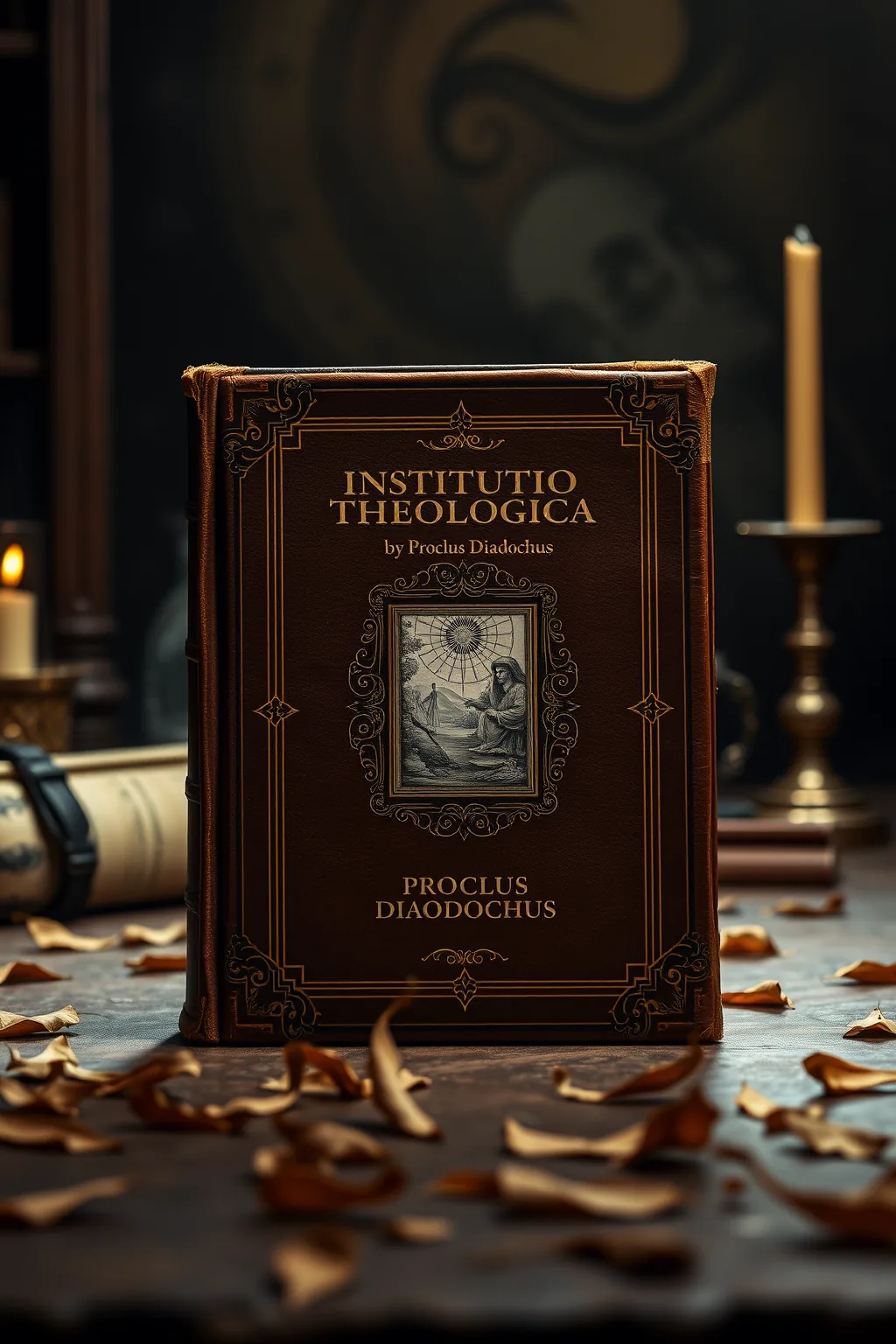
Proclus Diadochus’s *Institutio theologica* offers a formidable articulation of Neoplatonic metaphysics. Its strength lies in its systematic, almost axiomatic, presentation of a complex cosmology, tracing the emanation of existence from the ineffable One. The clarity with which Proclus lays out the hypostases—Intellect, Soul, and the descent to matter—is remarkable, especially considering its 5th-century origins. However, the sheer density and abstract nature of the propositions can be daunting for those unacquainted with Platonic and Neoplatonic dialectics. A specific passage that exemplifies this is the detailed analysis of the henads, divine unities that mediate between the absolute One and the multiplicity of lower realities. While intellectually rigorous, the text requires significant scholarly engagement to unlock its full meaning. It serves as a foundational text for understanding a crucial lineage of Western esoteric thought.
📝 Description
73
Proclus Diadochus's Institutio theologica, written in the 5th century, systematically lays out his Neoplatonic metaphysics.
Proclus Diadochus's Institutio theologica presents a systematic exposition of his metaphysical doctrines, drawing from ancient Neoplatonic thought. The work outlines a hierarchical cosmology, detailing how reality proceeds from the ultimate principle, the One, through intellect and soul, and down to the material world. Proclus structures the text as a series of propositions and proofs, aiming for logical rigor in his explanation of divine principles and their connection to the sensible realm. This book is intended for serious students of ancient philosophy and metaphysics, particularly those interested in Neoplatonism. It will appeal to scholars of late antique philosophy, religious studies, and esoteric traditions seeking a foundational text for Proclus's philosophical system. A background in Plato and Aristotle is recommended to fully grasp the dialectical method and conceptual framework.
The Institutio theologica emerged from 5th-century Athens, a time when Neoplatonism synthesized Platonic philosophy with other ancient traditions. Proclus, a leading figure at the Athenian Academy, sought to systematize the teachings of Plotinus and Iamblichus, creating a comprehensive philosophical theology. This work offered a pagan philosophical alternative to the burgeoning Christian theology of the era, influencing later medieval and Renaissance thought.
This text is a product of the Athenian Neoplatonic school, representing a late, systematic development of ancient Greek philosophy. Proclus sought to integrate and clarify the metaphysical and theological teachings of his predecessors, particularly Plotinus and Iamblichus. The Institutio theologica outlines a complex hierarchy of divine realities and their emanations, aiming to provide a rational account of the cosmos and humanity's place within it. It engages with concepts that would later resonate within esoteric traditions, focusing on the ascent of the soul and its return to the divine source.
💡 Why Read This Book?
• Gain a structured understanding of Neoplatonic emanation theory, tracing the descent of reality from the One as detailed in Proclus's propositions, a concept central to later esoteric traditions. • Explore the concept of the henads, divine unities that act as intermediaries, offering a unique perspective on divine mediation absent in many other philosophical systems. • Grasp Proclus's intricate cosmology, understanding the hierarchical structure of existence from the intellectual realm down to the material world, a framework vital for studying late antique philosophy.
⭐ Reader Reviews
Honest opinions from readers who have explored this book.
❓ Frequently Asked Questions
What is the primary philosophical system presented in Proclus's Institutio theologica?
The primary system is Neoplatonism, a late antique philosophical movement that synthesized Platonic thought with other mystical and philosophical traditions. Proclus's work systematically outlines this philosophy, detailing emanation from the One.
When was the Institutio theologica originally composed by Proclus?
Proclus Diadochus composed the Institutio theologica in the 5th century CE, during his tenure as head of the Athenian Academy. The specific publication date of the 1992 edition indicates its modern scholarly accessibility.
What is the concept of 'the One' in Proclus's philosophy?
'The One' in Proclus's system is the ultimate, ineffable principle from which all existence emanates. It is beyond being and intellect, the absolute source of all reality, a concept central to Neoplatonic metaphysics.
How does Proclus's philosophy relate to Plato's original ideas?
Proclus's philosophy is a sophisticated development and systematization of Plato's ideas, particularly from dialogues like the 'Parmenides'. He interpreted Plato through a mystical and hierarchical lens, adding complex metaphysical structures.
What is the significance of the 'henads' as discussed in the text?
The henads are divine unities that bridge the gap between the ultimate One and the multiplicity of lower realities. They represent the highest divine principles and are crucial for understanding Proclus's mediation between the absolute and the relative.
Is this text a primary source for understanding Neoplatonism?
Yes, the Institutio theologica is considered one of the most important systematic expositions of Neoplatonic thought, offering a comprehensive overview of Proclus's mature philosophical system and his interpretations of Plato.
🔮 Key Themes & Symbolism
The Principle of the One
The work's foundational concept is the ultimate principle of 'the One,' an ineffable, supra-essential source from which all reality emanates. Proclus meticulously details how existence, intellect, and soul proceed from this singular, absolute origin. This principle is not a being among beings but the very ground of being, a core tenet that distinguishes Neoplatonism and influenced subsequent mystical traditions seeking an ultimate divine unity beyond conceptualization.
Hierarchical Emanation
A central theme is the systematic emanation of the cosmos. Proclus outlines a hierarchical structure beginning with the One, followed by Intellect (Nous) containing the Platonic Forms, then Soul (Psyche), and finally descending to the material world. This ordered procession ensures the intelligibility and coherence of reality, with each level deriving its existence and nature from the level above it, demonstrating a meticulously structured universe.
The Henads and Divine Mediation
Proclus introduces the concept of the 'henads,' divine unities that act as intermediaries. These are the highest divine principles, participating in the One and distributing its divine power to lower realms. Understanding the henads is crucial for grasping Proclus's intricate system of divine causality and how the transcendent One interacts with the immanent world, providing a bridge between the absolute and the phenomenal.
Soul's Ascent and Descent
The text addresses the nature of the soul, its descent into the material world, and its potential for ascent back to its divine source. Proclus describes the soul's journey through various levels of existence, emphasizing the role of philosophical contemplation and purification in achieving reunification with the Intellect and ultimately, the One. This theme highlights the ethical and spiritual dimensions of his philosophy.
💬 Memorable Quotes
Direct passages from the work, attributed to the author.
“All things that are, derive their existence from that which is prior to them.”
— This proposition expresses the Neoplatonic doctrine of emanation. It posits a chain of being where every entity's existence is contingent upon and derived from a preceding cause or principle, ultimately tracing back to the supreme source.
“The One is not a being, but is prior to all being.”
— This highlights the ineffable and transcendent nature of the ultimate principle. The One is not merely another entity within the cosmos but the absolute ground of all existence, transcending all categories of being and thought.
“Intellect contains the entirety of the intelligible species.”
— This refers to the Neoplatonic concept of Nous (Intellect) as the realm where the Platonic Forms or intelligible species reside. It is the divine mind that apprehends and contains the perfect archetypes of all things.
“Evil is not a positive existence, but a privation of good.”
— This addresses the problem of evil within a monistic system. Proclus, following Plotinus, argues that evil does not have independent existence but arises from a deficiency or absence of the good, a corruption of the natural order.
“The soul's proper function is to turn towards the intelligible.”
— This emphasizes the spiritual orientation of the soul. Its ultimate purpose and fulfillment lie in its return to and contemplation of the higher, intelligible realms, rather than being solely concerned with the material world.
🌙 Esoteric Significance
Tradition
The *Institutio theologica* is a foundational text of the Neoplatonic tradition, a significant branch of Western esotericism. It represents a highly systematized, philosophical approach to mystical and theological concepts, aiming to provide a rational framework for understanding divine realities. It departs from earlier, more intuitive mystical expressions by employing rigorous dialectic and logical exposition, seeking to demonstrate the coherence of a hierarchical cosmos emanating from an ultimate, unified source.
Symbolism
Key symbols include the 'One,' representing absolute unity and the ineffable divine source, and the 'henads,' which symbolize divine unities acting as intermediaries. The procession of reality from the One outwards can be visualized as a cascade or a ray of light, with each level of existence representing a step further from the source, yet still participating in its being. The soul's journey is often depicted as an ascent or return, symbolizing spiritual purification and reintegration.
Modern Relevance
Contemporary thinkers and practitioners in fields ranging from comparative philosophy to various schools of Western esotericism, including Hermeticism and certain Theosophical interpretations, draw heavily on Proclus's structured cosmology. His emphasis on hierarchical order, divine mediation, and the soul's journey continues to inform discussions on metaphysics, consciousness, and the nature of reality within occult and philosophical circles.
👥 Who Should Read This Book
• Students of late antique philosophy seeking a definitive exposition of Neoplatonic metaphysics, particularly Proclus's systematic synthesis. • Scholars of comparative religion and Western esotericism interested in the philosophical underpinnings of mystical traditions and their historical development. • Advanced practitioners of contemplative or philosophical disciplines who wish to engage with a rigorous, intellectually demanding framework for understanding divine unity and cosmic order.
📜 Historical Context
Proclus Diadochus (412–485 CE) was a towering figure in late antique philosophy, leading the Athenian Academy during a period of intense intellectual and religious transition. His *Institutio theologica* represents the culmination of centuries of Neoplatonic development, building upon the foundations laid by Plotinus and Iamblichus. Composed in the mid-5th century, it offered a sophisticated pagan philosophical alternative to the rising doctrines of Christianity. While not explicitly censored, the continued flourishing of Neoplatonism like Proclus's was increasingly challenged by Christian dominance; Emperor Justinian's closure of the Academy in 529 CE marked a symbolic end to this era. Proclus engaged with a vast array of philosophical and theological ideas, subtly critiquing or integrating them into his own comprehensive system, which profoundly influenced later thinkers such as Pseudo-Dionysius the Areopagite and medieval Islamic philosophers.
📔 Journal Prompts
The concept of the One: How does its transcendence, as described in the *Institutio*, challenge conventional notions of divinity?
The hierarchy of emanation: Reflect on the relationship between Intellect, Soul, and the material world as presented by Proclus.
The role of the henads: Consider their function as divine intermediaries in Proclus's system. What parallels exist in other traditions?
The soul's journey: Explore the implications of the soul's descent and potential ascent for personal spiritual development.
Proclus's refutation of evil: Analyze his argument that evil is a privation of good. How does this impact one's understanding of suffering?
🗂️ Glossary
The One
The ultimate, ineffable, and transcendent principle from which all reality emanates. It is beyond being, intellect, and all categories, serving as the absolute source of existence.
Intellect (Nous)
The second hypostasis in Neoplatonic cosmology, containing the Platonic Forms or intelligible species. It is the area of divine thought and the immediate principle proceeding from the One.
Soul (Psyche)
The third hypostasis, mediating between the intelligible area of Intellect and the material world. It encompasses both individual souls and the World Soul.
Henads
Divine unities that stand above the gods of the traditional pantheon and below the absolute One. They are the highest divine principles, distributing divine power and acting as intermediaries.
Emanation
The Neoplatonic doctrine describing the procession of reality from a single, ultimate source (the One) in a hierarchical series of levels or hypostases.
Privation
In Proclus's context, the absence or deficiency of a good, which he posits as the nature of evil, rather than evil being a positive, independent force.
Intelligible Species
The perfect archetypes or Forms of things that exist in the area of Intellect (Nous), as conceptualized by Plato and elaborated by Neoplatonists.
🔮 Readers Also Liked
Browse all →







More by Proclus Diadochus
All books →





More Free Occult Philosophy Books
View all →