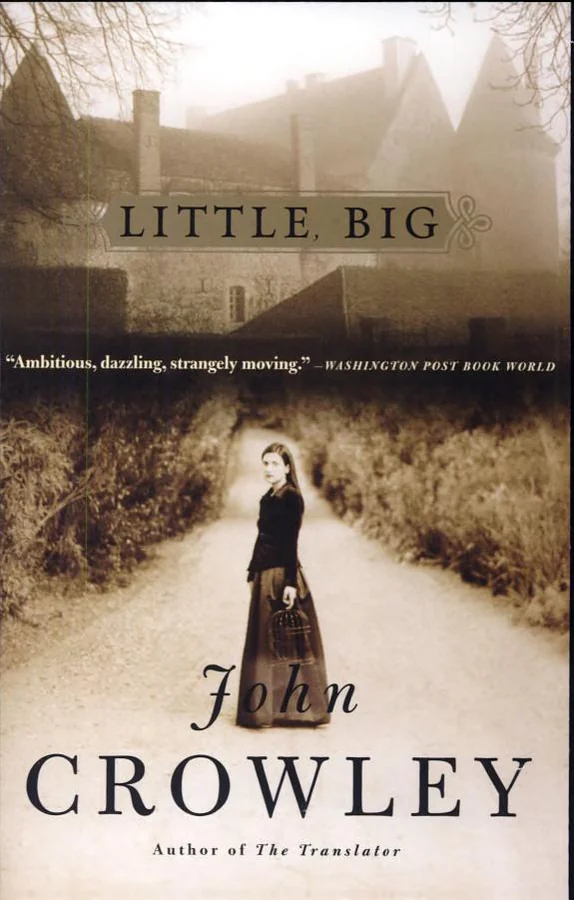
The World's Most Haunted Places
 75
75

The World's Most Haunted Places
Matt Chandler’s "The World's Most Haunted Places" offers a comprehensive catalog of spectral sites, distinguishing itself by its sheer breadth. Rather than relying on sensationalism, the book presents a systematic listing of locations and the reported phenomena associated with them, from the infamous Tower of London to lesser-known spectral hotspots. A notable strength is its commitment to detailing specific reported events, giving a sense of grounding to otherwise ephemeral claims. However, the work sometimes struggles to move beyond pure description; the analysis of the underlying causes of these hauntings remains largely implicit, leaving the reader to ponder the 'why' behind the 'what'. The exploration of the Borley Rectory case, for instance, lays out the historical claims effectively but offers little by way of critical dissection of the evidence presented. This book serves as an essential reference for anyone compiling a list of the world's spookiest locales, functioning more as an encyclopedia of the paranormal than a deep dive into its philosophy. It is a valuable resource for its detailed documentation of reported hauntings.
📝 Description
75
Matt Chandler's 2011 book documents alleged paranormal phenomena across global locations.
The World's Most Haunted Places meticulously records supposed paranormal events in various global sites. It moves beyond simple anecdotes, detailing accounts of reported hauntings, spectral apparitions, and unusual occurrences. The book aims to identify locations where the boundary between the physical and spiritual is thought to be permeable, presenting documented supernatural claims. This work is for anyone interested in the paranormal, the occult, and unexplained mysteries, whether they approach the subject with skepticism or seek validation of supernatural activity. Each location's entry includes factual reports and historical background, enabling readers to form their own judgments. The book is rooted in the history of ghostlore and psychical research, a field that saw significant development in the late 19th and early 20th centuries.
This book engages with the long-standing human interest in phenomena that defy conventional explanation, particularly those related to spirits and the afterlife. It situates itself within the tradition of psychical research, which began formally in the late 19th century with organizations like the Society for Psychical Research. This tradition sought to investigate psychic phenomena, including hauntings, through methods that often blended anecdotal evidence with attempts at empirical observation. Chandler's work reflects a continued societal fascination with the possibility of consciousness surviving death and residual energies manifesting from past events.
💡 Why Read This Book?
• Gain a structured understanding of reported hauntings by exploring specific documented cases from locations like the Tower of London, moving beyond generalized ghost stories. • Understand the different classifications of hauntings, such as residual versus intelligent phenomena, as detailed in the book's case studies. • Discover lesser-known haunted sites and their associated histories, expanding your knowledge base beyond common spectral lore, as presented in the book's global survey.
⭐ Reader Reviews
Honest opinions from readers who have explored this book.
❓ Frequently Asked Questions
What types of paranormal activity are described in "The World's Most Haunted Places"?
The book details various phenomena including apparitions, disembodied voices, unexplained sounds, poltergeist activity, and cold spots reported at numerous haunted locations worldwide.
Does Matt Chandler offer explanations for the hauntings?
While the book primarily focuses on reporting phenomena and historical accounts, it touches upon theories like residual energy and intelligent hauntings, often leaving interpretation to the reader.
Are there any famous haunted locations featured in the book?
Yes, "The World's Most Haunted Places" covers well-known sites such as the Tower of London, Borley Rectory, and Gettysburg Battlefield, alongside many other reported paranormal hotspots.
What is the historical context of the paranormal claims in the book?
The book often grounds its accounts in historical events and folklore associated with each location, reflecting a long-standing human interest in ghosts and the afterlife that dates back centuries.
Is "The World's Most Haunted Places" suitable for skeptics?
The book presents documented reports and historical context, allowing skeptics to examine the evidence and narratives critically, even if they remain unconvinced of paranormal activity.
When was "The World's Most Haunted Places" first published?
The book was first published in July 2011, placing it within the modern era of paranormal investigation and media.
🔮 Key Themes & Symbolism
Categorization of Hauntings
The work systematically categorizes reported paranormal events, distinguishing between residual hauntings, which are seen as imprints of past events replaying, and intelligent hauntings, where conscious entities are believed to interact. This distinction is crucial for understanding the varied nature of spectral phenomena documented, from the faint echoes at an old battlefield to more direct interactions reported in historic homes. The book uses these categories to structure its extensive catalog of global locations and their associated spectral narratives.
The Geography of the Paranormal
Chandler maps the world's spectral landscape, highlighting how certain locations become persistent loci for reported paranormal activity. This involves examining the historical context, folklore, and reported incidents tied to specific sites, suggesting a correlation between significant historical events, emotional residue, and the persistence of hauntings. The book treats haunted places not as isolated incidents but as part of a broader, geographically distributed phenomenon.
Witness Testimony and Folklore
Central to the book is the collection and presentation of witness testimonies and local folklore surrounding haunted places. It emphasizes the importance of oral histories and documented accounts in building a picture of a location's spectral reputation. By relaying these narratives, the book engages with the cultural transmission of ghost stories and the collective belief systems that sustain the idea of haunted environments.
Residual Energy and Imprints
A recurring concept is that of residual energy, where intense emotions or traumatic events leave an imprint on a location, manifesting as recurring phenomena or apparitions. The book explores how these 'recordings' can be perceived by sensitive individuals or even detected through various means, suggesting that the environment itself can retain elements of the past. This idea provides a framework for understanding hauntings that do not involve direct interaction with a sentient entity.
💬 Memorable Quotes
Direct passages from the work, attributed to the author.
“Reports of spectral activity at locations like the Tower of London...”
— This highlights the book's focus on specific, named places where paranormal claims are frequently reported, serving as anchors for the broader discussion of hauntings.
“Distinguishing between residual hauntings and intelligent entities...”
— This reflects a key conceptual framework used in psychical research to classify different types of alleged paranormal manifestations.
“The historical accounts surrounding Borley Rectory suggest a persistent phenomenon...”
— This points to the book's method of linking contemporary reports with historical narratives and folklore associated with particular haunted sites.
“The concept of places retaining imprints of past events is central to understanding some hauntings.”
— This expresses the 'residual haunting' theory, a significant explanatory model discussed within the context of documented spectral occurrences.
💡 Key Ideas
Editorial paraphrase of the work's core concepts — not direct quotes.
Many reported hauntings involve sensory experiences such as unexplained sounds or visual apparitions.
This summarizes the common types of phenomena cataloged throughout the book, focusing on the direct experiences of witnesses.
🌙 Esoteric Significance
Tradition
While not explicitly aligned with a single esoteric tradition, this work draws from the broad field of psychical research and ghostlore, which has historically intersected with spiritualism, mediumship, and certain branches of occultism. It functions as a compendium of phenomena that practitioners in various traditions might interpret through lenses such as elemental spirits, earthbound souls, or psychic residue. It departs from rigidly defined magical systems by focusing on reported experiences rather than prescribed ritual or cosmology.
Symbolism
The primary 'symbol' is the haunted place itself, representing thresholds between worlds, repositories of memory, or sites of unresolved psychic energy. Specific symbols within the text might include spectral apparitions (representing the departed or psychic imprints), unexplained noises (signifying disruption or unseen presence), and cold spots (often interpreted as a sign of spiritual manifestation or energy depletion). These elements function as indicators of the unseen.
Modern Relevance
Contemporary paranormal investigation, often documented online and through various media platforms, owes a debt to the systematic cataloging approach seen in works like Chandler's. Thinkers and practitioners in fields ranging from urban exploration with a supernatural focus to psychological studies of belief in the paranormal can use this book as a reference point for reported phenomena and locations. It informs discussions on collective memory, psychological projection, and the cultural persistence of ghost narratives in the digital age.
👥 Who Should Read This Book
• Enthusiasts of paranormal investigation who seek a comprehensive catalog of documented hauntings worldwide, offering specific case studies beyond anecdotal claims. • Researchers of folklore and cultural history interested in the evolution of ghost stories and the societal fascination with the supernatural across different regions. • Skeptics and critical thinkers who wish to examine the reported evidence and historical context of alleged paranormal phenomena from a factual, descriptive standpoint.
📜 Historical Context
Published in 2011, "The World's Most Haunted Places" emerged during a period of heightened public interest in paranormal investigation, fueled by television shows and a growing digital archive of anecdotal evidence. This era followed decades of serious psychical research, notably initiated by the Society for Psychical Research in 1882, which attempted to apply scientific methods to the study of phenomena like ghosts and telepathy. Chandler's work can be seen as a contemporary cataloging effort, building upon the tradition established by earlier authors who documented hauntings, such as Harry Price, whose investigations into Borley Rectory in the mid-20th century became legendary, though Price himself faced criticism for his methods. Unlike the more theoretical or philosophical explorations of the supernatural common in earlier centuries, this 2011 publication leans heavily on descriptive reporting and the aggregation of reported experiences, reflecting a shift towards empirical, albeit often subjective, documentation.
📔 Journal Prompts
The spectral reports from the Tower of London, as documented in the book.
The distinction between residual and intelligent hauntings.
The historical context of Borley Rectory and its alleged phenomena.
Sensory experiences in reported hauntings (sounds, sights).
The idea of environmental imprints of past events.
🗂️ Glossary
Residual Haunting
A type of haunting where past events or emotions are believed to be imprinted on a location, replaying like a recording without conscious interaction from a spirit.
Intelligent Haunting
A haunting characterized by apparent interaction with a conscious entity, such as communication, response to questions, or deliberate action.
Apparition
The visual manifestation of a ghost or spirit, often described as a spectral figure, shadow, or fleeting image.
Poltergeist Activity
Unexplained physical disturbances, such as moving objects, noises, or damage, often attributed to a disruptive spirit or energy.
Psychical Research
The interdisciplinary study of psychic phenomena and other paranormal claims, attempting to investigate these phenomena using scientific methods.
Folklore
The traditional beliefs, customs, and stories of a community, passed through the generations by word of mouth.
Cold Spot
An area within a location where the temperature is noticeably colder than the surrounding environment, often associated with paranormal activity.
This book appears in 1 collection
🔮 Readers Also Liked
Browse all →








From the “Haunted Places” Collection
View all →






More Free Occult Philosophy Books
View all →