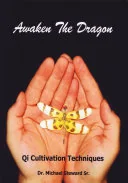
Awaken the Dragon
 72
72

Awaken the Dragon
Michael Steward's *Awaken the Dragon*, published in 2004, offers a foundational exploration of Qigong, framing it as a lifestyle rather than just a therapeutic technique. The strength of the work lies in its accessible presentation of complex ideas; Steward effectively translates the philosophical underpinnings of Qigong into language understandable to a broad audience. He convincingly argues for the practice's capacity to foster internal harmony and connect individuals to universal energies. However, the book's primary limitation is its generality. While it lays out the 'what' and 'why' of Qigong's holistic approach, it sometimes lacks the granular detail that seasoned practitioners or those seeking advanced techniques might desire. A passage discussing the regulation of the mind through breath and movement, while clear, could benefit from more specific examples of meditative states or breathing patterns. Steward's work serves as a solid introduction, particularly for those new to the discipline. Ultimately, *Awaken the Dragon* successfully advocates for Qigong as a path to integrated well-being.
📝 Description
72
Michael Steward's 2004 book, Awaken the Dragon, proposes Qigong as a complete life philosophy.
Awaken the Dragon presents Qigong not as a mere exercise routine, but as a philosophy for living. The book describes Qigong as a state of deep relaxation and acceptance, combined with meditation. Its central idea is to open oneself to the universe's healing energies, then extend that receptivity to foster global healing. Steward suggests that through Qigong, individuals can align their physical, mental, and spiritual selves with the universal consciousness.
The book is suited for those seeking a holistic path to well-being, aiming for physical energy, mental clarity, and spiritual connection. It will appeal to anyone interested in finding inner peace, improving their healing abilities, and understanding their place in the cosmos. Readers familiar with meditation, yoga, or other mind-body practices may find resonant concepts, presented in a unique way. It also offers a structured method for those feeling overwhelmed or disconnected to find balance.
Published in 2004, Awaken the Dragon emerged during a period of growing Western interest in Eastern spiritual traditions. It connects Qigong, rooted in Taoism and traditional Chinese medicine, to broader concepts of universal consciousness and energetic healing. Steward's work translates these complex ideas into a format accessible for Western self-help and spiritual exploration, making it part of a trend that brought practices like Qigong into mainstream awareness.
💡 Why Read This Book?
• Gain an understanding of Qigong as a life philosophy, not just exercise, by exploring its principles of relaxation and acceptance, as detailed in the book's core concepts. • Learn how to align your personal mind-body-spirit with universal energies, a central theme Steward elaborates on, potentially enhancing your connection to the world around you. • Discover the foundational practices of regulating your mind through meditation and deep breathing, as introduced in the book's initial chapters, offering a practical starting point for inner balance.
⭐ Reader Reviews
Honest opinions from readers who have explored this book.
❓ Frequently Asked Questions
When was Michael Steward's 'Awaken the Dragon' first published?
Michael Steward's 'Awaken the Dragon' was first published in 2004, positioning it within a period of growing Western interest in Eastern wellness practices.
What is the primary focus of 'Awaken the Dragon'?
The book focuses on Qigong as a comprehensive approach to life, emphasizing complete relaxation, acceptance, deep meditation, and alignment with universal energies.
Is 'Awaken the Dragon' suitable for beginners in Qigong?
Yes, the book is designed to be accessible, presenting complex concepts in understandable language, making it a good introduction for those new to Qigong.
What are the key benefits of practicing Qigong as described in the book?
The book highlights benefits such as aligning one's body, mind, and spirit, fostering inner peace, and connecting with the healing energy of the universe.
Does the book offer specific Qigong exercises?
While the book discusses the principles of gentle movement, deep breathing, and meditation, its primary emphasis is on the philosophy and approach to life rather than a comprehensive exercise manual.
What is the relationship between the individual and the universe in 'Awaken the Dragon'?
The book posits a reciprocal relationship, suggesting that by aligning one's own energies, individuals also align with the universal body, mind, and spirit.
🔮 Key Themes & Symbolism
Holistic Life Approach
The book frames Qigong not as a mere physical practice but as a fundamental 'approach to life itself.' This perspective suggests that the principles of deep relaxation, acceptance, and meditative awareness cultivated through Qigong should permeate daily existence. It advocates for integrating these practices to achieve a harmonious state of being, extending beyond formal exercise sessions into every aspect of one's interactions and perceptions. The goal is a unified experience of mind, body, and spirit.
Individual-Universal Alignment
A core concept is the alignment of the practitioner's 'own body, mind and spirit' with the 'universal body, mind and spirit.' This implies a profound interconnectedness, where personal energetic states are in dialogue with cosmic forces. By regulating internal states through Qigong, the individual becomes more receptive to, and in harmony with, the vast energetic field of the universe. This alignment is presented as the source of healing and profound peace.
The Power of Acceptance
Central to the Qigong philosophy presented is the state of 'complete acceptance.' This is not passive resignation but an active embracing of reality as it is, which is crucial for achieving deep relaxation and opening oneself to universal healing energies. The book suggests that resistance and judgment create energetic blockages, while acceptance facilitates flow and allows for genuine healing, both internally and for the wider world.
Energetic Receptivity
The work emphasizes openness to the 'healing energy of the universe.' This involves cultivating a state of receptivity, often achieved through the meditative and breathing techniques of Qigong. By quieting the mind and relaxing the body, practitioners become more attuned to subtle energetic flows. This heightened sensitivity allows them to draw upon universal energies for personal well-being and, as the blurb suggests, to extend this healing influence outward.
💬 Memorable Quotes
Direct passages from the work, attributed to the author.
“Qigong is actually an approach to life itself.”
— This statement elevates Qigong beyond a physical discipline, positioning it as a comprehensive philosophy for living that integrates mind, body, and spirit into daily actions and perceptions.
“It is a state of mind characterized by complete relaxation and complete acceptance.”
— This highlights the internal conditions necessary for effective Qigong practice, emphasizing mental stillness and a non-judgmental attitude towards one's experience as foundational.
“By regulating our minds through meditation, deep breathing and gentle movement we...”
— This incomplete thought points to the practical methods employed in Qigong to achieve the desired states of relaxation and acceptance, linking specific techniques to internal regulation.
“it offers healing for the whole world.”
— This expresses the outward-reaching potential of Qigong practice, suggesting that individual energetic alignment can contribute to a broader field of universal healing and well-being.
“aligns your own body, mind and spirit, but also aligns us with the universal body, mind and spirit.”
— This illustrates the dual nature of Qigong's effect: it harmonizes the individual internally while simultaneously connecting them to the larger cosmic consciousness and energetic systems.
🌙 Esoteric Significance
Tradition
The work draws heavily from Taoist principles, a foundational tradition within esoteric Chinese philosophy. Qigong itself is deeply rooted in Taoist cosmology and practices aimed at cultivating and balancing the body's vital energy (Qi). Steward's interpretation aligns with the Taoist emphasis on living in harmony with the natural order (the Tao), fostering longevity, health, and spiritual awareness through specific energetic cultivation methods.
Symbolism
While the title 'Awaken the Dragon' is evocative, the provided blurb doesn't detail specific symbols. However, the 'Dragon' itself is a potent symbol in Chinese mythology and Taoism, representing power, strength, good fortune, and the dynamic flow of Qi. 'Awakening' suggests activating this latent potential within the practitioner, aligning with the core Qigong aim of revitalizing one's vital energy and unlocking inherent capabilities.
Modern Relevance
Steward's work remains relevant for contemporary practitioners interested in accessible introductions to energy work and mind-body integration. It appeals to modern mindfulness movements, somatic therapies, and holistic health approaches that seek to bridge the gap between physical well-being and spiritual or psychological balance. Its emphasis on universal energy connects with concepts found in various New Age and esoteric circles today.
👥 Who Should Read This Book
• Individuals new to Qigong seeking a philosophical framework and understanding of its life-integrative potential. • Practitioners of other mind-body disciplines like yoga or Tai Chi looking to explore a related yet distinct energy cultivation system. • Those interested in Eastern philosophies and alternative wellness practices who wish to learn how to cultivate inner peace and connection to universal energies.
📜 Historical Context
Published in 2004, *Awaken the Dragon* arrived during a significant wave of Western engagement with Eastern philosophies and practices. The late 20th and early 21st centuries saw a surge in interest in disciplines like yoga, meditation, and traditional Chinese medicine, moving them from esoteric circles into mainstream wellness culture. Books exploring these traditions, like Steward's, benefited from and contributed to this trend. While Steward focuses on Qigong, his work emerged alongside a broader intellectual current that included figures like Deepak Chopra, who popularized mind-body medicine, and scholarly re-examinations of Taoist texts. This period marked a departure from the more rigid, purely physical interpretations of exercise, embracing holistic and spiritual dimensions. The reception of such works generally reflected a growing openness to alternative health and spiritual frameworks, although some traditional medical communities maintained skepticism.
📔 Journal Prompts
The concept of 'complete relaxation and complete acceptance' as a state of mind.
Personal alignment with the 'universal body, mind and spirit'.
The role of gentle movement in regulating the mind.
Identifying personal barriers to energetic receptivity.
How the practice of Qigong can be an 'approach to life itself'.
🗂️ Glossary
Qigong
An ancient Chinese practice involving coordinated breathing, movement, and meditation to cultivate and balance vital energy (Qi) for health, spirituality, and martial arts training.
Qi
Often translated as 'vital energy' or 'life force,' Qi is the fundamental animating principle in traditional Chinese culture, believed to flow through all living things and the universe.
Alignment
In the context of the book, alignment refers to the harmonious integration of an individual's physical, mental, and spiritual components, as well as their connection to broader universal energies.
Meditation
A practice of focused attention and awareness, often involving quiet contemplation or mindfulness, used to train attention and achieve mental clarity and emotional calm.
Deep Breathing
Conscious and controlled breathing techniques that emphasize full lung capacity and diaphragmatic engagement, used in Qigong to influence energy flow and mental state.
Universal Energy
The concept of a pervasive, subtle energy field that underlies and connects all existence, often referred to in spiritual and esoteric traditions.
Approach to Life
The idea that a practice like Qigong influences not just physical or mental states but permeates one's entire way of being, interacting, and perceiving the world.
This book appears in 1 collection
🔮 Readers Also Liked
Browse all →








From the “Qi Gong” Collection
View all →




More Free Occult Philosophy Books
View all →