Voodoo und andere afroamerikanische Religionen
 79
79

Voodoo und andere afroamerikanische Religionen
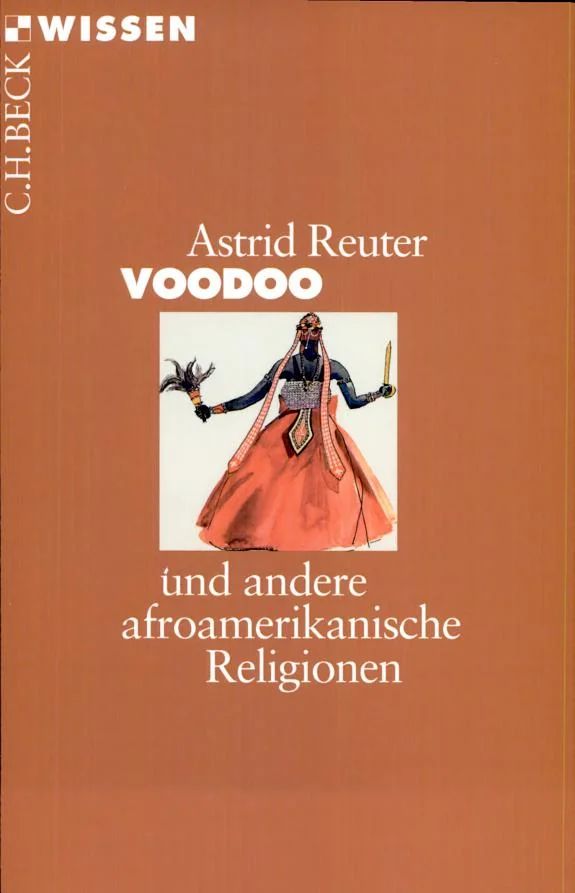
Astrid Reuter’s "Voodoo und andere afroamerikanische Religionen" offers a necessary corrective to popular misconceptions. The work excels in its detailed examination of the syncretic processes, particularly how enslaved Africans navigated oppressive colonial regimes by merging West African spiritual systems with Catholicism. Reuter meticulously traces the development of traditions like Haitian Vodou and Cuban Santería, grounding them in their specific socio-historical contexts. A particular strength lies in the careful exposition of the divine hierarchies and the functions of intermediary spirits, moving beyond simplistic notions of 'devil worship.'
However, the sheer density of information, while commendable for its thoroughness, can at times make the text feel somewhat academic and less accessible to the absolute beginner. The book’s historical focus, while crucial, occasionally overshadows the vibrant contemporary lived experiences of adherents. Despite this, Reuter provides a scholarly and respectful overview. The study is a valuable resource for anyone serious about understanding these complex spiritual landscapes.
📝 Description
79
Astrid Reuter's 2003 work examines the theological underpinnings and ritual practices of Afro-American religions.
Voodoo und andere afroamerikanische Religionen, published in 2003, moves beyond sensationalized portrayals to detail the theological underpinnings, ritual practices, and social functions of religious traditions born from the African diaspora in the Americas. The book systematically charts their historical development, showing how enslaved Africans blended ancestral practices with dominant Christianity. This syncretism resulted in unique religious systems that preserved African cosmology and adapted to new environments.
The work is intended for students of comparative religion, scholars of African diaspora studies, and anyone seeking a deeper understanding of Voodoo, Santería, Candomblé, and related faiths. It offers substantial material for readers interested in the intersection of culture, history, and spirituality, particularly those who wish to move past superficial stereotypes and engage with the intellectual and spiritual depth of these religions.
This book sits within the study of diaspora religions, specifically those that emerged from the forced migration of Africans to the Americas. It focuses on how enslaved peoples maintained spiritual continuity by adapting their native cosmologies, hierarchies, and rituals. This involved a complex syncretism, particularly with Catholicism, leading to distinct religious systems like Voodoo, Santería, and Candomblé. The work traces how these traditions preserved African spiritual frameworks while developing unique expressions in the New World.
💡 Why Read This Book?
• Gain a structured understanding of the historical development of Voodoo and related traditions, tracing their origins from West African beliefs and their syncretic evolution in the Americas, particularly noting the impact of colonial suppression. • Learn about the complex pantheons of intermediary spirits, such as the Lwa in Haitian Vodou or the Orishas in Santería, and their specific roles and functions within these religious frameworks. • Understand the essential role of community, ritual, and initiation in these faiths, recognizing practices like drumming, trance, and offerings not as mere spectacle but as vital means of spiritual communication and connection.
⭐ Reader Reviews
Honest opinions from readers who have explored this book.
❓ Frequently Asked Questions
What is the difference between Voodoo and Santería?
While both Voodoo and Santería are Afro-American religions born from African traditions syncretized with Catholicism, they developed in distinct geographical and cultural contexts. Voodoo primarily emerged in Haiti, while Santería (also known as Regla de Ocha) is most prominent in Cuba, leading to unique pantheons, rituals, and organizational structures.
When did these religions begin to form?
The foundational elements of these religions began to form during the period of the transatlantic slave trade, intensifying from the 17th century onwards, as enslaved Africans from various West African cultures mixed their beliefs with the imposed Catholicism.
Are Voodoo and Santería considered 'black magic'?
This perception is a harmful stereotype. Voodoo and Santería are complex religious systems with ethical frameworks, focused on spiritual connection, healing, and community well-being, not malevolent practices. The work explores their theological depth, countering such misrepresentations.
What role do spirits play in these religions?
Spirits, such as the Lwa in Haitian Vodou or Orishas in Santería, are central. They are seen as intermediaries between humans and the supreme creator, embodying natural forces and human archetypes. Practitioners interact with them through prayer, offerings, and ritual.
How did colonialism influence these religions?
Colonial powers, particularly Catholic ones, suppressed African religions. Enslaved people responded by syncretizing their beliefs with Catholicism, mapping their deities onto Catholic saints. This was a survival mechanism that preserved African spiritual heritage.
Is Astrid Reuter's work based on primary research?
Astrid Reuter's work draws upon extensive historical research and scholarly analysis of primary sources concerning Afro-American religions. While not explicitly stated as solely ethnographic fieldwork, it synthesizes existing scholarship to provide a comprehensive overview.
🔮 Key Themes & Symbolism
Syncretism and Cultural Resilience
The work meticulously details how African spiritual traditions, including those of the Yoruba, Fon, and Kongo peoples, merged with Roman Catholicism under the duress of slavery. This syncretism was not a loss of identity but a powerful act of cultural preservation. The mapping of African deities (Orishas, Lwa) onto Catholic saints, for example, allowed for the continuity of worship and the maintenance of a distinct spiritual cosmology despite oppressive colonial structures. Reuter highlights this as a evidence of the resilience and adaptability of African spiritual heritage.
The Spirit World and Mediation
A core theme is the intricate relationship between the human realm and the spirit world. Reuter explains the concept of a supreme creator God, often distant, and the crucial role of intermediary spirits – the Lwa in Haitian Vodou, Orishas in Santería, or Voduns in West African traditions. These spirits are not merely abstract entities but active forces governing aspects of life and nature. The book explores how rituals, including drumming, dance, and trance, serve as vital communication channels for humans to engage with, appease, and receive guidance from these spiritual beings.
Ritual, Community, and Initiation
The book emphasizes that these religions are fundamentally communal and expressed through rich ritual life. Practices such as ceremonial drumming, ecstatic dance, divination, and the use of sacred objects are presented as integral to spiritual practice. Initiation is often a critical gateway, marking a deeper commitment and understanding within the tradition. Reuter underscores how these communal rituals and initiation processes not only facilitate spiritual connection but also reinforce social bonds and transmit cultural knowledge across generations.
Beyond Stereotypes
A significant contribution of Reuter's work is its systematic dismantling of sensationalized and often racist stereotypes surrounding these religions. By providing historical context and detailed theological explanations, the book reframes practices often misunderstood as 'black magic' or 'devil worship.' It positions Voodoo, Santería, and Candomblé as legitimate and complex religious systems with sophisticated worldviews, ethical considerations, and profound spiritual depth, deserving of serious academic and spiritual inquiry.
💬 Memorable Quotes
Direct passages from the work, attributed to the author.
“The necessity of syncretism arose from the prohibition of African religious practices by colonial powers.”
— This highlights the adaptive strategies employed by enslaved Africans, who cleverly integrated their existing spiritual frameworks with the imposed Christianity to maintain their cultural and religious identity.
“Lwa and Orishas function as intermediaries, mediating divine will and earthly concerns.”
— This points to the complex spiritual hierarchy within these traditions, where specific deities embody natural forces and human experiences, acting as crucial links between humanity and the supreme creator.
“Ritual drumming and dance are essential for invoking and communing with the spirits.”
— This emphasizes the performative and embodied nature of these religions, where sonic and kinetic elements are not mere accompaniment but are integral to the spiritual process of connection.
“Understanding requires moving past sensationalized depictions to appreciate the theological depth.”
— This serves as a call to intellectual and spiritual rigor, urging readers to engage with the subject matter through scholarly analysis rather than succumbing to popular, often inaccurate, stereotypes.
“Ancestral veneration forms a significant pillar alongside the worship of deities.”
— This points to the holistic nature of these spiritual systems, recognizing the importance of lineage and the continued influence and guidance sought from those who came before.
🌙 Esoteric Significance
Tradition
This work engages with traditions rooted in West African spiritual systems (like Vodun, Yoruba religion) that developed into distinct syncretic faiths in the Americas. While not strictly fitting into Western esoteric lineages like Hermeticism or Kabbalah, it represents a vital branch of 'esotericism from below'—spiritual knowledge and practice preserved and evolved by marginalized communities. It offers a counterpoint to Eurocentric esoteric traditions, emphasizing immanent divinity, spirit communication, and community-based ritual practice.
Symbolism
Key symbols include the cross, often integrated with African symbols, representing the syncretic fusion of Christianity and indigenous beliefs. The serpent is another potent motif, frequently symbolizing transformation, healing, and the primal forces of life, echoing figures like Damballa in Haitian Vodou. Colors also hold deep significance, with specific hues associated with particular Lwa or Orishas, conveying their attributes and domains through a visual language understood by initiates.
Modern Relevance
Contemporary practitioners and scholars of diaspora religions continue to draw on works like Reuter's for foundational understanding. Thinkers in decolonial studies and critical race theory find value in its analysis of resistance and cultural survival. Furthermore, modern spiritual seekers interested in non-Western religious expressions, shamanic practices, and the power of ritual find resonance in its detailed exploration of spirit communication and communal spirituality.
👥 Who Should Read This Book
• Students of comparative religion and African diaspora studies seeking a scholarly yet accessible overview of Voodoo, Santería, and Candomblé. • Individuals interested in understanding the historical and cultural resilience of African spiritual traditions in the face of oppression and forced conversion. • Spiritual seekers and practitioners looking to move beyond sensationalized media portrayals towards a nuanced appreciation of these complex religious systems and their theologies.
📜 Historical Context
Published in 2003, Astrid Reuter’s work emerged at a time when academic and popular interest in Afro-American religions was growing, yet often still entangled with deeply ingrained stereotypes. The late 20th and early 21st centuries saw a concerted effort by scholars to re-evaluate these traditions, moving them from the periphery of religious studies to a central focus on diaspora studies and comparative religion. Key figures like Maya Deren (whose work on Haitian Vodou predates Reuter's) had already begun to champion a more respectful and informed approach. Reuter’s book builds upon this foundation, situating the development of Voodoo, Santería, and Candomblé within the brutal socio-political landscapes of colonialism and slavery, particularly from the 17th century onwards. It directly addresses the legacy of suppression by European powers, which necessitated the syncretic blending of African cosmologies with Catholicism—a key point of engagement against dominant European religious narratives of the era.
📔 Journal Prompts
The syncretic process: How did the fusion of African beliefs with Catholicism preserve spiritual identity?
The role of Lwa and Orishas: Reflect on the function of intermediary spirits in mediating divine will.
Community rituals: Consider the significance of drumming, dance, and trance in fostering spiritual connection.
Deconstructing stereotypes: Analyze how colonial powers and popular culture have misrepresented these faiths.
Ancestral veneration: Explore the importance of honoring ancestors within these spiritual frameworks.
🗂️ Glossary
Lwa
The spirits or deities in Haitian Vodou, seen as intermediaries between humans and the supreme creator, Bondye. Each Lwa has distinct characteristics, domains, and preferences.
Orishas
The pantheon of deities in Yoruba religion and its diasporic forms like Santería and Candomblé. They represent natural forces and human archetypes, serving as intermediaries to the supreme being, Olodumare.
Vodun
The traditional religion of the Fon people of West Africa, which significantly influenced Haitian Vodou. It involves the veneration of spirits (vodun) and a supreme creator.
Syncretism
The merging or blending of different religious beliefs, myths, and practices, often occurring when cultures come into contact, as seen in the combination of African traditions with Catholicism.
Bondye
In Haitian Vodou, the supreme creator God, understood as distant and uninvolved in daily human affairs, hence the importance of the Lwa.
Trance
A state of heightened consciousness or altered awareness, often induced through ritualistic drumming and chanting, during which practitioners may become possessed by or communicate with spirits.
Initiation
A formal process or ceremony by which an individual is admitted into a particular group or religious order, signifying a deeper level of commitment and knowledge.
This book appears in 1 collection
🔮 Readers Also Liked
Browse all →









From the “Santeria” Collection
View all →







More Free Occult Philosophy Books
View all →