Santeria Enthroned
 74
74

Santeria Enthroned
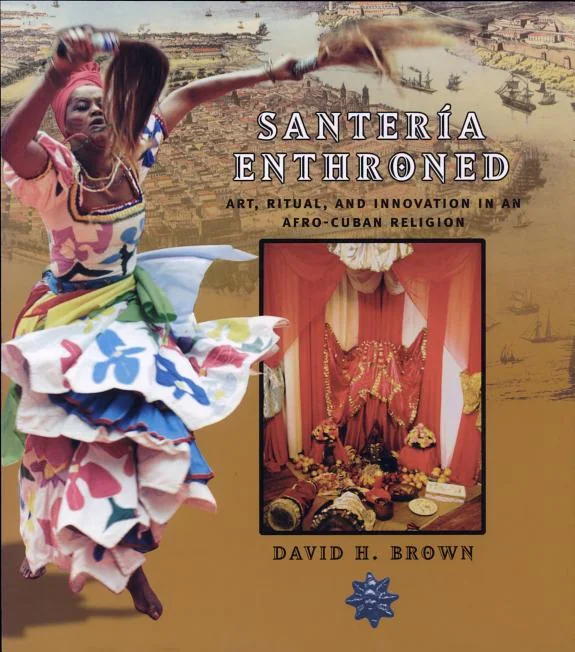
David H. Brown’s *Santería Enthroned* approaches the Lucumí tradition with a refreshing focus on the potent symbol of the royal throne. This isn't just another overview; the book grounds its analysis in the tangible, examining how concepts of sovereignty and spiritual authority are manifested in art and ritual. A particular strength lies in its exploration of how enslaved Africans creatively adapted West African concepts of kingship to assert spiritual and social autonomy under colonial rule. For instance, the detailed discussion of throne construction and its accompanying regalia offers a concrete understanding of power dynamics. While the book excels in its art historical and anthropological approach, readers seeking a purely devotional or practical guide to Santería might find its academic rigor demanding. Brown’s careful dissection of iconography and ritual, however, provides an invaluable scholarly perspective on the religion's historical development. It stands as a significant contribution to the study of Afro-Caribbean religions.
📝 Description
74
David H. Brown's 2003 study examines the symbolism of the royal throne in Afro-Cuban Lucumí religion.
Published in 2003, David H. Brown's *Santería Enthroned* centers on the symbolic significance of the royal throne within the Afro-Cuban Lucumí religion. The book analyzes this potent symbol's role across Santería's spiritual, social, and political structures. Merging art history with anthropological fieldwork, Brown traces the tradition's development from its origins in colonial Cuba.
Brown highlights how enslaved Africans and their descendants created new religious forms under severe oppression. He argues Santería was not just a passive retention of West African beliefs, but an active creation in response to enslavement and cultural suppression. The throne motif emphasizes sovereignty, lineage, and divine authority in both spiritual and communal life. The work scrutinizes the faith's visual language and ritual practices, showing how icons, altars, and ceremonial objects related to kingship convey complex theological ideas. These elements maintain continuity while adapting to changing historical circumstances.
This book situates itself within the study of diasporic religions that emerged from the transatlantic slave trade. It focuses on Santería, also known as the Lucumí religion, a syncretic faith blending West African Yoruba beliefs with Catholicism and indigenous Caribbean elements. By examining the throne's symbolism, Brown illuminates how enslaved peoples reinterpreted and asserted spiritual and political authority through religious practice, creating enduring traditions that reflect both ancestral heritage and the realities of their new environments.
💡 Why Read This Book?
• Understand the symbolic weight of the royal throne in Santería, a concept detailed through its art and ritual practices, offering insights into spiritual authority derived from the book's focus on this central motif. • Gain historical perspective on African religious adaptation in colonial Cuba, learning how enslaved peoples developed novel forms of practice in the face of oppression, as presented in the work's historical context. • Decipher the visual language of Santería through its iconography, exploring how specific symbols and objects, particularly those related to kingship, communicate complex theological ideas, as analyzed throughout the text.
⭐ Reader Reviews
Honest opinions from readers who have explored this book.
❓ Frequently Asked Questions
What is the primary focus of *Santería Enthroned*?
The book's central focus is the royal throne as a potent symbol and metaphor within Santería (Lucumí), examining its role in religious institutions, rituals, and iconography since its emergence in colonial-era Cuba.
When was *Santería Enthroned* first published?
The original publication date for *Santería Enthroned* by David H. Brown was October 15, 2003.
What academic disciplines does David H. Brown employ in his study?
David H. Brown combines methodologies from art history, cultural anthropology, and ethnohistory to analyze the development and expression of Santería.
How does the book address the challenges faced by African descendants in Cuba?
The work highlights how Africans and their descendants developed novel religious practices in response to relentless oppression, demonstrating resilience and cultural innovation.
What is the significance of the throne in the context of Santería?
The throne serves as a powerful metaphor for sovereignty, lineage, and spiritual authority within Santería, reflecting both divine principles and community leadership structures.
Is *Santería Enthroned* suitable for beginners?
While offering foundational insights, the book's academic approach, blending art history and anthropology, is most beneficial for those with some background or keen interest in the scholarly study of religious traditions.
🔮 Key Themes & Symbolism
The Throne as Sovereignty
The concept of the royal throne in *Santería Enthroned* is not merely decorative but a profound symbol of spiritual and temporal authority. Brown illustrates how this motif, inherited and adapted from West African traditions, became central to asserting self-governance and divine legitimacy for enslaved Africans and their descendants in Cuba. The work details how the physical construction and symbolic accoutrements of the throne communicate power, lineage, and the divine right to rule, offering a tangible representation of spiritual sovereignty in the face of colonial subjugation.
Artistic Resistance
Brown's analysis emphasizes how art and iconography served as vehicles for cultural preservation and resistance within Santería. The book explores the visual language of the religion, demonstrating how objects, symbols, and ceremonial attire related to kingship were employed to maintain cultural identity and spiritual continuity under oppressive conditions. This artistic expression became a critical means for Africans and their descendants to assert their own narratives and spiritual authority, transforming imposed limitations into platforms for creative expression.
Continuity and Change
A central theme in *Santería Enthroned* is the dynamic interplay between continuity and change within the Lucumí tradition. Brown meticulously documents how foundational West African religious concepts, particularly those surrounding royal power, were sustained and simultaneously transformed in the Cuban context. The book showcases how Santería evolved through creative adaptation, developing novel institutions, rituals, and iconographies that reflected the unique historical experiences of its practitioners while retaining core spiritual principles.
Embodied Spirituality
The work looks at how Santería embodies spiritual concepts through material culture and ritual performance. The throne, as a focal point, represents the physical manifestation of divine presence and legitimate spiritual leadership. Brown’s examination reveals how practitioners interact with these symbols and objects, enacting their faith in ways that connect the earthly and the divine, reinforcing community structures and individual spiritual authority through tangible, symbolic representations.
💬 Memorable Quotes
Direct passages from the work, attributed to the author.
“Africans and their descendants developed novel forms of religious practice in the face of relentless oppression.”
— This core idea underscores the resilience and creativity inherent in Santería's formation, emphasizing its role as a system born from resistance and adaptation rather than simple preservation.
“Iconography and institutions display a complex dynamic of continuity and change.”
— This suggests that Santería is not static; it actively blends inherited traditions with new expressions shaped by its unique historical and cultural journey since colonial times.
“The focus is on how the throne informs belief and practice.”
— This emphasizes the functional importance of the throne symbol, indicating that its meaning is deeply integrated into the daily rituals and core theological understandings of Santería practitioners.
“The study combines art history, cultural anthropology, and ethnohistory.”
— This statement clarifies the interdisciplinary approach of the book, promising a multi-faceted analysis drawing on visual culture, social structures, and historical accounts.
💡 Key Ideas
Editorial paraphrase of the work's core concepts — not direct quotes.
The royal throne emerges as a potent metaphor for sovereignty and spiritual authority.
This paraphrased concept highlights the book's central thesis: that the throne in Santería is more than just an object; it embodies the power and legitimate rule of spiritual leaders and the divine itself.
🌙 Esoteric Significance
Tradition
While not strictly belonging to a single Western esoteric lineage like Hermeticism or Kabbalah, *Santería Enthroned* engages with themes resonant in many esoteric traditions, particularly those concerning divine kingship, spiritual authority, and the embodiment of sacred power. Its focus on lineage, ritual objects, and the symbolic representation of the divine throne aligns with concepts found in ancient mystery schools and certain forms of Gnosticism that explore hierarchical spiritual structures and the manifestation of the sacred in the material world.
Symbolism
The most prominent symbol explored is the royal throne itself, representing sovereignty, the divine right to rule, and the seat of spiritual power. Other key symbols likely include the regalia associated with kingship (crowns, scepters), the specific *aché* (spiritual force) attributed to divine rulers, and the altars or spaces designated for spiritual authority. These symbols collectively articulate a cosmology where spiritual leadership is divinely sanctioned and ritually enacted, providing a framework for both individual devotion and community governance.
Modern Relevance
Contemporary practitioners and scholars of African Diasporic Religions continue to draw on the insights provided by *Santería Enthroned*. The book's detailed examination of how spiritual authority and cultural identity were forged under duress remains relevant for understanding the resilience of these traditions. Thinkers exploring themes of postcolonial spirituality, the intersection of art and ritual, and the symbolic representation of power in religious contexts find Brown's analysis valuable for contemporary discussions on Afro-Caribbean spirituality and its global influence.
👥 Who Should Read This Book
• Academic researchers in religious studies, art history, and African Diaspora studies seeking in-depth analysis of Santería's iconography and historical development. • Practitioners of Santería or related Afro-Caribbean traditions interested in a scholarly exploration of the symbolism and historical context of spiritual leadership. • Students of comparative religion looking to understand how enslaved Africans adapted and transformed religious concepts under colonial oppression, focusing on the specific case of Cuban Lucumí.
📜 Historical Context
Published in 2003, *Santería Enthroned* entered a scholarly landscape increasingly attentive to Afro-Caribbean religions and the nuances of diasporic identity. David H. Brown's work emerged in dialogue with scholars like Maya Deren and Lydia Cabrera, who had previously documented aspects of Haitian Vodou and Cuban Santería, respectively. The book’s focus on the throne as a symbol of power and legitimacy provided a unique lens, differentiating it from broader ethnographic accounts. Its examination of how enslaved Africans creatively reinterpreted West African concepts of kingship addressed critical questions about agency and cultural survival under colonial rule. The period saw a growing appreciation for the sophisticated theological systems developed within these traditions, moving beyond earlier, often reductionist, analyses. Brown's work contributed to this by grounding abstract spiritual concepts in concrete artistic and ritualistic expressions.
📔 Journal Prompts
The symbolism of the royal throne in Santería, as analyzed by Brown.
African adaptation of religious practices under colonial oppression.
The role of art and iconography in maintaining cultural identity.
The dynamic between continuity and change in religious traditions.
Manifestations of spiritual authority through ritual objects.
🗂️ Glossary
Santería
An Afro-Cuban syncretic religion that blends traditional Yoruba beliefs with Roman Catholicism. Also known as Lucumí.
Lucumí
A term referring to the Yoruba people and their language, often used interchangeably with Santería in Cuba and the diaspora.
Achè (Aché)
The spiritual life force or power believed to exist in all things, essential for rituals and the functioning of the Orishas in Santería.
Orishas
Deities or spirits in the Yoruba religion and its diasporic forms like Santería, each with distinct attributes, powers, and domains.
Iconography
The visual images and symbols used in the study or representation of a subject, particularly in religious art and context.
Ethnohistory
A method that studies the history of a culture or people, often non-Western, by combining historical records with ethnographic data and oral traditions.
Colonial-era Cuba
The historical period of Spanish colonial rule in Cuba, from the 15th century until 1898, a crucial time for the formation of Afro-Cuban religions.
This book appears in 1 collection
🔮 Readers Also Liked
Browse all →








From the “Santeria” Collection
View all →









More Free Occult Philosophy Books
View all →