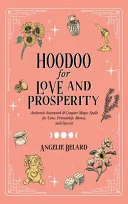
The meridians of acupuncture

 74
74

The meridians of acupuncture
Felix Mann’s "The meridians of acupuncture" offers a solid, if somewhat dated, introduction to the foundational energetic map of Traditional Chinese Medicine. Its strength lies in Mann’s earnest attempt to translate the abstract concept of Qi and meridian flow into a comprehensible system for a Western audience. The detailed charts and descriptions of the 12 primary meridians are particularly useful for visualizing these often elusive pathways. However, the book’s reliance on a purely anatomical and physiological lens, while intended for accessibility, sometimes feels reductive, potentially overlooking the more subtle philosophical and spiritual dimensions inherent in TCM. A passage detailing the Lung meridian’s connection to grief, for instance, touches upon the psychosomatic, but could benefit from deeper exploration of its symbolic resonance. Despite this limitation, Mann’s 1964 work remains a valuable historical marker and a practical reference for understanding the structural basis of acupuncture.
📝 Description
74
Felix Mann's 1964 book maps the energetic pathways of acupuncture.
First published in 1964, Felix Mann's "The meridians of acupuncture" details the energetic pathways within the body as understood in traditional Chinese medicine. Mann meticulously describes the primary meridians, their associated acupuncture points, and the flow of Qi, or vital energy, that connects them. His work sought to connect Eastern energetic ideas with Western anatomical and physiological understanding, creating a framework for both practitioners and interested individuals.
The book is a resource for acupuncturists, Traditional Chinese Medicine (TCM) practitioners, and students who need a solid grasp of the meridian system. It will also interest those in complementary and alternative medicine, such as energy healers and bodyworkers, who want to incorporate a structured view of energetic anatomy into their work. Researchers looking into acupuncture's historical development and theoretical basis will also find value here.
Published in 1964, Mann's book appeared as Western science and medicine began to tentatively examine acupuncture, partly due to increased contact with China. At a time when TCM's theories often met with doubt or were seen as purely empirical, Mann's work was significant. He attempted to explain complex energetic concepts in terms understandable to a Western audience, contributing to later clinical and academic studies on acupuncture's effectiveness and underlying principles.
💡 Why Read This Book?
• Understand the foundational architecture of Traditional Chinese Medicine by learning the specific pathways of the 12 primary meridians, a concept central to acupuncture since its inception. • Gain insight into the historical reception of Eastern medicine in the West, specifically noting how Felix Mann’s 1964 publication attempted to bridge these differing medical paradigms. • Learn the practical application of Qi flow and acupoint theory, understanding how imbalances in these specific energetic channels are believed to manifest as physical or emotional ailments.
⭐ Reader Reviews
Honest opinions from readers who have explored this book.
❓ Frequently Asked Questions
When was 'The meridians of acupuncture' first published?
Felix Mann's foundational work, 'The meridians of acupuncture', was first published in 1964, marking an early attempt to introduce these concepts to a Western audience.
What is the primary focus of Felix Mann's book?
The book primarily focuses on detailing the 12 primary meridians of acupuncture, their associated acupoints, and the flow of Qi, aiming to explain Traditional Chinese Medicine principles.
Is this book suitable for complete beginners in TCM?
Yes, it is designed as an introductory text, attempting to make the complex energetic systems of Traditional Chinese Medicine accessible to those unfamiliar with them.
Does the book explain the historical development of acupuncture meridians?
While it focuses on the system's structure and function, it provides historical context for its introduction to the West, particularly from its 1964 publication date.
What is Qi according to Mann's explanation?
Mann explains Qi as the vital life force or energy that flows through the meridians, crucial for maintaining health and balance within the body according to Traditional Chinese Medicine.
Can this book be used to locate acupuncture points?
Yes, the book provides detailed descriptions and charts of the primary meridians and their associated acupuncture points, serving as a practical guide for identification.
🔮 Key Themes & Symbolism
The Twelve Primary Meridians
Mann's text meticulously maps the network of the 12 primary meridians, the principal channels through which vital energy, or Qi, is understood to circulate within the body according to Traditional Chinese Medicine. Each meridian is linked to specific Zang-Fu organs (like the Liver, Heart, or Spleen) and possesses unique energetic properties and physiological functions. The book details the pathways of these meridians, tracing their course from head to toe, and outlines the key acupuncture points situated along them, providing a foundational understanding of TCM's energetic anatomy and its implications for health and disease.
Qi and Blood Circulation
Central to Mann's exposition is the concept of Qi (vital energy) and its dynamic relationship with Blood (Xue) in maintaining life. The work explains how the smooth and unobstructed flow of Qi through the meridians is essential for bodily harmony. Imbalances, such as Qi stagnation or deficiency, are presented as the root causes of illness, manifesting in various physical and psychological symptoms. The book elucidates how stimulating specific acupoints along the meridians can regulate this flow, thereby restoring health and vitality.
Acupuncture Points and Their Functions
The meridians are not merely abstract pathways; they are punctuated by specific acupuncture points (acupoints), each possessing distinct therapeutic actions. Mann's book catalogues these points, often detailing their anatomical location relative to bony landmarks or muscular structures, and explaining their indications for treating various conditions. This section provides a practical guide for understanding how targeted stimulation of these points, through techniques like needling or acupressure, can influence the flow of Qi and Blood within the associated meridian and organ systems.
Bridging East and West
Published in 1964, Mann’s work represents a significant effort to interpret and present the principles of Traditional Chinese Medicine (TCM) in a manner comprehensible to a Western audience accustomed to biomedical paradigms. The book attempts to correlate TCM concepts with Western anatomical and physiological understanding, seeking a common ground for dialogue and integration. This approach was vital during a period when TCM was gaining initial traction in the West, aiming to clarify its energetic theories and demonstrate their potential clinical relevance.
💬 Memorable Quotes
Direct passages from the work, attributed to the author.
“The meridians are the channels through which Qi and Blood flow.”
— This concise statement captures the fundamental role of the meridian system in Traditional Chinese Medicine, highlighting its function as the primary circulatory network for vital energy and sustenance.
“Each meridian is associated with a specific organ.”
— This highlights the intricate connection within TCM between the energetic pathways (meridians) and the physiological organ systems, illustrating how they are intrinsically linked in health and pathology.
“Acupuncture points are specific sites on the meridians.”
— This explains the practical significance of acupoints, identifying them as crucial nodes along the meridians where therapeutic interventions can directly influence the body's energetic balance.
“Understanding the meridians is key to understanding acupuncture.”
— This emphasizes the foundational importance of the meridian system, positioning it as the essential framework upon which the entire practice and theory of acupuncture are built.
💡 Key Ideas
Editorial paraphrase of the work's core concepts — not direct quotes.
Imbalance in the flow of Qi leads to disease.
This paraphrase captures the core tenet of TCM etiology as presented by Mann, emphasizing that health is contingent upon the harmonious movement of vital energy through the body's energetic pathways.
🌙 Esoteric Significance
Tradition
While rooted in Traditional Chinese Medicine, which has its own deep philosophical underpinnings, Mann’s approach in "The meridians of acupuncture" engages with esoteric principles by focusing on the subtle body and its energetic flows. It aligns with broader esoteric traditions that posit unseen forces and pathways governing physical well-being, such as the concept of 'subtle anatomy' found in Hermeticism or Theosophy. Mann attempts to provide a systematic, almost cartographic, representation of these energies, making them more tangible for practitioners seeking to influence health through non-physical means.
Symbolism
The primary symbols are the meridians themselves, representing the interconnectedness of the body's vital forces and organs. Each meridian is often associated with specific organs (e.g., the Liver meridian), which carry their own symbolic weight within TCM, representing aspects of emotion, function, and spirit. The concept of Qi, the vital life force, is itself a profound symbol of animating energy, akin to prana in yogic traditions or the vital fluid in Western alchemy, signifying the essential principle of life and consciousness that animates the physical form.
Modern Relevance
Mann's work continues to be relevant for contemporary practitioners and theorists in integrative medicine, energy healing, and applied TCM. Modern thinkers and schools of thought exploring psychosomatic connections, vibrational medicine, and advanced energy anatomy often draw upon the foundational understanding of meridians and Qi flow that Mann helped to popularize in the West. His systematic mapping provides a crucial reference point for those seeking to understand the energetic architecture that underpins various holistic healing modalities.
👥 Who Should Read This Book
• Students and practitioners of Traditional Chinese Medicine (TCM) seeking a clear, foundational text on the 12 primary meridians and their energetic pathways. • Western medical professionals and researchers interested in understanding the historical and theoretical basis of acupuncture as it began to be integrated into global healthcare discussions. • Esoteric practitioners and students of subtle anatomy who wish to explore the energetic systems of the human body as conceptualized in Eastern traditions, providing a structured map of vital energy.
📜 Historical Context
Felix Mann's "The meridians of acupuncture" emerged in 1964, a key moment in the nascent introduction of Traditional Chinese Medicine (TCM) to the Western world. This era saw limited but growing interest, spurred by political shifts and increased cultural exchange. Mann's work was significant in its attempt to articulate the complex, often abstract, energetic concepts of TCM—particularly the meridian system and Qi flow—in a framework accessible to a Western audience steeped in biomedical science. This contrasted with more traditional, philosophical, or purely empirical approaches. While figures like Reginald Davies were also exploring acupuncture, Mann’s focus on systematic mapping and physiological correlation offered a distinct angle. The book arrived before widespread acceptance, facing the challenge of bridging deeply entrenched Western scientific paradigms with millennia-old Eastern medical theories, aiming to provide a logical structure where previously there was often only mystique.
📔 Journal Prompts
The Lung meridian's association with grief—how does this energetic pathway connect emotion to physical manifestation?
Mapping the Stomach meridian’s path: Reflect on its start and end points and their potential symbolic significance.
Consider the concept of Qi as described by Mann; how does this vital energy differ from Western concepts of biological energy?
The Kidney meridian's role in storing 'Jing' (essence): What parallels can be drawn to esoteric concepts of vital essence or life force?
Reflect on the interconnectedness of the meridians as presented in the book; how does this network model influence your understanding of holistic health?
🗂️ Glossary
Meridian
An invisible pathway or channel within the body through which Qi (vital energy) and Blood are believed to circulate, connecting acupuncture points and organ systems.
Qi
The fundamental vital life force or energy that animates all living beings according to Traditional Chinese Medicine; its smooth flow is essential for health.
Acupoint
Specific points located on the meridians where the Qi is believed to be more accessible, used for therapeutic stimulation in acupuncture and acupressure.
Zang-Fu
The system of internal organs in Traditional Chinese Medicine, categorized into Zang (solid, Yin organs) and Fu (hollow, Yang organs), each associated with specific meridians.
Xue
The Chinese term for Blood, considered by TCM to be a vital substance closely related to Qi, carrying nourishment and warmth throughout the body.
Yin and Yang
The fundamental principle of dualistic, complementary forces that govern all phenomena in the universe, including health and disease, as understood in Chinese philosophy and medicine.
Jing
Essence; a vital substance stored in the Kidneys, considered the foundation of life and responsible for growth, development, reproduction, and fundamental constitution.
🔮 Readers Also Liked
Browse all →








More by Felix Mann
All books →





More Free Occult Philosophy Books
View all →