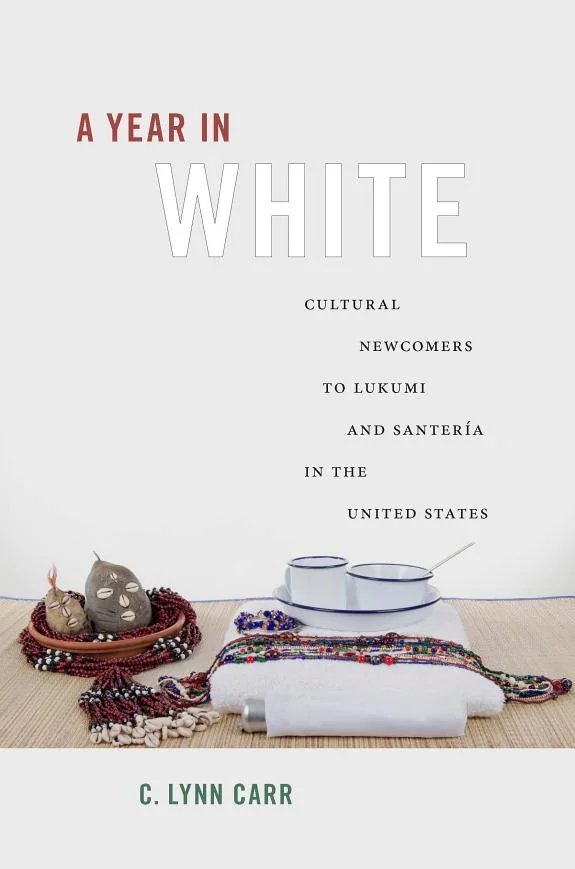
A Year in White
 78
78

A Year in White
C. Lynn Carr's *A Year in White* provides an unvarnished look at the *iyaworaje*, the demanding initiation into Lukumi priesthood. Carr, herself an initiate, avoids the sensationalism that often colors accounts of Santería, opting instead for a grounded, sociological perspective. Her description of the sensory deprivation and psychological recalibration required by the fifty-three-week regimen is particularly potent. The text excels in detailing the practical, day-to-day realities of the iyawo's existence – the constant vigilance, the prescribed diet, and the symbolic weight of perpetual white attire. A potential limitation for some readers might be the academic tone, which, while lending credibility, occasionally keeps an emotional distance. However, Carr's careful observation of the communal support structures within the *ilé* offers a compelling counterpoint to the individual austerity. The book's strength lies in its empathetic yet analytical approach to a sacred, often misunderstood, tradition.
📝 Description
78
C. Lynn Carr's "A Year in White" documents her fifty-three-week initiation into the Afro-Cuban Lukumi tradition.
This book details the author's experience as an *iyawo*, or initiate, in the Lukumi religion, commonly known as Santería. For a full year, she adhered to strict spiritual disciplines, including the mandatory wearing of white clothing. Carr, a sociologist, provides a personal yet analytical perspective on this transformative period. She describes the practicalities and the deep spiritual shifts involved in the *iyaworaje*, the state of being an initiate. The narrative illuminates the rigorous process of becoming part of this tradition, emphasizing the discipline and introspection required. It offers a close look at the daily life and spiritual focus that characterize this specific religious path.
The work situates Carr's personal journey within the broader context of the Lukumi faith. Its origins trace back to the Yoruba people of West Africa, with significant development in Cuba. The tradition's history includes syncretism with Catholicism and resilience through various social and political challenges. Carr's account highlights how these historical elements shape contemporary practice. The book examines the symbolic meaning of white, representing purity and detachment, and the novice's relationship with the *orishas* and the *ilé*, or religious household, during this intense period.
The Lukumi tradition, or Santería, is an Afro-Cuban religion with deep roots in West African spiritual systems, particularly the Yoruba faith. It developed in the Americas through a process of syncretism, blending Yoruba cosmology and practices with elements of Roman Catholicism due to the transatlantic slave trade and subsequent cultural exchanges. This tradition centers on the worship of *orishas*, divine intermediaries between humanity and Olodumare, the supreme creator. Initiation is a central rite of passage, marking a profound commitment and spiritual reorientation for the initiate, known as an *iyawo*, who undergoes a period of rigorous training and ritual observance.
💡 Why Read This Book?
• Gain an insider's perspective on the fifty-three-week *iyaworaje* initiation, understanding the specific prohibitions and spiritual disciplines unique to the Lukumi tradition, as detailed in Carr's personal experience. • Explore the profound symbolism of the color white within this Afro-Cuban religious context, learning how it signifies purity, vulnerability, and detachment from the mundane world during the initiation period. • Understand the social dynamics and communal support systems within a Lukumi *ilé* during a critical period of spiritual transformation, as observed by Carr during her own year as an iyawo.
⭐ Reader Reviews
Honest opinions from readers who have explored this book.
❓ Frequently Asked Questions
What is the Lukumi tradition and how does it differ from Santería?
The Lukumi tradition is the Afro-Cuban religious system that is more commonly known in the United States as Santería. The term 'Lukumi' refers to the language and cultural heritage of the Yoruba people who brought the religion to Cuba. 'Santería' is a more syncretic term that emerged later, blending Yoruba beliefs with Catholicism.
What does the term 'iyawo' signify in the context of A Year in White?
'Iyawo' is the term used for a novice or initiate undergoing the rigorous fifty-three-week initiation period into the Lukumi priesthood. It denotes a specific spiritual state characterized by numerous prohibitions and a focus on internal transformation.
Why is wearing white clothing so important during the initiation?
Wearing exclusively white clothing during the initiation, known as *iyaworaje*, is a central tenet. It symbolizes purity, spiritual vulnerability, and the iyawo's detachment from the secular world, marking them as being in a sacred and transitional state.
What is the duration of the initiation described in the book?
The initiation period documented in *A Year in White* lasts for fifty-three weeks, a substantial commitment that signifies a complete immersion into the spiritual disciplines and lifestyle of the Lukumi priesthood.
Who is C. Lynn Carr and what is her background for writing this book?
C. Lynn Carr is a sociologist who underwent the Lukumi initiation herself. Her academic background provides a framework for her ethnographic observations, allowing her to document the experience with both personal insight and analytical rigor.
What is the significance of the 'ilé' in the Lukumi tradition?
The 'ilé' refers to the religious household or temple within the Lukumi tradition. It is the central space where rituals are performed, and it serves as the primary community and support system for initiates like the iyawo during their transformation.
🔮 Key Themes & Symbolism
The Iyawo's Year of Transformation
The book meticulously details the fifty-three-week period of *iyaworaje*, the transformative process of becoming an initiate in the Lukumi tradition. Carr conveys the profound psychological, spiritual, and physical adjustments required, emphasizing the strict prohibitions and disciplined lifestyle that mark this sacred time. It highlights how this structured period serves to dismantle the old self and prepare the individual for a new spiritual identity and responsibilities within the community.
Symbolism of White Attire
Central to the *iyaworaje* is the exclusive wearing of white clothing. Carr explores the complex symbolism of this practice, which extends beyond mere purity. White signifies the iyawo's vulnerability, their separation from the profane world, and their status as a vessel for spiritual energies. The constant visual reminder of this state reinforces the initiate's dedication and the community's recognition of their sacred undertaking.
Community and Support in the Ilé
While the initiation is a deeply personal journey, *A Year in White* also illuminates the crucial role of the *ilé* (religious household or temple) and its members. Carr documents the intricate web of relationships, the guidance provided by elders, and the communal support that sustains the iyawo. This aspect underscores that spiritual transformation, particularly within indigenous traditions, is often a collective endeavor, not solely an individual one.
Ethnographic Observation and Lived Experience
As a sociologist who underwent the initiation, Carr offers a mix of participant observation and analytical insight. The book provides a valuable ethnographic record of a spiritual practice often shrouded in secrecy or misrepresentation. By tying her personal experience with sociological analysis, Carr opens a window for outsiders to understand the complexities and profundity of Lukumi initiation rites.
💬 Memorable Quotes
Direct passages from the work, attributed to the author.
“The fifty-three-week initiation period necessitates a complete recalibration of the iyawo's existence.”
— This statement captures the essence of the *iyaworaje*, emphasizing that the initiation is not merely a ritual but a total immersion that fundamentally alters the initiate's life, requiring profound internal and external adjustments.
“White is not just a color; it is a state of spiritual being and vulnerability.”
— This highlights the deep symbolic meaning behind the required white attire, framing it as an outward manifestation of an internal spiritual condition, denoting purity and openness to divine influence during the initiation.
“Every restriction, every ritual, serves to strip away the profane and reveal the sacred within.”
— This interpretation reflects the book's exploration of the purpose behind the numerous prohibitions and ceremonies of initiation, suggesting they are designed to purify the individual and facilitate a deeper connection to the divine.
“The experience demands an intense focus inward, away from the distractions of the outer world.”
— This conveys the introspective nature of the initiation, where the iyawo must disengage from ordinary life and concentrate entirely on their spiritual development and the internal processes of transformation.
💡 Key Ideas
Editorial paraphrase of the work's core concepts — not direct quotes.
The *ilé* provides a crucial scaffolding of support for the iyawo navigating intense spiritual change.
This paraphrased concept emphasizes the vital role of the religious community and its leaders in guiding and sustaining the initiate through the challenging and transformative process of *iyaworaje*.
🌙 Esoteric Significance
Tradition
The Lukumi tradition is a potent manifestation of African diasporic religions, deeply rooted in Yoruba cosmology. It represents a sophisticated system of spiritual knowledge and practice that, while distinct from Western Hermeticism, Gnosticism, or Kabbalah, shares with them an emphasis on initiation, divine intermediaries (*orishas*), and the pursuit of spiritual perfection. Carr's work fits within this lineage by offering a detailed, participant-observer account of its central rite of passage, validating its complex structure and lasting impact.
Symbolism
The most prominent symbol is the exclusive use of white clothing during the *iyaworaje*. This signifies purity, spiritual vulnerability, and the initiate's detachment from the mundane. Another key motif is the concept of *iyaworaje* itself – the state of being an initiate – representing a liminal period of profound transformation and rebirth. The *ilé*, or sacred household, functions as a microcosm of the spiritual universe, where the initiate learns to navigate divine relationships.
Modern Relevance
Contemporary practitioners and scholars of comparative religion, particularly those focusing on indigenous spiritualities and Afro-Latin American cultures, find immense value in Carr's firsthand account. Thinkers and practitioners in fields like embodied cognition and ritual studies also draw on such detailed ethnographies to understand the transformative power of sustained ritual practice. The book serves as a vital resource for understanding how ancient cosmologies continue to provide frameworks for spiritual growth in the modern era.
👥 Who Should Read This Book
• Students of comparative religion and anthropology seeking in-depth ethnographic accounts of initiation rites in Afro-Caribbean traditions. • Individuals interested in the practical and spiritual challenges of religious transformation, offering a window into a specific, demanding spiritual path. • Practitioners or inquirers within Lukumi or related Afro-diasporic faiths looking for a detailed, sociological perspective on the *iyaworaje* from a fellow initiate.
📜 Historical Context
The Lukumi tradition, a vibrant Afro-Cuban religion, possesses a long history shaped by the transatlantic slave trade and subsequent cultural syncretism. Its roots lie with the Yoruba people of West Africa, whose spiritual practices were brought to the Caribbean. In Cuba, under Spanish colonial rule and later through the 20th century, Lukumi developed in dialogue with Catholicism, leading to its common association with Santería. This period saw both the adaptation of beliefs to survive oppressive colonial structures and the eventual flourishing of the tradition, particularly after the Cuban Revolution. While some Western esoteric circles in the early to mid-20th century, like those influenced by Theosophy or certain Hermetic orders, engaged with African diasporic religions, Lukumi maintained a distinct trajectory, often viewed with suspicion or exoticism by outsiders. C. Lynn Carr's work, published in 2016, arrives at a time when scholarly and public interest in Afro-Caribbean spirituality has grown significantly, moving beyond earlier, often sensationalized, accounts and towards more nuanced, participatory ethnographies.
📔 Journal Prompts
The symbolic weight of the color white during the *iyaworaje*.
Working through the fifty-three-week prohibition period as an iyawo.
The role of the *ilé* in supporting spiritual transformation.
Personal reflections on the concept of spiritual vulnerability.
The impact of rigorous initiation on one's sense of self.
🗂️ Glossary
Lukumi
The name of the Afro-Cuban religious tradition, derived from the language of the Yoruba people. Often used interchangeably with Santería, though it emphasizes the Yoruba roots.
Santería
A common name in the United States for the Afro-Cuban religion, often implying a syncretic blend of Yoruba beliefs and Catholicism. The term itself is derived from the Spanish word for 'saint'.
Iyawo
A novice or initiate undergoing the rigorous fifty-three-week initiation period in the Lukumi tradition. The term denotes a specific spiritual state and role.
Iyaworaje
The state of being an iyawo; the period of initiation into the Lukumi priesthood. It is characterized by strict rules, white attire, and intense spiritual focus.
Orisha
Deities or spirits in the Yoruba and Lukumi pantheons, who are seen as intermediaries between humanity and the supreme creator god, Olodumare. Each Orisha has distinct characteristics, domains, and attributes.
Ilé
Literally 'house' in Yoruba. In the context of Lukumi, it refers to the religious household or temple, the spiritual center for a community and its initiates, often headed by a priest or priestess (babalowo or iyalowo).
Babalowo/Iyalowo
A male priest (babalowo) or female priestess (iyalowo) in the Lukumi tradition, who has completed their initiation and is recognized for their spiritual knowledge and ability to guide others.
This book appears in 1 collection
🔮 Readers Also Liked
Browse all →









From the “Santeria” Collection
View all →









More Free Occult Philosophy Books
View all →