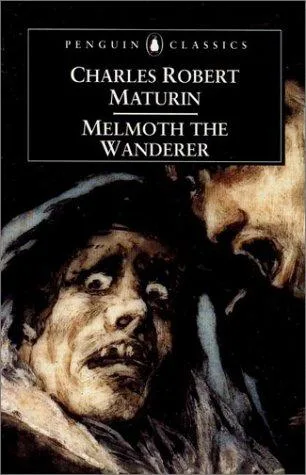
Melmoth the Wanderer
 74
74

Melmoth the Wanderer
Charles Robert Maturin’s Melmoth the Wanderer presents a Gothic edifice so vast and oppressive it threatens to collapse under its own weight of despair. The titular character’s centuries-long quest for release from his infernal bargain is less a narrative arc and more a descent into an abyss of human misery. Maturin’s prose, dense and often ornate, mirrors the suffocating atmosphere; one particular passage describing the asylum at the Isle of Goats, where reason itself seems to fracture and reform into grotesque shapes, exemplifies the novel’s power. Its primary limitation lies in this very density; the labyrinthine structure and relentless gloom can become exhausting, obscuring the emotional core for less dedicated readers. Yet, for those willing to persevere, the novel offers a stark, unforgettable examination of damnation. Melmoth the Wanderer is a profound, albeit grueling, exploration of ultimate despair.
📝 Description
74
Charles Robert Maturin published Melmoth the Wanderer in 1820, a Gothic novel about a man cursed by an infernal pact.
Melmoth the Wanderer, first published in 1820, is an epistolary Gothic novel by Charles Robert Maturin. The story follows the titular character, a man who sold his soul to the devil for extended life and the ability to reappear anywhere. For 150 years, Melmoth roams the earth, desperately seeking someone to take his place and break his pact. The narrative is built from a series of nested stories that reveal the tragic lives of those who crossed Melmoth's path or suffered from his curse.
The novel's prose is dense, and its narrative structure is complex. It appeals to readers interested in the darker aspects of Romantic literature and Gothic fiction. Those who appreciate philosophical inquiries into damnation, redemption, and the nature of suffering will find much to consider. This is not a light read; it requires focus and a willingness to confront themes of madness and perpetual torment.
Published in 1820, Melmoth the Wanderer stands as a significant work within the Gothic tradition, a genre deeply interested in the supernatural and the darker corners of human psychology. Maturin, an Irish clergyman, engaged with themes of damnation and the consequences of forbidden knowledge, common in occult and esoteric literature of the era. The novel's structure, with its interwoven tales of woe and its focus on a protagonist cursed by an unholy bargain, echoes older narratives of pacts with dark forces and the search for release from spiritual bondage.
💡 Why Read This Book?
• Gain insight into the Gothic literary tradition's darkest expressions, specifically through Maturin's unique take on the Faustian bargain, which differentiates it from earlier treatments of such themes. • Experience a narrative structure that mirrors psychological fragmentation, offering a unique model for exploring themes of madness and inherited sin beyond what simpler plot constructions allow. • Understand the pervasive sense of existential dread that permeated Romanticism, as exemplified by Melmoth’s 150-year search for release, a tangible representation of spiritual anguish.
⭐ Reader Reviews
Honest opinions from readers who have explored this book.
❓ Frequently Asked Questions
When was Melmoth the Wanderer first published?
Melmoth the Wanderer was first published in 1820. This places it firmly within the Gothic literary period, a time when tales of the supernatural and psychological horror were gaining significant traction.
What is the main theme of Melmoth the Wanderer?
The central theme is the exploration of despair, damnation, and the consequences of making a pact with the devil. It delves into the nature of suffering and the desperate, often futile, search for redemption over an extended period.
Who is the protagonist of Melmoth the Wanderer?
The protagonist is Melmoth, a spectral figure who has sold his soul for extended life and the ability to reappear at will. He wanders for 150 years, seeking someone to take his place and thus release him from his pact.
What is the narrative structure of the novel?
The novel employs an epistolary and frame narrative structure. It consists of a series of nested stories, where one tale unfolds within another, creating a complex and layered account of Melmoth's influence and the fates of those he encounters.
How did critics receive Melmoth the Wanderer upon its release?
Initial reception was mixed. While some recognized its powerful depiction of despair and its literary ambition, others found its unrelenting gloom and complexity overwhelming. It gained a more significant following in retrospect.
What literary movement does Melmoth the Wanderer belong to?
The novel is a prime example of Gothic literature, a genre that flourished during the Romantic era. It shares thematic and atmospheric concerns with other Gothic works but is noted for its extreme focus on psychological torment.
🔮 Key Themes & Symbolism
The Infernal Pact
The core of Melmoth the Wanderer revolves around the Faustian bargain, a pact with the devil for extended life and power. Melmoth’s 150-year existence is a continuous torment, driven by the need to find a successor to bear his curse. This theme explores the ultimate price of such bargains, suggesting that damnation is not merely punishment but an eternal, self-inflicted state of spiritual isolation and despair. The narrative traces the ripple effects of this pact, showing how it corrupts and destroys those who come into contact with Melmoth, highlighting the interconnectedness of spiritual fate.
Existential Despair and Madness
Maturin masterfully portrays profound existential despair, making it a palpable force within the novel. Melmoth himself embodies this, his endless wandering a metaphor for an unresolvable spiritual crisis. The novel frequently depicts characters succumbing to madness, their reason fractured by suffering, guilt, or the sheer weight of Melmoth's influence. This exploration of madness goes beyond simple psychological breakdown; it suggests a state where the soul itself is irrevocably damaged, unable to find solace or truth in a seemingly malevolent universe.
The Nature of Redemption
While the novel is saturated with damnation, the question of redemption is implicitly and explicitly present. Melmoth’s ceaseless search for someone to take his place can be seen as a desperate, albeit selfish, pursuit of release. The fates of other characters, particularly the Imogen story, offer glimpses of potential salvation through sacrifice or enduring faith, though these are often overshadowed by tragedy. The work questions whether true redemption is possible for those who have strayed so far, or if the very act of seeking it is part of an eternal, unfulfilled cycle.
Supernatural and Gothic Atmosphere
Melmoth the Wanderer is a quintessential Gothic novel, employing supernatural elements not merely for shock value but to create an overwhelming atmosphere of dread and psychological horror. Spectral visitations, cursed objects, and inexplicable events permeate the narrative. Maturin uses these devices to reflect the characters' internal states and the perceived malevolence of the world. The novel's pervasive gloom, dark settings, and sense of impending doom are hallmarks of the genre, pushing its boundaries with an almost unbearable intensity.
💬 Memorable Quotes
Direct passages from the work, attributed to the author.
“He has been the slave of the devil for these two hundred years.”
— This statement captures the core of Melmoth's predicament. It emphasizes the immense duration of his suffering and the absolute nature of his bondage, highlighting the eternal consequences of his infernal pact.
“The world is a vast asylum, and men are its patients.”
— This interpretation suggests that society itself is fundamentally disordered and that individuals are often driven by irrationality or suffering, akin to inmates in a madhouse. It reflects a deeply pessimistic view of humanity and its condition.
“He who is damned has no longer any thing to fear.”
— This chilling observation implies that once a soul is irrevocably condemned, the fear of further punishment or consequence ceases. It speaks to a state of ultimate resignation and the absence of hope, where even terror loses its efficacy.
“Melmoth paused at the threshold, as if the door of a tomb.”
— This imagery conveys the profound sense of dread and finality associated with entering certain spaces or confronting particular individuals. It suggests that what lies beyond the threshold is not life, but a form of spiritual death or inescapable doom.
“The greatest of all evils is despair.”
— This phrase identifies despair not merely as an emotion but as the ultimate affliction. It suggests that the loss of hope is more destructive than any external suffering or torment, representing the complete erosion of the spirit.
🌙 Esoteric Significance
Tradition
While not explicitly aligned with a single esoteric tradition, Melmoth the Wanderer deeply engages with themes common in Western esotericism, particularly Gnosticism and certain interpretations of Kabbalah. The concept of a fallen or damned spiritual entity (Melmoth) seeking escape from a flawed creation speaks to Gnostic cosmology. The idea of a soul trapped in an endless cycle, unable to find true liberation, touches upon themes of reincarnation and karmic debt explored in various mystical paths. Maturin's exploration of ultimate despair and the search for release from a cursed existence can be viewed through the lens of spiritual alchemy's goal of transformation, albeit here the focus is on the profound difficulty and potential impossibility of such a process.
Symbolism
The figure of Melmoth himself serves as a potent symbol of the eternally damned soul, a wanderer cut off from divine grace, forever seeking a release that may never come. His extended lifespan symbolizes the unending nature of spiritual suffering when divorced from redemption. The recurring motif of the 'infernal pact' symbolizes the ultimate act of spiritual self-betrayal, where temporary gain results in eternal loss. Furthermore, the labyrinthine structure of the narrative, with its nested stories, symbolizes the intricate and inescapable nature of sin and its consequences, suggesting that escaping one's spiritual entanglement is a complex, often impossible, endeavor.
Modern Relevance
Contemporary occult and esoteric thinkers often cite Melmoth the Wanderer for its unflinching depiction of spiritual despair and the consequences of soul-bargains. It remains a touchstone for discussions on the darker aspects of the human psyche and the potential for spiritual self-destruction. Practitioners of shadow work or those exploring the psychological implications of Gnostic ideas of entrapment might find resonance in Melmoth’s eternal torment. The novel’s exploration of existential dread also connects with modern philosophical inquiries into meaninglessness and the human condition, making it relevant to those grappling with contemporary anxieties through a historical, literary lens.
👥 Who Should Read This Book
• Gothic literature enthusiasts seeking the genre's most extreme and psychologically intense examples, particularly those interested in the Romantic era's darker literary currents. • Students of comparative religion and philosophy interested in literary explorations of damnation, redemption, and existentialism, as presented through the lens of a supernatural pact. • Readers drawn to complex narrative structures and dense, evocative prose who appreciate novels that demand sustained intellectual and emotional engagement with themes of suffering and the soul.
📜 Historical Context
Published in 1820, Melmoth the Wanderer emerged during the latter phase of the Romantic movement, a period marked by intense emotionalism and a fascination with the supernatural. Charles Robert Maturin, an Irish clergyman, penned this work amidst a literary landscape populated by figures like Lord Byron and Mary Shelley. While Gothic novels had been popular since Horace Walpole's *The Castle of Otranto* (1764), Maturin pushed the genre's boundaries with an almost unbearable intensity of despair and psychological horror. The novel's reception was polarized; some critics, like the influential *Blackwood's Magazine*, lauded its power, while others found its relentless gloom excessive. It was certainly a departure from the more sentimental strains of Romanticism, leaning into its darker, more nihilistic potential. Contemporaries like Sir Walter Scott, though a master of historical romance, operated in a different sphere, focusing less on the spectral and the infernal pacts that defined Maturin's extreme vision.
📔 Journal Prompts
Melmoth's 150-year pact and his unending search for release.
The symbolic weight of the asylum at the Isle of Goats.
Reflections on the nature of despair as depicted through Melmoth's existence.
The nested narrative structure and its relation to spiritual entanglement.
Consider the concept of the 'infernal pact' beyond its literal interpretation.
🗂️ Glossary
Epistolary Novel
A novel told through a series of documents, such as letters, diary entries, or newspaper clippings. Melmoth the Wanderer utilizes this form, embedding stories within letters and confessions to create its complex structure.
Gothic Literature
A genre characterized by elements of horror, death, and gloom, often set in ancient castles or desolate locations. It explores themes of terror, madness, and the supernatural, a tradition Melmoth the Wanderer exemplifies.
Faustian Bargain
A deal with the devil or a similar entity, typically in exchange for knowledge, power, or wealth. Melmoth's own pact is a central element, driving his eternal wandering and torment.
Infernal Pact
A formal agreement made with demonic forces, usually involving the forfeiture of one's soul. This is the foundational element of Melmoth's curse and the novel's central conflict.
Spectral Figure
A ghost or phantom-like being. Melmoth himself often appears spectral, his existence beyond the natural lifespan lending him an unearthly quality.
Existential Despair
A profound sense of hopelessness and meaninglessness arising from the contemplation of human existence. This pervades the atmosphere and character motivations throughout the novel.
Frame Narrative
A literary technique where an introductory or main narrative is presented, at least in part, for the purpose of setting the stage for a more emphasized second narrative or for a set of shorter stories. This structure is crucial to Melmoth the Wanderer.
🔮 Readers Also Liked
Browse all →








More by Charles Robert Maturin
All books →
More Free Occult Philosophy Books
View all →