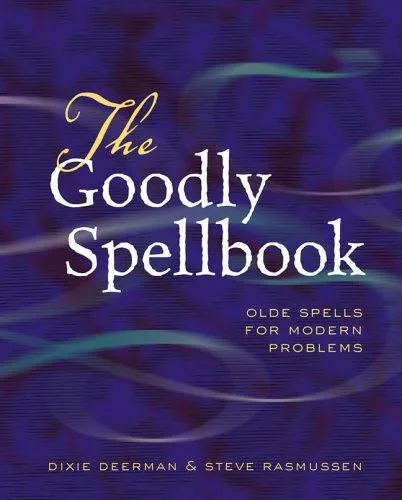
The goodly spellbook
 71
71

The goodly spellbook
HPS Lady Passion and HP Coven Oldenwilde *Diuvei’s “The Goodly Spellbook” offers a straightforward, operational approach to spellcraft that sidesteps much of the mystical fluff. Its strength lies in its directness; the instructions for ritual components and spell execution are clear and actionable. For instance, the section detailing the consecration of a ritual athame provides concrete steps that a working practitioner can immediately implement. However, the book’s limitation is its relative lack of theoretical depth. While it presents a functional system, it offers scant exploration of the philosophical underpinnings or historical evolution of the practices it details. The 2005 publication date places it within a specific moment of practical magic dissemination. Overall, it serves as a functional grimoire for those who prefer doing over deep contemplation.
📝 Description
71
Published in 2005, The Goodly Spellbook codified Coven Oldenwilde practices for wider access.
The Goodly Spellbook offers a practical guide to magical workings, rooted in established traditions for contemporary practitioners. It lays out ritual frameworks, correspondences, and incantations designed for direct use. The book guides readers through spell creation and execution, stressing the importance of intention and material components.
This volume is for individuals actively engaged in magical practice, especially those drawn to or curious about the Coven Oldenwilde tradition. It provides clear, sequential instructions for spell construction, covering both basic and more involved workings. Readers who prefer a direct, effective approach to ritual and spellcasting, valuing tradition, will find this a useful manual. It is not intended for those seeking solely theoretical discussions of magic.
The book details fundamental magical principles, such as using specific herbs, crystals, and elemental energies for desired results. It explains how to consecrate tools, cast circles, and invoke deities or energies. A central concept is the application of the 'Threefold Law' to spellcasting.
The Goodly Spellbook appeared in 2005, a time when public interest in Wicca and neo-paganism was growing. It reflects a movement within established covens to share their specific practices, distinguishing itself from the more academic or philosophical texts common in esoteric publishing. The book is part of a wider trend of disseminating practical magical knowledge from initiated groups, moving beyond generalized guides.
💡 Why Read This Book?
• Gain practical, step-by-step instructions for spell construction, including the proper use of specific correspondences like herbs and crystals as detailed in its chapters on material components. • Learn to perform effective ritual frameworks by understanding the principles of circle casting and energy invocation as presented within the book's operational sections. • Understand the application of the "Threefold Law" within spellcasting, offering a unique ethical and energetic consideration for magical outcomes that is specific to the Coven Oldenwilde tradition.
⭐ Reader Reviews
Honest opinions from readers who have explored this book.
❓ Frequently Asked Questions
What is the primary focus of The Goodly Spellbook?
The Goodly Spellbook focuses on practical, operational spellcraft. It provides detailed instructions for creating and performing spells, including the use of ritual tools, correspondences, and incantations, emphasizing direct application of magical principles.
Who is HPS Lady Passion and Coven Oldenwilde *Diuvei?
HPS Lady Passion and HP Coven Oldenwilde *Diuvei are the authors, representing a specific coven tradition. Their work aims to share established magical practices and spellcraft techniques from their lineage, first published in 2005.
Does The Goodly Spellbook explain the theory behind the spells?
While the book provides operational instructions, its primary emphasis is on the 'how-to' of spellcasting rather than extensive theoretical or historical exposition. It assumes a basic understanding or willingness to learn the underlying principles through practice.
What kind of magical traditions does this spellbook draw from?
The spellbook draws from established magical traditions and coven practices. It incorporates elements such as elemental energies, ritual frameworks, and specific correspondences, presented in a manner suitable for contemporary practitioners.
When was The Goodly Spellbook first published?
The Goodly Spellbook was first published in 2005, reflecting a period of increased accessibility for practical magical texts from established traditions.
Is this book suitable for beginners in magic?
It is suitable for beginners who are looking for a practical, step-by-step guide. However, practitioners who prefer extensive theoretical background might find it less satisfying than those who value direct application and ritual mechanics.
🔮 Key Themes & Symbolism
Operational Spellcraft
The core of The Goodly Spellbook lies in its detailed, step-by-step approach to performing magic. It emphasizes the practical execution of spells, providing clear instructions on everything from preparing ritual space and tools to casting circles and invoking energies. The focus is on efficacy and direct application, making it a guide for those who wish to actively engage in magical practice rather than merely study its theory.
Coven Tradition Codification
This work represents an effort to codify and share the practices of Coven Oldenwilde. It offers a glimpse into a specific lineage's approach to spellcasting, moving beyond generalized occult literature. The book details specific methods and traditions passed down within the coven, making it a valuable resource for understanding the nuances of particular magical lineages.
Intent and Manifestation
A central theme is the power of focused intent in manifesting desired outcomes. The book guides practitioners on how to clearly define intentions, channel personal energy, and utilize symbolic components (herbs, crystals, etc.) to amplify the spell's effect. This principle underpins the various workings presented, from protection spells to manifestation rituals.
Ethical Magic and Energy
The Goodly Spellbook addresses the energetic consequences of magical actions, notably through the principle of the "Threefold Law." This concept, woven throughout the text, highlights the importance of ethical considerations and the return of energy invested in spells. It encourages practitioners to act responsibly, understanding that magical work has repercussions.
💬 Memorable Quotes
Direct passages from the work, attributed to the author.
“Consecrate your tools with intention and reverence.”
— This emphasizes that ritual tools are not merely objects but conduits for magical energy. Their proper preparation imbues them with power and purpose, making them effective instruments for spellwork.
“The circle is a sacred space, a boundary against unwanted energies.”
— This highlights the protective and sacred function of the ritual circle. It serves as a defined space where focused magical work can occur safely, separating the practitioner from mundane distractions and energies.
“Understand the correspondences to amplify your will.”
— This points to the importance of symbolic associations (like herbs, colors, planets) in magic. By aligning spell components with the desired outcome, practitioners can enhance the power and effectiveness of their workings.
“The intent, clearly focused, is the seed of the spell.”
— This interpretation underscores that the success of any magical working hinges on the clarity and strength of the practitioner's intention. It is the primary driving force that directs the magical energy.
💡 Key Ideas
Editorial paraphrase of the work's core concepts — not direct quotes.
Energy returned is energy understood.
This paraphrase relates to the 'Threefold Law,' suggesting that the consequences or returns from a spell are a direct reflection of the energy and intent put into it, offering a lesson in karmic or energetic accountability.
🌙 Esoteric Significance
Tradition
This work aligns with contemporary Western Esoteric traditions, particularly those rooted in Wicca and modern Traditional Witchcraft. It draws upon established ritualistic frameworks, the use of elemental correspondences, and the concept of directed will, common in many magical systems that emerged or were codified in the 20th century. It departs from purely theoretical Hermeticism by focusing intensely on practical application and specific coven-derived methods.
Symbolism
Key symbols include the athame, representing the magical will and the element of fire, used for directing energy and cutting through illusion. The ritual circle functions as a sacred, protected space, symbolizing the cosmos and the microcosm of the practitioner's magical universe. Herbs and crystals are utilized for their specific energetic properties and planetary or elemental associations, acting as focal points for intent.
Modern Relevance
Contemporary practitioners engaged with Traditional Witchcraft, coven-based practices, and operational magic find value in its structured approach. It informs modern grimoire creation and ritual design for those seeking clear, actionable spellcraft based on established, albeit specific, lineages. Thinkers and practitioners focusing on the efficacy of ritual mechanics and the practical application of correspondences often reference such works.
👥 Who Should Read This Book
['• Practitioners of Traditional Witchcraft seeking to deepen their understanding of operational spellcraft and ritual structure.', '• Students of Coven Oldenwilde or similar coven traditions interested in accessing their specific magical methods and spell formulations.', '• Individuals looking for practical, step-by-step magical instruction beyond generalized theory, who value clear guidance on spell components and execution.']
📜 Historical Context
The Goodly Spellbook, first published in 2005, emerged during a period when practical occultism saw a surge in accessible literature. Following the groundwork laid by figures like Gerald Gardner in the mid-20th century and the subsequent explosion of Wiccan and neo-pagan texts in the late 20th century, this book represents a move towards more specific, coven-based grimoires being shared. It stands apart from the more academic or philosophical explorations of esotericism prevalent at the time, such as those found in journals like 'The Pomegranate.' While not directly engaging with contemporaries like Scott Cunningham, whose work often focused on simpler, nature-based magic, The Goodly Spellbook offers a more structured, ritualistic approach attributed to Coven Oldenwilde. Its publication date suggests it taps into an audience seeking direct operational knowledge from established traditions, potentially distinct from the broader Neopagan movements.
📔 Journal Prompts
The consecration of ritual tools: what intention do you imbue?
Reflection on the sacred space created by casting a circle.
Analyzing the correspondences of herbs and crystals for a specific spell.
The role of the Threefold Law in your magical practice.
Defining your core intent for a manifestation working.
🗂️ Glossary
Athame
A ritual dagger, distinct from a functional knife, used primarily for directing magical energy, inscribing symbols, and cutting through energetic barriers rather than physical objects.
Casting the Circle
The ritual act of creating a sacred, protected space for magical workings, typically by defining boundaries and invoking protective energies or deities.
Correspondences
The symbolic associations between magical elements, such as herbs, crystals, colors, planets, and deities, used to enhance the power and focus of spellwork.
Invocation
The act of calling upon deities, spirits, or energies to be present and assist in a ritual or spell, often involving specific prayers or incantations.
Spellcraft
The practical art and technique of designing and executing magical workings to achieve specific desired outcomes through the manipulation of energies and symbols.
Threefold Law
A principle often found in Wiccan and related traditions, stating that whatever energy (positive or negative) a practitioner sends out will return to them threefold.
Will
In a magical context, refers to the focused intent and directed energy of the practitioner, considered the primary force behind spellcasting and manifestation.
🔮 Readers Also Liked
Browse all →








More Free Occult Philosophy Books
View all →