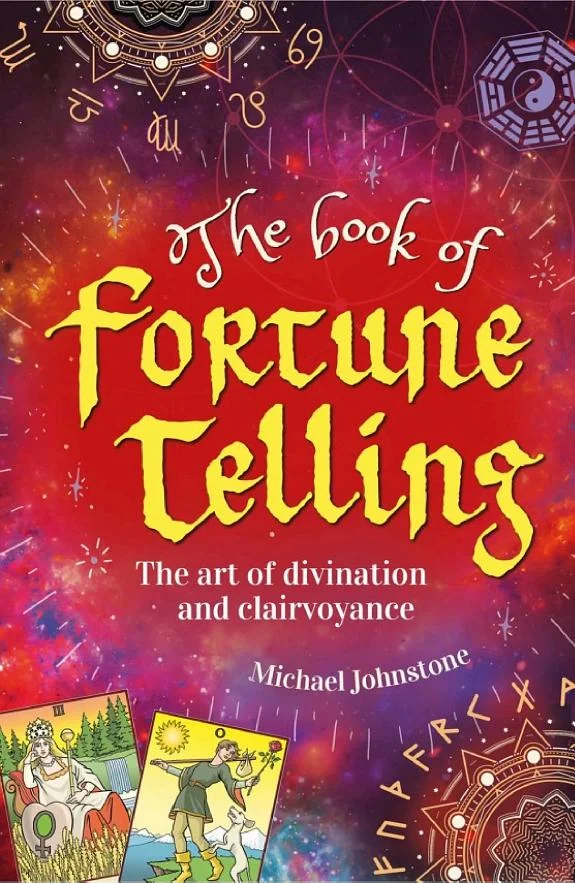
The Book of Fortune Telling
 73
73

The Book of Fortune Telling
Michael Johnstone’s *The Book of Fortune Telling* presents a broad survey of divinatory arts, a commendable undertaking given the vastness of the subject. The author’s strength lies in presenting complex historical threads and diverse practices with admirable clarity, avoiding the sensationalism that often plagues this genre. His examination of the historical development of cartomancy, for instance, is particularly well-researched, situating it within a specific European context. However, the book’s breadth occasionally comes at the expense of depth. While it introduces many methods, it rarely lingers long enough to allow the reader to fully grasp the nuances of any single practice beyond a foundational level. The section on crystal gazing, while informative, could benefit from more detailed guidance on developing the necessary focus and interpretive skills. Despite this limitation, Johnstone provides a solid, accessible introduction for those seeking an overview of humanity's enduring fascination with the future.
📝 Description
73
Michael Johnstone's 2015 book demystifies fortune-telling as structured systems of interpretation.
The Book of Fortune Telling by Michael Johnstone examines divinatory practices that have long captured human interest. It moves beyond a simple listing of methods, considering the historical and cultural circumstances that gave rise to them. The work covers a variety of common techniques, offering readers a straightforward introduction to foresight arts. Johnstone seeks to clarify processes often seen as mere superstition, instead showing them as organized frameworks for understanding.
This volume is for anyone curious about the history and application of divination, whether they are new to the subject or already have some background. It is relevant for students of esoteric traditions, comparative religion, and cultural history, as well as those wanting to grasp the human desire to foresee or affect future outcomes. Readers interested in specific methods such as tarot, palmistry, or scrying will find essential information within these pages.
Johnstone places fortune-telling within a long human tradition, tracing its origins to ancient civilizations. The book acknowledges the varied forms of divination that have appeared across cultures and eras, from Babylonian astrology to European cartomancy. It notes how these practices often connected with religious beliefs, philosophical ideas, and social customs, fulfilling various societal roles. The work engages with the ongoing tension between empirical observation and metaphysical inquiry.
💡 Why Read This Book?
• Gain a foundational understanding of over a dozen distinct fortune-telling methods, from the well-known tarot to lesser-known practices, as detailed in Michael Johnstone's comprehensive survey. • Explore the historical evolution of divination, tracing its roots and cultural significance from ancient times to its modern manifestations, as presented in the book's historical context sections. • Develop an appreciation for the symbolic language of divination, learning how techniques like palmistry and scrying utilize specific motifs and interpretations to offer insights into personal guidance.
⭐ Reader Reviews
Honest opinions from readers who have explored this book.
❓ Frequently Asked Questions
When was The Book of Fortune Telling first published?
The Book of Fortune Telling by Michael Johnstone was first published on October 26, 2018. This edition provides a contemporary overview of historical divinatory practices.
What are some of the fortune-telling methods covered in the book?
The book covers a wide array of methods, including tea leaf reading, tarot, palmistry, crystal ball gazing, and various other forms of divination from around the world.
Is Michael Johnstone an expert in occult literature?
While the book focuses on fortune-telling techniques, Michael Johnstone's work is positioned within the esoteric category, suggesting an author familiar with mystical and metaphysical subjects.
Does the book explain how to perform fortune-telling?
Yes, the book aims to provide an enlightening guide, examining well-known techniques and offering insights that can help readers understand and potentially practice these forms of divination.
Where can I find more information on the history of divination?
The Book of Fortune Telling offers a historical overview, examining the long and fascinating history of fortune-telling practices across different cultures and eras.
What is the main purpose of The Book of Fortune Telling?
Its purpose is to explore humanity's enduring attempts to understand fate through mystical means, examining various imaginative and esoteric techniques from a historical and interpretive perspective.
🔮 Key Themes & Symbolism
The Human Quest for Foresight
This theme examines the innate human desire to understand and anticipate future events, a drive that has manifested across cultures and throughout history. The book posits that fortune-telling methods are not mere superstitions but rather structured systems developed to interpret signs and patterns, offering a form of guidance or solace. Johnstone explores how these practices reflect a fundamental aspect of the human psyche – the need for meaning and control in the face of uncertainty, presenting divination as a dialogue with fate itself.
Diversity of Divinatory Methods
The work surveys a broad spectrum of divinatory techniques, highlighting their unique approaches and historical origins. From the visual language of tarot cards to the tactile interpretations of palmistry and the focused perception of crystal gazing, each method offers a distinct lens through which to view potential futures. Johnstone emphasizes that despite their varied forms, many share underlying principles related to symbolism, intuition, and pattern recognition, illustrating the rich diversity of human ingenuity in seeking knowledge beyond the obvious.
Symbolism and Interpretation
A core concept is that fortune-telling relies heavily on symbolic language and the art of interpretation. Whether it's the archetypal imagery in a tarot spread or the lines on a hand, these elements are not arbitrary but are understood within specific frameworks of meaning. The book explores how practitioners learn to decode these symbols, often drawing on intuition and established traditions, to construct narratives or offer insights. This process underscores the subjective yet structured nature of divination.
Historical and Cultural Roots
Johnstone situates fortune-telling practices within their specific historical and cultural contexts. The book traces how methods evolved over centuries, influenced by religious beliefs, philosophical movements, and societal needs. Understanding these origins is presented as crucial for appreciating the methods themselves, moving beyond simplistic notions of magic to recognize them as integral parts of human cultural heritage. The work implicitly connects ancient practices to their modern continuations and adaptations.
💬 Memorable Quotes
Direct passages from the work, attributed to the author.
“Since time immemorial, human beings have tried to understand the forces of fate through a variety of imaginative and mystical means.”
— This opening statement frames fortune-telling not as a fringe activity but as a fundamental, long-standing aspect of human inquiry into destiny and the unknown.
“Whether it's reading tea leaves, using tarot, palmistry, or crystal ball gazing, the history of fortune-telling is a long and fascinating one.”
— This highlights the diverse nature of divinatory arts and emphasizes their historical depth, suggesting that each practice has a rich lineage worth exploring.
“Michael Johnstone examines well-known techniques from around the world in this enlightening guide.”
— This statement positions the book as an accessible and informative resource, promising a broad overview of global fortune-telling traditions.
“You never know, perhaps one of these ancient forms of divination will reveal hidden...”
— This hints at the potential for personal revelation and self-discovery through engaging with these practices, suggesting a practical benefit for the reader.
“The history of fortune-telling is a long and fascinating one.”
— This simple assertion underscores the book's focus on the historical development and cultural significance of divinatory practices.
🌙 Esoteric Significance
Tradition
This work engages with the broad tradition of Western esoteric practices, particularly those concerned with divination and gnosis. While not strictly tied to a single lineage like Hermeticism or Kabbalah, it draws upon the historical prevalence of these arts within such traditions. The book acts as a bridge, presenting practices often found in occult circles to a wider audience, framing them as historical cultural phenomena with symbolic depth rather than solely as mystical rituals.
Symbolism
Key symbols explored include the archetypal imagery within tarot cards, which draw from a rich visual language often linked to Jungian psychology and older mythologies. Palmistry utilizes the lines and mounts of the hand as symbolic representations of life paths and character traits, rooted in ancient Greek and Roman physiognomy. Crystal ball gazing, or scrying, employs the reflective surface as a symbolic gateway to inner visions or subconscious perceptions, a practice found in various shamanic traditions.
Modern Relevance
Contemporary practitioners of divination, tarot readers, and those interested in psychological archetypes can find value in Johnstone's historical overview. The book's accessible approach may also appeal to individuals exploring mindfulness, introspection, and alternative methods of self-discovery, aligning with modern interests in mental wellness and personal growth. It provides a foundational understanding for those seeking to engage with practices that have seen renewed interest in online communities and contemporary spiritual exploration.
👥 Who Should Read This Book
• Aspiring diviners seeking an introduction to various fortune-telling techniques, providing a historical and practical overview of methods like tarot and palmistry. • Students of comparative religion and cultural history interested in understanding the role of divination across different societies and historical periods. • Individuals curious about the human impulse to predict or understand the future, offering insights into the psychological and symbolic dimensions of foresight practices.
📜 Historical Context
Published in 2018, Michael Johnstone's *The Book of Fortune Telling* enters a contemporary landscape where esoteric studies have seen a resurgence, often intersecting with popular psychology and wellness trends. The book’s approach, however, grounds itself in historical examination, moving beyond mere New Age interpretations. It revisits the long tradition of divination, which flourished significantly in periods like the Renaissance, where figures such as Nostradamus gained renown for their prophetic abilities, often operating within Hermetic and astrological frameworks. Johnstone implicitly contrasts these historical methods with more modern, secular approaches to predicting outcomes, such as data analysis, while acknowledging the enduring human need for symbolic interpretation. The work navigates a cultural space where occult practices are simultaneously dismissed by mainstream science and increasingly explored by curious individuals seeking alternative perspectives on life's uncertainties.
📔 Journal Prompts
Reflect on the historical significance of palmistry as presented in the text.
Consider the role of archetypal imagery in tarot as discussed.
Analyze the concept of fate as explored through various divinatory methods.
Contemplate the cultural context of tea leaf reading's origins.
Evaluate the symbolic interpretations used in crystal ball gazing.
🗂️ Glossary
Divination
The practice of seeking knowledge of the future or the unknown by supernatural means. It encompasses a wide range of techniques used to interpret signs and omens.
Cartomancy
Divination using a deck of cards, most commonly the Tarot or playing cards. It involves interpreting the symbols, positions, and combinations of cards drawn.
Palmistry
A divinatory practice involving the study of the palm of the hand, including its lines, mounts, and shape, to interpret character and predict future events.
Scrying
A form of divination involving gazing into a reflective surface, such as a crystal ball, mirror, or water, to receive visions or insights.
Tarot
A deck of cards featuring symbolic imagery, used for divination and self-exploration. It typically consists of a Major Arcana and a Minor Arcana.
Esoteric
Intended for or likely to be understood by only a small number of people with a specialized knowledge or interest. Often refers to mystical or occult subjects.
Archetype
A universal, inherited pattern of thought or imagery derived from the experience of the race and present in the individual unconscious, often seen in symbols and myths.
This book appears in 1 collection
🔮 Readers Also Liked
Browse all →









From the “Crystal Ball Gazing” Collection
View all →





More Free Occult Philosophy Books
View all →