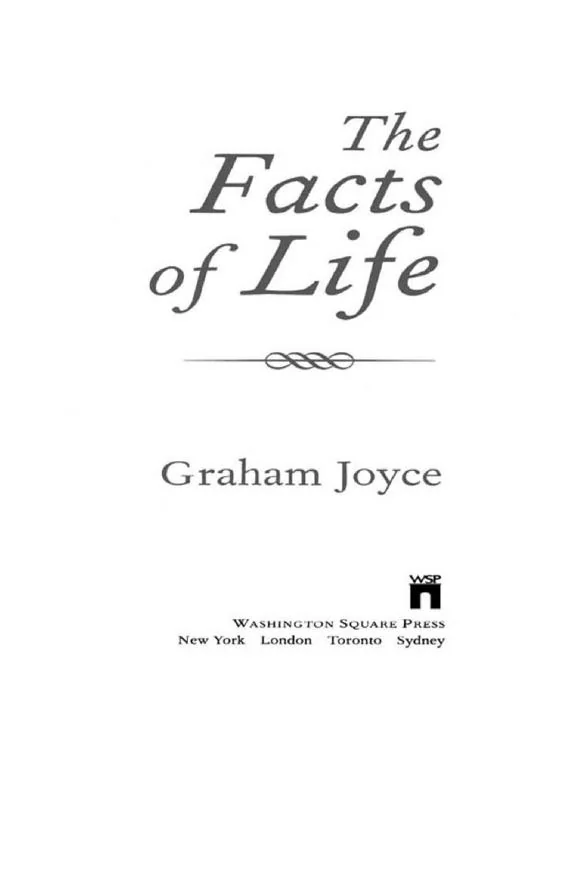
The Facts of Life
 84
84

The Facts of Life
Graham Joyce’s "The Facts of Life" offers a piercing look at a family fractured and reformed by the Second World War. The novel’s strength lies in its exquisite prose, which imbues even the most mundane moments with a palpable emotional weight. Joyce masterfully captures the lingering anxieties and unspoken griefs that permeate post-war English life. A particular strength is the portrayal of the child protagonist’s perspective, filtering the adult world’s turmoil through a lens of burgeoning understanding and fear. However, the narrative occasionally feels diffuse, its multiple threads sometimes struggling to cohere into a singular, driving force. The exploration of the characters’ inner lives, while richly detailed, can at times slow the pacing considerably, particularly in the novel's midsection. Despite this, the work remains a powerful examination of resilience and the enduring, often complex, bonds of family. Joyce's novel ultimately succeeds as a poignant exploration of how history shapes the private lives of individuals.
📝 Description
84
Graham Joyce's 2003 novel, "The Facts of Life," looks at how World War II reshaped a family's identity.
Published in 2003, Graham Joyce's "The Facts of Life" examines the lasting effects of World War II on an English family. The novel moves beyond the battlefield to concentrate on the psychological and emotional consequences of the conflict, showing how global events alter individual lives. It details the disruptions during and after the war, focusing on how the characters' personal identities are irrevocably changed.
The narrative appeals to readers who favor stories centered on characters and a strong sense of place. It will resonate with those interested in how major historical events impact ordinary people over time. The book addresses themes of resilience, the nature of memory, and the complex bonds within families, all written with careful prose.
While Graham Joyce's "The Facts of Life" is set against the backdrop of World War II, its esoteric dimension lies in its examination of inherited trauma and the unconscious transmission of familial histories. The novel suggests that the past does not simply disappear but continues to shape present realities, often in ways individuals do not fully grasp. It touches upon the subjective experience of memory, particularly how collective historical events like the Blitz become deeply personal and are filtered through individual consciousness. This focus on the hidden currents that link generations and the internal lives shaped by unseen forces places the book within traditions that explore the deeper, often hidden, connections of human experience.
💡 Why Read This Book?
• Gain insight into the enduring psychological impact of the Second World War on English family structures, specifically examining how the Blitz and its aftermath shape interpersonal dynamics in the period following 1945. • Experience a literary exploration of memory and identity, understanding how personal recollections and a sense of self are constructed and reconstructed in response to collective historical trauma. • Appreciate a nuanced portrayal of connection and emotional endurance, observing how characters find and maintain bonds amidst profound loss and societal change, as depicted in the narrative's exploration of post-war Britain.
⭐ Reader Reviews
Honest opinions from readers who have explored this book.
❓ Frequently Asked Questions
What is the primary focus of Graham Joyce's "The Facts of Life"?
The novel centers on an English family navigating the profound personal and emotional consequences of the Second World War, exploring themes of identity, connection, and resilience in the years during and after the conflict.
When was "The Facts of Life" first published?
Graham Joyce's "The Facts of Life" was first published on June 17, 2003.
How does "The Facts of Life" differ from typical war novels?
Unlike many war novels that focus on combat, this work emphasizes the domestic and psychological impact of the war on individuals and families, examining the long-term emotional endurance required.
What key themes are explored in "The Facts of Life"?
Key themes include inherited trauma, the subjective nature of memory, the search for connection in a post-war world, and the complex dynamics within family relationships under duress.
Is "The Facts of Life" based on real historical events?
While set against the backdrop of the Second World War, the novel is a fictional narrative. It uses the historical period to explore universal human experiences of loss, love, and adaptation.
What kind of writing style can readers expect from "The Facts of Life"?
Readers can expect exquisite, literary prose. Graham Joyce is known for his ability to imbue narratives with deep emotional resonance and a keen observational detail of his characters' inner lives.
🔮 Key Themes & Symbolism
Wartime's Domestic Echoes
The novel meticulously details how the Second World War, even when experienced indirectly, fundamentally reshapes domestic life and familial relationships. It moves beyond the battlefield to explore the psychological toll on those at home, including the pervasive anxieties during the Blitz and the long process of emotional recovery in the post-1945 era. Joyce illustrates how the external conflict becomes an internal one, influencing character development and the very fabric of family life for years to come.
The Fluidity of Memory
A central theme is the subjective and often unreliable nature of memory, particularly in the context of trauma. The work explores how individuals recall and reconstruct past events, influenced by personal emotions, societal narratives, and the passage of time. This is crucial in understanding how characters grapple with their pasts and how their identities are shaped by these often-shifting personal histories, especially when dealing with the ambiguities of wartime experiences.
Endurance and Connection
Despite the profound disruptions caused by war, "The Facts of Life" highlights the remarkable capacity for human connection and emotional endurance. The narrative examines how individuals forge and maintain bonds under immense pressure, finding solace and strength in relationships. It suggests that even in the face of widespread devastation, the drive to connect and to persevere remains a fundamental aspect of the human spirit.
Identity in Flux
The novel probes the construction of personal identity amidst external chaos and internal upheaval. Characters grapple with who they are in the shadow of war, questioning their roles within the family and society. The work suggests that identity is not static but a dynamic process, continually shaped by experiences, relationships, and the ongoing negotiation between past and present realities.
💬 Memorable Quotes
Direct passages from the work, attributed to the author.
“Children learned to read the silences as much as the words.”
— This interpretation highlights the novel's exploration of unspoken tensions and emotional subtext within families during and after the war. It points to how young characters develop a keen, albeit often fearful, sensitivity to the atmosphere around them.
“Home was a place of both refuge and reminder.”
— This concept reflects the duality of the domestic sphere in the novel. While homes provided sanctuary from the dangers of war, they also contained memories and atmospheres that continuously evoked the recent past and its emotional weight.
“The future felt uncertain, like a fog rolling in.”
— This captures the pervasive sense of apprehension and lack of clear direction experienced by the characters in the post-war period. The uncertainty mirrors the challenges of rebuilding not just a nation, but individual lives and futures.
💡 Key Ideas
Editorial paraphrase of the work's core concepts — not direct quotes.
The war ended, but the fear lingered.
This paraphrased concept captures the novel's focus on the long-term psychological impact of conflict. It suggests that the cessation of hostilities did not immediately bring peace, but rather a persistent undercurrent of anxiety and trauma for the characters.
They rebuilt their lives on foundations of memory.
This paraphrased idea emphasizes how the characters' present existence is inextricably linked to their past experiences, particularly those from the war years. Their future is built not just on new realities but on the reinterpretations and legacies of what came before.
🌙 Esoteric Significance
Tradition
While "The Facts of Life" is primarily a work of literary fiction grounded in historical realism, its exploration of memory, inherited trauma, and the subtle psychic currents within families can be viewed through an esoteric lens. It touches upon the Hermetic principle of 'As Above, So Below,' suggesting that the macrocosmic upheaval of war has profound micro-cosmic effects on individual consciousness and familial energetic patterns. The narrative implicitly explores how emotional residue and ancestral imprints can shape present-day realities, a concept echoed in certain psychological and spiritual traditions.
Symbolism
The novel subtly employs symbols that resonate with deeper meanings. The concept of the "Blitz" itself functions as a symbol of overwhelming external force impacting the internal psyche, akin to an initiatory ordeal. The recurring motif of "silences" within dialogue represents unspoken truths, repressed memories, and the psychic weight carried by individuals and families. Furthermore, the act of "rebuilding" a home or a life symbolizes the alchemical process of transforming chaos into order, and psychological fragmentation into a cohesive self.
Modern Relevance
In contemporary discussions surrounding intergenerational trauma and the impact of collective historical events on mental well-being, Joyce's novel finds significant relevance. Thinkers and practitioners in fields such as depth psychology and trauma-informed care can draw parallels to the narrative's portrayal of how war's effects ripple through generations. The work's focus on the subjective experience of history also aligns with modern scholarship that emphasizes personal narrative and lived experience in understanding larger societal shifts, resonating with approaches in fields like narrative therapy and psychogeography.
👥 Who Should Read This Book
• Readers interested in the psychological aftermath of major historical events, particularly those seeking to understand the long-term effects of World War II on civilian populations. • Students of literary fiction who appreciate character-driven narratives and exquisite prose, focusing on how authors craft emotional depth and explore complex human relationships. • Individuals drawn to explorations of memory, identity, and family dynamics, especially those who find value in narratives that examine how personal histories are shaped by collective experiences.
📜 Historical Context
Graham Joyce's "The Facts of Life," published in 2003, arrived in a literary landscape where World War II remained a potent subject. While many authors focused on battlefield narratives or grand historical sweeps, Joyce's work distinguished itself by concentrating on the intimate, often understated, psychological fallout within an English family. The early 2000s saw a growing trend in literary fiction to explore the civilian experience and the enduring impact of trauma, moving beyond the immediate conflict to its long-term societal and personal consequences. The novel’s publication year, 2003, was also a period where authors like Ian McEwan (whose novel "Atonement" explored similar themes of wartime impact and memory, published in 2001) were critically acclaimed for their nuanced portrayals of the era. "The Facts of Life" contributes to this ongoing conversation by examining how the domestic sphere absorbs and reflects national trauma, offering a counterpoint to more action-oriented historical accounts.
📔 Journal Prompts
The lingering silence after the Blitz.
The child's perception of adult anxieties.
Home as a repository of memory.
Rebuilding life on uncertain foundations.
The endurance of familial connection.
🗂️ Glossary
The Blitz
The sustained strategic bombing campaign by Nazi Germany against Britain during World War II, particularly targeting London and other cities from September 1940 to May 1941. It represents a period of intense aerial bombardment and civilian hardship.
Post-war era
The period following the end of World War II in 1945. This era in Britain was characterized by rebuilding, rationing, social change, and the long-term psychological and economic consequences of the conflict.
Inherited trauma
The concept that the psychological effects of traumatic experiences can be passed down from one generation to the next, influencing behavior, emotional responses, and mental health. The novel explores this through family dynamics.
Subjective memory
The personal and often biased recollection of past events. Unlike objective historical fact, subjective memory is influenced by individual emotions, perspectives, and the passage of time, as depicted in the characters' recollections.
Emotional endurance
The capacity to withstand and recover from significant emotional stress and hardship. The novel portrays characters demonstrating this quality in the face of wartime loss and the challenges of rebuilding their lives.
Domestic sphere
The field of home and family life. The novel focuses heavily on this sphere, illustrating how the war's impact was deeply felt within private households, affecting relationships and daily routines.
Unspoken tensions
Conflicts or disagreements that exist between individuals but are not openly discussed. These are often a source of psychological strain and are prevalent in the novel's portrayal of post-war family dynamics.
This book appears in 1 collection
🔮 Readers Also Liked
Browse all →









From the “Precognition” Collection
View all →




More Free Occult Philosophy Books
View all →