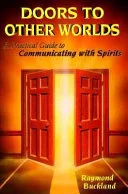
Doors to Other Worlds
 75
75

Doors to Other Worlds
Raymond Buckland’s *Doors to Other Worlds* approaches the perennial question of post-mortem consciousness with a decidedly hands-on methodology. Unlike many esoteric texts that rely on abstract philosophy, Buckland provides tangible exercises for spirit contact. The section detailing specific methods for astral projection, for instance, offers clear, actionable steps that are both intriguing and potentially effective for the dedicated practitioner. However, the book occasionally leans into an earnestness that, while genuine, might feel a bit dated to readers accustomed to more nuanced discussions of psychic phenomena. Buckland’s directness in presenting concepts like ‘spirit guides’ as straightforward entities, without extensive exploration of potential psychological interpretations, represents a limitation for those seeking a more critical perspective. Ultimately, *Doors to Other Worlds* is a valuable resource for those who believe in direct experiential learning within the spiritual realm.
📝 Description
75
Raymond Buckland's 1993 book, *Doors to Other Worlds*, details methods for contacting non-physical entities.
Published in 1993, *Doors to Other Worlds* is a guide by Raymond Buckland for those interested in consciousness outside the physical body. The book lays out specific techniques for attempting communication with spirits, such as guides and angels. Buckland's aim is to help readers grow their own psychic awareness and possibly engage in mediumship.
This book is for readers curious about life after death, spiritual dimensions, and inter-dimensional contact. It appeals to those who want to understand and build their psychic talents, whether they are new to the subject or aspire to be mediums. The focus is on practical, direct spiritual experience instead of abstract theory.
Buckland explains how to develop psychic senses and identify spirit guides. The text covers consciousness, non-physical planes, and how to interact with them. Exercises are included to improve intuition, clairvoyance, and mediumistic skills, encouraging a personal link with the spiritual world.
Published in 1993, *Doors to Other Worlds* arrived during a time when interest in New Age spirituality and paranormal subjects continued. It built upon earlier movements like Theosophy and Spiritualism. Buckland's focus on practical application set his work apart from more academic or philosophical texts, making him a teacher for those seeking concrete results in their spiritual pursuits. He was a contemporary of authors exploring accessible spiritual engagement.
💡 Why Read This Book?
• Learn specific, actionable techniques for spirit communication, such as those detailed for contacting spirit guides, which offer a direct path to exploring non-physical realms not found in purely theoretical works. • Develop your own psychic abilities through Buckland's structured exercises, providing a practical framework for enhancing intuition and mediumship that goes beyond general advice. • Gain a foundational understanding of consciousness survival and spiritual planes, as presented in the context of practical, experiential exploration, offering tangible steps for personal discovery.
⭐ Reader Reviews
Honest opinions from readers who have explored this book.
❓ Frequently Asked Questions
What specific methods does Raymond Buckland suggest for communicating with spirits in 'Doors to Other Worlds'?
Buckland outlines several methods, including automatic writing, trance communication, and visualization techniques. He emphasizes developing personal psychic sensitivity as a prerequisite for effective and safe spirit contact, as detailed throughout the book.
Can beginners learn to become mediums by reading this book?
Yes, the book is designed for beginners, offering step-by-step guidance on developing psychic abilities and mediumship. Buckland provides exercises aimed at cultivating intuition and facilitating communication with non-physical entities.
What is the historical significance of 'Doors to Other Worlds'?
Published in 1993, the book contributed to the ongoing discourse in New Age spirituality, offering practical techniques for spirit communication at a time when interest in the paranormal and personal spiritual development was high.
Does the book discuss different types of entities one might encounter?
The book addresses the existence of various entities on spiritual planes, specifically mentioning spirit guides and guardian angels. It provides guidance on how to approach these interactions.
What are the core philosophical underpinnings of Buckland's approach in this book?
Buckland's approach is grounded in the belief that consciousness survives physical death and that direct communication with non-physical realms is possible through disciplined practice and developed psychic faculties.
Is 'Doors to Other Worlds' suitable for skeptics?
While the book assumes a belief in the possibility of spirit communication, its structured approach and practical exercises might appeal to open-minded skeptics interested in exploring alternative states of consciousness and psychic phenomena.
🔮 Key Themes & Symbolism
Spirit Communication Techniques
The book details numerous methods for establishing contact with non-physical entities. This includes practical exercises for automatic writing, trance states, and developing clairvoyant perception. Buckland aims to explain the process, presenting spirit communication not as an innate gift for a select few, but as a skill that can be cultivated through focused practice and intention, empowering readers to engage directly with the spiritual dimensions he posits exist.
Development of Psychic Abilities
A central theme is the systematic cultivation of latent psychic faculties. Buckland guides readers through exercises designed to enhance intuition, clairvoyance, and telepathic abilities. The emphasis is on practical application, encouraging readers to actively engage with their inner senses rather than passively receiving information, thereby fostering personal growth and a deeper connection to the unseen.
Consciousness Beyond the Physical
The work directly confronts the question of whether consciousness persists after bodily death. Buckland posits the existence of multiple spiritual planes populated by various entities. He provides readers with the tools to explore these realms and interact with discarnate beings, including guides and angels, thereby challenging conventional materialistic views of existence.
Mediumship as a Practice
Buckland addresses the potential for readers to become mediums themselves. He outlines the responsibilities and methods involved in acting as a conduit for communication between the physical and spiritual worlds. The book offers a foundational understanding for those interested in developing mediumistic skills, stressing ethical considerations and personal development alongside practical techniques.
💬 Memorable Quotes
Direct passages from the work, attributed to the author.
“The spirit world is not a place of reward or punishment, but a place of learning and growth.”
— This interpretation highlights Buckland's view of the afterlife as a continuation of the soul's evolutionary journey. It suggests that interactions with spirits are opportunities for spiritual education and development, rather than judgment.
“The veil between worlds is thin for those who know how to perceive it.”
— This interpretation speaks to the core premise of the book: that the separation between the physical and spiritual realms is not absolute. It implies that with the right knowledge and techniques, this perceived barrier can be crossed.
💡 Key Ideas
Editorial paraphrase of the work's core concepts — not direct quotes.
Develop your psychic senses as you would develop a muscle.
This quote emphasizes Buckland's practical, exercise-based approach to psychic development. It frames spiritual abilities as trainable capacities, encouraging consistent effort and practice rather than reliance on innate talent alone.
Our guardian angels are always with us, offering guidance and protection.
This paraphrased concept underscores the presence of benevolent spiritual helpers in Buckland's cosmology. It suggests a supportive spiritual environment where individuals are not alone in their earthly or spiritual endeavors.
Mediumship is a sacred trust, requiring integrity and clear intent.
This paraphrased concept conveys Buckland's emphasis on the ethical dimension of channeling and mediumship. It suggests that becoming a medium involves a serious commitment to responsible and honest spiritual work.
🌙 Esoteric Significance
Tradition
Buckland's work draws heavily from the modern Spiritualist and Theosophical traditions, which posit the existence of a spirit world accessible to humans. His approach emphasizes practical mediumship and direct communication with non-physical entities, aligning with the experiential focus of these lineages. While not strictly Hermetic or Gnostic, it incorporates elements of universal spiritual exploration found across many esoteric paths, focusing on personal development and direct interaction with higher planes.
Symbolism
The concept of 'doors' itself serves as a potent symbol, representing thresholds between states of consciousness and physical/non-physical realities. Spirit guides and guardian angels function as symbolic representations of higher wisdom, intuition, and divine protection. The act of communication symbolizes the bridging of perceived separations, both within the individual psyche and between different dimensions of existence, facilitating spiritual integration.
Modern Relevance
Buckland's foundational work continues to influence contemporary spiritual practitioners and online communities focused on mediumship, psychic development, and spirit communication. His practical, step-by-step methods are often cited by modern channels and sensitives seeking to develop their own abilities. Thinkers and groups exploring consciousness studies, parapsychology, and modern spiritualism frequently reference Buckland's accessible teachings as a gateway into experiential spiritual work.
👥 Who Should Read This Book
• Aspiring mediums seeking structured guidance on developing their channeling abilities and understanding the responsibilities involved. • Individuals curious about the survival of consciousness after death who prefer practical exercises over theoretical discussions. • Practitioners of esoteric arts looking to deepen their connection with spirit guides and explore inter-dimensional communication techniques.
📜 Historical Context
Raymond Buckland's *Doors to Other Worlds*, released in 1993, emerged within the vibrant range of late 20th-century esoteric and New Age thought. This era saw a continued fascination with paranormal phenomena, channeling, and spiritualist traditions, building upon the foundations laid by movements like Theosophy in the late 19th century. Buckland's work distinguished itself by offering practical, accessible techniques for spirit communication, appealing to a generation seeking direct experiential engagement with the spiritual. His approach provided a counterpoint to more academic or dogmatic explorations of the afterlife and consciousness. Contemporary authors like Scott Cunningham were also popularizing accessible witchcraft and spiritual practices, indicating a broader cultural interest in tangible, personal spiritual paths. Buckland's clear, instructional style positioned him as a leading figure for those looking to actively explore the spiritual dimensions rather than merely theorize about them.
📔 Journal Prompts
Spirit guide communication: Document your initial impressions and any subtle sensations when attempting to connect with a named spirit guide.
Psychic sense development: Describe a recent instance where your intuition guided you, and analyze the sensory details involved.
The concept of 'doors' to other worlds: Reflect on what metaphorical or literal gateways you have encountered in your spiritual practice.
Guardian angel presence: Consider how you might perceive or acknowledge the guidance of a guardian angel in your daily life.
Developing mediumistic clarity: Journal about the challenges and breakthroughs experienced when trying to differentiate your own thoughts from potential external communications.
🗂️ Glossary
Spirit Guides
Non-physical entities believed to assist and guide individuals on their spiritual path, offering wisdom and support throughout life.
Guardian Angels
Beings of light and love, often seen as personal protectors assigned to individuals, offering comfort and safeguarding their spiritual journey.
Psychic Abilities
Innate mental faculties such as clairvoyance, clairaudience, and telepathy that allow for perception beyond the ordinary five senses.
Mediumship
The practice of acting as an intermediary to convey messages or information from the spirit world to the physical world.
Spiritual Planes
Different levels or dimensions of existence beyond the physical realm, inhabited by various forms of consciousness and energy.
Automatic Writing
A technique where a person's hand moves seemingly on its own, channeling messages or information from non-physical sources.
Trance Communication
A state of altered consciousness where the communicator's ego is lowered, allowing spirit entities to communicate more directly through them.
This book appears in 1 collection
🔮 Readers Also Liked
Browse all →






From the “Spirit Guides” Collection
View all →





More Free Occult Philosophy Books
View all →