Vipassana
 71
71

Vipassana
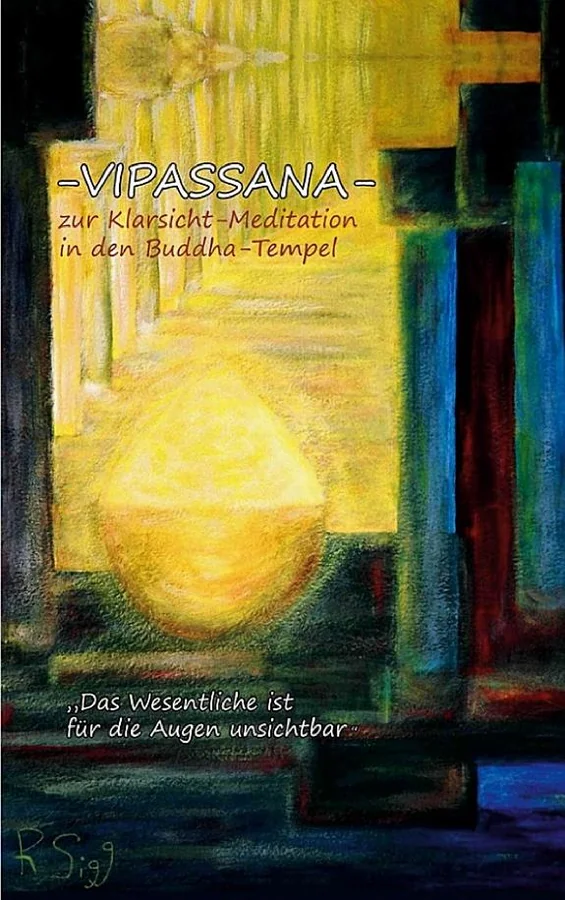
Rut Sigg's "Vipassana" presents a commendable effort to translate the intricate practice of insight meditation into comprehensible language for a modern audience. Sigg’s strength lies in her empathetic tone, drawing from a life marked by considerable personal struggle, which imbues the text with a relatable authenticity. The explanation of observing the 'arising and passing' of phenomena, particularly as detailed in the sections on anicca, offers a concrete anchor for practitioners grappling with the impermanence of their own mental states. However, the book occasionally leans towards simplification, potentially glossing over the profound psychological depth and sustained discipline required for deep Vipassana attainment. While accessible, it might leave seasoned practitioners wanting more nuanced exploration of the subtler aspects of the path. Nevertheless, "Vipassana" serves as a clear, encouraging entry point for those seeking to understand this ancient practice.
📝 Description
71
Rut Sigg's 2022 book demystifies Vipassana for the modern individual.
Rut Sigg's Vipassana, published in 2022, presents a clear and empathetic guide to a core Buddhist meditation practice. The book breaks down complex techniques into accessible steps for everyday people. Sigg aims to show that Vipassana is not just for ascetics but a practical tool for achieving inner peace and clarity. It is for anyone curious about meditation, especially those new to Vipassana or looking for a less abstract approach than philosophical texts. The book speaks to individuals facing emotional difficulties or seeking a methodical way to understand their own minds. Sigg's own experiences with significant life challenges suggest the book will connect with readers seeking wisdom gained through direct experience.
This practice has roots stretching back over 2,500 years in ancient India, where it formed a cornerstone of Buddhist tradition. Its systematic study and transmission in the West grew in the 20th century, particularly through figures like S.N. Goenka, who made the technique widely available. Sigg's work appears at a time when mindfulness and meditation are increasingly common in secular settings, yet the book maintains its spiritual foundation.
Vipassana meditation, as presented by Sigg, is a central practice within the Buddhist Theravada tradition. Its origins are traced to the Buddha himself, emphasizing direct, experiential insight into the nature of reality. The practice aims to cultivate wisdom by observing the three marks of existence: impermanence, suffering, and non-self. This direct perception is considered the path to liberation from conditioned suffering. Sigg's book places this ancient practice within contemporary life, bridging traditional teachings with personal application.
💡 Why Read This Book?
• Gain a practical framework for observing mental and physical phenomena, directly referencing Sigg's accessible explanations of 'arising and passing' to cultivate present-moment awareness. • Understand the core tenets of Vipassana, such as anicca (impermanence), through Sigg's empathetic prose, drawing connections between ancient Buddhist philosophy and contemporary life challenges. • Develop a foundational skill set for managing emotional fluctuations, informed by Sigg's approach to observing feelings without judgment, as outlined in the book's practical guidance.
⭐ Reader Reviews
Honest opinions from readers who have explored this book.
❓ Frequently Asked Questions
What is Vipassana meditation as explained by Rut Sigg?
Rut Sigg explains Vipassana as an insight meditation practice focused on observing reality directly, without judgment. The goal is to understand the impermanent nature of all experiences to achieve mental clarity and peace, as detailed in her 2022 book.
Is Rut Sigg's book suitable for absolute beginners?
Yes, Sigg's "Vipassana" is specifically designed for individuals new to the practice or those seeking a straightforward guide. Her language is intentionally simple, empathetic, and precise, making complex meditation concepts accessible.
What are the main benefits of practicing Vipassana according to Sigg?
According to Sigg, the primary benefits include cultivating inner peace, gaining clarity about one's own mind, and developing the ability to navigate emotional fluctuations by observing them without attachment.
Does the book discuss the historical origins of Vipassana?
While the book focuses on practical application, it situates Vipassana within its ancient Indian Buddhist tradition, providing context for the practice's deep roots and enduring relevance.
How does Sigg's personal experience inform the book?
Sigg draws upon her own life experiences, including periods of suffering and emotional variability, to offer an empathetic and grounded perspective on Vipassana, making the teachings feel more relatable and forged in lived reality.
What is the concept of 'anicca' in Rut Sigg's Vipassana?
Anicca, or impermanence, is a central concept Sigg explains. It refers to the constantly changing nature of all phenomena – thoughts, feelings, sensations – and observing this flux is key to Vipassana practice.
🔮 Key Themes & Symbolism
The Practice of Observation
The core of Vipassana, as presented by Sigg, lies in the disciplined, non-judgmental observation of moment-to-moment experience. This involves paying close attention to the arising and passing of physical sensations, thoughts, and emotions. The book likely guides readers to see these phenomena as transient events, distinct from a fixed self. This practice is fundamental to understanding the nature of reality and cultivating equanimity amidst life's inevitable changes.
Understanding Impermanence (Anicca)
A central tenet explored is anicca, the doctrine of impermanence. Sigg's work likely elucidates how all conditioned phenomena are in a constant state of flux. By observing this ceaseless change directly through meditation, practitioners can loosen their attachment to fleeting pleasures and their aversion to temporary discomforts. This realization is presented as a pathway to reducing suffering (dukkha).
Equanimity and Non-Attachment
The book emphasizes cultivating equanimity—a balanced state of mind—through consistent practice. This involves learning to remain present with both pleasant and unpleasant experiences without reacting impulsively or becoming overly attached. Sigg's empathetic approach likely highlights how developing this inner stability allows for a more measured and peaceful response to the vicissitudes of life.
Self-Observation for Clarity
Vipassana, in Sigg's interpretation, serves as a powerful tool for self-inquiry. By turning attention inward, practitioners gain direct insight into the workings of their own minds, including habitual thought patterns and emotional responses. This process of careful observation fosters self-awareness and can lead to a profound understanding of one's own nature and the roots of dissatisfaction.
💬 Memorable Quotes
Direct passages from the work, attributed to the author.
“Observe the arising and passing of all phenomena.”
— This directive expresses the core practice of Vipassana: to witness the continuous flow of existence, from fleeting thoughts to physical sensations, without clinging or aversion.
“Understand that all conditioned things are impermanent.”
— This statement points to the fundamental Buddhist concept of anicca, encouraging a direct experiential realization that everything is in constant change.
“Approach your feelings with a calm, observant mind.”
— This highlights the cultivation of equanimity, a key goal of Vipassana, enabling one to experience emotions without being overwhelmed or controlled by them.
“The path to peace lies in direct seeing.”
— This emphasizes the practical, experiential nature of Vipassana, suggesting that true understanding and liberation come from direct, unmediated awareness rather than intellectual belief.
“Suffering arises from attachment and aversion.”
— This succinctly explains the Buddhist understanding of dukkha, positing that much of our distress stems from clinging to pleasant experiences and resisting unpleasant ones.
🌙 Esoteric Significance
Tradition
While Vipassana is fundamentally a Buddhist practice, its emphasis on direct experiential insight and the meticulous observation of consciousness aligns with certain threads within Western esotericism. Esoteric traditions often seek knowledge through inner exploration rather than solely through external dogma or ritual. Vipassana's focus on understanding the nature of mind and reality through disciplined introspection can be seen as a practical method that complements or even offers an alternative path to gnosis or direct apprehension of truth, akin to contemplative practices found in Hermeticism or certain mystical branches of other faiths.
Symbolism
The primary 'symbol' in Vipassana is the present moment itself, experienced directly. The 'arising and passing' of phenomena serves as a dynamic symbol of anicca (impermanence) and anatta (non-self). The breath often acts as an anchor, symbolizing the vital, yet transient, connection to life. In Sigg's work, these are less symbolic representations and more direct objects of observation, intended to deconstruct conceptual understanding in favor of raw experience.
Modern Relevance
Contemporary thinkers and practitioners in fields ranging from psychology (especially mindfulness-based therapies like MBCT and MBSR) to secular philosophy continue to draw from Vipassana's core principles. Modern schools of contemplative practice, even those outside formal Buddhist structures, often incorporate Vipassana techniques for mental training. Sigg's accessible approach makes these ancient methods relevant for individuals seeking practical tools for psychological well-being and self-understanding in a fast-paced, often overwhelming, modern world.
👥 Who Should Read This Book
• Individuals new to meditation seeking a clear, empathetic guide to a foundational practice, particularly those interested in Buddhist psychology without necessarily adhering to religious doctrine. • Those experiencing significant emotional fluctuations or life stress who desire practical techniques for cultivating inner stability and perspective, as offered by Sigg's grounded approach. • Students of comparative spirituality or contemplative practices looking to understand a core technique from the Buddhist tradition explained through the lens of lived experience.
📜 Historical Context
Rut Sigg's "Vipassana" (2022) enters a landscape profoundly shaped by the 20th-century popularization of Buddhist meditation techniques in the West. Following figures like the Buddha himself (circa 5th century BCE) and later disseminators like S.N. Goenka, Vipassana became increasingly accessible beyond monastic circles. The mid-to-late 20th century saw a surge of interest, with many Westerners traveling to Asia to study. This period also witnessed the rise of secular mindfulness movements, influenced by scholars like Jon Kabat-Zinn, who adapted Buddhist principles for therapeutic contexts. Sigg's work, published in an era saturated with mindfulness apps and corporate wellness programs, stands apart by aiming for an empathetic, personal transmission rooted in the practice's original spiritual context, likely avoiding the purely clinical framing that can sometimes dominate contemporary discussions.
📔 Journal Prompts
Observe the arising and passing of a single breath cycle.
Reflect on the impermanence (anicca) of a recurring thought pattern.
Document feelings experienced during a brief period of non-judgmental observation.
Consider how attachment to pleasant sensations influences your reactions.
Analyze a moment of emotional reactivity through the lens of direct seeing.
🗂️ Glossary
Vipassana
A Pali term meaning 'insight' or 'clear seeing.' It refers to a specific type of Buddhist meditation focused on observing reality as it is, leading to wisdom and liberation.
Anicca
A fundamental concept in Buddhism, signifying impermanence or the transient nature of all conditioned phenomena, including thoughts, feelings, and physical objects.
Dukkha
Often translated as 'suffering,' 'dissatisfaction,' or 'stress.' It refers to the inherent unsatisfactoriness of conditioned existence, arising from impermanence and attachment.
Anatta
The doctrine of 'non-self' or 'no-soul.' It posits that there is no permanent, unchanging, independent self or essence in any phenomenon.
Equanimity
A state of mental calmness and composure, especially in difficult situations. In Vipassana, it is cultivated by observing experiences without craving or aversion.
Arising and Passing
The observation of how all phenomena constantly come into being and cease to exist from moment to moment, a key insight into impermanence.
Mindfulness
The quality or state of being conscious or aware of something. In meditation, it specifically refers to non-judgmental attention to the present moment.
This book appears in 1 collection
🔮 Readers Also Liked
Browse all →









From the “Vipassana” Collection
View all →




More Free Occult Philosophy Books
View all →