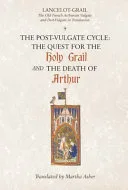
Lancelot-Grail: The post-Vulgate Quest for the Holy Grail & the post-Vulgate Death of Arthur
 72
72

Lancelot-Grail: The post-Vulgate Quest for the Holy Grail & the post-Vulgate Death of Arthur
Norris J. Lacy's presentation of the Lancelot-Grail's initial sections offers a clear entry point into one of the most significant Arthurian prose cycles. The edition effectively foregrounds the intricate development of Lancelot's character, from his obscure origins to his entanglement with Guenevere and his elevation to the Round Table. Lacy’s editorial hand, while focused on accessibility, allows the original narrative’s richness to emerge. A particular strength lies in its meticulous tracing of Lancelot’s internal conflicts, where his burgeoning love for Guenevere clashes with his nascent loyalty to Arthur. However, the sheer volume and episodic nature of the adventures, even in these early parts, can feel overwhelming without a more robust critical apparatus to guide the reader through the labyrinthine plot developments. The work succeeds in demonstrating how the cycle began to shift the focus from purely heroic deeds to the psychological and emotional lives of its characters.
Ultimately, this volume serves as a crucial, albeit dense, foundation for understanding the Post-Vulgate's ambitious reimagining of Arthurian legend.
📝 Description
72
Composed in 13th-century Old French prose, the Lancelot-Grail reworked earlier Arthurian tales.
The Lancelot-Grail, also known as the Post-Vulgate Cycle, is a large Arthurian romance written in Old French prose during the 13th century. This edition, selected and edited by Norris J. Lacy, includes parts one and two. These sections focus on Sir Lancelot's early life and his entry into King Arthur's court. The text details his intense and ultimately sorrowful relationship with Queen Guenevere.
The narrative follows Lancelot from his youth to his knighthood and his place among the Knights of the Round Table. This sets up the cycle's later examination of chivalric ideals and their eventual failure. This work is valuable for scholars of medieval literature and those interested in the development of Arthurian legends. Readers looking to grasp the early texts that influenced later Arthurian stories will find this edition particularly useful.
While not strictly esoteric in a modern sense, the Lancelot-Grail is part of a medieval literary tradition that engaged with complex symbolic systems and spiritual quests. The pursuit of the Holy Grail, a central element, carries allegorical weight, representing a spiritual journey and divine grace. The narrative's focus on sin, redemption, and the fallibility of even the most noble knights touches on themes explored in religious and mystical writings of the era. The intricate weaving of romance, chivalry, and religious undertones positions it within a broader cultural context that sought meaning beyond the material world.
💡 Why Read This Book?
• Gain insight into the complex origins of Lancelot's character, tracing his boyhood and entry into Arthur's court as depicted in the 13th-century Post-Vulgate Cycle, a narrative distinct from earlier Arthurian traditions. • Understand the foundational dynamics of courtly love and chivalric duty as they are presented through Lancelot's intense relationship with Guenevere, exploring the inherent tensions that drive the plot. • Appreciate the early stages of the Arthurian narrative's shift towards prose and psychological depth, exemplified by the detailed portrayal of Lancelot's internal struggles and his relationships, such as the one with Galehaut.
⭐ Reader Reviews
Honest opinions from readers who have explored this book.
❓ Frequently Asked Questions
What is the primary difference between the Vulgate Cycle and the Post-Vulgate Cycle of Lancelot?
The Post-Vulgate Cycle, including the Lancelot sections presented here, was composed after the Vulgate Cycle and generally aims to revise, expand, and often provide a more theological or moralistic framework for the Arthurian narrative, particularly concerning the Grail quest and Lancelot's downfall.
When was the Lancelot-Grail composed?
The Lancelot-Grail, or Post-Vulgate Cycle, was composed in Old French prose during the 13th century, likely between the 1220s and 1240s, building upon and reacting to earlier Arthurian romances.
Who is Galehaut in the Lancelot-Grail?
Galehaut is a significant figure in the Lancelot-Grail, often portrayed as a powerful king and Lancelot's closest friend and mentor. His relationship with Lancelot is complex and pivotal, influencing Lancelot's actions and allegiances.
What role does Queen Guenevere play in these early sections?
Queen Guenevere is central to the early Lancelot narrative. Her immediate and passionate love affair with Lancelot is a primary catalyst for the plot, establishing the central conflict between their desire and their duties to King Arthur.
Is Norris J. Lacy the original author of the Lancelot-Grail?
No, Norris J. Lacy is the editor and translator of this modern edition. The Lancelot-Grail itself is an anonymous work of 13th-century Old French literature.
What is the significance of Lancelot becoming a companion of the Round Table?
Lancelot's admission to the Round Table marks his official integration into Arthur's chivalric order. It symbolizes the height of his prowess and honor, but also places him in direct proximity to Arthur, intensifying the dramatic potential of his affair with Guenevere.
🔮 Key Themes & Symbolism
Chivalry and Courtly Love
The Lancelot-Grail meticulously dissects the ideals of medieval chivalry, presenting Lancelot as the epitome of knightly prowess and virtue. Simultaneously, it plunges into the turbulent currents of courtly love, focusing on Lancelot's overwhelming passion for Queen Guenevere. This creates a central tension: how does the pursuit of romantic love, with its inherent secrecy and potential for betrayal, align with or subvert the codes of loyalty and honor demanded by knighthood and service to King Arthur?
The Nature of Fellowship
Beyond romantic entanglements, the cycle explores profound bonds of fellowship. Lancelot's relationship with Galehaut serves as a powerful example, showcasing a deep male friendship built on mutual respect and shared experience. These connections are depicted as crucial pillars within the Arthurian world, offering support and shaping individual destinies, even as they sometimes complicate loyalties and personal choices.
The Quest and Its Trials
Adventures and quests form the structural backbone of the Lancelot-Grail. These trials are not merely tests of physical strength but examinations of a knight's character, virtue, and adherence to the chivalric code. Whether seeking glory, undertaking a specific task, or navigating treacherous landscapes, each quest serves to reveal the strengths and vulnerabilities of the knights, particularly Lancelot, and contributes to the unfolding narrative of Arthur's reign.
The Inevitability of Tragedy
Even in these early sections, the Lancelot-Grail lays the groundwork for the eventual downfall of Arthur's court. The passionate, illicit love between Lancelot and Guenevere is presented not just as a romantic ideal but as a potent force of disruption. The narrative subtly foreshadows how personal desires, when in conflict with societal structures and oaths, can lead to profound sorrow, betrayal, and the unraveling of the most noble enterprises.
💬 Memorable Quotes
Direct passages from the work, attributed to the author.
“Lancelot falls immediately in love with Guenevere.”
— This concise statement captures the instantaneous and overwhelming nature of Lancelot's infatuation, a central moment that defines his trajectory and sets the stage for much of the ensuing drama and conflict within the Arthurian world.
“The adventures and quests which follow...”
— This phrase signals the core narrative engine of the Lancelot-Grail: a series of trials and journeys designed to test the knights, showcase their prowess, and propel the epic story forward through a succession of challenges.
“...his friendship with the tragic Galehaut...”
— This points to a significant relationship within the text, highlighting Galehaut's doomed or sorrowful fate and the deep bond he shares with Lancelot, suggesting themes of loyalty tested by adversity and potential loss.
“He becomes a companion of the Round Table.”
— This marks Lancelot's official ascent into the highest echelon of Arthurian knighthood. It signifies the culmination of his early exploits and his acceptance into the legendary fellowship, setting the scene for his future glories and his profound moral compromises.
“Lancelot's boyhood and his admission to Arthur's court.”
— This phrase outlines the foundational elements of the narrative, focusing on Lancelot's origins and his crucial entry into the political and social heart of Arthurian Britain, establishing his early character and the environment that will shape him.
🌙 Esoteric Significance
Tradition
While not explicitly tied to a single esoteric lineage like Hermeticism or Kabbalah, the Lancelot-Grail engages with themes resonant within Western esotericism. Its exploration of quests, hidden knowledge (particularly surrounding the Grail, though less central in these parts), and the internal struggles of protagonists seeking perfection or divine favor echoes Gnostic and Neoplatonic ideals. The emphasis on the interplay between the spiritual and the carnal, and the potential for both transcendence and fall, aligns with broader mystical traditions that grapple with the duality of human existence.
Symbolism
The Round Table itself symbolizes a form of cosmic order and divine justice, albeit one destined for corruption. Lancelot, as the preeminent knight, can be seen as an archetypal figure striving for spiritual or heroic perfection, whose flaws (particularly his illicit love) represent the entanglement of the spiritual seeker in earthly attachments. Guenevere, in her allure and the destructive consequences of her relationship with Lancelot, embodies the potent, often dangerous, force of passionate desire that can both inspire and derail spiritual or heroic endeavors.
Modern Relevance
Contemporary explorations of archetypal psychology, particularly Jungian analysis, find fertile ground in the Lancelot-Grail's complex character dynamics and the symbolic weight of its narratives. Modern Pagan and Neo-Arthurian movements often draw inspiration from the cycle's depiction of chivalric ideals and the potent symbolism of Arthurian legend. Furthermore, literary scholars and writers continue to mine the text for its nuanced portrayal of flawed heroism, the complexities of love and duty, and the cyclical nature of societal rise and fall, making it relevant to ongoing discussions in ethics, philosophy, and narrative theory.
👥 Who Should Read This Book
• Scholars of Medieval Arthurian literature seeking to understand the foundational Post-Vulgate Cycle beyond the more commonly cited Vulgate versions. • Enthusiasts of Arthurian legend interested in a detailed exploration of Lancelot's early life, his relationship with Guenevere, and the dynamics of Arthur's court from a 13th-century perspective. • Readers interested in the evolution of Western romance and prose narratives, examining how early authors structured complex plots and developed character psychology.
📜 Historical Context
The Lancelot-Grail emerged in 13th-century France, a period marked by the flourishing of vernacular prose romance. This monumental cycle, also known as the Post-Vulgate, represented a significant departure from earlier, more fragmented Arthurian narratives. It aimed to create a comprehensive and unified prose account of Arthur's reign, seeking to provide a more psychologically complex and theologically grounded version of the legends than its predecessors. It followed closely on the heels of the Vulgate Cycle, offering a distinct, often more morally focused, continuation and revision. Key literary figures of the era included Chrétien de Troyes, whose romances had popularized Arthurian themes decades earlier, and later writers like Jean de Meun, who contributed to the Roman de la Rose. The Post-Vulgate Cycle's ambition and scale were immense, contributing to its widespread dissemination and profound influence on subsequent medieval and Renaissance literature. Its reception was largely enthusiastic, cementing its place as a core part of the Arthurian tradition, though specific critical reviews from the period are scarce, its impact is evident in the numerous manuscripts produced and the later adaptations it inspired.
📔 Journal Prompts
Lancelot's immediate infatuation with Guenevere: Analyze the narrative's portrayal of this central moment.
The fellowship between Lancelot and Galehaut: Explore the dynamics and significance of this bond.
The role of quests in testing chivalric virtue: Reflect on specific trials Lancelot undergoes.
The tension between Lancelot's love for Guenevere and his loyalty to Arthur: Discuss its narrative function.
The symbolic meaning of the Round Table in these early sections.
🗂️ Glossary
Post-Vulgate Cycle
A major 13th-century Old French prose compilation of Arthurian romances that revises and expands upon the earlier Vulgate Cycle, focusing on the Lancelot story, the Grail quest, and the end of Arthur's reign.
Arthur's Court
The central seat of power and chivalric activity in Arthurian legend, presided over by King Arthur and populated by knights of the Round Table, including Lancelot and Guenevere.
Round Table
The legendary assembly of knights serving King Arthur, symbolizing unity, equality, and the highest ideals of chivalry within the Arthurian world.
Guenevere
The legendary queen of King Arthur and wife of Arthur, whose passionate and ultimately tragic love affair with Sir Lancelot is a central element of Arthurian romance.
Lancelot
The most famous knight of the Round Table, renowned for his chivalry, prowess in battle, and his adulterous love for Queen Guenevere, a figure whose character arc is central to the Lancelot-Grail.
Galehaut
A significant character in the Lancelot-Grail, often depicted as a powerful lord and a close companion and mentor to Lancelot, whose friendship plays a central role in Lancelot's life.
Courtly Love
A medieval literary and social concept emphasizing idealized, often unconsummated or illicit, romantic devotion and service from a knight to a noble lady, typically characterized by passion, longing, and suffering.