Handbook to UFOs, Crop Circles, and Alien Encounters
 75
75

Handbook to UFOs, Crop Circles, and Alien Encounters
McCollum’s handbook tackles a vast subject with an earnest, if somewhat generalized, approach. The strength lies in its sheer breadth, cataloging a wide array of reported encounters and formations without getting bogged down in excessive detail. However, this breadth sometimes comes at the cost of critical analysis. For instance, the section on crop circles, while acknowledging their widespread appearance in English fields since the 1970s, could benefit from deeper exploration of the documented hoaxes that have also been part of their history. The book effectively consolidates common narratives for newcomers. The limitation here is a tendency to present anecdotal evidence as conclusive fact without sufficient skepticism. Ultimately, it serves as a competent primer, if not a definitive scholarly examination, for those beginning their journey into the UFO and alien lore.
📝 Description
75
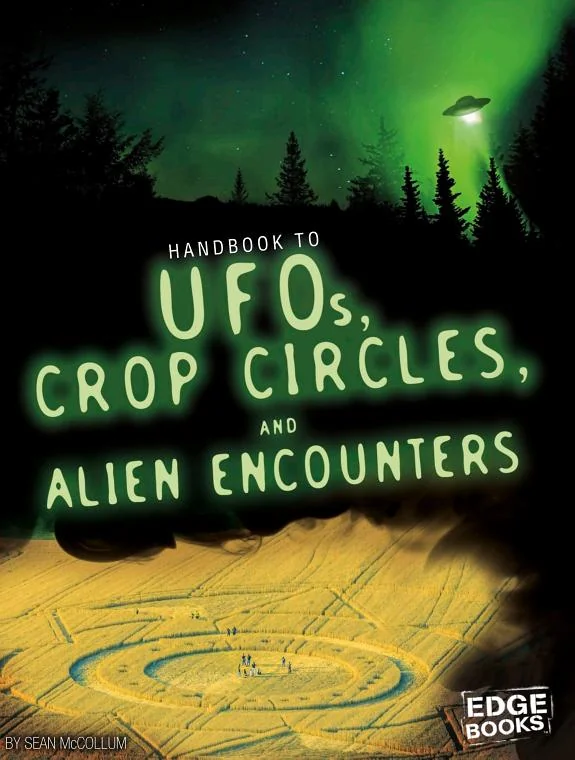
Sean McCollum's 2016 Handbook to UFOs, Crop Circles, and Alien Encounters introduces readers to persistent mysteries.
Published in 2016, this handbook serves as an accessible introduction to phenomena that have long captured public attention. It gathers various accounts and theories concerning unidentified flying objects, the patterns found in crop circles, and claims of alien contact. The book aims to give a wide overview of these subjects, using different sources to inform readers about the ongoing questions regarding humanity's place in the universe.
This work is suitable for people new to studying ufology and alleged alien encounters. It is written for readers curious about the history of UFO sightings, the cultural impact of crop circles, and the continuing discussion about extraterrestrial intelligence. Those seeking a straightforward, non-academic way to begin understanding these complex topics will find it a good starting point for further research.
McCollum's book addresses core concepts such as defining and classifying UFOs, the potential symbolic meanings of crop circles, and different ideas about the identity and purposes of alleged alien visitors. It also touches on society's fascination with these occurrences, how they appear in popular culture, and the methods employed in their study.
This book enters a long tradition of examining unexplained aerial phenomena, particularly prominent after World War II. The mid-20th century saw a surge in reported UFO sightings, influenced by events like the 1947 Kenneth Arnold sighting and subsequent official investigations. While crop circles have older roots, they gained significant public notice in the late 20th century, especially in England. McCollum's work connects these historical threads, situating modern discussions within a history of inquiry into aerial anomalies and possible non-human intelligence.
💡 Why Read This Book?
• Gain a foundational understanding of UFO phenomena, including historical sightings like the Kenneth Arnold incident in 1947, providing context for the ongoing search for extraterrestrial intelligence. • Explore the visual language and historical spread of crop circles, particularly their emergence as a significant phenomenon in the late 20th century, offering insight into symbolic communication. • Grasp the spectrum of theories surrounding alien encounters, from government cover-ups to benevolent visitors, helping you form an informed perspective on these complex possibilities.
⭐ Reader Reviews
Honest opinions from readers who have explored this book.
❓ Frequently Asked Questions
What is the earliest documented UFO sighting discussed in the book?
While the book covers a range of sightings, it often references the significant increase in reports following the Kenneth Arnold sighting in 1947, which is widely considered a pivotal moment in modern UFO history.
Where are crop circles most famously reported, according to the handbook?
The handbook frequently points to England, particularly the southern counties, as the region with the most extensive and well-documented crop circle formations appearing since the latter half of the 20th century.
Does the book offer scientific explanations for UFOs?
The book presents various theories and accounts, including both unexplained phenomena and potential conventional explanations, but it primarily focuses on cataloging the mysteries rather than providing definitive scientific conclusions.
What is the author's stance on alien visitation?
Sean McCollum’s approach in the handbook is to present the evidence and various perspectives surrounding alien encounters, allowing readers to draw their own conclusions rather than advocating for a single viewpoint.
Is this book suitable for advanced researchers of ufology?
The handbook is best suited for beginners and those seeking an introduction. Advanced researchers might find its coverage of topics like the Project Blue Book investigations to be a brief overview rather than an in-depth analysis.
How does the book address the skepticism surrounding UFOs and alien encounters?
The work acknowledges skepticism by presenting different viewpoints and historical context, including the existence of hoaxes, but its primary aim is to explore the phenomena themselves and the questions they raise.
🔮 Key Themes & Symbolism
The Enigma of Unidentified Flying Objects
This theme explores the history and prevalence of UFO sightings, from early reports in the mid-20th century to contemporary accounts. It examines the various classifications and interpretations of these aerial phenomena, touching upon governmental investigations like Project Blue Book. The book explores the persistent question of whether these objects represent advanced terrestrial technology, natural phenomena, or something of extraterrestrial origin, reflecting a core curiosity about the unknown that has driven public fascination for decades.
The Symbolic Language of Crop Circles
Central to the book is an exploration of crop circles, the intricate patterns that appear in agricultural fields. It discusses their emergence as a widespread phenomenon, particularly in England, and the various theories proposed to explain their origin and meaning. Beyond simple formations, the text considers the possibility of these designs carrying symbolic messages or representing a form of communication from an unknown source, engaging with the visual and potentially esoteric aspects of these agrarian artworks.
The Question of Extraterrestrial Intelligence
This theme addresses the broader implications of UFOs and crop circles for the existence of alien life. The handbook surveys different perspectives on alien visitation, ranging from scientific searches for extraterrestrial intelligence (SETI) to anecdotal accounts of encounters. It ponders the potential nature, intent, and origins of non-human visitors, framing the discussion within the context of humanity's place in the galaxy and the profound philosophical questions raised by the possibility of our not being alone.
Cultural Fascination and Skepticism
The book examines the enduring cultural impact of UFOs and alien encounters, noting their pervasive presence in science fiction, media, and popular discourse. It also touches upon the inherent skepticism and critical analysis that accompany such extraordinary claims. By presenting a spectrum of evidence, theories, and counterarguments, the work engages with both the fervent belief and the cautious doubt that characterize the public's relationship with these mysterious phenomena.
💬 Memorable Quotes
Direct passages from the work, attributed to the author.
“The idea that aliens might visit our planet has gripped Earthlings for a long time.”
— This opening statement from the original blurb expresses the enduring human fascination with extraterrestrial visitation, setting the stage for the book's exploration of this persistent theme in our collective consciousness.
“Extraterrestrials are popular in science fiction books, movies, and TV shows.”
— This observation highlights the significant role of popular culture in shaping public perception and interest in alien life, indicating how fictional portrayals often fuel real-world curiosity and speculation.
“UFO hunters of every kind are searching Earth, sky, and space for answers.”
— This phrase conveys the active and widespread nature of the pursuit of knowledge regarding UFOs, illustrating the global effort by various individuals and groups to uncover evidence and understand these phenomena.
“Are we along in the galaxy?”
— This fundamental question, posed as the ultimate inquiry driving UFO research, distills the core existential curiosity about humanity's uniqueness and our place within the vastness of the cosmos.
💡 Key Ideas
Editorial paraphrase of the work's core concepts — not direct quotes.
The work explores accounts of unidentified aerial phenomena and alleged encounters.
This paraphrased concept emphasizes the book's function as a compendium of reported events and experiences related to UFOs, suggesting its value lies in presenting a range of documented incidents for reader consideration.
🌙 Esoteric Significance
Tradition
This work, while not explicitly tied to a single esoteric lineage like Hermeticism or Kabbalah, taps into a broader current of modern occult and metaphysical inquiry that emerged in the 20th century. It shares thematic ground with Theosophy and Aerialism, movements that explored non-human intelligences and advanced cosmic civilizations. McCollum’s handbook functions as a gateway, presenting phenomena often interpreted through esoteric lenses to a wider audience, reflecting a contemporary spiritual-scientific search for meaning beyond conventional paradigms.
Symbolism
Within the context of esoteric thought, crop circles can be viewed as modern hieroglyphs or mandalas, potentially carrying complex symbolic information or energies. UFOs themselves can symbolize advanced consciousness, cosmic messengers, or manifestations of psychic phenomena. The act of 'searching Earth, sky, and space' reflects an alchemical quest for hidden knowledge and transformation, mirroring humanity's perennial desire to understand its origins and destiny beyond terrestrial limitations.
Modern Relevance
Today, McCollum's handbook remains relevant as an accessible introduction to subjects that continue to intrigue and inspire. It appeals to contemporary communities exploring consciousness, alternative realities, and the potential for non-human intelligence, feeding into discussions found in online forums, ufological societies, and new age circles. Thinkers and practitioners interested in the intersection of science, spirituality, and the unexplained find such foundational texts valuable for understanding the historical trajectory of these investigations.
👥 Who Should Read This Book
• Curious newcomers to ufology and unexplained aerial phenomena seeking a broad overview of key topics and historical context. • Readers interested in the cultural history of UFO sightings and crop circles, particularly how these subjects have been portrayed and investigated over time. • Individuals exploring philosophical questions about humanity's place in the universe and the possibility of extraterrestrial life, looking for accessible starting points for contemplation.
📜 Historical Context
Published in 2016, Sean McCollum's Handbook to UFOs, Crop Circles, and Alien Encounters arrives in an era where public interest in these topics has seen resurgent waves, influenced by declassified government documents and ongoing online discourse. The book follows decades of intense fascination, particularly ignited post-World War II. Key contemporaries and parallel developments include the continued work of researchers like Jacques Vallée, who sought more rigorous analysis of UFO reports, and the increasing public awareness of crop circles, which gained significant traction from the late 1970s onwards, notably in areas of the UK. While the book itself might not directly engage with specific academic critiques or controversies, it operates within a cultural landscape shaped by the legacy of investigations such as Project Blue Book (concluded in 1969) and the enduring skepticism from scientific bodies. The reception of such works often falls into two camps: those seeking validation of extraordinary claims and those demanding conventional explanations.
📔 Journal Prompts
The persistent question: Are we alone in the galaxy?
The visual language of crop circles and potential interpretations.
Early UFO sightings like Kenneth Arnold's and their lasting impact.
The role of science fiction in shaping our ideas about extraterrestrials.
Defining 'unidentified' in the context of aerial phenomena.
🗂️ Glossary
UFO
An acronym for Unidentified Flying Object. It refers to any aerial phenomenon that cannot be immediately identified or explained by the observer, encompassing a wide range of sightings and reports.
Crop Circles
Intricate geometric patterns formed by flattening crops, such as wheat or barley. Their origins are debated, with theories ranging from natural phenomena and human creation to more extraordinary explanations.
Extraterrestrial
Originating from or existing outside the planet Earth. In the context of the book, it refers to potential alien life forms or visitors from other planets.
Ufology
The study of UFOs and related phenomena. It is considered a pseudoscience by mainstream science, but it involves collecting, analyzing, and interpreting reports of unidentified aerial objects and alleged alien encounters.
Project Blue Book
A U.S. Air Force study of unidentified flying objects conducted from 1952 to 1969. It was the third study of its kind and aimed to determine if UFOs were a threat to national security.
Alien Encounters
Reports or alleged experiences involving interaction with extraterrestrial beings. These can range from sightings of spacecraft to claims of abduction or communication.
Pseudoscience
A claim, belief, or practice presented as scientific but lacking adherence to the scientific method. Ufology is often categorized as such by the scientific community.
This book appears in 1 collection
🔮 Readers Also Liked
Browse all →








From the “Crop Circles” Collection
View all →





More Free Occult Philosophy Books
View all →