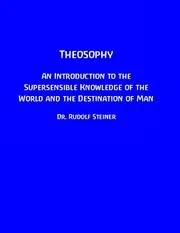
Theosophy (CW 9)
 73
73

Theosophy (CW 9)



Rudolf Steiner's 'Theosophy (CW 9)' remains a seminal work in the field of esoteric literature, offering timeless insights into the spiritual nature of humanity. Published in 1904, this book provides a comprehensive introduction to the supersensible world, making it an essential read for modern esoteric seekers. Steiner's exploration of the corporeal, soul, and spiritual aspects of man is both enlightening and profound, offering a holistic view of human existence. The book's discussions on reincarnation, destiny, and the soul's journey after death are particularly compelling, providing a rich tapestry of spiritual knowledge. For those seeking to deepen their understanding of the spiritual dimensions of life, 'Theosophy (CW 9)' is an invaluable resource. The text's clarity and depth make it accessible to both beginners and advanced students of esoteric wisdom.
📝 Description
73
Rudolf Steiner published 'Theosophy' (CW 9) in 1904, detailing a system of spiritual science.
Rudolf Steiner's 'Theosophy' (CW 9), first published in 1904, lays out his early system of spiritual science. The book aims to explain the nature of the human being, the cosmos, and the path of spiritual development. Steiner discusses concepts like reincarnation, karma, and the different states of consciousness accessible through specific practices. He presents a structured view of the spiritual world, outlining hierarchies of beings and the evolution of planets and humanity.
The text addresses the possibility of direct spiritual perception, arguing that such knowledge is not solely the domain of faith or intuition but can be cultivated through disciplined inner work. Steiner contrasts his approach with traditional theosophical societies of his time, emphasizing a scientific methodology for studying the supersensible. The book functions as an introduction to his broader corpus, setting the stage for later developments in Anthroposophy.
Published in 1904, Rudolf Steiner's 'Theosophy' emerged during a period of intense interest in spiritual and occult movements. It engages with contemporary Theosophical ideas, particularly those of the Theosophical Society, yet Steiner sought to establish a more rigorous, science-like approach to the supersensible. This work is foundational to his later spiritual philosophy, Anthroposophy, distinguishing his path from earlier esoteric traditions by emphasizing empirical investigation of inner realities and presenting a detailed cosmology and anthropology.
💡 Why Read This Book?
Reading 'Theosophy (CW 9)' today offers readers a unique opportunity to explore the spiritual dimensions of human existence. This book provides insights into the nature of the soul, the concept of reincarnation, and the journey of the spirit after death. For modern esoteric seekers, this text serves as a guide to understanding the deeper meanings of life and the interconnectedness of all beings. Steiner's work is particularly relevant in an age where spiritual exploration is gaining traction, offering a comprehensive framework for spiritual development and self-discovery.
⭐ Reader Reviews
Honest opinions from readers who have explored this book.
❓ Frequently Asked Questions
What is the main focus of 'Theosophy (CW 9)'?
The main focus of 'Theosophy (CW 9)' is to introduce readers to the supersensible world and the spiritual nature of humanity, exploring themes such as reincarnation, destiny, and the soul's journey after death.
Who should read this book?
This book is ideal for those interested in esoteric knowledge, spiritual development, and the deeper meanings of life. It is suitable for both beginners and advanced students of esoteric wisdom.
Is this book relevant for modern readers?
Yes, 'Theosophy (CW 9)' is highly relevant for modern readers, especially those seeking to understand the spiritual underpinnings of their existence and the interconnectedness of all beings.
🔮 Key Themes & Symbolism
Supersensible Knowledge
Steiner's 'Theosophy' looks at the hidden domains of human existence, revealing the interconnectedness of all things through supersensible knowledge. This theme explores the mystical dimensions of the soul and spirit, providing insights into the deeper layers of reality. Steiner's evocative prose and strong symbolism guide readers on a journey of self-discovery and spiritual enlightenment.
Human Purpose
One of the central themes of 'Theosophy' is the exploration of human purpose. Steiner's work provides a comprehensive framework for understanding our true nature and place in the cosmos. Through philosophical reflection and practical meditation techniques, readers are invited to question their perceptions of reality and gain a deeper understanding of their spiritual journey.
Meditation Techniques
Steiner's 'Theosophy' offers practical meditation techniques that serve as tools for spiritual growth. These techniques are designed to help readers connect with the supersensible dimensions of their being, fostering a deeper sense of awareness and enlightenment. By integrating these practices into their daily lives, seekers can enhance their spiritual journey and gain a more profound understanding of the mysteries of the soul and spirit.
💬 Memorable Quotes
Direct passages from the work, attributed to the author.
“Meditation is the key to unlocking the mysteries of the spirit.”
— Steiner emphasizes the importance of meditation as a tool for spiritual growth, inviting readers to explore the deeper dimensions of their being.
“Supersensible knowledge reveals the true nature of reality.”
— Steiner's exploration of supersensible knowledge challenges readers to question their perceptions of reality, inviting them to delve deeper into the mysteries of the soul and spirit.
💡 Key Ideas
Editorial paraphrase of the work's core concepts — not direct quotes.
The soul is the intermediary between the spirit and the physical world.
This quote underscores the interconnectedness of the body, soul, and spirit, highlighting the soul's role as a bridge between the physical and spiritual realms.
The human spirit is a microcosm of the universe.
This quote reflects Steiner's belief in the interconnectedness of all things, suggesting that the human spirit contains the essence of the cosmos.
The journey of self-discovery is a journey into the divine.
This quote emphasizes the spiritual dimension of self-discovery, suggesting that understanding our true nature leads to a deeper connection with the divine.
🌙 Esoteric Significance
Tradition
Rudolf Steiner's 'Theosophy' belongs to the esoteric tradition of Anthroposophy, which seeks to integrate scientific knowledge with spiritual wisdom. This tradition draws on a variety of mystical and occult teachings, including Hermeticism, Gnosticism, and Kabbalism, to provide a comprehensive framework for understanding the deeper dimensions of human existence.
Symbolism
Key symbols in 'Theosophy' include the interconnectedness of the body, soul, and spirit, as well as the journey of self-discovery and spiritual enlightenment. Steiner's strong symbolism serves as a guide for readers, inviting them to explore the mysteries of the soul and spirit through meditation and philosophical reflection.
Modern Relevance
Steiner's 'Theosophy' remains relevant today, offering practical tools for spiritual growth and a deeper understanding of the mysteries of the soul and spirit. Modern practitioners of the occult and spiritual seekers continue to draw on Steiner's insights, integrating his teachings into their daily lives and spiritual practices.
👥 Who Should Read This Book
Beginners interested in the esoteric and mystical traditions will find 'Theosophy' an accessible and enlightening introduction. Scholars of philosophy and spirituality will appreciate Steiner's comprehensive framework for understanding human existence. Spiritual seekers will benefit from the practical meditation techniques and philosophical insights, while practitioners of the occult will find strong symbolism and a deeper connection to the spiritual world.
📜 Historical Context
Rudolf Steiner's 'Theosophy' was first published in 1904, during a time of significant intellectual and spiritual ferment. The early 20th century saw a growing interest in esoteric and mystical traditions, as well as a renewed focus on the exploration of human consciousness. Steiner's work was influential in bridging the gap between Eastern and Western spiritual traditions, offering a comprehensive framework for understanding the deeper dimensions of human existence. 'Theosophy' has had a lasting impact on the development of Anthroposophy, a spiritual movement founded by Steiner that seeks to integrate scientific knowledge with spiritual wisdom.
📔 Journal Prompts
Reflect on the interconnectedness of the body, soul, and spirit. How do these aspects of your being influence your daily life?
Consider the role of meditation in your spiritual journey. How can you integrate Steiner's meditation techniques into your practice?
Explore the concept of supersensible knowledge. How does this knowledge challenge your perceptions of reality?
Reflect on the idea of the human spirit as a microcosm of the universe. How does this concept influence your understanding of your place in the cosmos?
Consider the journey of self-discovery as a journey into the divine. How does understanding your true nature deepen your connection with the divine?
🗂️ Glossary
Supersensible Knowledge
Knowledge that transcends the physical senses, revealing the deeper dimensions of reality and the interconnectedness of all things.
Anthroposophy
A spiritual movement founded by Rudolf Steiner that seeks to integrate scientific knowledge with spiritual wisdom.
Meditation Techniques
Practical methods for spiritual growth, designed to help readers connect with the supersensible dimensions of their being.
Human Purpose
The exploration of our true nature and place in the cosmos, inviting readers to question their perceptions of reality and gain a deeper understanding of their spiritual journey.
Symbolism
Rich imagery and metaphors used to guide readers on a journey of self-discovery and spiritual enlightenment.
This book appears in 2 collections
🔮 Readers Also Liked
Browse all →






More by Steiner, Rudolf
All books →



From the “Theosophy” Collection
View all →





More Free Theosophy & Anthroposophy Books
View all →