Steiner, Rudolf
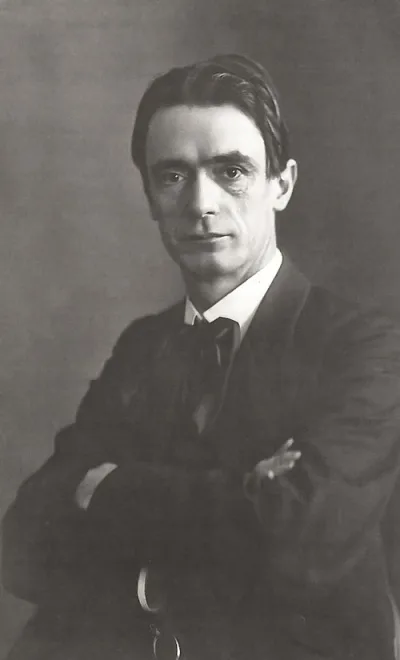
Rudolf Steiner was an Austrian philosopher and esotericist who founded anthroposophy, a spiritual movement blending idealism, theosophy, and Gnosticism.
Rudolf Steiner, an Austrian philosopher, occultist, and esotericist, gained recognition in the late 19th century for his literary criticism and works like "The Philosophy of Freedom." In the early 20th century, he established anthroposophy, a spiritual movement drawing from German idealism and theosophy, with influences from Gnosticism. His teachings often applied philosophical rigor to spiritual matters, which he termed "spiritual science." Steiner's work evolved through phases, from philosophical inquiry to artistic collaboration and the establishment of practical applications like Waldorf education and biodynamic agriculture.
Steiner's intellectual journey began with a background in mathematics and natural sciences, studying thinkers like Kant and Fichte. He developed an epistemological framework based on Goethe's view of thinking as a mode of perception, aiming to demonstrate the boundless potential of human knowledge. Despite his academic pursuits and literary contributions, Steiner faced cultural and academic isolation, with his later esoteric reputation overshadowing his philosophical work in mainstream circles. His early experiences included perceived spiritual encounters, which shaped his later views on the reality of the spiritual world.
Founding of Anthroposophy
Rudolf Steiner founded anthroposophy, a spiritual movement rooted in German idealism and theosophy, with Gnostic influences. Initially, his work focused on a 'spiritual science' that aimed to apply clear Western philosophical thinking to spiritual questions, distinguishing it from more ambiguous mystical approaches. This phase sought a synthesis between science and spirituality. Around 1907, his work entered a second phase characterized by collaborative artistic endeavors, including drama, dance, and architecture, which led to the construction of the Goetheanum as a cultural center. Following World War I, a third phase saw Steiner engage in practical applications such as Waldorf education, biodynamic agriculture, and anthroposophical medicine, demonstrating a commitment to applying his spiritual insights to various aspects of life.
Philosophical and Epistemological Foundations
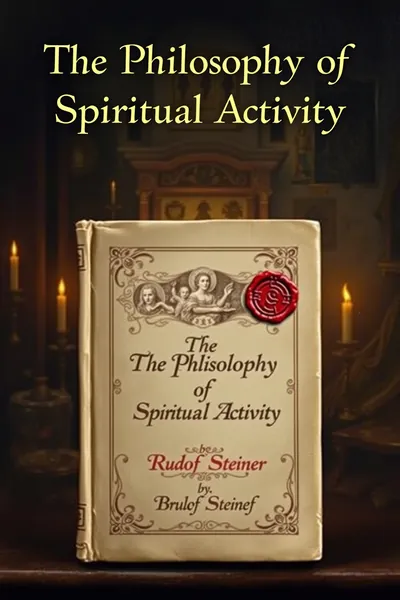
Steiner's philosophy is grounded in an ethical individualism that later incorporated spiritual dimensions. His epistemology was heavily influenced by Johann Wolfgang von Goethe's concept of thinking as a direct organ of perception, akin to the senses. Steiner posited that just as eyes perceive colors and ears perceive sounds, thinking perceives ideas. A central aim of his work was to assert that human knowledge has no inherent limitations. He received a doctorate for his dissertation on Fichte's concept of the ego, which later formed the basis for his expanded work, "Truth and Knowledge: Prelude to a Philosophy of Freedom." His 1894 book, "The Philosophy of Freedom," explored epistemology and ethics, outlining a path for human spiritual liberation and implicitly containing the core of his later anthroposophical system.
Early Life and Education
Born in Austria, Rudolf Steiner's early life involved his father's career changes, moving from gamekeeping to telegraph operation. His education began in village schools, with a brief period of home tutoring. He later attended a realschule and then the Vienna Institute of Technology, where he studied mathematics, physics, chemistry, botany, zoology, and mineralogy, while also auditing literature and philosophy courses. During this period, he studied philosophers like Kant and Fichte. A significant early influence was a teacher, Karl Julius Schröer, who introduced him to Joseph Kürschner, leading to Steiner's role as a natural science editor for an edition of Goethe's works, a notable opportunity given his lack of formal academic credentials at the time.
Key Ideas
- Spiritual science as an application of clear thinking to spiritual matters
- Anthroposophy as a spiritual movement rooted in idealism, theosophy, and Gnosticism
- Thinking as an organ of perception, inspired by Goethe
- The boundless potential of human knowledge
- Ethical individualism with a spiritual approach
Books by Steiner, Rudolf
0 free public domain books · Read online or download