What is Aura Reading?
Aura reading involves the visual or intuitive perception of a luminous energy field surrounding a person or object. This field is believed to reflect the individual's physical, emotional, mental, and spiritual state. Different colors and patterns within the aura are interpreted as indicators of health, mood, personality traits, and energetic blockages. While often associated with psychic abilities, it is also approached as a skill that can be developed through focused attention and practice.
Best Books for Complete Beginners
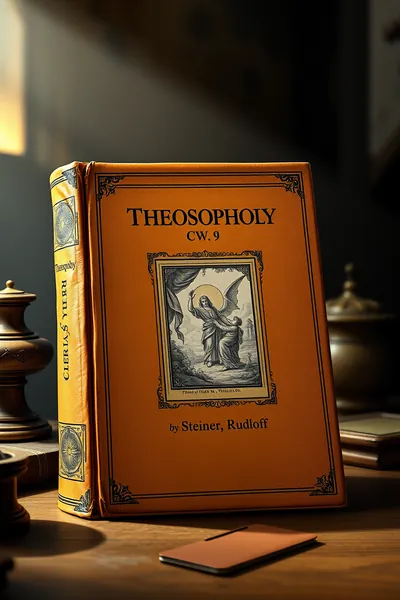
For those new to aura reading, starting with accessible texts that clearly explain fundamental concepts is key. William Walker Atkinson's 'The Human Aura: Astral Colors and Thought Forms' offers an early, comprehensive overview of aura colors and their association with thoughts and emotions. Jesse Charles Fremont Grumbine's 'Auras and Colors: An Esoteric System of Teaching Concerning Halos, Aureolas and the Nimbus' (1907) provides a structured approach to understanding the energetic halos. Rudolf Steiner's 'Theosophy' (1904) introduces broader spiritual concepts that contextualize the aura within a larger energetic framework.
Intermediate Reading
Building on foundational knowledge, intermediate texts delve deeper into the nuances of aura interpretation and practice. Frank Homer and Harriette Augusta Curtiss's 'The Key to the Universe' (1938) explores universal principles that can inform aura perception. The 'Journal Of Borderland Research Vol XLII' (1986) offers research and discussions from a dedicated esoteric publication. Texts from the 'CIA Reading Room' related to the Gateway Program, such as 'THE GATEWAY PROGRAM' (1984) and 'MONROE INSTITUTE OF APPLIED SCIENCES PRESENTS THE GATEWAY PROGRAM' (1976, 1978), touch upon altered states of consciousness relevant to subtle perception.
Classical / Advanced Texts
Advanced study involves engaging with primary sources and more complex theoretical frameworks. While direct primary texts on aura reading are scarce, works like J Maxwell and Charles Robert Richet's 'Metaphysical Phenomena: Methods and Observations' (1905) document early scientific and philosophical investigations into subtle energies. Denis Saurat's 'Literature And Occult Tradition: Studies In Philosophical Poetry' (1930) connects esoteric concepts to literary traditions, offering a scholarly perspective. The 'Aries Book Series Texts and Studies in Western Esotericism' represents academic engagement with esoteric subjects.
Reading Order — Step by Step
Begin with foundational texts to grasp core principles. Weeks 1-4: Focus on Atkinson's 'The Human Aura' and Grumbine's 'Auras and Colors' to understand basic color associations and energetic fields. Month 2: Explore Steiner's 'Theosophy' for a broader spiritual context and begin with Curtiss's 'The Key to the Universe' to integrate universal laws. Month 3+: Engage with the 'Journal Of Borderland Research' and the CIA Gateway Program materials for practical applications and advanced concepts. Consider Saurat's work for historical context.
Frequently Asked Questions
Which aura reading book should I read first?
For a beginner, start with 'The Human Aura: Astral Colors and Thought Forms' by William Walker Atkinson. It clearly explains the basic concepts of aura colors and their relation to thoughts and emotions, providing a solid foundation.
Can aura reading be learned from books alone?
Books provide essential theoretical knowledge and practical guidance. However, developing the ability to perceive auras often requires dedicated practice, meditation, and personal experience beyond reading.
What is the difference between an aura and a chakra?
An aura is the subtle energy field surrounding the entire body, while chakras are specific energy centers located along the spine, believed to influence and be influenced by the aura.
Are the colors in an aura always the same?
No, aura colors are dynamic and can change based on a person's emotional, mental, and physical state. Different colors indicate different energies, moods, or health conditions.
What does the CIA Reading Room material suggest about aura reading?
The Gateway Program materials suggest that altered states of consciousness, achievable through specific techniques, can enhance perception of subtle energies, including what might be interpreted as auras.
How do thought forms relate to the aura?
Thought forms are energetic patterns created by thoughts and emotions. They are believed to manifest within or influence the aura, contributing to its color, shape, and density.
Are there scientific studies on auras?
While mainstream science does not recognize auras as empirically verifiable phenomena, some researchers in fringe science and parapsychology have explored them, as seen in historical texts on metaphysical phenomena.