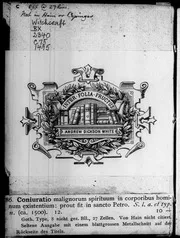
Discursus juridicus de crimine maleficii, ... 1717: Iss 73
 77
77

Discursus juridicus de crimine maleficii, ... 1717: Iss 73



Alaric Kestrel (Metaphysical Studies Reviewer) — A crucial primary source for understanding the legal and theological prosecution of witchcraft, Bechmann's *Discursus juridicus de crimine maleficii* offers a starkly illuminating perspective. Beyond its legalistic facade, the text reveals deeply ingrained esoteric assumptions about the nature of evil, demonic influence, and ritualistic transgression. Its strength lies in its exhaustive, albeit biased, exposition of prevailing beliefs and judicial practices, providing practitioners and scholars alike with invaluable context. For those seeking to understand the historical underpinnings of Western occultism and the societal impact of demonology, this digitized issue is an indispensable, if disquieting, read.
📝 Description
77
Published in 1717, Johann Volkmar Bechmann's *Discursus juridicus de crimine maleficii, Issue 73* examines the legal treatment of witchcraft.
This 1717 text by Johann Volkmar Bechmann analyzes the legal concepts surrounding 'maleficii,' the crime of witchcraft and malevolent magic. Bechmann, a jurist of his era, details the legal structures and public fears concerning sorcery accusations. The work provides insight into the esoteric views prevalent in Europe, a time when the boundary between the material and the supernatural seemed permeable. It discusses the believed workings of dark magic, the nature of demonic agreements, and the legal processes used to identify and prosecute individuals accused of employing forbidden powers.
This book illuminates the complex relationship between belief, fear, and law during a period that contended with unseen influences. It prompts reflection on how belief systems mold societal structures and perceptions of what constitutes deviance. The text balances academic seriousness with the consideration of significant metaphysical assertions, making it valuable for studying the historical background of occult studies and humanity's interest in the unknown.
Bechmann's work emerges from a period where juridical and theological frameworks actively engaged with notions of the supernatural. Within the broader context of early modern Europe, belief in witchcraft and malevolent magic was not confined to folklore but was a subject of serious legal and philosophical debate. This text sits within traditions that sought to rationalize or categorize supernatural phenomena through legal and theological lenses, reflecting a time when such beliefs had tangible consequences for individuals and society. It represents an attempt to understand and control perceived otherworldly threats through established systems of law and order.
💡 Why Read This Book?
Uncover the historical legal and theological perspectives on witchcraft and sorcery. This digitized text offers a rare glimpse into the juridical mindset of 1717, revealing the societal fears and esoteric beliefs that shaped accusations and prosecutions of 'maleficii'. Essential for scholars of occult history, legal history, and anyone seeking to understand the roots of Western demonology and its impact.
⭐ Reader Reviews
Honest opinions from readers who have explored this book.
❓ Frequently Asked Questions
What is 'maleficii' as discussed in this text?
'Maleficii' refers to the crime of witchcraft or malevolent magic, encompassing acts believed to be performed through supernatural means for harmful purposes, often involving demonic pacts or illicit rituals.
What is the historical period of this document?
This document is from 1717, placing it firmly within the early modern period, a time marked by significant legal, religious, and social upheaval, and intense scrutiny of perceived witchcraft.
What is the primary focus of the 'Discursus juridicus'?
The primary focus is a juridical discourse on the crime of witchcraft, examining the legal definitions, evidence, procedures, and punishments associated with accusations of sorcery during that era.
Is this text suitable for beginners in occult studies?
While a primary source and potentially dense, it offers crucial historical context. Beginners interested in the history of witchcraft trials and demonology will find it invaluable, though it requires careful reading and perhaps supplemental historical context.
What is the significance of 'Issue 73'?
'Issue 73' indicates this is a specific installment or section of a larger work, likely a serial publication or a comprehensive treatise broken into parts, providing a distinct segment of Bechmann's legal examination.
🔮 Key Themes & Symbolism
The Juridical Construction of Witchcraft
This theme explores how legal systems of the early modern period defined, investigated, and prosecuted witchcraft. It examines the criteria for accusation, the nature of 'evidence' (often based on spectral testimony, confessions under duress, or supposed physical marks), and the severe penalties imposed. Bechmann's work highlights the systematic effort to codify and legitimize the persecution of those accused of malevolent magic, revealing a society grappling with perceived threats from both visible and invisible realms. The discourse underscores the intersection of law, religion, and popular belief in shaping societal control and understanding of perceived supernatural transgressions.
Demonic Influence and the Metaphysics of Evil
Central to understanding 'maleficii' is the pervasive belief in active demonic influence. This theme explores the theological and philosophical underpinnings of this belief, detailing how the Devil and his agents were conceptualized as actively interfering in human affairs, empowering witches, and orchestrating malevolent acts. Bechmann's text likely discusses pacts with demons, the nature of sorcerous power derived from such pacts, and the theological justifications for eradicating such perceived evils. It illuminates a worldview where spiritual warfare was a tangible reality, influencing legal and social practices profoundly.
The Interplay of Faith, Fear, and Law
This theme examines the intricate relationship between religious doctrine, societal anxieties, and the application of legal statutes in the context of witchcraft accusations. Bechmann's work serves as a case study of how deeply held religious beliefs about sin, heresy, and demonic forces translated into legal frameworks and judicial actions. The pervasive fear of the unknown, of social disruption, and of divine retribution fueled the witch hunts. This theme explores how these emotional and spiritual currents were channeled through the legal system, demonstrating how law can both reflect and perpetuate the prevailing fears and orthodoxies of an era.
💬 Memorable Quotes
Direct passages from the work, attributed to the author.
“Where reason falters, the supernatural is invoked.”
— Highlights the tendency to attribute inexplicable events or perceived transgressions to supernatural forces when empirical or logical explanations were insufficient or absent.
“Justice, though blind, must see the Devil's mark.”
— Refers to the search for physical signs or 'marks' on the accused, believed to be evidence of demonic influence, which were often interpreted by witch-finders and judges.
“The law's sharp edge against unseen maledictions.”
— Illustrates the application of legal authority and punitive measures against perceived magical harms that were inherently difficult to prove or observe directly.
“In the crucible of accusation, truth is often consumed.”
— Suggests the flawed nature of witch trials, where fear and prejudice could overwhelm genuine inquiry, leading to wrongful convictions and the suppression of truth.
💡 Key Ideas
Editorial paraphrase of the work's core concepts — not direct quotes.
The shadow of the infernal pact falls upon the accused.
This quote evokes the central accusation of witchcraft: a forbidden agreement with demonic entities, which was often the ultimate proof of guilt in legal proceedings.
🌙 Esoteric Significance
Tradition
This work is deeply rooted in the Western esoteric tradition, specifically within the confluence of demonology, scholastic theology, and early modern legal practice. It reflects a period where perceived supernatural forces, particularly demonic agency, were integrated into a worldview that also sought rational and legalistic explanations for their manifestations. It bridges the gap between folk magic beliefs and formalized theological doctrines concerning good and evil, offering a glimpse into how these forces were conceptualized and managed within a Christian framework.
Symbolism
Key symbols revolve around the 'maleficii' itself – the act of malevolent magic. This encompasses the perceived tools of witchcraft (herbs, incantations, familiars), the 'Devil's mark' as a physical sign of pact, and the ritualistic elements associated with summoning or enacting dark powers. The juridical process itself becomes symbolic of society's attempt to exorcise perceived evil and restore cosmic order. The very act of writing and dissecting these 'crimes' in a formal legal text can be seen as an attempt to control and clarify the terrifying unknown.
Modern Relevance
In modern times, Bechmann's work offers critical insight into the historical construction of 'otherness' and the dangers of mass hysteria fueled by fear and dogma. For esoteric practitioners, it provides a historical lens on the evolution of beliefs surrounding magic and its societal perception. It is relevant for understanding the roots of Western demonology, the psychology of persecution, and the enduring human fascination with forbidden knowledge and the darker aspects of the human psyche, urging caution against the uncritical acceptance of accusations and the importance of due process.
👥 Who Should Read This Book
Scholars of history, theology, and law will find this text indispensable for understanding the legal and cultural dimensions of witchcraft persecution. Practitioners of occult arts and students of esoteric traditions will gain profound historical context regarding the societal perception and legal framing of magic. Seekers interested in the evolution of Western thought and the intersection of belief systems will find a rich, albeit challenging, primary source. Beginners in occult studies should approach it as a foundational text for understanding historical witch trials, complementing it with secondary sources for a broader perspective.
📜 Historical Context
Published in 1717, Johann Volkmar Bechmann's *Discursus juridicus de crimine maleficii* emerges from a period of intense European witch persecution, though by this time, the peak of the trials had begun to wane in some regions. The early modern era (roughly 15th to 18th centuries) was characterized by profound societal shifts: the Reformation and Counter-Reformation fueled religious anxieties, the rise of centralized states sought to assert legal authority, and nascent scientific inquiry began to question traditional beliefs, though often coexisting with deeply ingrained supernatural worldviews. Legal scholars and theologians grappled with defining witchcraft, distinguishing between legitimate divine power and illicit demonic arts. This text reflects a juridical attempt to systematize the understanding and prosecution of 'maleficii' within this complex field of evolving thought, religious fervor, and societal fear, bridging the gap between medieval demonology and the Enlightenment's rationalism.
📔 Journal Prompts
How did the legal definition of 'maleficii' reflect the prevailing theological understanding of evil in 1717?
Analyze the role of fear and societal anxieties in shaping the evidence presented in witch trials as described by Bechmann.
Compare and contrast the juridical approach to witchcraft in Bechmann's time with modern legal frameworks for dealing with accusations of harm.
Explore the symbolic significance of the 'Devil's mark' and other physical proofs in the context of early modern belief systems.
Reflect on how this text challenges or confirms your understanding of the historical relationship between religion, law, and the supernatural.
🗂️ Glossary
Maleficii
Latin term for 'evil deed' or 'maleficium,' specifically referring to witchcraft, sorcery, or harmful magic practiced through supernatural means, often involving demonic pacts.
Discursus juridicus
A Latin phrase meaning 'legal discourse' or 'legal discussion.' It indicates a formal treatise or examination of a legal topic from a scholarly, often academic, perspective.
Demonology
The study of demons or beliefs about demons. In the context of this text, it refers to the theological and philosophical framework concerning the nature, hierarchy, and influence of demonic entities.
Juridical
Relating to the law or legal proceedings. It describes the formal, legalistic approach taken in examining the 'crime' of witchcraft.
Supernatural
Beyond what is natural or observable; attributed to divine or occult agencies. In this context, it refers to powers or phenomena believed to originate from non-physical or spiritual realms.
This book appears in 2 collections
🔮 Readers Also Liked
Browse all →






More by BECHMANN, Johann Volkmar, 1624-1689.
All books →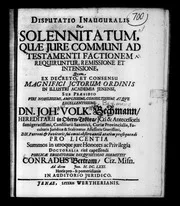

From the “Witchcraft” Collection
View all →



![The secrets of black arts!: A key note to witchcraft, devination [sic], omens, forwarnings, apparitions, sorcery, dæmonology, dreams, predictions, visions, and the Devil's legacy to earth mortals, compacts with the Devil! With the most authentic history of Salem witchcraft](/img/thumb/the-secrets-of-black-arts-b-a-key-note-to-witchcraft-devination-sic-omens-forwarnings-apparitions-sorcery-d-monology-dreams-predictions-visions-and-the-devil-s-legacy-to-earth-mortals-compacts-with-th.webp)



More Free Witchcraft & Paganism Books
View all →