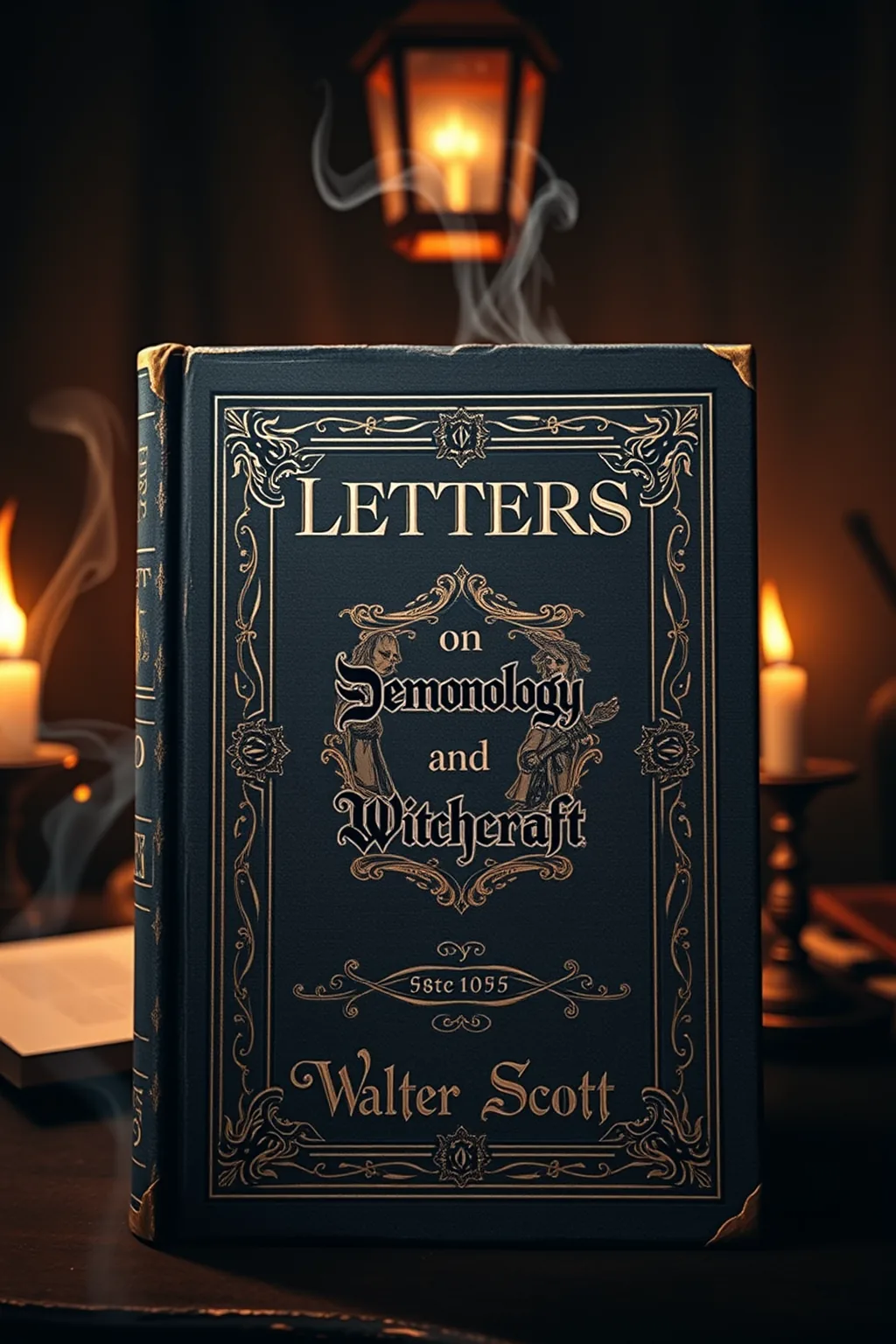
Letters on Demonology and Witchcraft
 71
71

Letters on Demonology and Witchcraft


Sophia Crane (Associate Editor) — Sir Walter Scott's 'Letters on Demonology and Witchcraft' remains a cornerstone for understanding the historical and psychological dimensions of occult belief. Scott masterfully synthesizes folklore, legal records, and theological discourse to present a comprehensive, if sometimes sensational, overview of the witch-craze. His antiquarian zeal shines, illuminating the societal mechanisms and deeply ingrained fears that fueled these dark periods. While not a practitioner's guide, the book offers invaluable context for scholars of folklore, religious history, and the evolution of esoteric thought. It serves as an essential precursor to later, more specialized studies, providing a vivid, if cautionary, narrative of humanity's engagement with the supernatural and the demonized.
📝 Description
71
Sir Walter Scott wrote 'Letters on Demonology and Witchcraft' in 1830, examining historical beliefs about the supernatural.
Published in 1830, Sir Walter Scott's 'Letters on Demonology and Witchcraft' examines historical accounts of sorcery and demonic influence. Scott, drawing on his antiquarian interests, details beliefs about witches, their supposed pacts with the devil, and the legal proceedings against them. He analyzes the psychological and societal factors contributing to the witch hunts, alongside folklore and alleged supernatural events. The book covers specific cases and legends, presenting them with a critical yet engaged perspective. Scott discusses the nature of evidence used in witch trials and the common characteristics attributed to those accused. He also touches upon the perceived powers of demons and their historical influence on human imagination.
Scott's work is not a defense of these beliefs but an inquiry into why they took hold and persisted. He examines the connection between fear, superstition, and religious doctrine in shaping these narratives. The author presents a range of historical incidents and folklore, from alleged demonic possessions to witch covens. He contrasts these with rational explanations or the historical context that made such beliefs plausible at the time. Ultimately, the letters offer a look at how societies have grappled with the concept of the unseen and the forces believed to operate beyond human control.
Scott's 'Letters on Demonology and Witchcraft' is situated within the 19th-century fascination with folklore, antiquarianism, and the supernatural. This period saw renewed interest in medievalism and occult traditions, often presented through a romantic or historical lens. While not an occult manual itself, the book participates in a broader cultural dialogue about magic, demonology, and spiritual beliefs that existed outside mainstream religious dogma. It reflects a scholarly approach to understanding historical superstitions and their impact on society, contributing to the study of folk belief and its perceived connection to hidden powers.
💡 Why Read This Book?
Uncover the historical roots of Western demonology and witchcraft beliefs. Scott's meticulous research offers a unique window into the societal anxieties and folklore that shaped these phenomena. Ideal for seekers of hidden knowledge, scholars of occult history, and anyone fascinated by the darker, more mysterious aspects of human belief and persecution.
⭐ Reader Reviews
Honest opinions from readers who have explored this book.
❓ Frequently Asked Questions
What is the primary focus of Scott's 'Letters on Demonology and Witchcraft'?
The book primarily focuses on the historical phenomenon of the witch-craze, exploring the beliefs, accusations, and societal factors that led to the persecution of individuals accused of witchcraft and dealings with demonic forces.
Is this book a practical guide to witchcraft or demonology?
No, 'Letters on Demonology and Witchcraft' is a historical and analytical work. It examines the historical context, folklore, and psychology surrounding these beliefs rather than providing practical instructions or rituals.
What kind of sources does Walter Scott draw upon?
Scott draws upon a wide array of sources, including historical legal documents, theological treatises, folklore collections, personal accounts, and earlier writings on witchcraft and demonology, reflecting his extensive antiquarian research.
Who would find this book most interesting?
This book is ideal for historians, folklorists, scholars of religion and mythology, students of the occult, and general readers interested in the historical and psychological underpinnings of supernatural beliefs and societal fear.
Does Scott offer his own beliefs on witchcraft and demonology?
While Scott presents historical accounts and analyses, he largely maintains an objective, scholarly distance, often expressing skepticism towards the literal truth of witchcraft claims while exploring the reasons behind widespread belief.
🔮 Key Themes & Symbolism
The Psychology of Fear and Belief
Scott studies the intricate psychological landscape that fueled the witch-craze, examining how fear, superstition, and societal pressures coalesced to create an environment where accusations of witchcraft could flourish. He explores the human tendency to attribute unexplained phenomena to malevolent supernatural forces and the collective hysteria that often accompanied such accusations. This theme highlights the book's enduring relevance in understanding mass delusion and the construction of the 'other' in historical and contemporary contexts.
Folklore and the Supernatural Imagination
A significant thread woven through Scott's work is the examination of folklore as a repository of ancient beliefs and archetypes. He meticulously traces the origins of demonic lore, spectral apparitions, and magical practices as they manifested in popular imagination and oral traditions. The book illuminates how these narratives, often grotesque and captivating, shaped perceptions of the supernatural and provided a framework for understanding the perceived interactions between the human and infernal realms.
Historical Analysis of the Witch-Craze
Scott provides a rigorous, albeit early, historical analysis of the witch-craze across Europe. He scrutinizes legal proceedings, theological condemnations, and the societal structures that enabled widespread persecution. By presenting documented cases and the arguments used to condemn individuals, he offers a stark portrayal of an era where belief in witchcraft had tangible, devastating consequences, prompting reflection on justice, intolerance, and the evolution of rational thought.
💬 Memorable Quotes
Direct passages from the work, attributed to the author.
“Demonology is a system of belief concerning demons.”
— A concise definition that frames demonology as a structured framework for understanding the nature and influence of malevolent spiritual entities.
“The popular mind is easily impressed by the marvellous.”
— This highlights the susceptibility of the general populace to extraordinary or supernatural claims, particularly when fear or strong emotions are involved.
“We often attribute to supernatural agency what is only the effect of natural causes.”
— This points to a critical observation on human error in understanding the world, suggesting a tendency to invoke the supernatural when rational explanations are overlooked or undiscovered.
“The imagination is a powerful engine of belief.”
— This underscores the potent role of the human imagination in shaping and solidifying beliefs, especially those concerning the unseen and the extraordinary.
💡 Key Ideas
Editorial paraphrase of the work's core concepts — not direct quotes.
The belief in witchcraft is as old as the world.
This quote emphasizes the pervasive and ancient nature of belief in supernatural forces, suggesting it's a fundamental aspect of human history and consciousness.
🌙 Esoteric Significance
Tradition
While not a direct practitioner's text, 'Letters on Demonology and Witchcraft' offers foundational insights into the Western esoteric tradition, particularly its historical engagement with notions of the demonic and the supernatural. It provides a crucial historical lens through which to view the evolution of occult beliefs, demonology, and the societal construction of 'magic' and 'witchcraft' as perceived threats or powers. Its value lies in its detailed recounting of beliefs that were once central to many spiritual and magical systems.
Symbolism
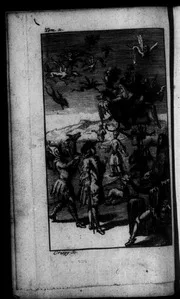
Scott meticulously documents the symbolic language and imagery associated with witchcraft and demonology. This includes the symbolism of the pact with the devil, the witch's familiars (often animals imbued with supernatural significance), the use of specific herbs and incantations, and the visual iconography of demonic entities. Understanding these symbols, as presented by Scott, is key to deciphering the belief systems of the era and their representation of cosmic forces, forbidden knowledge, and the perceived boundaries between the sacred and the profane.
Modern Relevance
In contemporary times, Scott's work remains relevant for its exploration of the psychological underpinnings of mass hysteria, scapegoating, and the construction of 'otherness.' It serves as a historical case study for understanding how fear and misinformation can lead to persecution. For those interested in the history of consciousness, comparative mythology, and the evolution of belief systems, the 'Letters' offer a vital glimpse into a past where the supernatural was an undeniable force shaping human lives and societies.
👥 Who Should Read This Book
This compelling work is essential for a diverse readership. **Scholars and students** of history, folklore, religious studies, and occultism will find Scott's meticulous research an invaluable primary resource for understanding the witch-craze. **Occult practitioners and enthusiasts** seeking historical context for Western demonological traditions will gain a deeper appreciation for the evolution of these beliefs. **Seekers of hidden knowledge and curious minds** will be captivated by Scott's vivid descriptions and his exploration of the enduring human fascination with the supernatural and the forbidden. **Readers interested in social psychology and the history of fear** will find useful insights into mass delusion and societal anxieties.
📜 Historical Context
Penned in the early 19th century, Walter Scott's 'Letters on Demonology and Witchcraft' emerged during a period of burgeoning antiquarianism and romantic fascination with the medieval past. While the Enlightenment had largely sought to rationalize away supernatural beliefs, a counter-current of interest in folklore, myth, and the darker aspects of human history was gaining momentum. Scott, a prominent figure in this movement, engaged with a rich tradition of demonological texts and historical accounts that had been compiled over centuries. His work reflects a transitional era, where skepticism and rational inquiry began to coexist with a deep-seated curiosity about the beliefs and fears that had shaped earlier epochs. It served as an accessible entry point for a wider audience into the complex, often terrifying, world of historical witchcraft beliefs, paving the way for more in-depth academic studies in the century that followed.
📔 Journal Prompts
Reflect on a historical or modern instance where fear led to the persecution of a group. How does Scott's analysis of the witch-craze resonate with this instance?
Consider the role of folklore in shaping societal beliefs about the supernatural. What contemporary folklore or urban legends reflect similar underlying fears or archetypes?
Scott details the perceived 'pact' with demonic forces. Explore the modern concept of 'making a deal' for power or success, whether literal or metaphorical. What are the perceived costs?
How might the 'imagination' as described by Scott be both a source of creativity and a tool for delusion or fear-mongering?
If you were living in the era Scott describes, what personal beliefs or societal pressures might have influenced your stance on witchcraft and demonology?
🗂️ Glossary
Demonology
The study of demons or beliefs about demons. It encompasses theological, mythological, and folkloric traditions concerning these supernatural beings and their perceived influence.
Witch-craze
A historical period characterized by widespread accusations, trials, and executions of individuals believed to be witches, typically involving accusations of malevolent magic and pacts with the Devil.
Superstition
Excessively credulous belief in and reverence for supernatural beings, events, or phenomena, often leading to irrational actions or fears.
Familiar
In folklore, a supernatural entity, often in animal form, believed to serve and assist a witch.
Grimoire
A textbook of magic, typically containing instructions on how to cast spells, perform rituals, and invoke spirits, often associated with historical occult practices.
This book appears in 2 collections
🔮 Readers Also Liked
Browse all →









From the “Witchcraft” Collection
View all →





More Free Witchcraft & Paganism Books
View all →