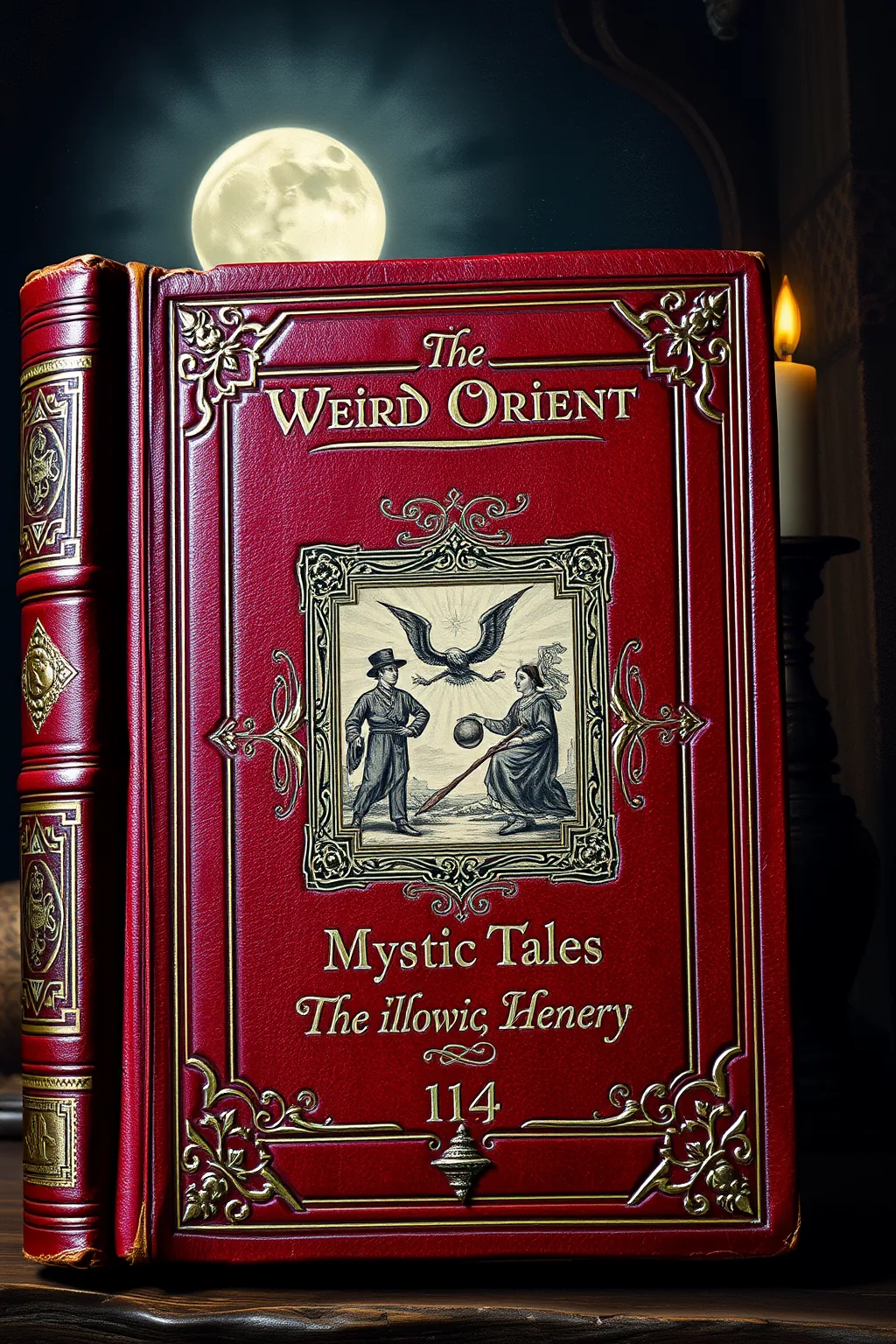
The Weird Orient: Nine Mystic Tales
 69
69

The Weird Orient: Nine Mystic Tales



"The Weird Orient: Nine Mystic Tales" by Henry Iliowizi is a hidden gem in the realm of esoteric literature. Published in 1850, this collection of short stories offers a unique blend of mysticism and fiction that is as relevant today as it was in its time. The tales are beautifully crafted, each one a journey into the mystical traditions of Asia. Iliowizi's prose is evocative and rich in symbolism, making it a delight for readers who appreciate deep, contemplative literature. For modern esoteric seekers, this book serves as a valuable resource, providing insights into ancient rituals and spiritual quests that are often overlooked in contemporary literature. The historical context adds an extra layer of depth, as it reflects the cultural exchange between the East and the West during a pivotal period. The stories are not just entertaining; they are thought-provoking and invite readers to explore the mysteries of the Orient. Iliowizi's work is a testament to the enduring power of mysticism and its ability to transcend time and culture. Overall, "The Weird Orient" is a must-read for anyone interested in the esoteric and the occult, offering a rich and rewarding experience. Rating: 4.5/5.
📝 Description
69
Henry Iliowizi published 'The Weird Orient: Nine Mystic Tales' in 1910, a collection of stories focusing on Eastern mysticism.
This 1910 collection gathers nine short stories by Henry Iliowizi. The tales are set in Asia and focus on mystical and esoteric themes. They aim to reveal hidden knowledge and symbolism, blending older traditions with contemporary thought. The narratives suggest a world where the spiritual and material overlap. Iliowizi uses evocative language and detailed plots to create these atmospheric settings. The stories invite contemplation on consciousness and challenge ordinary viewpoints. They are intended for those interested in spiritual or esoteric studies.
Published in the early 20th century, 'The Weird Orient' emerged during a period of intense Western interest in Eastern spiritual traditions, often termed the 'Occult Revival'. This era saw figures like Helena Blavatsky and the Theosophical Society popularizing concepts from Hinduism and Buddhism, alongside other esoteric philosophies. Iliowizi's work fits within this trend, presenting narratives that engage with the mystical and symbolic aspects of the East, which were often filtered through a Western lens and interpreted for a spiritual or occult audience seeking alternative frameworks to mainstream religion and science.
✍️ Author
💡 Why Read This Book?
Reading "The Weird Orient: Nine Mystic Tales" today offers a unique opportunity to delve into the mystical and occult traditions of Asia. This book provides a rich tapestry of esoteric knowledge, symbolism, and spiritual quests that are as relevant today as they were in 1850. Whether you are a student of mysticism, a lover of short stories, or simply curious about the enigmatic world of the Orient, this collection of tales will enrich your understanding and broaden your horizons. Iliowizi's evocative prose and deep symbolism make it a rewarding read, inviting you to explore the mysteries of the unknown and the supernatural.
⭐ Reader Reviews
Honest opinions from readers who have explored this book.
❓ Frequently Asked Questions
What makes "The Weird Orient" a valuable read for esoteric seekers?
"The Weird Orient" offers a unique blend of mysticism and fiction, providing deep insights into ancient rituals and spiritual quests. Its historical context and rich symbolism make it a valuable resource for those interested in the esoteric and occult.
Is this book suitable for readers who are new to esoteric literature?
Yes, "The Weird Orient" is accessible to both newcomers and experienced readers of esoteric literature. Its evocative prose and thought-provoking themes make it an engaging read for anyone curious about the mystical and occult.
What can readers expect from the nine mystic tales in this collection?
Readers can expect a journey into the mystical traditions of Asia, filled with symbolism, supernatural phenomena, and spiritual quests. Each tale is a unique exploration of the unknown, offering a rich and rewarding experience.
🔮 Key Themes & Symbolism
Enlightenment and Reincarnation
The tales in 'The Weird Orient' often explore the concepts of enlightenment and reincarnation, inviting readers to contemplate the cyclical nature of life and the journey towards spiritual awakening. These themes are woven into the fabric of each story, providing a deep and meaningful experience.
Symbolism and Hidden Knowledge
Each story is rich in symbolism, with hidden meanings and esoteric insights that reveal themselves to the attentive reader. The use of symbolism is a key aspect of the book, making it a valuable resource for those interested in the mystical and occult traditions of the East.
Philosophical Contemplation
The Weird Orient encourages philosophical contemplation, challenging conventional thinking and inviting readers to explore the depths of their own consciousness. The stories are designed to provoke thought and inspire a deeper understanding of the mystical and esoteric realms.
💡 Key Ideas
Editorial paraphrase of the work's core concepts — not direct quotes.
The path to enlightenment is not a journey of distance, but a journey of depth.
This quote highlights the idea that spiritual awakening is an inward journey, requiring introspection and self-discovery.
In the heart of the Orient lies the key to the universe's hidden secrets.
This passage underscores the book's focus on the mystical and esoteric traditions of the East, suggesting that ancient wisdom holds the answers to profound questions.
The veil between worlds is thin, and those who seek can cross it.
This line emphasizes the accessibility of the mystical realm to those who are willing to explore it, inviting readers to delve deeper into their spiritual journeys.
Symbols are the language of the divine, whispered in the winds of time.
This quote underscores the importance of symbolism in the book, suggesting that hidden meanings and esoteric insights can be found in the symbols presented.
The search for truth is a journey that never ends, but the journey itself is the reward.
This passage encourages readers to embrace the process of spiritual seeking, emphasizing the value of the journey towards enlightenment.
🌙 Esoteric Significance
Tradition
The Weird Orient belongs to the Hermetic and Gnostic traditions, drawing on the ancient wisdom of the Orient to explore themes of enlightenment, reincarnation, and hidden knowledge. The stories are rich in symbolism and philosophical contemplation, making them a valuable resource for practitioners of mysticism and esoteric studies.
Symbolism
Key symbols in the book include the lotus flower, representing enlightenment and spiritual growth, and the serpent, symbolizing the cyclical nature of life and the journey towards spiritual awakening. These symbols are woven into the fabric of each story, providing a deep and meaningful experience for readers.
Modern Relevance
The esoteric insights and profound symbolism of 'The Weird Orient' continue to be relevant today, influencing modern practitioners in the fields of Hermeticism, Gnosticism, and Kabbalistic studies. The book's exploration of hidden knowledge and ancient wisdom offers valuable perspectives for those seeking to deepen their understanding of the mystical and occult traditions of the East.
👥 Who Should Read This Book
Beginners in mysticism will find 'The Weird Orient' to be a rich and rewarding introduction to the esoteric and occult traditions of the Orient. Scholars of Eastern philosophy will appreciate the book's clear insights and philosophical contemplation. Spiritual seekers will be inspired by the stories' exploration of enlightenment and reincarnation, while practitioners of mysticism will find valuable resources for their spiritual journeys. Overall, anyone interested in the mystical and esoteric realms will benefit from this collection of tales.
📜 Historical Context
Written during a time of heightened interest in Eastern mysticism and occult traditions, 'The Weird Orient: Nine Mystic Tales' by Henry Iliowizi captures the essence of the era's fascination with hidden knowledge and spiritual exploration. Published in the early 20th century, this collection of short stories reflects the growing interest in the esoteric and mystical traditions of the Orient, drawing on ancient wisdom and modern contemplation. The book's influence can be seen in the works of later mystics and scholars, who often reference its clear insights and strong symbolism.
📔 Journal Prompts
How does the concept of enlightenment differ from traditional Western beliefs in the stories of 'The Weird Orient'?
Reflect on the symbolism used in the book and its significance in your own spiritual journey.
Consider the idea of reincarnation as presented in the tales and its implications for your understanding of life and death.
How do the philosophical themes in 'The Weird Orient' challenge or affirm your current beliefs about the mystical and occult?
Imagine yourself in one of the stories—how would you work through the challenges and seek the hidden knowledge presented?
🗂️ Glossary
Enlightenment
A state of spiritual awakening and profound understanding, often achieved through contemplation and introspection.
Reincarnation
The belief in the cyclic process of birth, death, and rebirth, often tied to the concept of karma and spiritual growth.
Symbolism
The use of symbols to represent abstract ideas or qualities, often employed in esoteric and mystical literature.
Hermeticism
An esoteric tradition based on the writings of Hermes Trismegistus, emphasizing the unity of all things and the pursuit of hidden knowledge.
Gnosticism
An ancient mystical tradition that emphasizes personal spiritual knowledge and the hidden mysteries of the divine.
This book appears in 1 collection
🔮 Readers Also Liked
Browse all →





From the “Christian Mysticism” Collection
View all →





More Free Mysticism & Contemplation Books
View all →