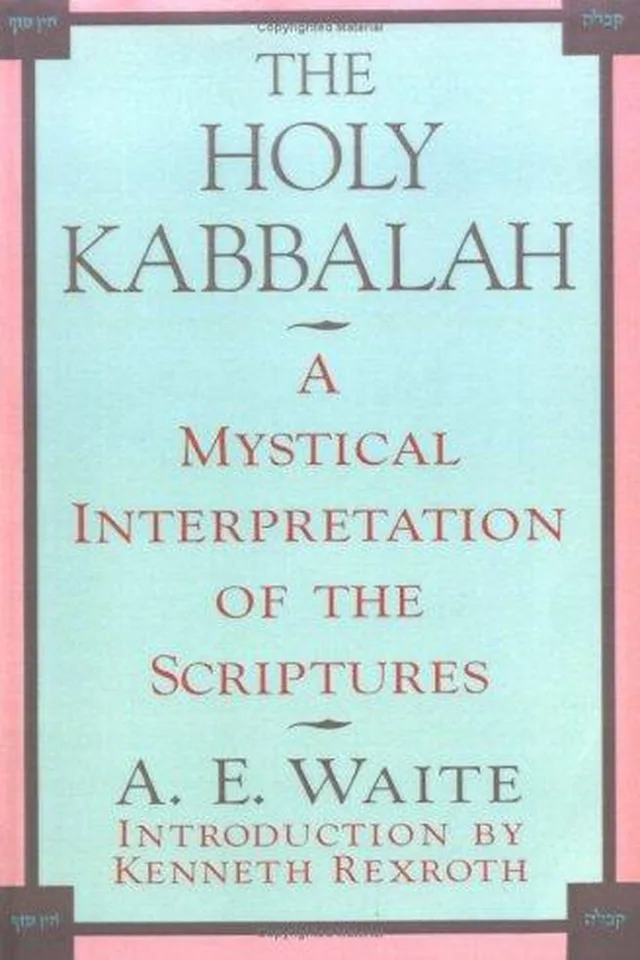
The Holy Kabbalah
 63
63

The Holy Kabbalah

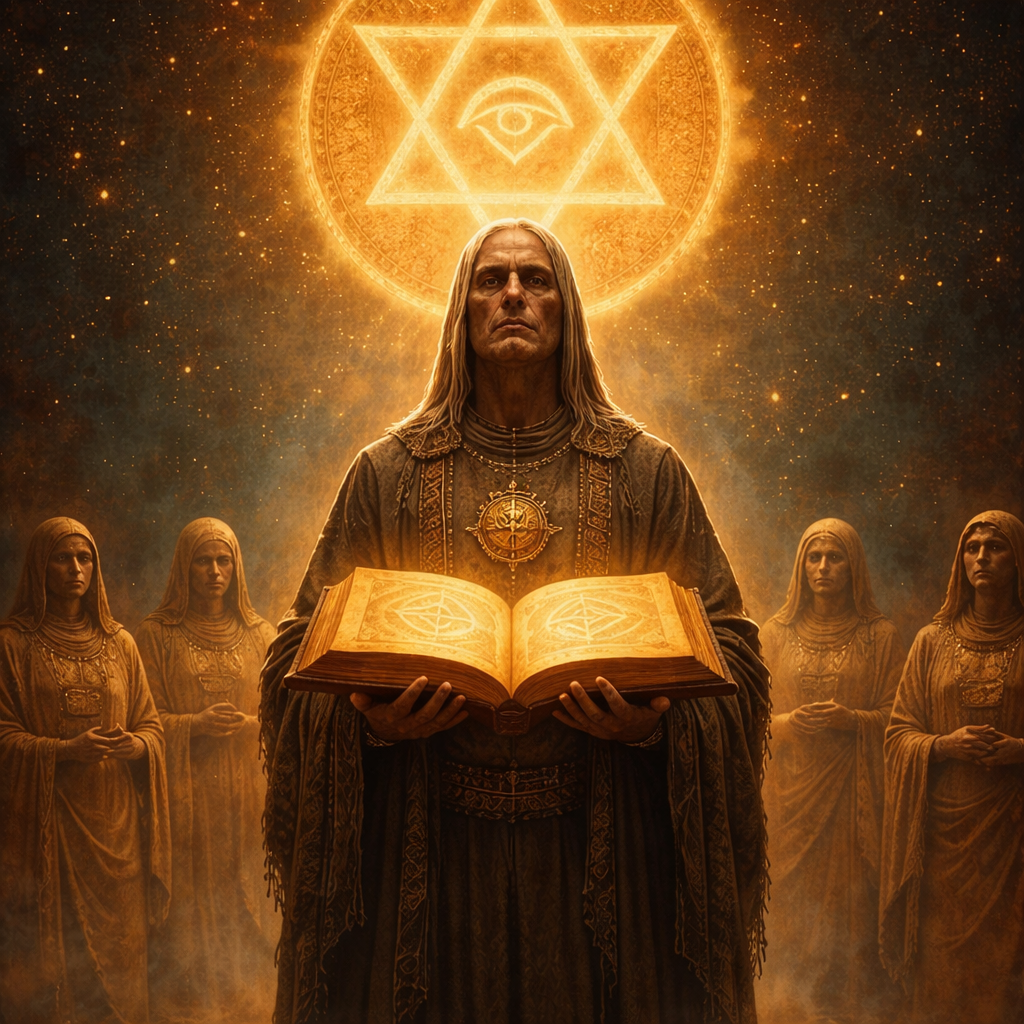

Aurelia Blackwood, Occult Philosophy Critic: A.E. Waite's 'The Holy Kabbalah' stands as a monumental achievement in the study of Jewish mysticism. Waite’s scholarly rigor is matched only by his profound intuitive grasp of the esoteric currents flowing through Kabbalistic thought. He masterfully navigates the complex symbolisms of the Zohar and other foundational texts, making accessible the profound concepts of divine emanation and the ascent of the soul. This work is indispensable for serious practitioners and scholars alike, offering a lucid gateway into the hidden knowledge that has captivated mystics for centuries. Its strength lies in its comprehensive yet deeply insightful presentation, making it a cornerstone for understanding Western esoteric traditions.
📝 Description
63
A.E. Waite published 'The Holy Kabbalah' to demystify Jewish mysticism for a Western audience.
A.E. Waite's 'The Holy Kabbalah' details the principles of Jewish mysticism, aiming to make them accessible. The book examines the Tree of Life, a central Kabbalistic symbol, and its ten sefirot, which represent divine emanations. Waite traces the historical development and philosophical underpinnings of Kabbalah, connecting its concepts to broader Western esoteric traditions. The author's intent is to provide a clear exposition of this complex system of thought. It describes the ascent from the lowest sefirah, Malkuth, to the highest, Kether. The work is structured to guide the reader through the core ideas of Kabbalistic cosmology and its spiritual implications.
This text serves as a guide to understanding the symbolic language and conceptual framework of Kabbalah. It addresses the symbolic meanings behind the Hebrew alphabet and various mystical interpretations. Waite's approach seeks to illuminate the connections between Kabbalistic thought and other esoteric disciplines. The book is intended for those interested in Jewish mystical practices and their influence on Western esotericism. It aims to clarify the path of spiritual development as understood within this tradition. The author reconstructs the lineage of these ideas through historical analysis.
This book situates itself within the study of Western esotericism, a field concerned with hidden traditions and mystical philosophies. Kabbalah is a key component of this lineage, particularly its influence on hermeticism and ceremonial magic. Waite, himself a significant figure in esoteric circles, sought to interpret and present these complex ideas in a systematic way. His work connects Jewish mysticism to a wider understanding of spiritual development and the underlying structure of reality. It addresses concepts that have long been of interest to those studying Gnosticism and Neoplatonism.
💡 Why Read This Book?
Embark on an illuminated journey into the heart of Jewish mysticism. 'The Holy Kabbalah' unveils the profound symbolism of the Tree of Life, the nature of divine emanation, and the esoteric paths to spiritual enlightenment. Ideal for seekers of hidden knowledge, students of comparative religion, and practitioners of mystical arts who wish to ground their understanding in ancient, potent wisdom.
⭐ Reader Reviews
Honest opinions from readers who have explored this book.
❓ Frequently Asked Questions
What is Kabbalah?
Kabbalah is a mystical and esoteric tradition within Judaism that seeks to understand the nature of God, creation, and the relationship between the divine and the human through symbolic interpretation of scripture and sacred texts.
Who was A.E. Waite?
Arthur Edward Waite was a prominent scholar of the occult, a prolific writer, and co-creator of the Rider-Waite-Smith tarot deck. He dedicated much of his life to researching and disseminating knowledge on various mystical traditions, including the Kabbalah.
What is the Tree of Life in Kabbalah?
The Tree of Life is a central diagram in Kabbalah, representing the structure of the universe and the process of creation. It consists of ten interconnected sefirot (divine attributes or emanations) and twenty-two paths, symbolizing the journey of the soul.
Is this book suitable for beginners?
While comprehensive, 'The Holy Kabbalah' is a deep dive. Beginners may find it beneficial to start with introductory texts on Kabbalah, but Waite's clear prose makes it an accessible, albeit challenging, entry point for dedicated newcomers.
What is the historical significance of 'The Holy Kabbalah'?
Waite's work is significant for its synthesis of historical research and esoteric interpretation, bringing the complexities of Kabbalistic thought to a wider Western audience during a period of intense interest in occultism and comparative mysticism.
🔮 Key Themes & Symbolism
The Tree of Life and Divine Emanation
This section illuminates the central symbol of Kabbalah, the Tree of Life, detailing its ten sefirot as divine emanations and pathways through which the infinite Ein Sof manifests in the created universe. It explores the intricate relationships between these spheres, the journey of the soul through them, and the profound cosmological model they represent. Understanding this structure is key to grasping the Kabbalistic vision of God's relationship with existence and the potential for human spiritual ascent.
Symbolism of Sacred Texts and Oracles
Waite meticulously unpacks the symbolic language embedded within ancient Israelite oracles and sacred texts, particularly the Zohar. This theme explores how Kabbalah interprets scripture not just on a literal level, but through layers of hidden meaning, Gematria, Notarikon, and Temurah. It highlights the concept of divine secrets concealed within the Torah and the methods used by Kabbalists to unlock these profound truths, revealing the universe as a divine text waiting to be deciphered.
The Path of Spiritual Ascent and Exile
This theme addresses the Kabbalistic understanding of the soul's journey, often framed within the concept of spiritual exile and return. It explores the challenges and transformations inherent in moving from the material realm towards divine consciousness. Waite discusses the 'Princes of the Exile' metaphorically, signifying forces or stages that influence the soul's journey, and the ultimate goal of reunification with the divine source, a central aspiration in Kabbalistic mysticism.
💬 Memorable Quotes
Direct passages from the work, attributed to the author.
“The Tree of Life is the map of the soul's journey.”
— This captures the Kabbalistic view of the Tree of Life not just as a cosmological diagram, but as a practical guide for spiritual development and self-understanding.
“Within the veiled chambers of the Sefirot lie the blueprints of creation.”
— This highlights the idea that the divine attributes or emanations within Kabbalah hold the fundamental principles and structure of all existence.
“Gnosis is the illumination of the hidden.”
— This speaks to the core of esoteric traditions, emphasizing that true spiritual knowledge (Gnosis) comes from uncovering concealed truths and divine mysteries.
“The ascent is a descent into the divine.”
— A paradoxical statement suggesting that spiritual progress is often achieved by delving deeper into spiritual realities rather than outward striving.
💡 Key Ideas
Editorial paraphrase of the work's core concepts — not direct quotes.
The construction of the Exile placed by the 'Princes of the Exile' upon the Sacred Oracles...
This quote suggests a profound, perhaps divinely orchestrated, layering of meaning or spiritual impediment within sacred texts, requiring esoteric interpretation to overcome.
🌙 Esoteric Significance
Tradition
This work is a reference for understanding the Western Esoteric tradition, particularly its deep roots in Jewish Mysticism and Kabbalah. It bridges the gap between ancient Hebrew esoteric practices and their influence on Hermeticism, Christian Kabbalah, and later occult movements. Waite's synthesis provides a critical lens for examining the transmission of mystical knowledge across cultures and eras.
Symbolism
Central to the esoteric significance is the profound symbolism of the Tree of Life, the Sefirot, and the Hebrew alphabet. Waite meticulously deciphers these symbols, revealing them not as mere abstract concepts but as living conduits of divine energy and cosmic order. The book explores how these symbols function as a language of the soul, offering keys to understanding creation, consciousness, and the path to spiritual union.
Modern Relevance
'The Holy Kabbalah' remains profoundly relevant for contemporary seekers and practitioners of esoteric arts. Its exploration of divine emanation, consciousness, and the structure of reality offers timeless insights into the human condition and the quest for meaning. The symbolic language and philosophical underpinnings provide a robust framework for personal transformation, spiritual growth, and a deeper understanding of interconnectedness in the modern world.
👥 Who Should Read This Book
This key work is essential for serious students of Kabbalah and Jewish Mysticism, offering a comprehensive historical and symbolic exploration. Scholars of comparative religion and Western esotericism will find Waite's meticulous research invaluable. For practitioners seeking a deeper theoretical foundation for their magical or meditative work, 'The Holy Kabbalah' provides clear insights. While dense, dedicated beginners with a strong interest in the subject will find it an enlightening, albeit challenging, gateway into this ancient and potent tradition.
📜 Historical Context
Written during a period of burgeoning interest in occult and esoteric studies in the late 19th and early 20th centuries, A.E. Waite's 'The Holy Kabbalah' emerged from a rich intellectual milieu fascinated by ancient wisdom traditions. The Victorian era saw a revival of interest in mysticism, alchemy, and Hermeticism, with scholars and practitioners seeking to synthesize disparate esoteric systems. Waite, a prolific scholar, was at the forefront of this movement, contributing significantly to the understanding and popularization of Kabbalah for a Western audience. His work aimed to bridge the gap between academic historical analysis and the practical, spiritual dimensions of Kabbalistic practice, placing it within the broader context of Western esotericism and its historical lineages.
📔 Journal Prompts
Reflect on the concept of spiritual exile as presented by Waite. How does this resonate with your own experiences or understanding of the human condition?
Choose one Sefirah from the Tree of Life and meditate on its attributes. How might this divine emanation manifest in your daily life?
Consider the idea of 'Sacred Oracles' being layered with meaning. What contemporary 'oracles' or texts do you engage with, and what hidden meanings might they hold?
Waite discusses the 'Princes of the Exile' as forces influencing the soul's journey. Identify any personal 'princes' or obstacles that hinder your spiritual progress.
How can the symbolic language of Kabbalah, as explored in this book, serve as a tool for personal transformation and deeper self-understanding?
🗂️ Glossary
Kabbalah
An esoteric system of Jewish mysticism that explores the nature of God, the creation of the universe, and the relationship between the divine and humanity through symbolic interpretation of scripture.
Sefirot
The ten divine emanations or attributes of God, forming the structure of the Kabbalistic Tree of Life, through which the infinite divine manifests in the created world.
Ein Sof
The Kabbalistic term for the 'Infinite' or 'Without End,' representing God in His absolute, unknowable, and transcendent aspect before any manifestation or creation.
Zohar
The foundational work of Kabbalistic literature, a mystical commentary on the Torah, rich in symbolism, allegorical narratives, and discussions of divine mysteries.
Gematria
A Kabbalistic method of interpreting scripture by calculating the numerical value of Hebrew letters and words to find hidden meanings or connections between different concepts.
This book appears in 1 collection
🔮 Readers Also Liked
Browse all →








From the “Kabbalah” Collection
View all →








More Free Kabbalah & Jewish Mysticism Books
View all →