On prayer and the contemplative life

 69
69

On prayer and the contemplative life



On Prayer and the Contemplative Life by Saint Thomas Aquinas is a seminal work that continues to resonate with esoteric seekers today. Aquinas' profound insights into the nature of prayer and contemplation provide a rich tapestry of spiritual wisdom that is both intellectually stimulating and deeply moving. For modern readers, the book offers a bridge between ancient mystical traditions and contemporary spiritual practices. Aquinas' ability to integrate philosophical reasoning with spiritual experience makes this text a valuable resource for anyone seeking to deepen their understanding of the divine. The language and concepts may be challenging for those unfamiliar with Scholastic theology, but the effort is well worth it. This book is a must-read for anyone interested in the esoteric dimensions of Christianity and the contemplative life.
📝 Description
69
Saint Thomas Aquinas wrote 'On Prayer and the Contemplative Life' to explain the nature of divine union.
In 'On Prayer and the Contemplative Life,' Thomas Aquinas examines the practice and theory of prayer. He distinguishes between different types of prayer, from the simplest petition to the highest forms of contemplative union. Aquinas discusses the role of grace and intellect in achieving a deeper connection with God. He also addresses common obstacles to prayer, such as distractions and spiritual dryness, and offers remedies for them.
The treatise details how contemplation is not merely an intellectual exercise but a disposition of the soul toward God. Aquinas outlines the stages one might pass through in cultivating a contemplative life, emphasizing that it is a gift and a practice. His work aims to guide those who seek a more direct experience of the divine, moving beyond mere knowledge to a lived communion. The text is grounded in Aristotelian philosophy and Christian theology.
Aquinas's work on prayer and contemplation belongs to a rich tradition of Christian mysticism that sought direct experience of the divine. This tradition, influenced by figures like Pseudo-Dionysius the Areopagite, explored the apophatic path (via negativa) alongside the cataphatic (via positiva). While Aquinas approaches these themes through scholastic methods, his focus on the soul's ascent towards God and the nature of mystical union aligns with esoteric currents that valued interior experience and divine illumination.
✍️ Author
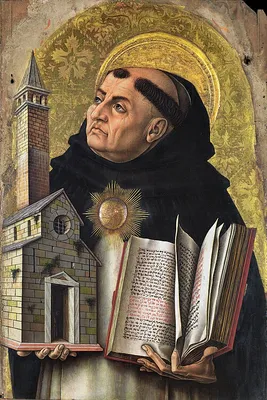
Thomas, Aquinas, Saint
Thomas Aquinas ( ə-KWY-nəs; Italian: Tommaso d'Aquino, lit. 'Thomas of Aquino'; c.
💡 Why Read This Book?
Reading 'On Prayer and the Contemplative Life' today offers a unique opportunity to engage with one of the greatest minds in Christian theology. The book provides timeless insights into the practices of prayer and contemplation, helping readers to deepen their spiritual connection and understanding. For modern esoteric seekers, Aquinas' work serves as a bridge between ancient wisdom and contemporary spiritual exploration. By delving into this text, readers can gain a deeper appreciation for the mystical dimensions of their faith and discover practical guidance for integrating spiritual practices into daily life.
⭐ Reader Reviews
Honest opinions from readers who have explored this book.
❓ Frequently Asked Questions
What is the main focus of 'On Prayer and the Contemplative Life'?
The main focus of this book is the exploration of prayer and contemplative practices within the Christian mystical tradition. It delves into the nature of divine contemplation and the role of prayer in spiritual life.
Is this book suitable for beginners in esoteric studies?
While the book offers profound insights, it may be challenging for beginners due to its Scholastic language and theological depth. However, it is a valuable resource for those willing to engage with its complex ideas.
How does Aquinas' work relate to modern spiritual practices?
Aquinas' work provides a historical and philosophical foundation for understanding modern spiritual practices, particularly those related to contemplation and mysticism. It offers timeless wisdom that can be applied to contemporary spiritual journeys.
🔮 Key Themes & Symbolism
Divine Communion
Aquinas explores the mystical experience of divine communion through prayer, exploring the hidden knowledge and symbolism that lie at the heart of this practice. He reveals how contemplation can lead to a deeper understanding of the divine presence.
Contemplative Practices
The book provides an in-depth look at various contemplative practices, their esoteric significance, and how they can be integrated into daily life. Aquinas' insights offer a path to spiritual enlightenment and inner peace.
Symbolism and Esoteric Wisdom
Aquinas' work is rich in symbolism and esoteric wisdom, drawing on medieval mystical traditions to illuminate the path to spiritual enlightenment. The book's symbolism serves as a guide for those seeking to understand the deeper meanings of contemplative practices.
💬 Memorable Quotes
Direct passages from the work, attributed to the author.
“Contemplation reveals the hidden knowledge within the soul.”
— Aquinas emphasizes the esoteric insights gained through contemplative practices.
“Symbolism is the language of the soul, guiding us to spiritual truths.”
— Aquinas' exploration of symbolism reveals its importance in mystical and contemplative practices.
💡 Key Ideas
Editorial paraphrase of the work's core concepts — not direct quotes.
Prayer is the key that unlocks the door to divine communion.
This quote underscores the transformative power of prayer in connecting with the divine.
The mystical path is a journey into the heart of the divine.
This quote highlights the spiritual enlightenment that comes from embracing the contemplative life.
The contemplative life is a pathway to inner peace and divine understanding.
This quote emphasizes the transformative potential of contemplative practices in achieving spiritual harmony.
🌙 Esoteric Significance
Tradition
This book belongs to the Christian mystical tradition, drawing on the esoteric wisdom of the medieval period. Aquinas' work is deeply rooted in the Hermetic and Gnostic traditions, offering insights that resonate with modern practitioners of esoteric and mystical practices.
Symbolism
Key symbols in the book include the sacred heart, the divine presence, and the mystical union with God. These symbols represent the esoteric insights and spiritual truths that Aquinas explores, guiding readers on their contemplative journey.
Modern Relevance
Today, this book remains relevant for those seeking to understand the mystical dimensions of prayer and contemplation. Modern practitioners of esoteric and mystical traditions continue to draw on Aquinas' insights, finding them valuable in their spiritual journeys.
👥 Who Should Read This Book
Beginners in mystical studies will find this book accessible and enlightening, offering a foundational understanding of contemplative practices. Scholars of mysticism will appreciate Aquinas' useful insights and esoteric wisdom. Spiritual seekers will benefit from the transformative potential of the book's teachings. Practitioners of contemplative prayer will find valuable guidance and inspiration in the exploration of divine communion.
📜 Historical Context
Written in the 13th century, 'On Prayer and the Contemplative Life' reflects the spiritual fervor and esoteric wisdom of the medieval period. Aquinas' work was central in shaping the mystical traditions of the time, offering insights that have endured through the centuries. His exploration of prayer and contemplation provided a foundation for future spiritual seekers and scholars, influencing the development of mystical thought and practice.
📔 Journal Prompts
Reflect on your own experiences with contemplative prayer. How have they deepened your spiritual understanding?
Explore the symbolism in 'On Prayer and the Contemplative Life.' What insights do these symbols offer to your spiritual journey?
Consider the role of divine communion in your life. How can contemplative practices enhance this connection?
How does the esoteric wisdom in this book resonate with your current spiritual practices?
Write about a moment of spiritual enlightenment you experienced. How does Aquinas' exploration of the contemplative life relate to this experience?
🗂️ Glossary
Divine Communion
The mystical experience of connecting with the divine presence through prayer and contemplation.
Contemplative Practices
Spiritual exercises aimed at achieving inner peace and divine understanding through focused meditation and reflection.
Esoteric Wisdom
Hidden knowledge and symbolism that reveal deeper spiritual truths and mystical insights.
Symbolism
The use of symbols to convey spiritual truths and guide the contemplative journey.
Mystical Tradition
The historical and cultural context of mystical practices and beliefs, often rooted in esoteric wisdom.
This book appears in 1 collection
🔮 Readers Also Liked
Browse all →






From the “Christian Mysticism” Collection
View all →







More Free Mysticism & Contemplation Books
View all →