Kabbalah and Jewish Mysticism

 61
61

Kabbalah and Jewish Mysticism

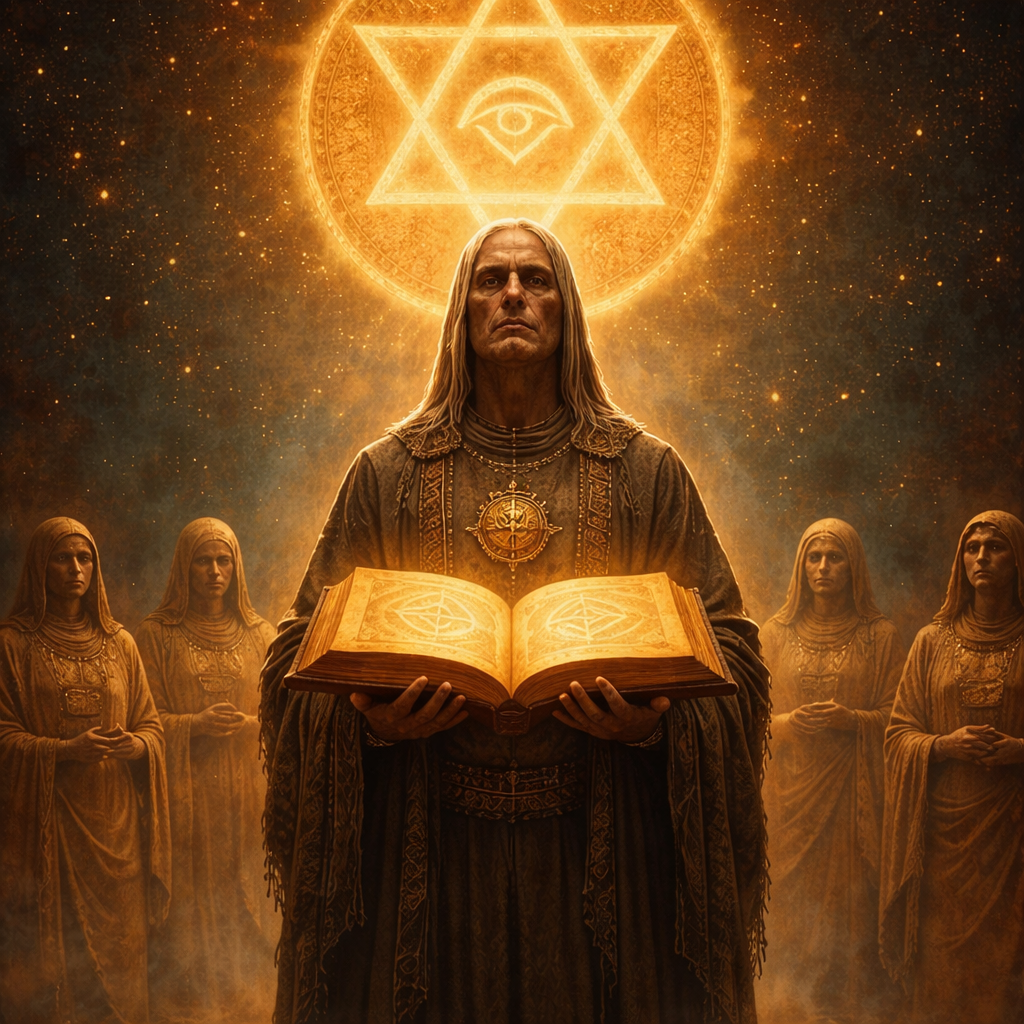

Marcus Thorne (Esoteric Sciences Reviewer): Dan Cohn-Sherbok's 'Kabbalah and Jewish Mysticism' is a masterful distillation of complex spiritual currents. Thorne excels in illuminating the esoteric core of Kabbalah, revealing its profound symbolism and philosophical depth without sacrificing scholarly rigor. This work is an indispensable resource for those seeking to understand the mystical underpinnings of Jewish tradition, offering clear explanations of concepts often shrouded in mystery. Its accessible prose makes it ideal for both earnest beginners and seasoned practitioners of esoteric studies, providing a solid foundation for further exploration. A truly enlightening read.
📝 Description
61
Dan Cohn-Sherbok's 1999 book examines Kabbalah and Jewish mysticism.
This volume presents the esoteric elements of Kabbalah and Jewish mysticism. Dan Cohn-Sherbok traces the development of this tradition from its early origins to its later philosophical expressions. The book discusses the symbolic language and mystical concepts found in key texts. It aims to make the complex ideas of Jewish mysticism accessible to a wider audience. Readers will find explanations of the divine, the structure of the cosmos, and the path of the mystic.
The author structures the material to show the progression of thought within Jewish mystical traditions. He covers the historical context and the core tenets of Kabbalistic belief. The book is written for those interested in understanding the spiritual and philosophical underpinnings of this lineage. It is not a beginner's guide but assumes some familiarity with Jewish thought.
Kabbalah represents a specific, esoteric tradition within Judaism that seeks a direct, experiential knowledge of God and the divine realms. Unlike mainstream Jewish practice, which focuses on Halakha (Jewish law), Kabbalah delves into the mystical dimensions of creation, the nature of the divine, and the human soul's relationship with the infinite. It uses complex symbolism, numerology, and meditative techniques to interpret sacred texts and understand the structure of the universe. This tradition has influenced various spiritual movements throughout history and continues to be studied by those seeking deeper spiritual insights.
💡 Why Read This Book?
This book is essential for seekers of hidden wisdom, scholars of comparative religion, and practitioners of contemplative arts. It offers a clear, comprehensive, and spiritually resonant introduction to the esoteric dimensions of Kabbalah, illuminating its rich symbolism and philosophical depth. Uncover the secrets of divine connection and cosmic understanding within a tradition that has captivated minds for centuries. Essential for anyone desiring a deeper connection to the mystical.
⭐ Reader Reviews
Honest opinions from readers who have explored this book.
❓ Frequently Asked Questions
What is Kabbalah?
Kabbalah is a mystical tradition within Judaism that seeks to understand the nature of God, the universe, and humanity's place within it through esoteric interpretation of religious texts and symbolic practices. It explores divine emanations and hidden pathways to spiritual enlightenment.
Is this book suitable for beginners?
Yes, this book is thoughtfully structured to be accessible to newcomers while still offering depth for those with prior knowledge. Cohn-Sherbok guides readers through complex concepts with clarity and insight, making the esoteric accessible.
What are the main concepts covered?
The book delves into the Tree of Life, divine emanations (Sefirot), the nature of the soul, mystical interpretations of the Torah, and the historical development of Kabbalistic thought. It explores concepts of divine unity and cosmic interconnectedness.
Does the book discuss practical Kabbalistic practices?
While primarily an exploration of theory and philosophy, the book touches upon the spiritual aims that underpin Kabbalistic practices, such as meditation and contemplation, offering context for their esoteric purpose.
What is the historical significance of Kabbalah?
Kabbalah has profoundly influenced Jewish thought and practice for centuries, shaping mystical interpretations, theological discourse, and spiritual aspirations. Its ideas have also permeated Western esotericism and philosophy.
🔮 Key Themes & Symbolism
The Tree of Life and Divine Emanations
Central to Kabbalistic cosmology is the Sephirotic Tree, a symbolic map of divine attributes and emanations. This theme explores how God's infinite essence is expressed through ten distinct Sefirot, each representing a facet of the divine and a stage in creation. Understanding these emanations provides a framework for comprehending the divine-human relationship, the structure of the cosmos, and the pathways to spiritual ascent. The interconnectedness of the Sefirot reveals a dynamic divine presence that permeates all existence, offering useful insights into the nature of reality and the divine will.
The Nature of the Soul and Spiritual Ascent
Kabbalah offers a sophisticated understanding of the human soul, positing multiple levels and functions that are intimately connected to the divine realm. This theme examines the soul's journey, its potential for both spiritual elevation and descent, and the esoteric practices designed to purify and reunite it with its divine source. It explores concepts like 'Tikkun' (rectification) and the ultimate goal of achieving 'Devekut' (cleaving to God), highlighting the soul's inherent capacity for divine communion and its role in the cosmic order.
Mystical Interpretation of Sacred Texts
This theme focuses on the Kabbalistic method of interpreting the Torah and other sacred Jewish texts not just for their literal meaning, but for deeper, hidden layers of spiritual significance. Through techniques like Gematria (numerical interpretation), Notarikon (acronyms), and Temurah (letter permutation), Kabbalists uncover profound allegorical and mystical truths. This approach reveals the divine blueprint embedded within scripture, demonstrating how seemingly mundane passages can unlock cosmic secrets and guide the seeker towards spiritual illumination and a profound understanding of God's will.
💬 Memorable Quotes
Direct passages from the work, attributed to the author.
“To know God is to know oneself.”
— This pithy statement highlights the interconnectedness of the divine and the human, suggesting that self-discovery is intrinsically linked to understanding the divine nature, a core tenet of many mystical traditions.
“The universe is a reflection of the divine mind.”
— This evocative phrase points to the idea that all of creation is a manifestation or projection of God's thoughts and intentions, imbuing the cosmos with sacred meaning and order.
“Through symbols, we touch the infinite.”
— This emphasizes the power of symbolic language in Kabbalah to bridge the gap between the finite human intellect and the boundless nature of the divine, allowing for a more intuitive grasp of spiritual truths.
“The path of wisdom is a journey inward.”
— This captures the introspective nature of spiritual seeking within Kabbalah, suggesting that true understanding and enlightenment are found not through external pursuits but through deep self-exploration and contemplation.
💡 Key Ideas
Editorial paraphrase of the work's core concepts — not direct quotes.
The light of the divine is everywhere, but we must open our eyes to see it.
This quote emphasizes the omnipresence of divine energy and the importance of inner perception and spiritual awareness to apprehend it, suggesting our limitations are often self-imposed.
🌙 Esoteric Significance
Tradition
Kabbalah stands as a central to Jewish mysticism, a deeply esoteric tradition aiming to comprehend the divine essence and its relationship with creation. It offers a complex symbolic language and philosophical framework for understanding the hidden aspects of reality, God's emanations, and the pathways to spiritual enlightenment. Its esoteric nature lies in its veiled meanings, symbolic representations, and the requirement of deep study and contemplation to unlock its useful insights into the nature of existence.
Symbolism
The symbolism within Kabbalah is rich and many-sided, with the Tree of Life serving as its central icon. This diagram represents the ten Sefirot, divine attributes or emanations through which God interacts with the world. Other key symbols include Hebrew letters, their numerical values (Gematria), divine names, and allegorical interpretations of biblical narratives. These symbols are not mere decoration but potent keys, designed to unlock hidden meanings, facilitate spiritual contemplation, and guide the initiate towards a deeper understanding of cosmic order and divine unity.
Modern Relevance
In contemporary times, Kabbalah continues to resonate profoundly, offering seekers a collection of spiritual wisdom and a framework for understanding life's deeper mysteries. Its emphasis on interconnectedness, the divine spark within all beings, and the pursuit of spiritual growth provides potent tools for navigating modern challenges. The esoteric insights into consciousness, the nature of reality, and the soul's journey remain highly relevant for those seeking meaning, personal transformation, and a more profound connection to the sacred in an increasingly secular world.
👥 Who Should Read This Book
This book is essential for anyone drawn to the profound depths of spiritual inquiry. Beginners will find a clear and accessible entry point into the intricate world of Kabbalah, guided by an expert hand. Scholars of religion and philosophy will appreciate its scholarly rigor and comprehensive overview of key concepts and historical developments. Seekers of esoteric knowledge will discover a wealth of hidden wisdom, symbolic language, and contemplative pathways. Practitioners of meditation and spiritual disciplines will find valuable insights to deepen their understanding and practice, connecting them to an ancient and powerful mystical tradition.
📜 Historical Context
The development of Kabbalah spans centuries, with its roots tracing back to ancient Jewish mystical traditions and early esoteric interpretations of biblical texts. The medieval period, particularly in 13th-century Spain and 14th-century Safed, Palestine, marked a golden age for Kabbalistic literature, giving rise to seminal works like the Zohar. This era was characterized by a fervent spiritual climate, fueled by historical upheavals, messianic expectations, and a deep desire to understand God's hidden nature and the intricate workings of the cosmos. Kabbalah offered a profound and intricate system for spiritual engagement, influencing not only Jewish thought but also broader Western esoteric currents, providing a framework for understanding divine immanence and the possibility of mystical union.
📔 Journal Prompts
Meditate on the concept of divine emanations (Sefirot) and how they might manifest in your own life. Journal your reflections.
Explore the symbolism of a particular Hebrew letter you find resonant. What deeper meanings or connections does it evoke for you?
Consider the idea of 'Tikkun' (rectification). In what areas of your life do you feel a call for spiritual repair or refinement?
Reflect on a moment when you felt a profound sense of interconnectedness with the universe. How does this relate to Kabbalistic ideas of unity?
How can the pursuit of 'Devekut' (cleaving to God) inform your daily actions and intentions?
🗂️ Glossary
Sefirot
The ten divine emanations or attributes through which God manifests and interacts with creation in Kabbalistic cosmology. They form the structure of the Tree of Life.
Tree of Life (Etz Chaim)
A central symbolic diagram in Kabbalah, depicting the ten Sefirot and their interconnections, representing the divine blueprint of the universe and the pathways of spiritual ascent.
Gematria
A method of Kabbalistic interpretation that assigns numerical values to Hebrew letters and words to reveal hidden meanings and connections between concepts.
Tikkun
Meaning 'rectification' or 'repair,' this concept refers to the process of spiritual refinement and mending, both within the individual soul and on a cosmic level, to restore divine harmony.
Devekut
A state of intense spiritual communion or 'cleaving' to God, representing the ultimate goal of Kabbalistic practice and the pinnacle of mystical union with the divine.
This book appears in 1 collection
🔮 Readers Also Liked
Browse all →









More by Dan Cohn-Sherbok
All books →
From the “Kabbalah” Collection
View all →






More Free Kabbalah & Jewish Mysticism Books
View all →