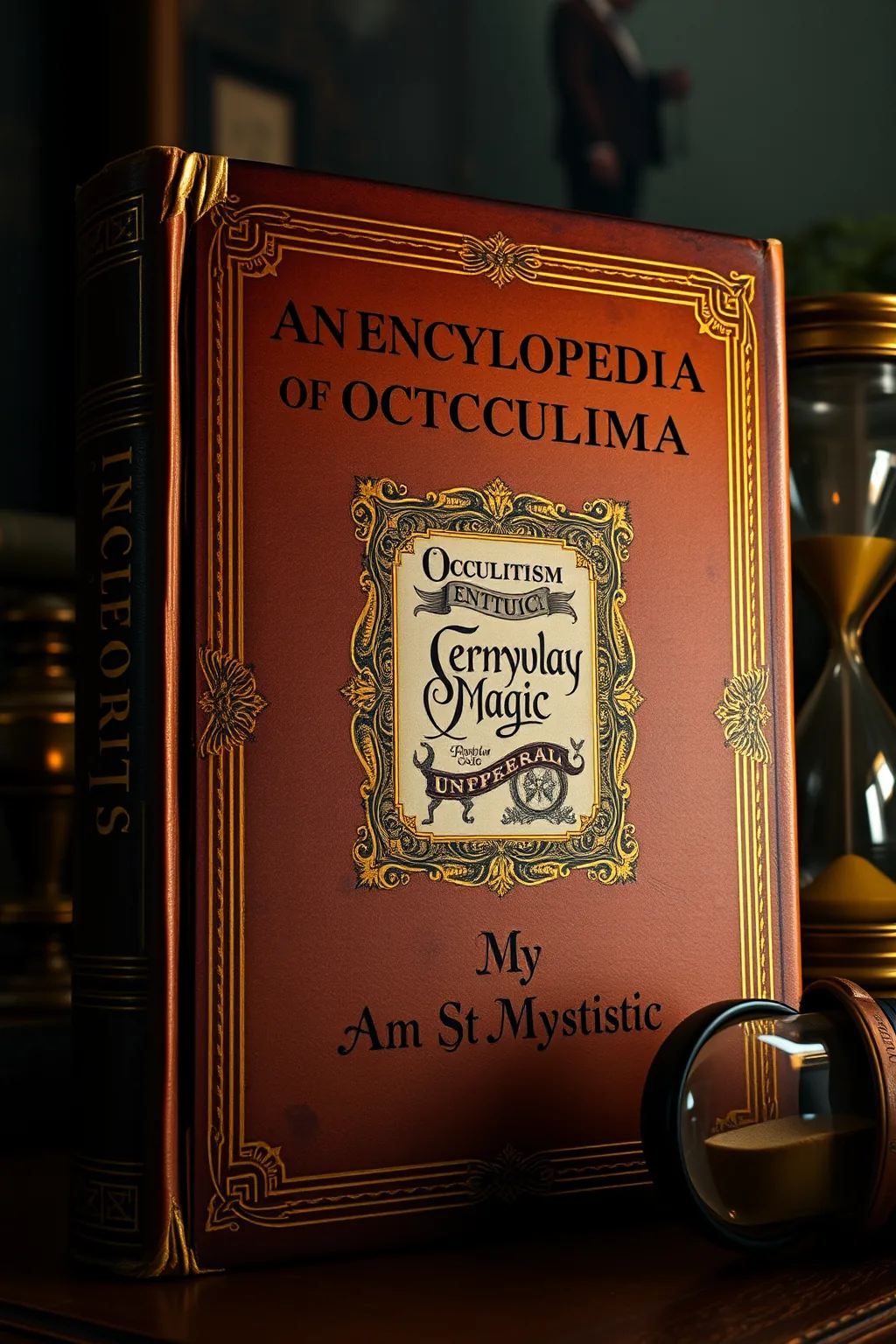
An Encyclopaedia Of Occultism, Magic, Demonology, Spiritism And Mysticism ( 1920)
 79
79

An Encyclopaedia Of Occultism, Magic, Demonology, Spiritism And Mysticism ( 1920)


An Encyclopaedia of Occultism, Magic, Demonology, Spiritism and Mysticism is a treasure trove for modern esoteric seekers. Published in 1920, it captures the essence of a time when the boundaries between science, spirituality, and the occult were more fluid. The book's encyclopedic format allows for easy navigation through complex subjects, making it accessible even to those new to the field. Each entry is a mini-lesson in itself, offering historical context, theoretical frameworks, and practical applications. For contemporary readers, this book serves as a bridge to the past, providing insights into the evolution of occult thought and practice. It is particularly valuable for its detailed exploration of demonology, a subject often shrouded in mystery and misinformation. The text's scholarly approach demystifies many of the misconceptions, offering a clearer understanding of the historical and cultural significance of demonic entities. Despite being nearly a century old, the book's relevance endures, making it a must-read for anyone interested in the deeper dimensions of human experience.
📝 Description
79
Published in 1920, 'An Encyclopaedia of Occultism, Magic, Demonology, Spiritism, and Mysticism' compiles diverse esoteric subjects.
This 1920 compilation gathers information on occultism, magic, demonology, spiritism, and mysticism. It presents topics such as symbolism, ritual practices, and ancient lore from a historical perspective. The text aims to provide insights into the philosophical underpinnings of various spiritual traditions. It covers concepts relevant to those interested in the history of belief systems and their influence on human thought.
The encyclopaedia is organized to serve as a reference for individuals curious about esoteric subjects. It details a range of practices and beliefs that have been part of human spirituality across different eras. The work attempts to clarify complex ideas within these fields for a general audience with an interest in the occult and mystical traditions.
This work emerged during a period of heightened interest in spiritualism and occult sciences, following the late 19th-century occult revival. It reflects a trend of cataloging and systematizing esoteric knowledge that was prevalent at the time. Books like this aimed to distill diverse traditions, from ceremonial magic to spirit communication, into accessible formats for a growing readership. It sits within a lineage of encyclopedic efforts to define and explain phenomena considered outside mainstream religious or scientific understanding.
💡 Why Read This Book?
Reading An Encyclopaedia of Occultism, Magic, Demonology, Spiritism and Mysticism today offers a unique opportunity to delve into the rich tapestry of esoteric knowledge. This book provides a comprehensive overview of mystical and occult traditions, offering readers a solid foundation for further exploration. Whether you are a seasoned practitioner or a curious beginner, this encyclopedia will enrich your understanding of the hidden dimensions of human experience. It is an essential resource for anyone seeking to deepen their knowledge of the occult and its various practices.
⭐ Reader Reviews
Honest opinions from readers who have explored this book.
❓ Frequently Asked Questions
What makes this book a valuable resource for esoteric studies?
This book is a valuable resource due to its comprehensive coverage of occult subjects and its encyclopedic format, which allows for easy navigation and in-depth study.
Is this book suitable for beginners in the field of occultism?
Yes, the book's detailed entries and scholarly approach make it accessible to beginners, providing a solid foundation for further exploration.
How does this book differ from other works on occultism published around the same time?
This book stands out for its encyclopedic format and the depth of research, offering a more structured and comprehensive overview of occult subjects compared to other works of its time.
🔮 Key Themes & Symbolism
The Hidden Knowledge
This theme looks at the esoteric traditions and hidden wisdom that have been passed down through generations. It explores the mystical teachings and symbolism that form the foundation of occult practices, offering readers a glimpse into the hidden dimensions of reality.
Symbolism and Ritual
Symbolism is a core part of mystical practices, and this theme examines the deep significance behind various symbols and rituals. It reveals how these elements are used to connect with higher realms and tap into the universal energies that govern the cosmos.
The Spiritual Quest
The spiritual quest is a journey of self-discovery and enlightenment, and this theme explores the various paths and practices that seekers can embark upon. It provides insights into the mystical traditions that have guided spiritual seekers throughout history.
💬 Memorable Quotes
Direct passages from the work, attributed to the author.
“Demonology reveals the dark side of the human psyche.”
— This statement explores the psychological and spiritual dimensions of demonology, revealing the inner demons that we must confront.
💡 Key Ideas
Editorial paraphrase of the work's core concepts — not direct quotes.
The mysteries of the universe are hidden in plain sight.
This quote underscores the idea that esoteric knowledge is often concealed within everyday symbols and experiences.
Magic is the art of transforming the mundane into the divine.
This line highlights the transformative power of magical practices, which seek to elevate the human spirit to higher realms.
Spiritism connects us to the world beyond the physical.
This quote emphasizes the role of spiritism in bridging the gap between the material and spiritual worlds.
Mysticism is the path to ultimate enlightenment.
This line underscores the goal of mystical practices, which aim to lead seekers to a state of profound spiritual awareness.
🌙 Esoteric Significance
Tradition
This book belongs to the Hermetic tradition, which emphasizes the unity of all things and the pursuit of spiritual enlightenment through esoteric knowledge. It draws on a wide range of mystical and occult practices, offering a holistic view of the esoteric sciences.
Symbolism
Key symbols in this book include the pentacle, the pentagram, and the sigils of various demons and spirits. These symbols are imbued with deep meaning and are used in rituals to invoke higher powers and tap into universal energies.
Modern Relevance
This book remains relevant today, as modern practitioners continue to explore the esoteric traditions it covers. It is a valuable resource for those seeking to understand the mystical and occult sciences and their significance in the modern world.
👥 Who Should Read This Book
Beginners will find this book to be an accessible introduction to the world of the occult and mysticism. Scholars will appreciate its depth and breadth, providing a comprehensive overview of various esoteric traditions. Spiritual seekers will be drawn to its clear insights into the spiritual quest, while practitioners will find practical guidance on magical and spiritual arts.
📜 Historical Context
Published in 1920, 'An Encyclopaedia of Occultism, Magic, Demonology, Spiritism, and Mysticism' emerged during a time of great intellectual and spiritual ferment. The early 20th century saw a renewed interest in esoteric traditions, as people sought to understand the mysteries of the universe and the human spirit. This book was important because it provided a comprehensive overview of the occult sciences, helping to preserve and disseminate this hidden knowledge. Its influence can be seen in the works of modern occultists and mystics, who continue to draw on its insights and teachings.
📔 Journal Prompts
What are some of the hidden symbols in your daily life that might hold esoteric significance?
How do you think occult practices can lead to spiritual enlightenment?
Reflect on a time when you experienced a sense of connection to the spiritual world.
What role do you believe demonology plays in understanding the human psyche?
How can you incorporate mystical practices into your daily life to deepen your spiritual journey?
🗂️ Glossary
Occultism
The study of hidden or secret knowledge, often involving mystical and magical practices.
Magic
The art of manipulating natural and supernatural forces to achieve desired outcomes.
Demonology
The study of demons and their influence on the human world.
Spiritism
The belief in communication with the spirits of the deceased.
Mysticism
The pursuit of direct, personal experience of the divine or ultimate reality.
This book appears in 1 collection
🔮 Readers Also Liked
Browse all →





From the “Christian Mysticism” Collection
View all →






More Free Mysticism & Contemplation Books
View all →


![The mystic oracle, or, The complete fortune-teller and dream book / [F.M. Lupton].](/img/thumb/the-mystic-oracle-or-the-complete-fortune-teller-and-dream-book-f-m-lupton.webp)