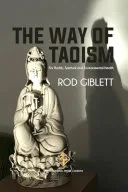
The Way of Taoism For Bodily, Spiritual and Environmental Health
 80
80

The Way of Taoism For Bodily, Spiritual and Environmental Health
Rod Giblett's exploration of Taoism as a path to triple cultivation offers a refreshingly grounded perspective. The strength of *The Way of Taoism For Bodily, Spiritual and Environmental Health* lies in its consistent focus on the tangible benefits of Taoist practice for the body and the earth, moving beyond purely abstract spiritual tenets. The concept of "triple cultivation" is particularly well-articulated, providing a clear framework for integrating personal health with ecological responsibility. However, the book occasionally feels less like a critical scholarly work and more like a personal exposition of Taoist principles, which might leave readers seeking deeper textual analysis wanting more. A passage discussing the energetic flow (Qi) within both the body and natural landscapes effectively illustrates the book's core argument, highlighting the practical applications of this ancient philosophy. It's a valuable resource for those seeking a practical, integrated approach to well-being.
📝 Description
80
Rod Giblett's 2023 book frames Taoism as a holistic path for body, mind, and environment.
This book presents Taoism as a complete system for developing the health of the body, spirit, and surroundings. It draws from Taoist oral and written traditions to propose a method of "triple cultivation." The author guides readers toward ways of living that promote shared well-being between individuals and the earth, linking spiritual and material aspects of life. The work examines the Taoist view of the body and its relationship with the natural world.
Individuals looking for integrated ways to improve personal and ecological health will find this book especially useful. It suits those interested in old philosophies that offer practical advice for today's world. Readers curious about the overlap between spiritual practice, physical wellness, and environmental care will gain from it. It is also for students of religion and philosophy who want to grasp Taoist ideas in a modern setting.
Published in 2023, Giblett's work appears during a time of growing interest in Eastern philosophies and ecological awareness. Taoism, originating in ancient China, has a long history of interpretation. This book engages with these traditions, providing a modern viewpoint that connects ancient teachings to current concerns about health and sustainability. It may offer a contrast to more severe or purely philosophical interpretations sometimes found in Western esoteric thought.
💡 Why Read This Book?
• Gain a framework for "triple cultivation" that directly links personal physical and spiritual health to environmental well-being, as explored in the book's discussion of the Taoist body's connection to the earth. • Understand practical applications of Taoist principles for modern health and ecological consciousness, drawing on the book's engagement with the rich oral and textual traditions of Taoism. • Discover how ancient Chinese philosophy, particularly Taoism, offers pathways to holistic living that nurture all aspects of existence, as presented in the book's first-hand exploration of Taoist teachings.
⭐ Reader Reviews
Honest opinions from readers who have explored this book.
❓ Frequently Asked Questions
What is the core philosophy presented in 'The Way of Taoism For Bodily, Spiritual and Environmental Health'?
The book centers on Taoism as a path of "triple cultivation," aiming to foster the health of the body, mind/spirit, and environment simultaneously through integrated living and spiritual practices.
When was 'The Way of Taoism For Bodily, Spiritual and Environmental Health' first published?
The book was first published on October 5, 2023, reflecting contemporary interest in ancient wisdom for modern challenges.
Who is the author of 'The Way of Taoism For Bodily, Spiritual and Environmental Health'?
The author is Rod Giblett, who draws on rich oral and textual traditions of Taoism to present his ideas.
What makes this book different from other books on Taoism?
It uniquely frames Taoism as a system for "triple cultivation," specifically linking bodily, spiritual, and environmental health in mutual spirituality and materiality.
What kind of practices does the book suggest?
The book offers ways of living and being that nurture the health of the body and earth, integrating spiritual and material aspects, drawing from Taoist teachings.
What are the main benefits of reading this book?
Readers can learn to live more holistically, improve their personal well-being, and develop a deeper connection and responsibility towards the environment through Taoist principles.
🔮 Key Themes & Symbolism
Triple Cultivation Framework
The core of the book is the concept of "triple cultivation," a Taoist-inspired approach to harmonizing bodily vitality, spiritual awareness, and environmental stewardship. This framework posits that true health is achieved not in isolation but through the interconnected nurturing of these three domains. Giblett suggests that by understanding the Taoist perspective on the body as an extension of the natural world, individuals can foster mutual well-being, integrating their spiritual aspirations with their material existence and their role within the ecosystem.
Body-Earth Interconnectedness
A significant theme is the profound link between the human body and the earth. Drawing on Taoist traditions, the book explores the idea that the body is not a separate entity but is deeply interwoven with the rhythms and energies of the natural world. This perspective encourages readers to see their physical and spiritual health as intrinsically tied to the health of the planet, promoting practices that honor this symbiotic relationship and foster a sense of mutual care and responsibility.
Holistic Well-being
The work advocates for a holistic understanding of well-being, moving beyond conventional notions of health that often compartmentalize physical, mental, and environmental aspects. By presenting Taoism as a path of integration, Giblett guides readers towards a more unified way of living. This approach emphasizes that spiritual and material health are not opposing forces but complementary elements that, when cultivated together, lead to a more balanced, resilient, and meaningful existence grounded in natural principles.
Taoist Wisdom for Modern Life
This book serves as a bridge, translating ancient Taoist wisdom into practical guidance for contemporary challenges. It accesses the rich oral and textual heritage of Taoism to offer actionable insights for those seeking healthier lifestyles and a more sustainable relationship with the environment. The focus is on how these timeless principles can be applied today to nurture the health of individuals and the planet, demonstrating the enduring relevance of Taoist philosophy.
💬 Memorable Quotes
Direct passages from the work, attributed to the author.
“Taoism presents a path of triple cultivation for the body, the mind/spirit, and the earth.”
— This statement expresses the book's central thesis, framing Taoism not just as a philosophy or spiritual practice, but as a practical methodology for achieving holistic well-being across multiple interconnected dimensions of existence.
“Mutual spirituality and materiality are achieved through Taoist principles.”
— This interpretation suggests that the book explores how Taoism reconciles seemingly opposing concepts, demonstrating that spiritual growth and material well-being are not mutually exclusive but can be harmoniously integrated.
“The Taoist body is understood in relation to the natural world.”
— This core idea underscores the book's perspective that the human body is not an isolated biological machine but an integral part of the larger cosmic and ecological system, deeply connected to universal forces.
“Drawing on rich oral and textual traditions of Taoism.”
— This indicates the book's scholarly and practical foundation, rooted in the historical and living heritage of Taoist teachings, ensuring its concepts are grounded in authentic lineage.
💡 Key Ideas
Editorial paraphrase of the work's core concepts — not direct quotes.
Living and being with the body and the earth that nurture the health of both.
This paraphrased concept highlights the book's emphasis on reciprocal relationship and mutual health between the individual's physical self and the natural environment, suggesting a path of active engagement and care.
🌙 Esoteric Significance
Tradition
While not strictly adhering to a single Western esoteric lineage like Hermeticism or Kabbalah, this work draws heavily from the philosophical and spiritual traditions of Taoism. It fits within the broader category of esoteric thought by exploring non-material aspects of existence and advocating for practices that cultivate deeper awareness and connection. It departs from some Western esoteric traditions by emphasizing a direct, immanent connection between the physical body, the natural world, and spiritual realization, rather than focusing on transcendent realms or complex symbolic systems.
Symbolism
Central to Taoist symbolism, which the book likely explores, are concepts like the Yin and Yang, representing the dynamic interplay of complementary forces in the universe, and the concept of Qi (or Chi), the vital life force that flows through all things. The book's focus on "triple cultivation" suggests a symbolic representation of the unified self, encompassing physical form (body), inner experience (spirit), and external environment. These symbols are interpreted not merely as abstract representations but as active principles guiding health and balance.
Modern Relevance
Contemporary thinkers and practitioners in fields like ecopsychology, holistic health, and mindfulness-based stress reduction often find resonance with Taoist principles, even if not explicitly referencing Giblett's work. Schools of thought that promote interconnectedness, natural living, and the integration of mind-body practices can be seen as drawing on the same wellspring of wisdom that Giblett explores. The book speaks to a growing movement seeking sustainable lifestyles and a deeper, more harmonious relationship with the planet.
👥 Who Should Read This Book
• Individuals interested in holistic health and wellness practices that integrate mind, body, and environment. They will gain practical Taoist-inspired methods for achieving balanced well-being. • Students of comparative religion and philosophy seeking to understand the practical applications of Eastern thought, particularly Taoism, in contemporary life. They will find a unique framework for "triple cultivation." • Environmental activists and advocates looking for philosophical underpinnings for ecological stewardship. They will discover how personal spiritual and bodily health are intrinsically linked to planetary health.
📜 Historical Context
Rod Giblett's *The Way of Taoism For Bodily, Spiritual and Environmental Health*, published in 2023, enters a contemporary landscape where interest in Eastern philosophies and ecological solutions is significant. Taoism, originating in ancient China with figures like Lao Tzu (traditionally associated with the *Tao Te Ching*), has a long history of interpretation, evolving from philosophical inquiry to religious practice. This work engages with that tradition, offering a modern synthesis that connects ancient wisdom to current concerns about personal health and environmental crises. It emerges in a period where Western thinkers like Alan Watts popularized Eastern thought, though Giblett's focus on "triple cultivation"—specifically linking bodily, spiritual, and environmental health—provides a distinct, integrated framework. The book's emphasis on practical, holistic living can be seen as a response to a perceived fragmentation in modern Western approaches to health and sustainability, offering an alternative to purely scientific or purely spiritual paradigms.
📔 Journal Prompts
The Taoist body's connection to the earth: how can daily practices reflect this interdependence?
Reflect on the concept of "triple cultivation" and its application to your personal health goals.
Consider the relationship between your spiritual well-being and the immediate environment you inhabit.
How does the principle of Yin and Yang inform your understanding of balance in your life?
Explore the integration of materiality and spirituality in your current lifestyle.
🗂️ Glossary
Taoism
An ancient Chinese philosophy and religion that emphasizes living in harmony with the Tao, the fundamental principle of the universe. It is often associated with concepts like wu wei (non-action) and balance.
Triple Cultivation
A framework presented in the book for simultaneously nurturing the health of the body, the mind/spirit, and the environment through Taoist principles and practices.
Tao
The fundamental, ineffable principle that underlies and governs all reality in Taoist philosophy. It is often translated as 'The Way' and represents the natural order of the universe.
Qi (Chi)
The vital life force or energy believed to flow through all living things and the universe. Maintaining the free and balanced flow of Qi is central to health in Taoist traditions.
Wu Wei
A core Taoist concept, often translated as 'non-action' or 'effortless action.' It refers to acting in accordance with the natural flow of the Tao, without force or excessive striving.
Yin and Yang
The Taoist concept of dual, complementary, and interdependent forces that shape the natural world. Yin represents passive, feminine, dark, and cold aspects, while Yang represents active, masculine, light, and hot aspects.
Mutual Spirituality and Materiality
The idea that spiritual and material aspects of existence are not separate but intertwined and mutually reinforcing, a concept explored in the book's Taoist framework.