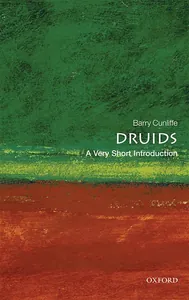
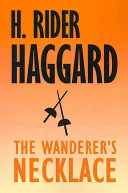
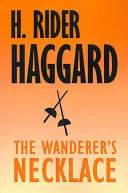
The Wanderer's Necklace
 76
76

The Wanderer's Necklace
Haggard's "The Wanderer's Necklace" presents a fascinating if somewhat dated exploration of reincarnation and ancestral memory. The framing device of the Zulu witch-doctor recounting past lives is an ambitious narrative choice, lending an authentic, if somewhat exoticized, voice to the proceedings. However, the pacing can feel uneven, with lengthy passages dedicated to exposition that might test modern readers accustomed to more direct storytelling. The concept of the "necklace" as a physical and spiritual link across lifetimes is particularly compelling, offering a tangible representation of enduring karmic bonds. While the prose occasionally leans into the conventions of its era, the core ideas regarding the persistence of past selves are handled with a seriousness that elevates it beyond mere adventure. It’s a curious artifact of early occult fiction, offering a glimpse into the spiritual anxieties and fascinations of the interwar period.
📝 Description
76
H. Rider Haggard's 1932 novel, "The Wanderer's Necklace," posits a direct link between past lives and present circumstances.
Published in 1932, "The Wanderer's Necklace" by H. Rider Haggard weaves a narrative centered on destiny and reincarnation. The story unfolds through the perspective of a Zulu witch-doctor, recounting ancestral memories that intertwine with the present lives of the characters. Haggard's novel constructs a cosmology where previous existences actively shape current events, and ancient spiritual forces retain their power.
This work appeals to those interested in early 20th-century occult fiction, particularly stories that examine spiritualism, reincarnation, and a sense of cosmic connection. Readers who appreciate historical settings combined with supernatural elements will find merit here. Those familiar with Haggard's other novels, especially those that touch upon mysticism, will recognize recurring thematic interests.
Emerging in 1932, "The Wanderer's Necklace" reflects the widespread fascination with spiritualism and esoteric thought prevalent in the early 20th century. This period saw significant interest in movements like Theosophy, which promoted ideas of Eastern religions and reincarnation. Haggard's own interest in spiritual matters likely informed the mystical elements within his later writings. The novel captures a broader cultural engagement with the unseen and the concept of inherited memory from previous generations.
💡 Why Read This Book?
• Understand the concept of ancestral memory as a narrative driver, as explored through the witch-doctor's recollections, offering a unique perspective on destiny. • Examine the symbolic significance of the "necklace" as a physical and spiritual anchor to past lives, providing a concrete representation of karmic continuity. • Appreciate the novel's engagement with early 20th-century esoteric thought, particularly its reflection of Theosophical ideas about reincarnation and spiritual inheritance.
⭐ Reader Reviews
Honest opinions from readers who have explored this book.
❓ Frequently Asked Questions
When was H. Rider Haggard's 'The Wanderer's Necklace' originally published?
H. Rider Haggard's 'The Wanderer's Necklace' was first published in 1932, placing it among his later works and reflecting the era's continued interest in spiritual and esoteric themes.
What is the primary narrative device used in 'The Wanderer's Necklace'?
The novel primarily uses the framing device of a Zulu witch-doctor recounting ancestral memories and past lives, which directly influence the present-day narrative and characters.
Does 'The Wanderer's Necklace' deal with reincarnation?
Yes, reincarnation is a central theme in 'The Wanderer's Necklace.' The story explores how individuals carry the experiences and spiritual imprints of their past lives into their current existence.
What role does the 'necklace' play in the story?
The "necklace" serves as a significant symbol and plot device, representing the enduring connection to past lives and acting as a conduit for karmic influence across time.
Is 'The Wanderer's Necklace' considered an occult or esoteric work?
Yes, due to its focus on reincarnation, ancestral memory, prophecy, and spiritual continuity, 'The Wanderer's Necklace' is categorized as an esoteric work reflecting early 20th-century occult interests.
Who is the author of 'The Wanderer's Necklace'?
The author of 'The Wanderer's Necklace' is H. Rider Haggard, a renowned writer known for adventure novels like 'King Solomon's Mines' and 'She'.
🔮 Key Themes & Symbolism
Ancestral Memory and Reincarnation
The novel posits that individuals are not isolated beings but carry the spiritual and emotional traces of their past lives. Through the narrative voice of the Zulu witch-doctor, Haggard explores how ancestral memories manifest, influencing present actions, relationships, and destinies. This concept, prevalent in Theosophical thought of the era, suggests a continuous thread of consciousness that binds individuals to their lineage and previous incarnations, shaping their present existence in profound ways.
The Necklace as a Karmic Symbol
The titular "necklace" functions as more than just an adornment; it is a potent symbol of enduring connection and karmic linkage across lifetimes. It represents the tangible manifestation of past experiences and spiritual debts or blessings carried forward. The object serves as a focal point for the narrative's exploration of destiny, suggesting that certain items can hold residual spiritual energy, connecting individuals to their former selves and the events that shaped them.
Destiny and Spiritual Inheritance
Haggard uses "The Wanderer's Necklace" to investigate the interplay between fate and free will, mediated by spiritual inheritance. The characters' present lives are significantly impacted by actions and circumstances from their past incarnations, hinting at a predetermined path. However, the narrative also suggests agency, as characters grapple with these inherited influences. The Zulu cosmology, as presented, provides a framework where past spiritual dynamics continue to exert power, shaping the unfolding of future events.
The Enduring Power of Love and Connection
Beneath the layers of reincarnation and destiny, the novel underscores the persistent nature of profound emotional bonds, particularly love. These connections are depicted as transcending the boundaries of individual lives, suggesting that certain affinities are forged across multiple existences. The narrative implies that these deep relationships are a fundamental aspect of spiritual continuity, echoing through time and influencing the choices and experiences of souls across incarnations.
💬 Memorable Quotes
Direct passages from the work, attributed to the author.
“He saw the necklace not just as gold and jewels, but as a chain linking him to forgotten ages.”
— This highlights the symbolic weight of the 'necklace,' portraying it as a physical artifact imbued with spiritual significance, representing the continuity of self and experience across vast spans of time.
“Love, it seemed, was a force that defied the boundaries of death and rebirth.”
— This interpretation focuses on the enduring nature of emotional bonds, suggesting that profound connections like love are depicted as spiritual constants that persist and reappear across multiple lifetimes.
“Destiny was a river, and though its course could be seen, its currents were powerful.”
— This captures the novel's treatment of fate, illustrating destiny as a powerful, flowing force that, while potentially perceivable, carries individuals along its predetermined path.
💡 Key Ideas
Editorial paraphrase of the work's core concepts — not direct quotes.
The witch-doctor spoke of lives lived long ago, of souls bound by unbreakable threads.
This paraphrase captures the essence of the narrative's premise: that past existences and their connections are not lost but actively influence the present, serving as the foundation for the story's exploration of destiny.
The past, he explained, was not dead, but sleeping within the present.
This paraphrased concept emphasizes Haggard's thematic focus on the active presence of past lives within current existence, suggesting that ancestral memory and previous incarnations are integral to one's identity.
🌙 Esoteric Significance
Tradition
The work fits within the broad currents of Western esotericism influenced by Theosophy and Spiritualism, prevalent in the late 19th and early 20th centuries. It explores concepts like reincarnation, karma, and ancestral memory, which were central tenets of Theosophical teachings. Haggard's narrative adopts a syncretic approach, blending these ideas with a narrative framework that draws on colonial-era perceptions of African spirituality, presenting a unique, albeit filtered, perspective on spiritual continuity and hidden knowledge.
Symbolism
The titular "necklace" is a primary symbol, representing the physical manifestation of karmic ties and past-life connections. It acts as a conduit, linking the present protagonist to previous incarnations and the events that shaped them. Additionally, the figure of the Zulu witch-doctor serves as a symbol of ancient wisdom and spiritual authority, embodying the transmission of esoteric knowledge across generations and cultures, acting as a guide through the labyrinth of past lives.
Modern Relevance
Contemporary interest in ancestral healing, past-life regression, and the examination of karmic patterns carries the themes present in "The Wanderer's Necklace." Modern practitioners of Western esoteric traditions, particularly those interested in reincarnation and the spiritual underpinnings of personal identity, may find Haggard's narrative a compelling, albeit dated, illustration of these enduring concepts. It speaks to a continued fascination with how the past informs the present on a soul level.
👥 Who Should Read This Book
• Students of early 20th-century esoteric fiction: Those interested in how spiritualism and Theosophy influenced popular literature will find "The Wanderer's Necklace" a valuable case study. • Readers exploring themes of reincarnation: Individuals seeking narratives that look at the concept of past lives and their impact on present circumstances will appreciate the novel's central premise. • Fans of H. Rider Haggard's later works: Readers familiar with Haggard's more mystical explorations will find thematic continuity and a continuation of his interest in ancient mysteries and spiritual inheritances.
📜 Historical Context
Published in 1932, "The Wanderer's Necklace" emerged in an era deeply fascinated by spiritualism, Theosophy, and Eastern philosophies, movements popularized by figures like Helena Blavatsky. This period saw a surge in literary works exploring reincarnation, psychic phenomena, and the hidden forces of the universe. Haggard, known for his adventure tales, here engages with these esoteric currents, reflecting a broader cultural milieu where the boundaries between the material and spiritual worlds were actively being questioned. The novel's reception occurred alongside works by contemporaries such as Aldous Huxley, who also experimented with spiritual themes in "The Perennial Philosophy" (published later, in 1945, but indicative of the era's intellectual trajectory). While not a sensational bestseller like his earlier works, "The Wanderer's Necklace" contributed to the ongoing literary exploration of hidden realities and the persistence of the soul across time, aligning with a growing public appetite for metaphysical narratives.
📔 Journal Prompts
The witch-doctor's recounting of past lives: How might ancestral memories influence your own present perceptions?
Reflect on the symbolic weight of the "necklace" in your own life. What objects hold karmic or ancestral significance?
Consider the concept of spiritual inheritance. What aspects of your past or lineage feel most present in your current being?
The river of destiny: How do you perceive the interplay between predetermined paths and personal agency in your life?
Enduring connections: Explore a relationship that feels as though it transcends time or current circumstances.
🗂️ Glossary
Ancestral Memory
The concept that individuals inherit or carry residual memories, emotions, or predispositions from their ancestors or past lives, influencing their present consciousness and behavior.
Reincarnation
The philosophical or religious concept that the soul or spirit, after biological death, begins a new life in a new body. Haggard explores this through the lens of continuity of consciousness.
Karmic Threads
Refers to the spiritual connections and consequences carried over from past actions or lives, influencing present experiences and relationships, often depicted as unbreakable bonds.
Zulu Witch-Doctor
In the context of the novel, this figure represents a keeper of ancient lore and spiritual knowledge, acting as a narrator and interpreter of past lives and destinies within a specific cultural framework.
Spiritual Inheritance
The idea that individuals inherit not only physical traits but also spiritual or psychic imprints from their past lives or lineage, shaping their character and life path.
Esoteric
Relating to or accessible only by a relatively small number of people with a specialized knowledge or interest. In this context, it refers to mystical or occult teachings.
Theosophy
A spiritual movement founded in the late 19th century, emphasizing universal brotherhood, the study of comparative religion, and the exploration of ancient wisdom traditions, including reincarnation and karma.
🔮 Readers Also Liked
Browse all →








More by H. Rider Haggard
All books →
More Free Occult Philosophy Books
View all →