Wonder Women and Bad Girls
 75
75

Wonder Women and Bad Girls
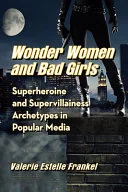
Valerie Estelle Frankel's "Wonder Women and Bad Girls" presents a compelling framework for understanding the multifaceted portrayals of women in superhero narratives. The author's division of superhero media into ten distinct eras, each characterized by specific gendered representations, provides a robust historical spine for the analysis. Frankel adeptly categorizes characters into archetypes such as 'boundary crossers' and 'good girls,' offering a clarity that illuminates complex figures. A particular strength lies in the detailed examination of how characters like Harley Quinn, initially framed as an 'abuse victim,' have been reinterpreted across different media landscapes. However, the sheer breadth of characters and eras discussed occasionally leads to a sense of rapid progression rather than deep immersion in any single period. The work's exploration of Shuri as a 'fourth wave princess' is insightful, showcasing a modern archetype of empowered, technologically adept femininity. Despite this, the book sometimes feels more descriptive than interpretative, leaving the reader to draw more profound conclusions. Nevertheless, "Wonder Women and Bad Girls" serves as a valuable, well-researched guide to the evolving landscape of female representation in a dominant cultural genre.
📝 Description
75
Valerie Estelle Frankel's 2017 book analyzes female archetypes in superhero media across ten historical periods.
Valerie Estelle Frankel's "Wonder Women and Bad Girls" examines the evolution of female archetypes within superhero narratives. The book divides superhero history into ten specific eras, each characterized by distinct societal attitudes toward women. Frankel moves beyond simple labels to reveal the complex representations of female power and the struggles women face. She categorizes heroines into distinct archetypes such as boundary crossers, good girls, outcasts, and tricksters. These classifications are not fixed, as the book demonstrates how they shift and merge across different periods of superhero media. The analysis also addresses the portrayal of the 'abuse victim' and the contemporary 'fourth wave princess,' showing how these figures reflect changing cultural narratives.
The work is suited for academics in media studies and feminist theory, alongside devoted followers of comic books and superhero films. It offers a critical perspective for dissecting characters like Wonder Woman, Harley Quinn, Shuri, and Black Widow, particularly for those interested in the connection between popular culture and gender studies. Readers looking to gain a deeper appreciation for character development and thematic progression in visual storytelling will find this book useful. Frankel's research traces a path from early, often idealized heroines to more complex, morally ambiguous figures, engaging with feminist critiques that emerged from the second wave of feminism onwards.
While not strictly an esoteric text in the occult sense, this book engages with the archetypal patterns that underpin mythology and narrative. It examines how societal beliefs and psychological forces manifest in popular culture, particularly through the lens of female figures in superhero comics and films. The archetypes discussed, such as the trickster or the boundary crosser, resonate with concepts found in Jungian psychology and comparative mythology, traditions often studied within esoteric circles. The analysis shows how these universal patterns are adapted and reinterpreted within a modern, secular context, revealing deeper cultural currents.
💡 Why Read This Book?
• Gain a structured understanding of superhero media history by learning about the ten distinct eras Frankel identifies, enabling you to contextualize character evolution since the Golden Age of Comics. • Develop a sharper analytical eye for female archetypes by grasping the classifications of 'boundary crossers,' 'good girls,' 'outcasts,' and 'tricksters' as presented in the book's framework. • Appreciate the nuanced representation of specific characters by understanding how figures like Black Widow, the spy, are analyzed through Frankel's lens, offering insights beyond surface-level portrayals.
⭐ Reader Reviews
Honest opinions from readers who have explored this book.
❓ Frequently Asked Questions
What historical periods of superhero media does "Wonder Women and Bad Girls" analyze?
The book identifies ten distinct eras within superhero media history. These periods are defined by the specific ways in which female characters were portrayed, tracing their evolution from earlier comic book iterations to more contemporary film and television appearances.
Which specific female characters are examined in "Wonder Women and Bad Girls"?
Key characters explored include Wonder Woman, Harley Quinn, Shuri, and Black Widow, representing archetypes from the classic superheroine to the modern tech-savvy princess and the complex spy.
What are the main archetypes of female characters discussed in the book?
Frankel categorizes superheroines into four primary archetypes: boundary crossers, good girls, outcasts, and tricksters, further analyzing specific roles like the abuse victim and the fourth wave princess.
Is "Wonder Women and Bad Girls" suitable for academic study?
Yes, the book's in-depth analysis, historical categorization, and focus on gender studies within popular culture make it a valuable resource for academic research in media studies and feminist theory.
How does the book approach the portrayal of female villains?
The book examines figures like Harley Quinn not just as villains but as complex characters, analyzing their portrayal as 'abuse victims' and how this narrative has shifted across different media eras and interpretations.
What is the primary focus of Valerie Estelle Frankel's analysis in this book?
The primary focus is the evolution and categorization of female archetypes within superhero media across different historical periods, exploring how societal views on women are reflected and shaped by these characters.
🔮 Key Themes & Symbolism
Archetypal Feminine Power
The work dissects how various forms of feminine power are represented, from the overtly heroic 'good girl' archetype to the subversive 'boundary crosser.' It examines how characters like Wonder Woman embody idealized strength, while others, like Black Widow, represent a more pragmatic, often morally ambiguous, form of agency. Frankel's classification system allows for a comparative study of these archetypes across different media eras, revealing shifts in societal expectations and interpretations of female empowerment within popular culture.
Evolution of Gender in Media
Frankel meticulously traces the historical trajectory of female representation in superhero media, identifying ten key eras that mark significant changes in how women are depicted. This chronological approach highlights the impact of societal movements, such as second-wave feminism and later waves, on character development. The analysis contrasts early, often simplistic portrayals with the more complex and nuanced 'fourth wave princess' archetype seen in contemporary figures like Shuri, demonstrating media's evolving dialogue with gender roles.
The Ambiguity of the 'Bad Girl'
A significant focus is placed on characters who defy traditional heroic molds, particularly the 'bad girl' archetype. The book examines figures like Harley Quinn, exploring their portrayal as 'abuse victims' and the complexities surrounding their agency and motivations. This analysis challenges simplistic categorizations, suggesting that these characters often reflect darker, more complicated aspects of the feminine psyche and societal anxieties, providing a counterpoint to idealized heroines.
Character Classification Systems
The core of Frankel's methodology lies in her system for classifying superheroines. By defining categories such as 'boundary crossers,' 'good girls,' 'outcasts,' and 'tricksters,' the book provides a structured analytical tool. This framework enables a deeper, comparative study of characters across different media and time periods, revealing recurring patterns and unique deviations in the portrayal of women within the superhero genre. The book demonstrates how these classifications are fluid and context-dependent.
💬 Memorable Quotes
Direct passages from the work, attributed to the author.
“The book identifies ten eras of superhero media defined by the way they portray women.”
— This statement underscores the central thesis of Frankel's work: that the evolution of female characters in superhero narratives is not random but directly correlates with distinct historical periods and their prevailing cultural attitudes toward gender.
“Archetypes are classified into four categories: boundary crossers, good girls, outcasts, and tricksters.”
— This highlights the analytical framework employed by Frankel, providing readers with the fundamental categories used to dissect and understand the complex spectrum of female characters within the superhero genre.
“The work explores the 'abuse victim' as a distinct portrayal.”
— This points to a specific, often fraught, aspect of female characterization that the book examines closely, acknowledging the problematic yet prevalent trope of victimhood and its implications for understanding female agency.
“The 'fourth wave princess' represents a modern, empowered figure.”
— This introduces a contemporary archetype, contrasting with earlier portrayals and signifying the evolution of female representation towards figures embodying modern ideals of strength, intelligence, and independence.
💡 Key Ideas
Editorial paraphrase of the work's core concepts — not direct quotes.
Wonder Woman, Harley Quinn, Shuri, and Black Widow... portray very different versions of women: the superheroine, the abuse victim, the fourth wave princess, and the spy, respectively.
This effectively summarizes the book's scope, introducing key characters and the diverse, often challenging, roles they embody, setting the stage for an in-depth analysis of feminine archetypes in popular media.
🌙 Esoteric Significance
Tradition
While not explicitly rooted in a singular esoteric tradition like Hermeticism or Gnosticism, the book's deep dive into archetypes aligns with Jungian psychology, which itself has strong connections to esoteric thought. The classification of characters into archetypes like 'boundary crossers' and 'tricksters' reflects the exploration of primordial forces and mythic patterns found in various esoteric systems. It approaches popular culture through a lens that seeks universal psychological structures, a common endeavor in esoteric studies.
Symbolism
The book implicitly analyzes the symbolic weight of these characters. Wonder Woman, for instance, symbolizes idealized Amazonian strength and divine justice, often drawing on classical mythology. Harley Quinn, as a 'trickster' or 'abuse victim,' symbolizes chaotic feminine energy or the societal consequences of patriarchal structures. Shuri, the 'fourth wave princess,' embodies technological prowess and modern matriarchal leadership, symbolizing innovation and a forward-looking, empowered femininity that transcends traditional limitations.
Modern Relevance
Contemporary thinkers and practitioners in fields like pop psychology, modern paganism, and feminist spirituality often draw on archetypal analysis. "Wonder Women and Bad Girls" provides a structured way to understand how these archetypal energies manifest in accessible, mainstream narratives. It offers a framework for analyzing modern myths, helping individuals connect with universal themes of power, struggle, and transformation as reflected in beloved cultural figures, aiding in personal myth-making and self-understanding.
👥 Who Should Read This Book
['• Students of feminist media studies: Gain a chronological and archetypal framework for analyzing female representation in a dominant cultural genre, supplementing theoretical coursework with concrete examples.', '• Comic book and superhero franchise enthusiasts: Deepen your appreciation by understanding the historical context and underlying archetypes of your favorite female characters, moving beyond plot analysis.', "• Cultural historians and sociologists: Utilize the book's ten-era classification system to track evolving societal attitudes towards gender as reflected in popular media over several decades."]
📜 Historical Context
Published in 2020, "Wonder Women and Bad Girls" arrived at a time of heightened discourse surrounding representation in media, particularly concerning gender and power dynamics. The book engages implicitly with decades of feminist critique, from the second-wave analyses of media portrayals in the 1970s to contemporary discussions on third and fourth-wave feminism influencing character creation. Frankel's decade-by-decade breakdown of superhero media's treatment of women implicitly contrasts with earlier, more simplistic critical approaches that might have focused solely on the Golden Age of Comics (circa 1938-1956). While not explicitly engaging with a single competing school of thought, the work situates itself firmly within feminist media studies, offering a systematic approach that complements broader theoretical works. Its contribution lies in providing a granular, era-specific classification of female archetypes, serving as a valuable reference for scholars and fans alike, potentially influencing subsequent analyses by figures like Roxane Gay or ongoing academic discussions.
📔 Journal Prompts
The portrayal of Wonder Woman as the 'superheroine' archetype.
The shifting representation of the 'abuse victim' archetype, exemplified by Harley Quinn.
The characteristics defining the 'fourth wave princess' archetype, as seen in Shuri.
The function of 'boundary crossers' and 'tricksters' across different media eras.
Comparing the 'spy' archetype (Black Widow) with the 'superheroine' (Wonder Woman).
🗂️ Glossary
Fourth Wave Princess
A contemporary archetype of female empowerment characterized by technological aptitude, independent spirit, and often a royal or privileged background, exemplified by characters like Shuri.
Abuse Victim Archetype
A characterization, often problematic, where a female figure's actions or motivations are heavily influenced or defined by past or ongoing experiences of abuse, as explored with Harley Quinn.
Boundary Crosser
An archetype referring to female characters who challenge societal norms, physical limits, or moral boundaries within the narrative, often embodying transgression and unconventional strength.
Good Girl Archetype
A traditional archetype representing idealized femininity, often characterized by virtue, adherence to rules, and conventional heroism, as seen in early superheroines.
Outcast Archetype
A character type relegated to the fringes of society or narrative, often possessing unique abilities or perspectives due to their marginalized status.
Trickster Archetype
A character known for disrupting norms, using wit, deception, or chaos, often embodying ambiguity and challenging established order, exemplified by figures like Loki or sometimes Harley Quinn.
Spy Archetype
A character role focused on espionage, stealth, and often morally gray actions, typically utilizing intelligence and combat skills, represented by Black Widow.
This book appears in 1 collection
🔮 Readers Also Liked
Browse all →









From the “Archetypes” Collection
View all →



More Free Occult Philosophy Books
View all →