Carl Jung, Darwin of the mind
 78
78

Carl Jung, Darwin of the mind
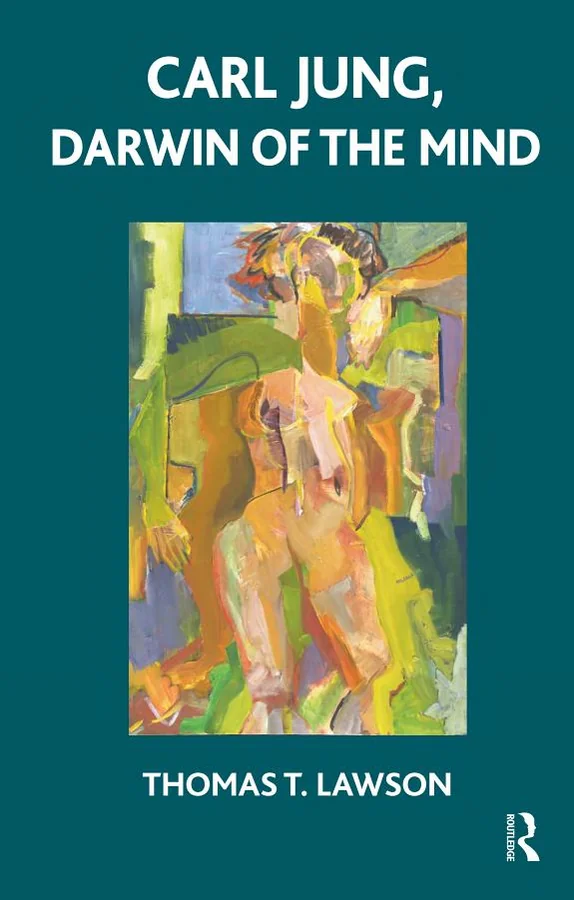
Thomas T. Lawson's "Carl Jung, Darwin of the Mind" attempts to frame Carl Jung's contributions through a Darwinian lens, a bold proposition that offers fresh perspectives. Lawson effectively illustrates Jung's comparative method, drawing parallels between biological evolution and the evolution of psychic structures, particularly evident in the discussion of archetypes as universal psychic blueprints. However, the book occasionally strains the analogy, sometimes forcing connections that feel more asserted than demonstrated. A particularly insightful passage explores Jung's concept of synchronicity, presenting it not as mere coincidence but as a meaningful acausal connecting principle, which Lawson links to emergent properties in complex systems, mirroring evolutionary leaps. While Lawson’s exploration of Jung's impact is valuable, the Darwinian parallel, though intriguing, doesn't always fully illuminate the unique spiritual and symbolic dimensions central to Jung's work. The book serves as a solid introduction to Jung's breadth, framed by a specific intellectual comparison.
📝 Description
78
Thomas T. Lawson's 2008 book compares Carl Jung to Charles Darwin.
Published in 2008, Thomas T. Lawson's "Carl Jung, Darwin of the Mind" argues that Carl Jung's psychological theories represent a paradigm shift comparable to Darwin's impact on biology. Lawson presents Jung not simply as a psychiatrist but as a groundbreaking thinker whose ideas, such as archetypes and the collective unconscious, provide a map for understanding the human psyche. These concepts suggest universal patterns of thought and behavior that transcend individual experience, linking humanity through shared psychic structures.
The book is for those interested in the connections between psychology, mythology, and philosophy. It speaks to readers seeking to grasp the deeper motivations behind human actions and the symbolic language of the mind. Lawson's analysis is especially valuable for individuals studying Jungian psychology, comparative religion, or the history of psychology. A basic grasp of psychological ideas or a strong interest in esoteric thought about the mind is helpful.
Lawson's work situates Jungian psychology within a broader esoteric tradition that seeks to understand the hidden structures of the human mind. It highlights Jung's interest in comparative mythology and alchemy as pathways to understanding universal psychic patterns, aligning with esoteric pursuits that explore symbolic language and spiritual development. The book connects Jung's ideas to a lineage of thinkers who saw the unconscious as a source of profound insight, accessible through non-rational means.
💡 Why Read This Book?
• Gain insight into Jung's concept of the collective unconscious, understanding it as a foundational psychic inheritance akin to biological heredity, as explored in the book's comparative framework. • Appreciate the process of individuation as a lifelong developmental journey, recognizing its parallels to evolutionary adaptation and survival, a key focus in Lawson's analysis. • Grasp the significance of archetypes as universal psychic structures, much like biological structures, that shape human experience and mythology across diverse cultures, as detailed in the text.
⭐ Reader Reviews
Honest opinions from readers who have explored this book.
❓ Frequently Asked Questions
What is the central argument of "Carl Jung, Darwin of the Mind"?
The book argues that Carl Jung's contributions to psychology are as revolutionary and foundational to understanding the human mind as Charles Darwin's theories were to biology, positioning Jung as a 'Darwin of the mind'.
When was "Carl Jung, Darwin of the Mind" first published?
The book by Thomas T. Lawson was first published in 2008.
What key Jungian concepts does the book explore?
It delves into concepts such as the collective unconscious, archetypes, individuation, and synchronicity, explaining their significance within Lawson's comparative framework.
Who is Thomas T. Lawson?
Thomas T. Lawson is the author of "Carl Jung, Darwin of the Mind," a work that seeks to place Jung's psychological theories within a broader evolutionary and comparative context.
How does the book relate Jung to Darwin?
Lawson draws parallels between Jung's exploration of universal psychic structures and symbolic patterns and Darwin's discovery of evolutionary principles through comparative studies of life forms.
What is the primary focus of the book's analysis?
The primary focus is on understanding Jung's psychological theories as a comprehensive system for comprehending the human psyche, viewed through the lens of evolutionary thought and comparative analysis.
🔮 Key Themes & Symbolism
Archetypes as Psychic Blueprints
Lawson positions Jung's archetypes as fundamental, inherited patterns of the psyche, analogous to biological structures discovered by Darwin. These universal motifs, such as the Mother, the Hero, or the Shadow, are presented not as mere myths but as innate psychic predispositions that shape human experience and behavior across cultures and history. The book explores how these archetypes manifest in dreams, art, and religious symbolism, providing a framework for understanding the commonalities in the human unconscious, thereby extending the evolutionary perspective into the area of psychological inheritance.
Individuation as Evolutionary Growth
The concept of individuation, Jung's term for the lifelong process of psychological development and integration of the self, is framed by Lawson as a parallel to evolutionary adaptation. This journey involves confronting the unconscious, integrating disparate psychic elements, and achieving wholeness. The book suggests that this process reflects an inherent drive towards complexity and self-realization within the psyche, much like natural selection favors organisms that best adapt to their environments. It highlights individuation as a crucial aspect of psychic evolution, moving from a collective, undifferentiated state towards a unique, realized self.
The Collective Unconscious
Central to Lawson's thesis is Jung's theory of the collective unconscious, a transpersonal layer of the psyche containing inherited psychic material shared by all humanity. The book elaborates on this concept as the bedrock of Jung's comparative psychology, arguing that it provides evidence for universal patterns in human consciousness, much as comparative anatomy reveals common ancestry in biology. Lawson explores how this shared psychic inheritance influences our perceptions, emotions, and behaviors, linking it to the continuity and evolution of the human species from an ancestral psychic perspective.
Synchronicity and Acausal Connection
Lawson examines Jung's concept of synchronicity – meaningful coincidences that appear acausally related – as a phenomenon that challenges purely deterministic scientific views. He suggests that these events, where inner psychic states align with external occurrences, point to an underlying order or interconnectedness in the universe, potentially reflecting emergent properties within complex psychic and material systems. This exploration offers a way to understand the subjective experience of meaning in seemingly random events, suggesting a layer of reality where psyche and matter are intimately linked, a concept that pushes the boundaries of traditional evolutionary thought.
💬 Memorable Quotes
Direct passages from the work, attributed to the author.
“Jung's archetypes function as the inherited psychic blueprints of humanity.”
— This interpretation emphasizes the innate, structural nature of Jungian archetypes, suggesting they are as fundamental to the psyche as biological genes are to the body, forming the basis for universal human experiences.
“The collective unconscious is the deep reservoir of shared human psychic inheritance.”
— This definition highlights the transpersonal and inherited nature of the collective unconscious, presenting it as a common psychic foundation that binds all individuals and influences their experiences.
“Synchronicity suggests a meaningful acausal connection between psyche and world.”
— This interpretation focuses on Jung's concept of meaningful coincidences, proposing that events can be linked not by cause and effect but by shared meaning, hinting at a deeper order.
“Lawson positions Jung as the Darwin of the psychological sciences.”
— This statement expresses the book's core thesis: that Jung's work fundamentally transformed our understanding of the mind, comparable to Darwin's impact on our understanding of life itself.
💡 Key Ideas
Editorial paraphrase of the work's core concepts — not direct quotes.
Individuation mirrors the evolutionary drive towards complexity and self-realization.
This paraphrase connects Jung's developmental process to evolutionary principles, portraying the journey of becoming a whole self as an inherent, adaptive mechanism within the human psyche.
🌙 Esoteric Significance
Tradition
While not strictly adhering to a single esoteric lineage, Lawson's work engages with the Hermetic and Gnostic traditions through its exploration of the inner world and the quest for self-knowledge. Jung's concepts, particularly the collective unconscious and archetypes, resonate with Gnostic ideas of a divine spark within humanity and a hidden area of spiritual reality. The book's focus on individuation also echoes Hermetic principles of transformation and achieving a higher state of consciousness. Lawson frames Jung's psychological system as a modern, scientific articulation of ancient perennial philosophies concerning the human psyche's deeper dimensions.
Symbolism
The book frequently discusses symbols as direct manifestations of the collective unconscious. Key symbols explored include the **Shadow**, representing the repressed or unacknowledged aspects of the personality, often depicted in dark or monstrous forms. The **Mandala**, a circular symbol of wholeness and the integrated self, is another crucial motif, representing the Jungian pursuit of psychic balance and the unification of opposites. These symbols function not merely as decorative elements but as vital conduits of meaning, offering access to the unconscious and guiding the process of individuation.
Modern Relevance
Contemporary thinkers and practitioners in depth psychology, archetypal astrology, and mythology studies frequently draw upon Jung's framework, as illuminated by Lawson's comparative approach. Modern Jungian analysts continue to apply these concepts to psychotherapy, while scholars in comparative religion and mythology use archetypal analysis to understand cross-cultural narratives. The work's emphasis on the symbolic life and the integration of the unconscious also finds resonance in contemporary spiritual and personal development movements seeking holistic well-being.
👥 Who Should Read This Book
• Students of Jungian psychology seeking a fresh perspective that contextualizes Jung's theories within a broader evolutionary framework. • Comparative religion and mythology scholars interested in understanding universal symbolic patterns through a psychological lens. • Philosophy enthusiasts exploring the nature of consciousness and the human psyche beyond purely materialistic explanations.
📜 Historical Context
Published in 2008, Thomas T. Lawson's "Carl Jung, Darwin of the Mind" emerged at a time when Jungian psychology continued to be a significant force, influencing fields from literary criticism to developmental psychology. This period saw a robust academic engagement with Jung's ideas, often in dialogue with post-structuralism and neuroscience. Lawson's work contributes to this discourse by explicitly drawing parallels with Charles Darwin's 1859 publication of "On the Origin of Species." While Jung himself was deeply interested in evolutionary theory, Lawson's book offers a specific comparative framework, highlighting Jung's use of comparative mythology and religion as evidence for universal psychic structures. In this intellectual landscape, Jungian thought stood as a counterpoint to more behaviorist or cognitively reductionist approaches prevalent in some psychology circles. The book's reception occurred within a broader academic context where the integration of scientific and humanistic perspectives was a recurring theme.
📔 Journal Prompts
The archetype of the Hero in myth and its manifestation as a psychic blueprint.
Reflecting on personal experiences of synchronicity and their perceived meaning.
The process of integrating the Shadow aspect of the psyche.
Identifying personal symbols that represent the journey of individuation.
Comparing the concept of the collective unconscious to inherited biological traits.
🗂️ Glossary
Archetype
Universal, inherited patterns of thought and imagery derived from the collective unconscious, which shape human experience and behavior across cultures.
Collective Unconscious
A deeper layer of the psyche, shared by all humanity, containing inherited instincts, predispositions, and archetypes, distinct from personal experience.
Individuation
The lifelong psychological process of differentiation and integration, aiming at developing one's unique potential and achieving psychic wholeness.
Synchronicity
Meaningful coincidences that occur without a discernible causal relationship, suggesting an acausal connecting principle between inner psychic states and outer events.
Shadow
The unconscious, often repressed, aspect of the personality that the conscious ego does not identify with, typically containing primitive instincts and undesirable qualities.
Mandala
A symbolic circular design representing wholeness, integration, and the self, often used in Jungian analysis as a focus for meditation and psychic balance.
Psychic Inheritance
The concept that psychological patterns, instincts, and predispositions are passed down through generations, forming the basis of the collective unconscious.
🔮 Readers Also Liked
Browse all →








More by Thomas T. Lawson
All books →
More Free Occult Philosophy Books
View all →