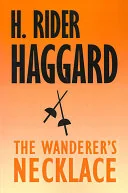
The Wanderer's Necklace
 82
82

The Wanderer's Necklace
H. Rider Haggard's *The Wanderer's Necklace* presents a curious blend of adventure and spiritualist speculation, typical of its era. The novel's strength lies in its earnest engagement with the burgeoning spiritualist movement of the early 20th century. Haggard's depiction of Willie's developing psychic abilities and his mother's devout belief offers a window into the period's fascination with the afterlife. However, the narrative pacing can feel uneven, with lengthy descriptive passages sometimes slowing the plot's momentum. The central concept of the "wanderer's necklace" itself, while intriguing, remains somewhat underdeveloped as a narrative device. Despite these limitations, the book offers a unique perspective on the spiritualist zeitgeist through Haggard's characteristic narrative flair. It stands as an interesting, if flawed, exploration of the supernatural.
📝 Description
82
H. Rider Haggard's 1914 novel, The Wanderer's Necklace, concerns a boy who sees spirits after a near-death experience.
Published in 1914, The Wanderer's Necklace tells the story of Willie, a young boy who gains the ability to perceive spirits following a life-threatening event. His mother, who believes in spiritualism, encourages his newfound sight. This leads them on a quest connected to a significant necklace.
Haggard's novel is suited for readers interested in adventure fiction from the early 20th century that includes strong supernatural or spiritualist elements. Those drawn to the intersection of Victorian spiritualism and imaginative writing will appreciate Haggard's treatment of the afterlife and psychic phenomena. The book will appeal to readers who enjoy authors that combined adventure with the uncanny.
The Wanderer's Necklace appeared in 1914, a time when spiritualism and occult ideas were widely discussed in Europe and America. Helena Blavatsky's Theosophy, popular since the late 19th century, had brought concepts like reincarnation and spiritual development into public conversation, themes that echo in Haggard's story. This period also saw a rise in ghost stories and supernatural narratives, reflecting a broad cultural interest in the unseen and the potential for communication with those who have passed.
💡 Why Read This Book?
• Gain insight into early 20th-century spiritualist beliefs and how they were integrated into popular fiction, as seen in the narrative's focus on psychic abilities and the afterlife. • Experience Haggard's distinctive adventure storytelling, particularly in how he frames a quest involving a mystical artifact, the "wanderer's necklace." • Understand the cultural impact of movements like Theosophy, which influenced literary explorations of reincarnation and spiritual planes during the book's publication era.
⭐ Reader Reviews
Honest opinions from readers who have explored this book.
❓ Frequently Asked Questions
When was H. Rider Haggard's *The Wanderer's Necklace* originally published?
H. Rider Haggard's *The Wanderer's Necklace* was first published in 1914, a period marked by significant public interest in spiritualism and the occult.
What is the main premise of *The Wanderer's Necklace*?
The novel follows a young boy named Willie who develops the ability to perceive spirits after a near-death experience, leading his mother to explore his psychic potential.
Does the book involve actual spiritualist practices?
While not a manual, the book reflects the spiritualist beliefs prevalent in the early 20th century, exploring themes of communication with the dead and psychic phenomena.
What role does the 'wanderer's necklace' play in the story?
The necklace is presented as a mystical artifact that facilitates spiritual perception and connection, central to Willie's journey and his mother's quest.
Is *The Wanderer's Necklace* considered an adventure novel?
Yes, it blends elements of adventure with supernatural and spiritualist themes, characteristic of Haggard's broader literary output.
What esoteric concepts are explored in the book?
The book touches upon concepts such as psychic abilities, the nature of the soul, reincarnation, and the veil between the physical and spiritual realms.
🔮 Key Themes & Symbolism
Psychic Perception and the Afterlife
The novel posits that certain individuals, like the young protagonist Willie, can perceive spirits and the spiritual realm, particularly after a brush with death. This aligns with the spiritualist movement's fascination with mediumship and communication beyond the veil. The "wanderer's necklace" serves as a symbolic, perhaps literal, conduit for this enhanced perception, suggesting that spiritual awareness can be both innate and amplified by external objects or states of being.
Reincarnation and Spiritual Evolution
Echoing themes popular in esoteric circles of the time, particularly influenced by Theosophy, the work hints at the concept of reincarnation. The journey described in the book is not merely a physical one but also implies a progression or exploration of the soul across different states of existence. This spiritual evolution is tied to understanding one's place and purpose within a larger cosmic order.
The Mystical Artifact
The "wanderer's necklace" functions as a classic mystical artifact in esoteric literature. It's an object imbued with power that unlocks hidden potentials or facilitates contact with unseen forces. Its presence suggests that tangible items can hold spiritual significance and act as catalysts for supernatural experiences, bridging the gap between the mundane and the magical.
Parental Guidance in the Esoteric Path
The narrative highlights the role of a mother figure who recognizes and encourages her child's unique spiritual gifts. This aspect reflects a common trope in spiritualist literature, where nurturing guidance is crucial for a young medium or sensitive to navigate their abilities safely and productively, rather than being overwhelmed or misunderstood.
💬 Memorable Quotes
Direct passages from the work, attributed to the author.
“The boy had a great affection for the necklace, and indeed, was seldom seen without it.”
— This highlights the central importance of the "wanderer's necklace" not just as a plot device, but as an object of deep personal significance and spiritual connection for the protagonist.
“He had seen, or fancied that he had seen, a pale and shimmering form standing by his bedside.”
— This captures the initial, uncertain manifestation of psychic perception in Willie, suggesting the blurry line between imagination and genuine spiritual sight that the novel explores.
“She believed that the spirits of the departed could communicate with the living.”
— This statement captures the core tenet of spiritualism that underpins the mother's actions and beliefs throughout the narrative, driving her engagement with Willie's abilities.
“The idea of a past life, of a soul that had lived and learned before, began to take hold.”
— This indicates the nascent exploration of reincarnation within the narrative, reflecting the widespread esoteric interest in this concept during the novel's publication period.
“He felt as though he were a wanderer in a strange land, guided only by an inner light.”
— This metaphorical use of "wanderer" connects to the title and suggests a spiritual journey of self-discovery and working through the unknown areas of existence.
🌙 Esoteric Significance
Tradition
The work aligns broadly with the spiritualist tradition, which gained significant traction in the late 19th and early 20th centuries. It draws upon the popularization of concepts like mediumship and communication with spirits, themes also explored within Theosophy. While not strictly adhering to a specific Hermetic or Kabbalistic framework, it taps into the general esoteric milieu of the era that sought to understand hidden realities and the nature of consciousness beyond material existence.
Symbolism
The titular "wanderer's necklace" is a key symbol, representing a conduit or amplifier for spiritual perception. It suggests that tangible objects can hold esoteric power, facilitating connection to unseen realms. Willie's own psychic sensitivity, particularly after his near-death experience, symbolizes the innate potential within individuals to access deeper realities, a concept central to many esoteric paths.
Modern Relevance
Contemporary explorations of psychic phenomena, mediumship, and the intersection of consciousness and spirituality can find echoes in *The Wanderer's Necklace*. While the specific spiritualist context is historical, the novel's exploration of innate psychic abilities and the potential for perceiving other dimensions continues to resonate with modern New Age thought and parapsychological inquiry.
👥 Who Should Read This Book
• Readers interested in the history of spiritualism and its portrayal in early 20th-century literature, particularly how it intersected with adventure fiction. • Enthusiasts of H. Rider Haggard seeking to explore his engagement with supernatural and esoteric themes beyond his more famous adventure novels. • Students of comparative religion and occult history looking for popular cultural interpretations of concepts like reincarnation and psychic phenomena from a specific historical period.
📜 Historical Context
Published in 1914, *The Wanderer's Necklace* emerged from a fertile ground of spiritualist and occult interest in the late Victorian and Edwardian eras. This period saw figures like Helena Blavatsky popularizing Theosophy, which explored reincarnation and esoteric knowledge, influencing many contemporary authors. H. Rider Haggard, already famous for adventure tales like *King Solomon's Mines* (1885), here turned his attention to the supernatural, reflecting a broader cultural fascination with séances, mediums, and the possibility of life after death. This was a time when the boundary between science and the paranormal was actively debated. While competing with rationalist and scientific explanations for phenomena, spiritualism offered a compelling alternative worldview. Haggard's work engaged with these currents, though it also stood apart from more academic esoteric pursuits, focusing on narrative and adventure.
📔 Journal Prompts
Willie's perception of pale, shimmering forms after his illness.
The mother's unwavering belief in spiritual communication.
The symbolic function of the "wanderer's necklace" in unlocking perception.
The concept of a soul's journey beyond a single lifetime.
Working through the boundary between the seen and unseen worlds.
🗂️ Glossary
Spiritualism
A religious movement and belief system that asserts the possibility of communication between the living and the spirits of the dead, popular in the 19th and early 20th centuries.
Mediumship
The practice of certain individuals (mediums) who claim to act as intermediaries between the earthly realm and the spirit world, facilitating communication.
Psychic ability
An innate capacity to perceive or influence things outside the normal range of human senses, such as telepathy, clairvoyance, or precognition.
Theosophy
A philosophical and religious movement founded in the late 19th century, promoting esoteric ideas about divine wisdom, reincarnation, and spiritual evolution.
Afterlife
The existence of a soul or consciousness after death of the physical body, a concept explored through various religious and spiritual beliefs.
Reincarnation
The philosophical or religious concept that the soul or spirit, after biological death, begins a new life in a new body, often influenced by past actions (karma).
Near-death experience
A profound personal experience associated with dying, often involving altered states of consciousness, out-of-body sensations, and encounters with light or spirits.
This book appears in 1 collection
🔮 Readers Also Liked
Browse all →









From the “Reincarnation” Collection
View all →



More Free Occult Philosophy Books
View all →