She
 78
78

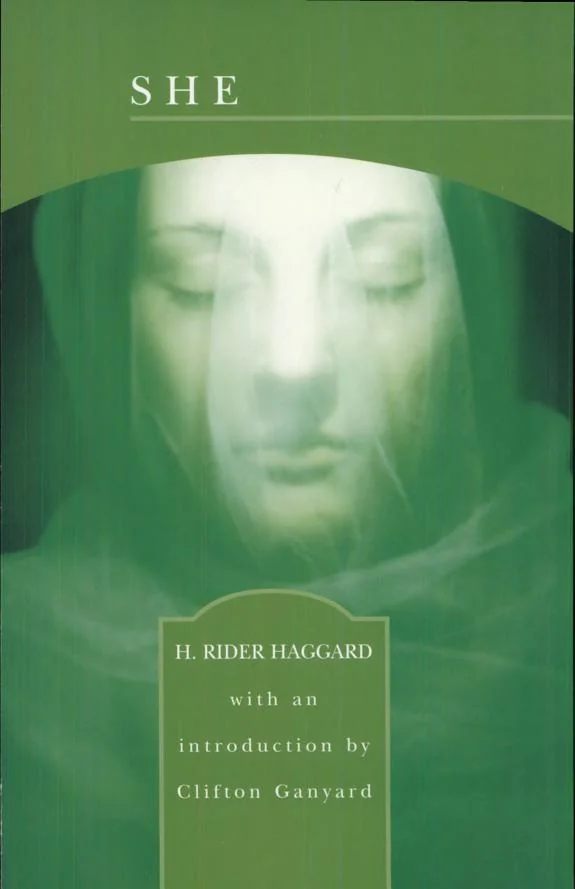
She
Haggard's "She" is more than just an adventure yarn; it’s a potent exploration of eternal feminine archetypes and the intoxicating danger of absolute power. The depiction of Ayesha, a queen who has lived for two millennia, is undeniably striking for its era, drawing on mythic resonance. Her dominion over a hidden African kingdom and her command of ancient, mystical forces are rendered with a vividness that still holds sway. However, the narrative’s colonial subtext, while characteristic of its time, can feel heavy-handed to modern readers, with the 'civilized' Europeans often positioned as both awestruck and repulsed by Ayesha's primal power. The central conceit of her immortality, tied to a dangerous, alchemical flame, is particularly memorable. Ultimately, "She" remains a significant work for its early engagement with themes of god-like female power and the psychological toll of eternal life.
📝 Description
78
H. Rider Haggard published 'She' in 1887, a tale of an immortal queen in a lost African kingdom.
Horace Holly and Leo Vincey travel to a hidden African civilization in search of answers about Leo's past. They discover the kingdom ruled by Ayesha, an immortal woman known as 'She-who-must-be-obeyed.' Ayesha has lived for centuries, sustained by a mystical pillar of fire and a life-giving spring. She wields immense power and possesses an ageless beauty that captivates the men.
The narrative explores the consequences of immortality and absolute power. Holly and Vincey become entangled in Ayesha's plans, facing the allure and danger of her command. The novel blends adventure with a late Victorian fascination for exotic locales and ancient mysteries, examining human ambition and the quest for eternal life.
Published in 1887, 'She' tapped into a late Victorian fascination with spiritualism and ancient civilizations. The era saw a surge of interest in occult beliefs and non-Western cultures, often filtered through a lens of adventure and exoticism. Haggard's novel presented a vision of a hidden world ruled by a powerful, immortal female deity, connecting with contemporary currents of occult exploration and speculative fiction.
💡 Why Read This Book?
• Gain insight into the archetype of the immortal, powerful feminine as presented in late Victorian adventure fiction, exemplified by Queen Ayesha's command of the mystical "Flame of Life." • Understand the cultural milieu of the 1880s, a period fascinated by ancient mysteries and lost civilizations, which fueled Haggard's creation of the lost kingdom of Kor. • Explore the psychological implications of eternal youth and power, as depicted through Ayesha's centuries-long existence and her ultimate confrontation with mortality.
⭐ Reader Reviews
Honest opinions from readers who have explored this book.
❓ Frequently Asked Questions
What is the 'She-who-must-be-obeyed' referred to in H. Rider Haggard's novel?
She-who-must-be-obeyed is the immortal Queen Ayesha, the central figure in H. Rider Haggard's 1887 novel 'She.' She rules a lost African kingdom and possesses immense power derived from a mystical life-giving force.
What is the significance of the 'Flame of Life' in 'She'?
The 'Flame of Life' is a mystical pillar of fire central to the lost kingdom of Kor. It grants Ayesha immortality and eternal youth but also represents a dangerous, volatile power.
Who are the main protagonists accompanying Leo Vincey on his quest?
The main protagonist accompanying Leo Vincey on his quest to find Ayesha is Horace Holly, his former tutor. Together, they embark on the perilous journey into Africa.
When was H. Rider Haggard's 'She' first published?
H. Rider Haggard's influential novel 'She' was first published in 1887, becoming a significant work of adventure fiction in the late Victorian era.
What themes does 'She' explore beyond adventure?
Beyond adventure, 'She' explores themes of immortality, reincarnation, the allure and danger of absolute power, the concept of the eternal feminine, and the clash between ancient mysticism and modern skepticism.
Is 'She' considered an esoteric text?
Yes, 'She' is often considered esoteric due to its exploration of mystical forces like the 'Flame of Life,' themes of reincarnation, and the portrayal of a powerful, quasi-divine female entity, resonating with occult and spiritualist interests of its time.
🔮 Key Themes & Symbolism
The Eternal Feminine
The novel centers on Queen Ayesha, a figure who embodies the archetype of the immortal, all-powerful feminine. Her existence, spanning millennia, is tied to the mystical 'Flame of Life' within the lost kingdom of Kor. Haggard presents her as a figure of immense beauty, wisdom, and terrifying authority, a stark contrast to conventional Victorian notions of womanhood. This portrayal taps into a deep fascination with ancient goddesses and the primal feminine power that transcends mortal limitations, exploring its seductive and destructive potential when untethered by human frailty or mortality.
Immortality and Reincarnation
A central preoccupation of 'She' is the nature and cost of eternal life. Queen Ayesha's immortality is not a simple blessing but a complex condition sustained by a dangerous, alchemical force. The narrative suggests a cyclical existence, hinting at reincarnation and the enduring presence of souls across vast epochs. This exploration examines the psychological burden of living forever, the potential for wisdom or madness, and the human desire to conquer death, questioning whether such a conquest is ultimately desirable or even possible without profound transformation.
Ancient Mysteries and Lost Civilizations
Haggard crafts a compelling vision of a hidden African civilization, the lost kingdom of Kor, which serves as a repository of ancient knowledge and esoteric power. The discovery of this civilization by Victorian explorers Holly and Leo Vincey mirrors the era's fascination with uncovering forgotten histories and mystical traditions. Kor, with its imposing architecture and the awe-inspiring 'Flame of Life,' represents a world untouched by modern progress, holding secrets of life, death, and spiritual potency that challenge the protagonists' understanding of reality.
The Allure of Absolute Power
Queen Ayesha wields absolute power over her domain and her subjects, a power derived from her immortality and her command of arcane forces. The novel examines the intoxicating effect of such unchecked authority, both on the wielder and those who fall under its sway. Ayesha's nearly divine status highlights the dangerous temptations that absolute control can present, leading to hubris and a potential disregard for the consequences of her actions. The narrative questions whether humanity is equipped to handle such immense power responsibly.
💬 Memorable Quotes
Direct passages from the work, attributed to the author.
“The greatest of all the evils in the world comes from the lips of the good.”
— This aphorism reflects a deep cynicism regarding conventional morality and the potential for well-intentioned actions to cause harm, particularly relevant given Ayesha's complex and often ruthless nature.
“I am She who must be obeyed.”
— This iconic declaration captures Ayesha's absolute authority and divine status within her kingdom. It underscores her power and the unwavering obedience she commands from her followers.
“The Flame of Life is the very essence of existence.”
— This statement highlights the mystical significance of the 'Flame of Life,' portraying it not merely as a magical artifact but as a fundamental cosmic force, crucial for maintaining life and order in Ayesha's realm.
“Fear is the parent of cruelty.”
— This observation suggests a psychological underpinning to harsh actions, linking aggression and brutality to underlying insecurity or fear, a concept that can be applied to understanding the motivations of characters within the narrative.
💡 Key Ideas
Editorial paraphrase of the work's core concepts — not direct quotes.
We are the creatures of the new world, and we have come to destroy the old.
This line, spoken by Ayesha, signifies her awareness of her own ancient nature and her perception of the arriving Europeans as harbingers of a new era, one that might challenge or even supersede her long-held dominion.
🌙 Esoteric Significance
Tradition
While not strictly aligned with a single esoteric lineage, "She" draws heavily from archetypal mythology and concepts that resonate with Gnostic and Hermetic thought. The idea of an ancient, powerful feminine entity (the Pleroma or Sophia in Gnosticism) and the quest for hidden knowledge are central. The 'Flame of Life' can be seen as a symbol akin to the alchemical prima materia or the divine spark. The narrative’s focus on reincarnation and the cyclical nature of existence also aligns with Theosophical interests prevalent during the late 19th century.
Symbolism
The primary symbol is Queen Ayesha herself, representing the eternal feminine, the anima figure, and a powerful, potentially dangerous, divine presence. The 'Flame of Life' is a potent symbol of raw, regenerative, and destructive energy – akin to a mystical life force or alchemical fire that grants immortality but demands a heavy price. The lost kingdom of Kor symbolizes hidden knowledge, ancient power, and a world removed from mundane reality, a repository of secrets concerning life and death.
Modern Relevance
Contemporary occultists and writers exploring goddess archetypes and ancient mythologies often reference "She." Thinkers interested in the psychology of power, the eternal feminine, and the intersection of adventure fiction with esoteric themes find Haggard's work a foundational text. Its exploration of immortality and the human desire to transcend death continues to resonate in spiritual and philosophical discussions, particularly within circles examining ancient wisdom traditions and their application to modern life.
👥 Who Should Read This Book
• Students of late Victorian literature interested in the intersection of adventure, occultism, and early speculative fiction. • Readers fascinated by archetypal mythology, particularly the 'eternal feminine' and ancient goddess figures. • Those exploring themes of immortality, reincarnation, and the psychological implications of absolute power in narrative form.
📜 Historical Context
H. Rider Haggard's "She" arrived in 1887, a period ripe with public fascination for the esoteric, ancient civilizations, and the burgeoning field of spiritualism. The late Victorian era was marked by a popular appetite for adventure stories set in exotic, unexplored locales, exemplified by the success of authors like Rudyard Kipling. "She" tapped into this zeitgeist, offering a potent blend of mysticism, ancient Egyptian and African influences, and a powerful, enigmatic female protagonist. Contemporaries like Arthur Conan Doyle were also exploring the supernatural and the unknown. The novel's reception was overwhelmingly positive, solidifying Haggard's reputation, though its themes of a powerful, ancient female deity and its exploration of mystical forces like the 'Flame of Life' placed it adjacent to occult literature that captivated many readers seeking alternatives to conventional science and religion.
📔 Journal Prompts
Ayesha's centuries-long existence: Reflect on the psychological toll of enduring time without aging.
The "Flame of Life": Consider the concept of a volatile, sacred power source and its potential consequences.
The lost kingdom of Kor: Imagine a society built entirely around a single, ancient mystical principle.
Holly and Leo's motivations: Analyze the drive for discovery versus the fear of the unknown.
Ayesha's pronouncements: Examine the aphorisms attributed to her regarding life and human nature.
🗂️ Glossary
Ayesha
The immortal, ancient queen who rules the lost African kingdom of Kor and is known as 'She-who-must-be-obeyed.' She is the central figure of mystery and power in the novel.
Flame of Life
A mystical pillar of fire located in Kor, responsible for Ayesha's immortality and eternal youth. It is a potent, dangerous, and sacred force central to the kingdom's existence.
Kor
A hidden, ancient kingdom located in Africa, ruled by Ayesha. It is depicted as a place of immense mystery, ancient knowledge, and powerful, life-sustaining mystical forces.
Horace Holly
A scholar and the former tutor of Leo Vincey. He accompanies Leo on the perilous expedition to Africa in search of Ayesha.
Leo Vincey
A young Englishman who is drawn by mysterious circumstances to start a quest to Africa to find the immortal Ayesha, with whom he has a mysterious connection.
Reincarnation
The concept that a soul or spirit, after biological death, can begin a new life in a new body. This theme is explored through the long existence and past lives of Ayesha.
Ankh
An ancient Egyptian hieroglyphic symbol that represented 'life.' While not explicitly named as an Ankh, the 'Flame of Life' shares symbolic resonance with this potent symbol of existence.
This book appears in 1 collection
🔮 Readers Also Liked
Browse all →








From the “Reincarnation” Collection
View all →




More Free Occult Philosophy Books
View all →