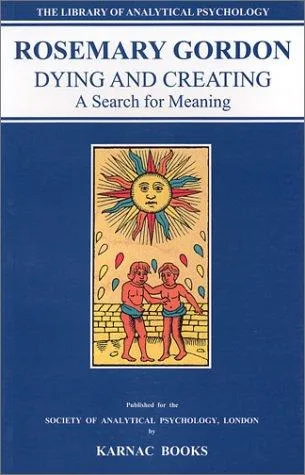
Dying and creating
 83
83

Dying and creating
Rosemary Gordon's "Dying and Creating" offers a compelling, if at times dense, exploration of the symbiotic relationship between cessation and genesis. Gordon skillfully employs psychoanalytic theory to illuminate how the necessary dissolution of old psychological structures acts as fertile ground for new growth. A particular strength lies in her ability to connect these internal processes to broader, archetypal patterns of destruction and creation, evident in her discussion of the 'Great Mother' archetype. However, the book's reliance on specialized psychological terminology may present a barrier for readers less familiar with psychoanalytic discourse. The passages detailing the experience of 'psychic death' as a necessary prelude to 'psychic rebirth' are particularly impactful, offering a framework for understanding personal crises not as endpoints but as transformations. Gordon's contribution lies in its rigorous, yet imaginative, synthesis of psychology and esoteric themes.
📝 Description
83
Rosemary Gordon's 2018 book, "Dying and Creating," examines the psychological links between ending and beginning.
"Dying and Creating" by Rosemary Gordon looks at how psychological and symbolic processes connect the end of one phase with the start of another. Gordon suggests that old forms, whether personal, psychological, or societal, must break down to allow for new growth. She uses ideas from psychoanalysis and esoteric thought to explain these recurring changes.
The book is useful for anyone interested in the deeper psychological aspects of life's transitions. This includes therapists, analysts, and students of depth psychology. People involved in esoteric studies who want to grasp the symbolic meanings of death and rebirth across different cultures will also find it valuable. Readers who like interdisciplinary work that connects psychology with mysticism will find it particularly appealing.
Gordon's work fits into a time after 2000 when interest in Jungian psychology, transpersonal psychology, and various spiritual paths increased. Her ideas relate to thinkers like James Hillman, who studied archetypal psychology and the soul, and others in the analytic tradition who examine symbolic patterns. The period since 2000 has also seen a greater willingness to consider consciousness and transformation beyond purely material explanations.
Gordon's work draws on esoteric traditions to frame psychological transformation. It connects psychoanalytic concepts of psychic change with symbolic understandings of death and rebirth found in various mystical and occult philosophies. The book considers how these processes, often depicted through cyclical imagery of destruction and creation, manifest within the individual psyche.
💡 Why Read This Book?
• Gain a framework for understanding personal crises as transformative opportunities, drawing on Gordon's concept of 'psychic death' preceding 'psychic rebirth'. • Explore the symbolic connections between ending and beginning through Gordon's psychoanalytic lens, offering unique insights beyond conventional psychology. • Understand the archetypal roles of destruction and creation in human development, as illuminated by specific discussions of figures like the Great Mother.
⭐ Reader Reviews
Honest opinions from readers who have explored this book.
❓ Frequently Asked Questions
What is the primary focus of Rosemary Gordon's "Dying and Creating"?
The book focuses on the psychological and symbolic interplay between the processes of ending and beginning, examining how the dissolution of old forms is essential for the emergence of new ones, rooted in psychoanalytic and esoteric thought.
When was "Dying and Creating" first published?
Rosemary Gordon's "Dying and Creating" was first published in 2018.
What psychological tradition does Gordon draw upon?
Gordon primarily draws upon psychoanalytic theory, particularly concepts related to psychological death and rebirth, and engages with archetypal psychology.
Are there specific esoteric traditions mentioned or referenced in the book?
While not exclusively focused on one tradition, the book engages with esoteric concepts of transformation and symbolism, often found in broader mystical and archetypal studies.
Who would benefit most from reading "Dying and Creating"?
Therapists, analysts, students of depth psychology, and those interested in esoteric studies exploring themes of transformation, death, and rebirth would find this book valuable.
What does the book suggest about overcoming stagnation?
It suggests that stagnation arises from clinging to outdated identities or structures, and that embracing a process of 'psychic death' is necessary for psychological renewal and growth.
🔮 Key Themes & Symbolism
Psychic Death and Rebirth
This theme explores the psychoanalytic concept of 'psychic death' not as annihilation but as a necessary dissolution of old psychic structures, identities, or patterns. Gordon posits that this ending is a crucial precursor to 'psychic rebirth,' allowing for the emergence of new consciousness and selfhood. It examines how individuals and systems resist this process, leading to stagnation, and how embracing the dissolution can lead to profound psychological renewal and growth, aligning with esoteric notions of cyclical transformation.
Archetypes of Destruction and Creation
The work examines the archetypal forces of destruction and creation, often personified in figures like the Great Mother or primordial deities. Gordon connects these cosmic principles to individual psychological experience, illustrating how the destructive phase is not inherently negative but generative, clearing the ground for new life. This exploration draws parallels between mythological narratives of cosmic cycles and the personal journey of transformation, suggesting that these archetypes offer a symbolic language for understanding life's inherent dualities.
Symbolism of Cycles and Transitions
Gordon analyzes the symbolic language associated with endings and beginnings, drawing from natural cycles, mythological motifs, and psychological imagery. She examines how symbols of decay, dissolution, and void can paradoxically represent potential and fertility, while symbols of birth and emergence signify the culmination of a transformative process. The book highlights the importance of understanding these symbols to navigate life's transitions consciously, recognizing that every ending carries the seed of a new beginning.
The Resistance to Change
A significant aspect of the book addresses the human tendency to resist necessary endings, clinging to familiar but ultimately limiting structures or identities. This resistance, Gordon argues, perpetuates psychological inertia and prevents growth. The work explores the fear associated with dissolution and the unconscious mechanisms that maintain the status quo, contrasting this with the potential for liberation and expanded consciousness that comes from accepting and engaging with the process of dying to the old.
💬 Memorable Quotes
Direct passages from the work, attributed to the author.
“The process of dying is an essential prelude to creating.”
— This central idea suggests that true creation, whether psychological, artistic, or spiritual, requires an acknowledgment and enactment of endings. Old forms, beliefs, or aspects of the self must cease to exist for something new to emerge.
“Stagnation arises from the refusal to let go.”
— This highlights the dynamic relationship between change and inertia. Gordon implies that clinging to the past or resisting necessary transformations leads to a state of arrested development, preventing forward movement and growth.
“Symbols of decay often hold the promise of renewal.”
— This points to the symbolic language of transformation, suggesting that what appears as ending or destruction in the natural world or in psychological processes can, when viewed symbolically, signify potential and the seeds of future growth.
“The archetype of destruction is inherently creative.”
— Gordon interprets destructive forces not as purely negative but as integral components of a larger creative cycle, essential for breaking down old structures to facilitate new formations.
💡 Key Ideas
Editorial paraphrase of the work's core concepts — not direct quotes.
Psychic death clears the ground for psychic rebirth.
This paraphrased concept emphasizes that the dissolution of old psychological structures is not an end in itself but a vital, fertile phase that makes space for the emergence of a renewed self or consciousness.
🌙 Esoteric Significance
Tradition
Gordon's work sits within the broader tradition of depth psychology that draws heavily on archetypal symbolism, often found in esoteric literature. While not strictly adhering to a single lineage like Hermeticism or Kabbalah, it engages with universal themes of cyclical transformation and the interplay of opposites that are central to many esoteric systems, including Gnosticism and alchemy.
Symbolism
Key symbols explored include the serpent (representing cyclical renewal and transformation), the void or abyss (as a generative space preceding creation), and archetypal figures of destruction and fertility (like the Great Mother in her dual aspect). These symbols function as psychic maps for reading through the necessary dissolution inherent in profound change.
Modern Relevance
Contemporary thinkers in transpersonal psychology, archetypal psychology, and trauma-informed therapy can find Gordon's framework highly relevant. Her insights into the necessity of dissolution for growth inform modern approaches to personal development, crisis intervention, and understanding the cyclical nature of life, consciousness, and societal change.
👥 Who Should Read This Book
• Depth psychology students and practitioners seeking to integrate concepts of death and rebirth into their understanding of the psyche. • Esoteric scholars interested in exploring the psychological underpinnings of transformation myths and archetypes across cultures. • Individuals undergoing significant life transitions who are looking for a symbolic and psychological framework to comprehend their experiences of loss and renewal.
📜 Historical Context
Rosemary Gordon's "Dying and Creating," published in 2018, entered a contemporary intellectual climate marked by renewed interest in depth psychology and its intersections with spirituality and esoteric thought. Emerging after the peak of the mid-20th century psychoanalytic revolution, Gordon's work can be seen as continuing and expanding upon the symbolic and archetypal explorations pioneered by figures like Carl Jung and later developed by analysts such as James Hillman. The book's engagement with themes of death, rebirth, and transformation speaks to a broader cultural shift towards exploring consciousness and meaning beyond purely materialistic paradigms, a trend observed across various spiritual and therapeutic movements of the late 20th and early 21st centuries. It offers a distinctly psychological perspective on processes often explored in more overtly religious or mystical traditions, positioning itself within the ongoing dialogue between scientific psychology and the perennial philosophy.
📔 Journal Prompts
The necessity of psychic death for psychic rebirth: Identify an area of your life where letting go might allow for new growth.
Reflect on the dual nature of the Great Mother archetype in your personal experience of creation and dissolution.
Analyze the symbols of decay present in nature or art and their potential connection to personal renewal.
Consider your personal resistance to letting go of old patterns or identities. What fears are present?
Explore how the cyclical nature of endings and beginnings manifests in your daily life.
🗂️ Glossary
Psychic Death
A psychoanalytic concept referring to the dissolution of old psychological structures, identities, or ego boundaries, seen not as annihilation but as a necessary phase for renewal.
Psychic Rebirth
The emergence of new consciousness, identity, or psychological structures following a period of 'psychic death,' representing growth and transformation.
Archetype
In Jungian psychology, a universal, archaic pattern of thought or imagery derived from the collective unconscious and capable of influencing behavior.
Great Mother
An archetype representing the feminine principle, encompassing nurturing, fertility, creation, but also destruction and engulfment.
Stagnation
A state of arrested development or lack of progress, often resulting from the refusal to undergo necessary psychological transformation or dissolution.
Dissolution
The process of breaking down or dissolving; in a psychological context, the disintegration of old forms or structures to make way for new ones.
Symbolism
The use of symbols to represent ideas and qualities, particularly in the context of psychological and esoteric understanding of transformation.
🔮 Readers Also Liked
Browse all →







More by Rosemary Gordon
All books →
More Free Occult Philosophy Books
View all →