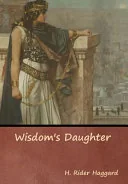
Wisdom's Daughter
 71
71

Wisdom's Daughter
Wisdom's Daughter offers a fascinating, if somewhat uneven, direct address from Ayesha herself. Haggard's attempt to give his enigmatic antagonist a voice is ambitious. The strength lies in the sheer audacity of Ayesha's self-justification, presenting her actions not as malice but as necessary steps dictated by cosmic understanding and, of course, love. However, the prose, even when filtered through Ayesha, occasionally retains the somewhat ponderous, Victorian cadence that can be challenging for modern readers. A passage describing her ancient origins, claiming a lineage stretching back to predynastic Egypt, is particularly compelling for its attempt to ground her mythos in historical speculation. The limitation is that Ayesha, even in her own words, remains an archetype more than a fully rounded individual, her motivations often grandly stated rather than subtly revealed. It is a valuable epilogue for fans, offering a different lens on familiar events.
📝 Description
71
H. Rider Haggard published Wisdom's Daughter, the final "She" novel, in 2019, centering it on Ayesha's perspective.
Wisdom's Daughter concludes H. Rider Haggard's "She" sequence by shifting the narrative focus to Ayesha, the immortal queen. Published in 2019, this installment revisits the established characters and lore, but presents events through Ayesha's own voice. The book aims to clarify her motivations, her past, and her understanding of her own vast power and unending life. It is written for those already familiar with the "She" novels and their sequels. The story appeals to readers interested in a deeper examination of Ayesha, moving beyond the initial mystery of the first book. Fans of Victorian adventure fiction, particularly those with supernatural elements, will find material here. It also attracts those drawn to stories about immortality, old legends, and the psychology of singular, commanding figures.
This novel delves into the nature of cyclical time, the archetype of the divine feminine, and the weight of immortality. Ayesha's telling is positioned as a revelation of truth, counteracting the interpretations offered by other characters. The book examines love, power, deceit, and the meaning of wisdom itself. These themes are viewed through the eyes of an ancient, formidable being as she recounts her existence spanning millennia and her deep connection to spiritual forces.
Though this edition appeared in 2019, the "She" novels originated in the late Victorian era, a time of significant interest in spiritualism and occultism. Haggard's work tapped into a cultural fascination with the mystical and the exotic. The "She" sequence, including Wisdom's Daughter, emerged within a literary landscape that explored ancient civilizations and supernatural phenomena. This context is important for understanding the book's engagement with themes of eternal life, powerful female figures, and spiritual forces.
💡 Why Read This Book?
• Gain Ayesha's direct perspective on her millennia-long existence, understanding her motivations beyond the initial portrayal in "She" (1887). • Explore the concept of the "Eternal Woman" archetype as presented through Ayesha's own voice, offering a unique take on feminine power and divinity. • Analyze Haggard's late-Victorian exploration of ancient civilizations and spiritualism through the specific lens of Ayesha's personal narrative and self-understanding.
⭐ Reader Reviews
Honest opinions from readers who have explored this book.
❓ Frequently Asked Questions
What is the primary focus of Wisdom's Daughter compared to other books in the She sequence?
Unlike earlier novels that focus on Holly's perspective, Wisdom's Daughter centers entirely on Ayesha's first-person account of her life, power, and relationships, offering her justifications and history.
Who is the author, H. Rider Haggard, and when did he write?
H. Rider Haggard was a prolific English author, best known for his adventure romances. The original works in the 'She' sequence were written and published in the late 19th and early 20th centuries, with this narrative being a late addition.
What esoteric themes are explored in Wisdom's Daughter?
The book delves into themes of immortality, divine feminine power, ancient wisdom, reincarnation, and the nature of spiritual evolution, all through Ayesha's extensive lifespan.
Is Wisdom's Daughter a standalone novel?
No, Wisdom's Daughter is the fourth and final book in the 'She' sequence. It is best understood in conjunction with 'She' (1887), 'The Return of She' (1905), and 'She and Allan' (1921).
What is the significance of Ayesha's story being told in her own words?
It allows readers to interpret her character and actions from her viewpoint, potentially challenging the initial perceptions of her as purely a villain or temptress, and exploring her self-defined wisdom and love.
Does this book contain new material or is it a retelling?
Wisdom's Daughter presents Ayesha's own version of events and her history, serving as a narrative supplement and re-framing of the mythology established in earlier novels of the sequence.
🔮 Key Themes & Symbolism
The Burden of Immortality
Ayesha's narrative grapples with the profound isolation and detachment that comes from living for millennia. She reflects on the loss of loved ones, the repetition of history, and the unique perspective gained from outliving entire civilizations. This theme is central to her self-understanding, presenting immortality not merely as a gift of power but as a weighty existence shaped by memory and endless cycles of renewal and decay, seen through her ancient eyes and interactions.
Divine Feminine Archetype
Wisdom's Daughter positions Ayesha as a manifestation of the eternal feminine, a powerful, wise, and ancient entity embodying both creation and destruction. Her narrative explores her role as a spiritual guide and a figure of immense cosmic significance, far exceeding mortal comprehension. The book examines the nature of her power, suggesting it stems from a deep connection to primal forces and a profound, albeit often ruthless, understanding of existence itself.
Truth vs. Perception
A central tenet of the book is Ayesha's attempt to correct the record regarding her character and motives. She frames her story as the true account, contrasting it with the potentially biased or incomplete narratives of others, particularly Holly. This theme highlights the subjective nature of truth and how powerful beings might manipulate or reveal information to shape their legacy, presenting her actions as dictated by wisdom rather than malice.
Love and Deception
Ayesha's narrative is deeply intertwined with her capacity for profound love, often directed towards those who can comprehend her existence, and her willingness to employ deception to achieve her ends or protect her secrets. She presents her complex emotional landscape, where intense affection can coexist with manipulative strategy, all in service of her ultimate goals and understanding of cosmic order. This duality is key to her character's portrayal.
💬 Memorable Quotes
Direct passages from the work, attributed to the author.
“TO THE learned man, ugly of form and face but sound at heart, Holly by name, a citizen of a northern land whom at times I think that once I knew as Noot the Holy, that philosopher who was my master in a past which seems far to him and is forgot, but to me is but as yesterday, to this Holly, I say, I, who on earth am named Aye”
— This opening establishes Ayesha's vast perspective, addressing her former student, Holly. It immediately signals her ancient nature, recalling him from a forgotten past that is 'yesterday' to her, setting the stage for her personal chronicle.
“I am of that race which has been before the peoples of the earth, and I am of that race which shall be after them. I am of that race which has been and which shall be.”
— This statement emphasizes Ayesha's timeless quality and her connection to primordial forces. It positions her as a being outside the linear progression of human history, belonging to an eternal lineage that predates and will outlast all mortal endeavors.
“My love is a strong thing, and my hate is a strong thing, and my revenge is a strong thing.”
— This declaration underscores the intensity of Ayesha's emotions and her decisive nature. It highlights that her actions, whether born of affection or animosity, are powerful and consequential, reflecting her ancient, potent spirit.
“It is not for me to judge the deeds of the gods. I am but their instrument.”
— Through this statement, Ayesha deflects personal responsibility for her actions, framing herself as a conduit for higher powers or cosmic will. It suggests a belief in destiny and her role within a larger, divine plan.
💡 Key Ideas
Editorial paraphrase of the work's core concepts — not direct quotes.
There is no death for me, but there is change, and there is suffering, and there is weariness.
This quote articulates the complex reality of Ayesha's immortality. It is not a static state of being but one fraught with emotional and existential challenges, emphasizing the enduring human elements within her eternal existence.
🌙 Esoteric Significance
Tradition
This work aligns with the Western Esoteric tradition, particularly drawing on Gnostic and Hermetic themes of ancient wisdom, divine feminine principles, and cyclical existence. Ayesha can be viewed as an archetype of Sophia or a manifestation of primordial goddess energy, possessing knowledge beyond human ken. Her narrative explores concepts akin to reincarnation and the evolution of consciousness across vast epochs, fitting within a lineage that seeks hidden truths beyond conventional religious or scientific frameworks.
Symbolism
The figure of Ayesha herself is a potent symbol, representing the eternal feminine, the anima mundi, and the allure of forbidden knowledge. Her association with an ancient, lost civilization (often hinted at as predynastic Egypt) symbolizes primordial wisdom and a connection to pre-Abrahamic spiritual traditions. The element of fire, often linked to her power and the transformative 'Life Everlasting' she commands, symbolizes purification, destruction, and divine illumination, a recurring motif in many esoteric paths.
Modern Relevance
Contemporary practitioners of Goddess spirituality and archetypal psychology often find resonance in Ayesha's character, viewing her as a complex portrayal of the divine feminine. Modern occultists and those interested in comparative mythology can analyze her narrative for insights into ancient religious concepts and the enduring power of myth. Her struggle with immortality and her profound knowledge also speak to existential themes explored in modern esoteric thought and neo-pagan traditions seeking to reconnect with ancient spiritual forces.
👥 Who Should Read This Book
• Students of Victorian literature and its engagement with occultism, seeking to understand how authors like Haggard incorporated esoteric themes into popular adventure stories. • Explorers of the Divine Feminine archetype, who wish to examine a powerful, ancient female figure presented from her own perspective, challenging traditional interpretations. • Enthusiasts of early 20th-century adventure fiction with supernatural elements, interested in the foundational narratives that shaped later fantasy and occult literature.
📜 Historical Context
Wisdom's Daughter emerges from the fertile ground of late Victorian England, a period saturated with a fascination for the exotic, the occult, and the mysteries of ancient civilizations. H. Rider Haggard, a contemporary of Arthur Conan Doyle and Rudyard Kipling, was a master of adventure fiction that often incorporated supernatural or pseudo-historical elements. The "She" sequence, beginning with 'She' in 1887, tapped into a cultural zeitgeist captivated by spiritualism, Theosophy, and burgeoning archaeological discoveries. Haggard's work was immensely popular, contributing to a genre that explored themes of empire, lost races, and potent, often exotic, female figures. While not directly censored, the sensational nature of his narratives often placed them at the forefront of popular, albeit sometimes controversial, literary discourse, engaging with an era eager for tales of the unknown beyond the European sphere.
📔 Journal Prompts
Ayesha's recollection of Holly as 'Noot the Holy' from a forgotten past.
The concept of 'that race which has been before the peoples of the earth, and which shall be after them'.
Ayesha's self-description as a vessel for divine will rather than an independent actor.
The balance Ayesha strikes between her immense love and her capacity for deception.
The weariness that accompanies Ayesha's eternal life.
🗂️ Glossary
Ayesha
The immortal, powerful queen who is the central figure of the 'She' sequence. She claims to be millennia old and possesses extraordinary knowledge and abilities, often viewed as a divine or semi-divine being.
Holly
Professor Horace Holly, a scholar and explorer, who is a primary narrator in the original 'She' novel and a significant character in Ayesha's recounting. He represents a more conventional, rational perspective contrasted with Ayesha's ancient wisdom.
Life Everlasting
The mystical force or substance that grants Ayesha her immortality and immense power. It is associated with a specific location and ancient rituals within the narrative's mythology.
Predynastic Egypt
Refers to the period in Egyptian history before the unification of Upper and Lower Egypt and the establishment of the First Dynasty, roughly before c. 3100 BCE. Ayesha claims lineage from this ancient era.
The She Sequence
A series of novels by H. Rider Haggard featuring the character Ayesha. This includes 'She' (1887), 'The Return of She' (1905), 'She and Allan' (1921), and 'Wisdom's Daughter' (published posthumously in 1923, with this edition dated 2019).
Eternal Feminine
An archetypal concept, popularized by philosophers like Goethe and Carl Jung, representing the enduring, often mystical, power and essence attributed to the feminine principle in creation and spirituality.
Goddess Spirituality
A broad range of contemporary spiritual practices and beliefs that focus on the divine feminine, often drawing from ancient, pre-patriarchal religions and mythologies. Ayesha is sometimes interpreted through this lens.
This book appears in 1 collection
🔮 Readers Also Liked
Browse all →








From the “Reincarnation” Collection
View all →




More Free Occult Philosophy Books
View all →