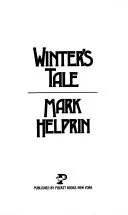
Winter's Tale

 83
83

Winter's Tale
Mark Helprin's *Winter's Tale* presents a New York City that breathes with an almost supernatural life, a city where impossible things happen with the quiet certainty of falling snow. The novel's most striking achievement is its creation of Peter Lake, a character who embodies a poignant blend of outlaw and innocent, a figure pursued by an inescapable past and a mysterious future. Helprin’s prose, particularly when describing the city’s ethereal transformations, possesses a lyrical quality that elevates the narrative beyond mere storytelling. However, the sheer scope of the novel's ambition sometimes leads to a diffusion of focus; the intricate plot threads, while thematically rich, occasionally feel overextended, particularly in the later sections detailing the 'great white clouds' and the nature of time itself. The character of Beverly Penn, while central, sometimes feels more like a symbol than a fully realized individual. Despite these minor reservations, *Winter's Tale* remains a singular work of American fiction, a book that dares to imagine the impossible within the mundane.
📝 Description
83
Mark Helprin's Winter's Tale, published in 1995, reimagines New York City as a mythic stage.
This novel follows Peter Lake, a master thief and orphan, whose life becomes inextricably linked with the dying heiress Beverly Penn. Their unlikely romance unfolds against a backdrop of snow-covered streets, fantastical flying machines, and a palpable sense of destiny. Helprin crafts a narrative that blends historical elements with supernatural occurrences, creating a world that feels both familiar and otherworldly. The story operates on multiple levels, inviting readers to consider grand themes of love, death, time, and the very nature of reality.
*Winter's Tale* appeals to those who enjoy literary fiction that embraces the surreal and the symbolic. Its richly imagined world and complex characters reward readers seeking a story that resonates beyond its conclusion. While its unconventional narrative may challenge those accustomed to straightforward plots, the experience is ultimately a rich one.
Published in 1995, *Winter's Tale* arrived during a period of renewed interest in magical realism's ability to address deep human experiences through allegory. Helprin's New York City is both a recognizable metropolis and a place of enchanted possibility. The novel engages with the tradition of urban fantasy and myth-making prominent in American literature, from Washington Irving onwards. Its esoteric elements, though less frequently discussed than its literary ambition, are central to its unique vision.
💡 Why Read This Book?
• Gain insight into the nature of time as a non-linear force, as explored through Peter Lake's journey and the novel's unique temporal structure, offering a different perspective on causality. • Experience the symbolic interplay of light, darkness, and the elemental power of winter, which Helprin uses to represent profound existential struggles between life and death. • Understand the concept of a living, mythic city, exemplified by New York, which acts as more than a setting but a sentient entity shaping destinies.
⭐ Reader Reviews
Honest opinions from readers who have explored this book.
❓ Frequently Asked Questions
What is the primary setting of Mark Helprin's 'Winter's Tale'?
The primary setting is an alternate, mythic New York City, first published in 1995. This version of the city is imbued with magical properties and a sense of destiny that influences the characters' lives.
Who are the main protagonists in 'Winter's Tale'?
The main protagonists are Peter Lake, a master thief and orphan with a mysterious past, and Beverly Penn, a dying heiress. Their unlikely romance forms the central narrative arc.
What are some key themes explored in 'Winter's Tale'?
Key themes include destiny versus free will, the fluid nature of time, the symbolic battle between light and darkness, and the spiritual essence of a city.
When was 'Winter's Tale' by Mark Helprin first published?
Mark Helprin's 'Winter's Tale' was first published in 1995, placing it within a period of renewed interest in literary magical realism.
Does 'Winter's Tale' have a specific esoteric tradition it draws from?
While not strictly adhering to a single tradition, the novel engages with concepts found in Hermeticism and Gnosticism, particularly regarding the nature of reality, time, and the hidden spiritual forces at play in the world.
What is the significance of the flying machines in the book?
The flying machines, particularly those associated with Peter Lake, symbolize freedom, aspiration, and the potential for transcending earthly limitations. They are a manifestation of the novel's magical realist elements.
🔮 Key Themes & Symbolism
The Fluidity of Time
The novel posits time not as a linear progression but as a malleable force, capable of bending and looping. Characters experience moments of temporal distortion, suggesting that past, present, and future are not as distinct as conventionally understood. This concept challenges deterministic views, implying that moments can be revisited or altered, reflecting esoteric ideas found in certain Hermetic traditions concerning the nature of eternity and cyclical existence.
Destiny and Free Will
Peter Lake grapples with a sense of preordained fate, seemingly guided by unseen forces and a past he cannot escape. Yet, his actions and choices suggest an underlying agency. The narrative explores the tension between being a pawn of destiny and forging one's own path, a classic theme in esoteric thought that questions whether events are fixed or subject to individual will and spiritual intervention.
The Sentient City
New York City in *Winter's Tale* is more than a backdrop; it's a living, breathing entity with a soul. It possesses an awareness that influences events and characters, particularly those who are sensitive to its hidden energies. This personification aligns with animistic beliefs and certain occult traditions that view urban landscapes as imbued with their own spiritual consciousness and power.
Light and Shadow Symbolism
The constant interplay of light and darkness, warmth and the biting cold of winter, serves as a profound symbolic language. This duality represents fundamental cosmic struggles: life versus death, hope versus despair, knowledge versus ignorance. The pervasive snow itself can be seen as a purifying element or a shroud, reflecting the dualistic nature of existence often explored in Gnostic and Manichaean thought.
💬 Memorable Quotes
Direct passages from the work, attributed to the author.
“The city was a miracle of necessity, a evidence of the power of dreams.”
— This interpretation highlights the novel's view of New York City not merely as a physical construct but as a manifestation of collective human aspiration and imagination, echoing esoteric notions of thought-forms and the power of collective consciousness.
“He was a thief who had stolen time itself.”
— This evocative phrase captures Peter Lake's unusual relationship with temporality. It suggests he operates outside the conventional flow of time, perhaps able to manipulate or borrow from it, a concept resonant with esoteric philosophies of temporal relativity.
“Miracles were the common currency of the world.”
— This statement frames the extraordinary events within the novel not as aberrations but as fundamental aspects of reality. It aligns with a worldview where the seemingly impossible is a natural expression of underlying spiritual or magical laws.
“In winter, the world was stripped bare, revealing its bones.”
— This offers a symbolic interpretation of the winter setting, suggesting that the season's starkness allows for a clearer perception of fundamental truths and the essential nature of things, a concept akin to asceticism or spiritual purification.
“Love was a light that could not be extinguished.”
— This speaks to the enduring power of love as depicted in the story, portraying it as an almost divine force that transcends mortality and hardship, a common motif in mystical and spiritual traditions.
🌙 Esoteric Significance
Tradition
The novel draws loosely from Hermetic and Gnostic traditions by emphasizing a hidden spiritual reality beneath the mundane world. It explores concepts of fate and a divine plan, reminiscent of Gnostic cosmology, while the idea of a hidden, perfectible order or a transcendent realm echoes Hermetic ideals. It departs from strict adherence by combining these ideas into a distinctly American, urban magical realist narrative rather than a formal occult system.
Symbolism
The recurring motif of the flying machines represents transcending limitations and achieving a higher state of being, akin to spiritual ascension. The pervasive snow symbolizes both purification and oblivion; it can cleanse the world, revealing its essential form, or bury it in a state of death-like stasis, mirroring esoteric ideas of spiritual rebirth and the veil of Maya. The ancient, sentient city itself symbolizes a living spiritual organism, a microcosm of the universe.
Modern Relevance
Contemporary urban fantasy authors and practitioners of contemporary paganism and Hermeticism find resonance in Helprin's depiction of a city with a hidden spiritual life. The novel's exploration of destiny and the potential for miraculous intervention in everyday life appeals to those seeking a more enchanted worldview, influencing narratives that seek to imbue urban settings with magical properties and explore the interplay between the material and the spiritual.
👥 Who Should Read This Book
• Readers interested in exploring the concept of a living, mythic city, particularly those drawn to urban fantasy and magical realism. • Students of comparative literature and philosophy seeking examples of how authors engage with themes of destiny, time, and free will in a fictional context. • Individuals exploring esoteric concepts of fate and spiritual interconnectedness who appreciate literary interpretations of these ideas.
📜 Historical Context
Mark Helprin's *Winter's Tale*, published in 1995, arrived at a moment when magical realism had firmly established itself as a significant literary mode in Western literature, influenced heavily by Latin American authors like Gabriel García Márquez. The novel's depiction of an enchanted, mythic New York City taps into a long tradition of American urban literature that imbues cities with a special character, from Stephen Crane's *Maggie: A Girl of the Streets* to E.L. Doctorow's *Ragtime*. While not overtly tied to a specific esoteric movement of the 1990s, its exploration of fate, time, and the spiritual underpinnings of reality echoed broader cultural interests in spirituality and metaphysics that were gaining traction outside mainstream religious institutions. The novel was recognized for its ambitious scope and lyrical prose, though its fantastical elements often placed it outside conventional literary realism, leading to varied critical receptions rather than a specific, widely documented reception event like a prize or a censorship controversy.
📔 Journal Prompts
Peter Lake's encounters with the limits of time and destiny.
The symbolic weight of winter's pervasive snow in the narrative.
Beverly Penn's role as a dying emblem of light.
The city of New York as a sentient, guiding force.
The meaning of the impossible events within the story's framework.
🗂️ Glossary
Peter Lake
The protagonist, an orphan and master thief whose life is intertwined with destiny and a quest for love and redemption in a magical New York City.
Beverly Penn
The dying heiress whom Peter Lake falls in love with, representing a fragile hope and beauty against the encroaching darkness and mortality.
Master Thorne
An enigmatic, possibly immortal figure who appears throughout the narrative, representing a higher, perhaps cosmic, order or a guardian of fate.
The Great White Clouds
A symbolic representation of the forces of death and oblivion, which threaten to consume the world and its inhabitants.
Winter's Light
The paradoxical illumination found even in the darkest and coldest aspects of winter, symbolizing hope and spiritual clarity amidst despair.
The Unmade World
A concept related to the potential for creation and a reality not yet fixed by destiny, suggesting a area of pure possibility.
The City's Soul
The animating spirit or consciousness of New York City, depicted as a powerful entity that influences the lives of its inhabitants.
🔮 Readers Also Liked
Browse all →








More by Mark Helprin
All books →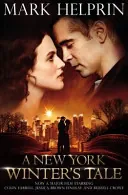
More Free Occult Philosophy Books
View all →