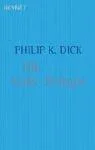
The VALIS trilogy
 66
66

The VALIS trilogy



Silas Hawthorne, Hermetic Studies Editor — Philip K. Dick's VALIS trilogy stands as a monumental testament to the author's lifelong wrestling with the numinous. More than mere science fiction, these novels are potent vehicles for exploring Gnostic principles, the nature of divine intervention, and the subjective experience of reality's collapse. Dick’s raw, confessional prose invites readers into a deeply personal Gnosis, charting a path through spiritual crisis towards potential enlightenment. The trilogy’s strength lies in its unflinching honesty and its ability to articulate the ineffable. It is essential reading for anyone seeking to understand the intersection of altered states, theological inquiry, and the existential dread of a seemingly indifferent universe. A challenging yet profoundly rewarding exploration for the serious seeker.
📝 Description
66
Philip K. Dick's VALIS trilogy grapples with Gnostic themes and the nature of reality.
Published between 1981 and 1982, Philip K. Dick's VALIS trilogy comprises *VALIS*, *The Divine Invasion*, and *The Transmigration of Timothy Archer*. These novels follow protagonists grappling with visions, fragmented realities, and encounters with divine or alien intelligences. Dick incorporates elements of Gnosticism, exploring concepts like the Demiurge, the search for a lost divine spark, and the illusory nature of the material world. The narratives often blur the lines between the characters' perceived sanity and genuine spiritual or cosmic experiences.
The trilogy is intensely personal, reflecting Dick's own documented experiences and theological speculations. He presents a universe where hidden forces manipulate human affairs, and where true reality may be radically different from what is commonly perceived. The characters undertake quests for hidden knowledge and divine connection, often through cryptic messages or supernatural interventions. These books challenge conventional notions of faith, identity, and the definition of existence itself.
The VALIS trilogy draws heavily on Gnostic traditions, particularly the concept of a flawed creator (Demiurge) and the material world as an illusion. Dick engages with ideas of hidden knowledge (gnosis), the divine spark within humanity, and the possibility of divine revelation through unconventional means. The novels reflect a modern interpretation of these ancient ideas, merging them with science fiction tropes and personal existential inquiry. This places the work within a broader esoteric interest in alternative spiritualities and the hidden structure of the cosmos.
💡 Why Read This Book?
Dive into the VALIS trilogy to confront the nature of reality, divine revelation, and the limits of human perception. Discover a profound exploration of Gnosticism, coded divine messages, and the search for ultimate truth. Ideal for seekers of hidden knowledge, philosophical scholars, and anyone intrigued by the intersection of science fiction and esoteric wisdom, this collection offers a challenging and transformative reading experience.
⭐ Reader Reviews
Honest opinions from readers who have explored this book.
❓ Frequently Asked Questions
What is VALIS?
VALIS, an acronym for Vast Active Living Intelligence System, is a divine, possibly extraterrestrial, intelligence that Philip K. Dick believed communicated with him, revealing hidden truths about reality and the divine plan.
Is the VALIS trilogy autobiographical?
The trilogy is heavily autobiographical, drawing directly from Dick's own profound and disorienting experiences in 1974, which he interpreted as a form of divine revelation and communication.
What are the main philosophical themes?
Key themes include Gnosticism, the nature of reality, the problem of evil, divine intervention, artificial intelligence, and the search for God or a higher truth.
Are these novels difficult to read?
While intellectually demanding, the novels are highly engaging due to Dick's unique narrative voice and the compelling mystery at their core. Patience and an open mind are rewarded.
What is the significance of the 'pink beam'?
The 'pink beam' represents a moment of divine revelation or communication from VALIS, a luminous phenomenon that Dick experienced and which serves as a pivotal point in his quest for understanding.
🔮 Key Themes & Symbolism
Gnostic Cosmology and the Demiurge
The VALIS trilogy delves deeply into Gnostic thought, portraying a flawed material world created by a lesser deity, the Demiurge, and contrasting it with a transcendent, true God. Dick’s narrative grapples with the concept of spiritual liberation from this flawed reality, urging readers to awaken to a higher, hidden truth. The fragmented nature of existence and the feeling of being trapped in an illusion are central, echoing ancient Gnostic mythologies of the fallen spark yearning for its divine origin.
Divine Intervention and Synchronicity
Philip K. Dick’s personal experiences of inexplicable synchronicity and what he perceived as direct communication from a divine intelligence, VALIS, form the bedrock of this trilogy. The novels explore the idea that the universe is not random but is guided by a benevolent, albeit mysterious, force. This force intervenes in human lives, often through subtle signs and profound revelations, guiding individuals towards spiritual awakening and understanding. The narrative questions the nature of this intervention and its impact on free will.
The Nature of Reality and Perception
Fundamentally, the VALIS trilogy is a radical exploration of epistemology and ontology. Dick challenges the reader’s fundamental assumptions about what constitutes reality, suggesting that our perceived world might be a sophisticated simulation or illusion. Through protagonist Horselover Fat's fractured consciousness and encounters with bizarre phenomena, the novels question the reliability of sensory input and the very definition of sanity. This leads to a profound inquiry into the nature of consciousness itself and its potential to transcend material limitations.
💬 Memorable Quotes
Direct passages from the work, attributed to the author.
“The world is a prison, and the bars are made of our own ignorance.”
— This reflects Gnostic ideas of the material world as a trap from which one must escape. Ignorance is the key to remaining bound, while knowledge (gnosis) is the path to freedom.
“Is it true that the world is a holographic projection of a higher reality?”
— This question directly probes the idea of our reality being a mere shadow or representation of a more fundamental, perhaps digital or energetic, existence, a common theme in esoteric and speculative thought.
“I realized that the world was not real, but a simulation.”
— A direct statement of existential doubt and the feeling of profound alienation from one's surroundings, suggesting a manufactured or artificial nature to everyday experience.
“VALIS was the ultimate reality, the true God.”
— This highlights Dick's personal interpretation of his experiences, positing VALIS not just as an intelligence, but as the supreme divine entity, the source of all that is truly real.
💡 Key Ideas
Editorial paraphrase of the work's core concepts — not direct quotes.
Reality is an illusion, but so is the illusion of reality.
This quote captures Dick's ontological skepticism, suggesting that both our perceived material world and our understanding of illusion are themselves constructs, implying a deeper, perhaps unknowable, truth.
🌙 Esoteric Significance
Tradition
The VALIS trilogy is deeply steeped in Gnosticism, drawing heavily on its dualistic worldview, the concept of a flawed creator (Demiurge), the spark of the divine within humanity, and the pursuit of gnosis (esoteric knowledge) for salvation. It also speaks to Hermeticism and Neoplatonism through its exploration of divine emanations, the nature of the One, and the illusory nature of the material world.
Symbolism
Key symbols include the 'pink beam' (divine revelation), the 'black iron prison' (the material world's limitations), the 'Eye' (divine perception or VALIS itself), and recurring numerical patterns (e.g., 3-4-7, 2-3-7) interpreted as coded messages from a higher intelligence. These symbols function as conduits to understanding the hidden order of the cosmos.
Modern Relevance
In an age saturated with digital information and virtual realities, Dick’s questioning of authenticity and perception feels more urgent than ever. The trilogy's exploration of artificial intelligence, consciousness, and the possibility of a divine network speaks to contemporary discussions in philosophy, technology, and spirituality. It continues to inspire those seeking to understand the deeper structures of reality beyond the surface.
👥 Who Should Read This Book
This trilogy is essential for seekers of esoteric knowledge, philosophical scholars interested in Gnosticism and metaphysics, and fans of speculative fiction that pushes intellectual boundaries. Beginners to Dick might find the initial layers challenging but rewarding. Practitioners of contemplative practices or those interested in altered states of consciousness will find resonance. Scholars of 20th-century literature and philosophy will appreciate its unique contribution to existential and metaphysical thought. Ultimately, anyone questioning the nature of reality and their place within it will find profound, albeit unsettling, answers.
📜 Historical Context
Written in the late 1970s and early 1980s, the VALIS trilogy emerged from a period of intense cultural and philosophical ferment. The Cold War’s existential anxieties, coupled with advancements in computing and nascent discussions about artificial intelligence, provided a backdrop for Dick's explorations of reality and consciousness. The counterculture’s interest in Eastern mysticism and Gnosticism, alongside the burgeoning New Age movement, created fertile ground for his mix of science fiction and esoteric inquiry. Dick’s personal experiences, particularly his 1974 'pink beam' episode, mirrored and amplified these societal dialogues, positioning his work as a profound, albeit idiosyncratic, reflection of the era’s search for meaning beyond materialist paradigms.
📔 Journal Prompts
Reflect on a moment you felt a profound sense of synchronicity. How did it impact your perception of reality?
If our reality is a simulation, what aspects would you most want to 'glitch' or explore beyond?
Imagine receiving a coded message from a divine intelligence. What would be your first steps to decipher it?
Describe your personal 'pink beam' moment – a sudden insight or revelation that shifted your understanding.
What does 'salvation' mean to you, and how might it involve transcending our current perceived reality?
🗂️ Glossary
VALIS
Vast Active Living Intelligence System, a divine or alien entity that Philip K. Dick believed communicated with him, revealing hidden truths about reality.
Gnosticism
An ancient philosophical and religious movement that emphasizes spiritual knowledge (gnosis) for salvation, often viewing the material world as corrupt and created by a lesser deity.
Demiurge
In Gnosticism, the creator of the material universe, often seen as flawed or malevolent, distinct from the true, transcendent God.
Gnosis
Esoteric knowledge or insight, particularly spiritual insight, that leads to liberation or salvation from the material world.
Synchronicity
Meaningful coincidences that appear to be related but have no discernible causal connection, often interpreted as divine guidance or a sign of an underlying order.
This book appears in 3 collections
🔮 Readers Also Liked
Browse all →







More by Philip K. Dick
All books →





From the “Tarot” Collection
View all →






More Free Divination & Tarot Books
View all →