Begineers's Guide to Tarot Cards
 61
61

Begineers's Guide to Tarot Cards



Cassian Rothmann, Senior Critic, Ancient Wisdom: Jennifer Brooks delivers an exceptionally lucid and spiritually resonant introduction to the Tarot. 'Beginner's Guide to Tarot Cards' transcends mere instruction, offering a profound exploration of the cards' esoteric underpinnings. Brooks masterfully decodes complex symbolism, making ancient archetypes accessible to the modern seeker. Her approach is both scholarly and deeply intuitive, fostering a respectful reverence for this potent divinatory art. This book is an indispensable primer for nascent practitioners and a valuable refresher for seasoned readers, illuminating the Tarot's capacity for profound self-insight and spiritual guidance. It is a rare find that balances clarity with genuine esoteric depth.
📝 Description
61
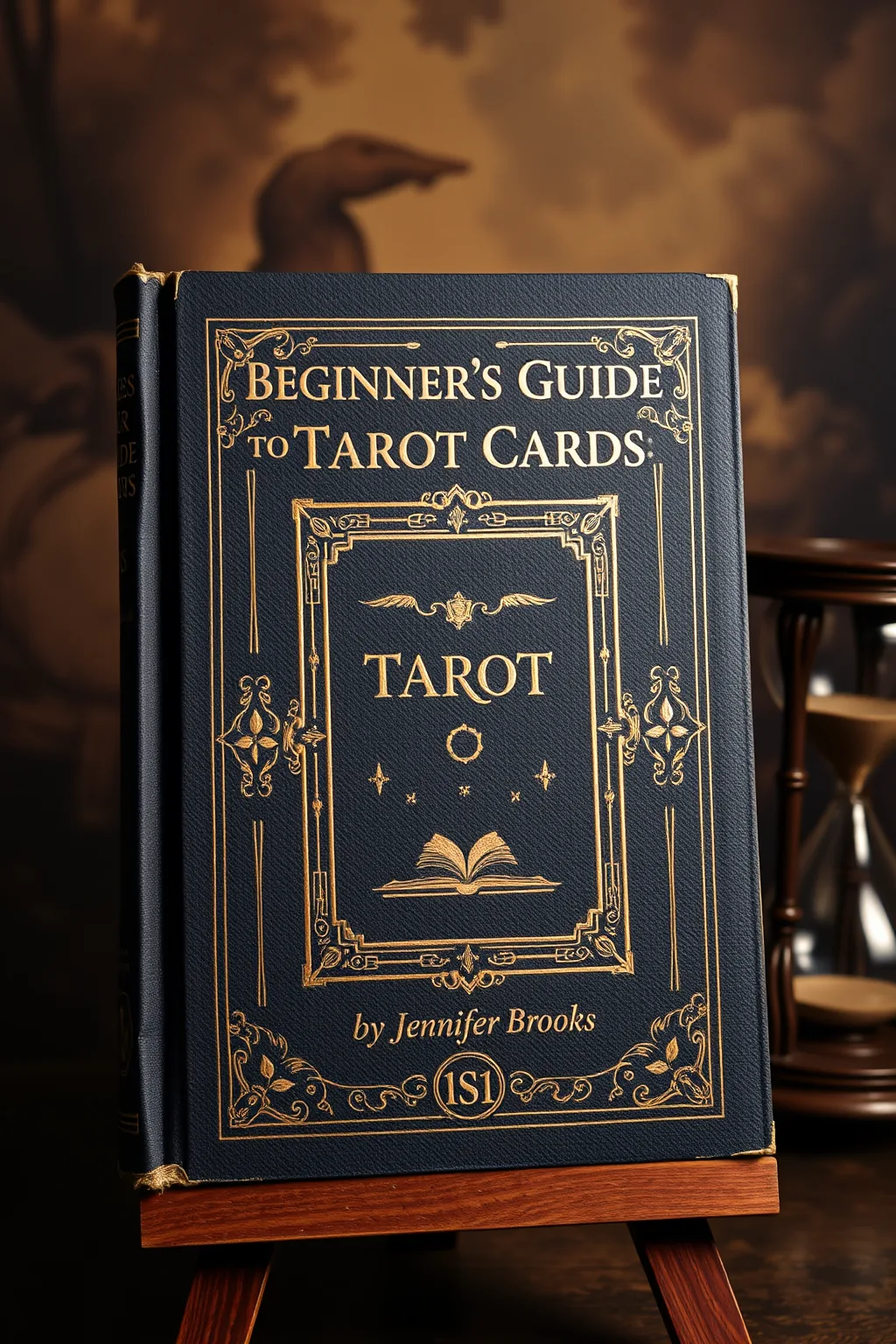
Jennifer Brooks' 2022 'Beginner's Guide to Tarot Cards' explains the Tarot's symbolism and practice.
Jennifer Brooks' 'Beginner's Guide to Tarot Cards' introduces readers to the practice and symbolism of Tarot. The book breaks down the meanings of individual cards, both upright and reversed, within the context of a reading. Brooks also covers the history of Tarot and its connection to numerology and astrology. The guide aims to help readers understand the Tarot as a tool for self-reflection and understanding, rather than solely for fortune-telling. It encourages a thoughtful approach to card interpretation and emphasizes developing personal intuition. Readers will learn about different spreads and how to approach a reading with a clear intention. The book is structured to build understanding step-by-step, making it accessible for those new to the subject.
This book enters the esoteric tradition of Tarot reading, which views the cards as a symbolic system reflecting psychological states and universal energies. Originating in 15th-century Europe, Tarot evolved from a game into a divinatory tool through occult circles in the 18th and 19th centuries. Authors like A.E. Waite and Pamela Colman Smith significantly shaped its modern esoteric interpretation, linking its imagery to Kabbalah, astrology, and alchemy. Brooks' guide follows this lineage, presenting Tarot as a method for inner exploration and connecting with subconscious insights.
💡 Why Read This Book?
Unveil the hidden language of the soul. This guide is your compass into the mystical world of Tarot, offering clear pathways to understanding its profound symbolism and divinatory power. Ideal for seekers of truth, curious minds, and aspiring practitioners, it demystifies the cards, empowering you to access your intuition and gain profound insights into life's mysteries. Discover a timeless oracle for personal growth and spiritual connection.
⭐ Reader Reviews
Honest opinions from readers who have explored this book.
❓ Frequently Asked Questions
What is the primary purpose of the Tarot?
The Tarot serves as a symbolic language and a divinatory tool, offering insights into the past, present, and potential future. It acts as a mirror to the subconscious, facilitating self-awareness, problem-solving, and spiritual guidance.
Do I need prior knowledge of mysticism to read Tarot?
No, this guide is specifically designed for beginners. Jennifer Brooks provides clear explanations of esoteric concepts, making the Tarot accessible without requiring prior mystical knowledge.
How does one begin reading Tarot cards?
Begin by familiarizing yourself with the card meanings, then practice simple spreads. The key is mindful intention, intuition, and consistent practice. This book guides you through these initial steps.
Are there different types of Tarot decks?
Yes, while the core 78-card structure is consistent, decks vary greatly in art style and thematic focus. This guide focuses on the Rider-Waite-Smith system, a foundational deck for many practitioners.
Can Tarot predict the future with certainty?
Tarot reveals probabilities and energies influencing the present, offering potential outcomes rather than fixed destinies. It empowers you to understand these influences and make informed choices to shape your path.
🔮 Key Themes & Symbolism
The Archetypal Journey of the Fool
Explore the transformative path of the Fool, the initial spark of creation and the seeker's odyssey through the Major Arcana. This theme studies the universal narrative of growth, learning, and spiritual evolution inherent in the Tarot's structure. It illuminates how each card represents a distinct stage in this profound journey, from innocence and initiation to wisdom and integration, mirroring the soul's quest for understanding and self-realization within the grand cosmic play.
Decoding the Symbolism of the Minor Arcana
Unravel the intricate collection of the Minor Arcana, the four suits representing the ebb and flow of daily life. Each suit—Wands, Cups, Swords, and Pentacles—embodies distinct energetic principles and elemental forces. This theme explores the detailed symbolism within each card, from the fiery passion of Wands to the emotional depths of Cups, the intellectual challenges of Swords, and the material realities of Pentacles, providing a framework for understanding everyday experiences and their spiritual resonance.
Intuition and the Art of Tarot Reading
This theme emphasizes the crucial role of intuition in Tarot interpretation, moving beyond rote memorization to a deeper, soul-level connection with the cards. It explores how to cultivate and trust one's inner voice, allowing for personalized and insightful readings. The practice of Tarot is presented not as fortune-telling, but as a dialogue with the subconscious and the divine, fostering self-awareness and empowering the reader to navigate life's complexities with wisdom and clarity.
💬 Memorable Quotes
Direct passages from the work, attributed to the author.
“Each card whispers secrets of the universe.”
— This evocative statement emphasizes the profound wisdom and cosmic knowledge embedded within each Tarot card, suggesting they are conduits of universal truths.
“Intuition is the key that unlocks the Tarot's magic.”
— This emphasizes the vital importance of inner guidance and instinctual understanding in interpreting Tarot readings, positioning it as more than just intellectual knowledge.
💡 Key Ideas
Editorial paraphrase of the work's core concepts — not direct quotes.
The Tarot is a mirror to the soul, reflecting its deepest truths.
This quote highlights the Tarot's function as a tool for introspection and self-discovery, suggesting that the cards reveal inner states and hidden aspects of the psyche.
The journey of the Fool is the journey of us all.
This quote underscores the universality of the archetypal narratives within the Tarot, particularly the Fool's journey, relating it to the common human experience of seeking and growth.
Symbols are the language of the divine.
This quote posits that symbolic representation, prevalent in the Tarot, serves as a direct channel for spiritual or universal communication.
🌙 Esoteric Significance
Tradition
The Tarot's esoteric significance is deeply interwoven with the Hermetic tradition, Kabbalah, and Western occultism. It is viewed as a visual representation of the Tree of Life, with the Major Arcana mirroring the paths and sephiroth, and the Minor Arcana reflecting the interplay of elements and divine energies. This framework allows for a sophisticated understanding of spiritual evolution, cosmic order, and the human condition through a symbolic lens.
Symbolism
Key symbols abound, from the alchemical elements represented by the suits (Fire, Water, Air, Earth) to the archetypal figures of the Major Arcana (The Magician, The High Priestess, The Lovers, The World). Numerology also plays a crucial role, with each number carrying specific vibrational meanings. The Fool's journey, in particular, represents the hero's quest, a universal narrative of initiation and transformation present across many spiritual traditions.
Modern Relevance
In contemporary times, the Tarot has transcended its occult origins to become a widely recognized tool for psychological exploration, personal development, and mindfulness. Its symbolic language offers a powerful means of accessing the subconscious, understanding life's challenges, and fostering self-awareness. The rise of digital platforms and accessibility has made Tarot readings more prevalent, serving as a modern oracle for working through the complexities of the 21st-century spiritual landscape.
👥 Who Should Read This Book
This guide is an essential companion for the nascent mystic, the curious soul, and the aspiring practitioner who wishes to examine the profound wisdom of the Tarot. It is meticulously crafted for those new to divination, offering a clear, accessible, and spiritually resonant entry point. Scholars of esotericism will find a solid foundation for understanding Tarot's historical and symbolic depth. For seekers of self-knowledge and practitioners aiming to deepen their intuitive connection, this book provides an invaluable resource for personal growth and spiritual illumination.
📜 Historical Context
The Tarot, with its roots tracing back to 15th-century Italy as playing cards, underwent a significant esoteric transformation in the late 18th century. Figures like Antoine Court de Gébelin began associating the cards with ancient Egyptian mysticism and Kabbalistic traditions. This period saw the emergence of Tarot as a divinatory tool, heavily influenced by occultists such as Eliphas Lévi in the 19th century, who further integrated it with Hermeticism and magical philosophies. The Rider-Waite-Smith deck, created in the early 20th century, solidified many of the archetypal interpretations and visual symbolism that are prevalent today, making it a starting point for modern Tarot practice and a bridge between historical occultism and contemporary spiritual seeking.
📔 Journal Prompts
Reflect on a time you felt like 'The Fool' beginning a new journey. What lessons did you learn?
Consider the element most dominant in your current life situation (Fire, Water, Air, Earth) and how it manifests in your daily experiences.
Choose a Major Arcana card that speaks to a challenge you are currently facing. How does its symbolism offer guidance?
How can you cultivate greater trust in your intuition when interpreting complex situations, both within and outside of Tarot readings?
What does 'The World' card signify for your personal aspirations and sense of completion?
🗂️ Glossary
Arcana
Refers to the divisions within a Tarot deck. The Major Arcana are the 22 trump cards representing significant life lessons and archetypes, while the Minor Arcana consist of 56 cards divided into four suits.
Divination
The practice of seeking knowledge of the future or the unknown by supernatural means. In Tarot, this involves interpreting card symbolism to gain insight into questions or situations.
Esoteric
Intended for or likely to be understood by only a small number of people with a specialized knowledge or interest; relating to or concerned with the occult or mystical.
Archetype
A universal, archaic symbol, image, or pattern of thought that is generally believed to be inherent in the collective unconscious and to influence human behavior and perception.
Suit
The four divisions within the Minor Arcana of a Tarot deck: Wands, Cups, Swords, and Pentacles, each associated with a specific element and aspect of life.
This book appears in 3 collections
🔮 Readers Also Liked
Browse all →
From the “Tarot” Collection
View all →
More Free Divination & Tarot Books
View all →