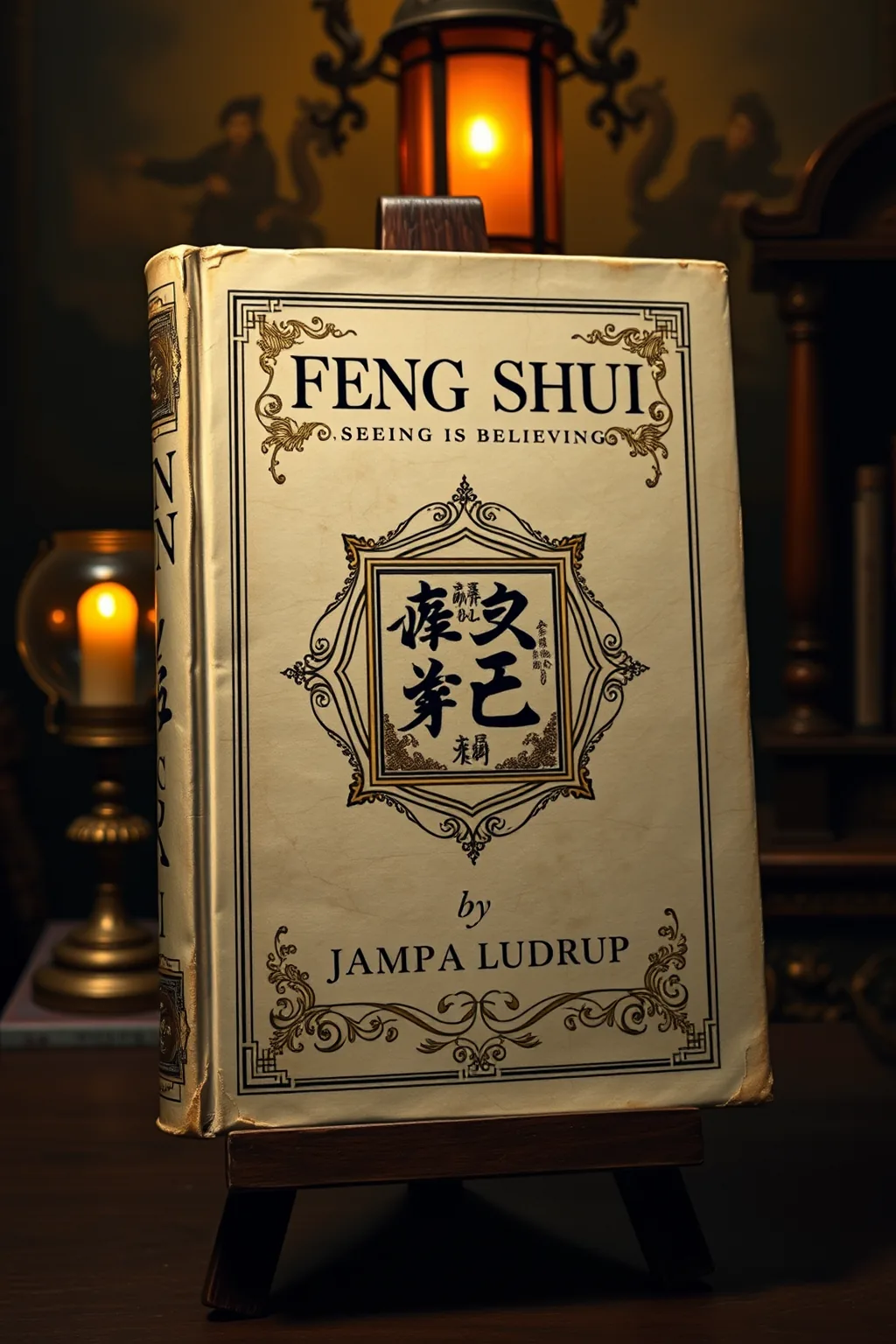
Feng Shui : Seeing Is Believing
 61
61

Feng Shui : Seeing Is Believing



Aurelia Blackwood (Occult Philosophy Critic) — Jampa Ludrup's 'Feng Shui: Seeing Is Believing' is a revelation for those who approach Feng Shui with a genuine thirst for esoteric understanding. Ludrup masterfully deciphers the complex symbolism, moving beyond mere aesthetics to expose the profound energetic principles at play. His insights into the geomantic currents and their impact on spiritual development are unparalleled. This text is essential for practitioners seeking to deepen their practice and scholars interested in the philosophical underpinnings of ancient environmental arts. It is a powerful guide for anyone ready to witness the tangible transformation that arises from aligning with universal energies.
📝 Description
61
Jampa Ludrup's 1997 book argues Feng Shui is a potent tool for spiritual alignment.
Jampa Ludrup's 'Feng Shui: Seeing Is Believing' moves beyond common notions of the practice. Published in 1997, the book proposes that Feng Shui is a significant method for aligning one's personal energy with their surroundings. Ludrup details how principles like Yin and Yang and the Five Elements can be applied to living spaces. The aim is to foster inner peace and attract prosperity. The text discusses harnessing unseen forces within homes and sacred areas. It invites readers to view their environment as a system of interconnected energy. This perspective can transform ordinary rooms into meaningful sanctuaries. The author draws on the adage 'as within, so without' to explain this connection.
This work is situated within the broader tradition of Taoist cosmology and its practical applications. Feng Shui, as presented here, connects to ancient Chinese philosophies that seek to harmonize human existence with the natural world. It shares roots with practices that interpret earth energies, often referred to as 'qi' or 'chi,' to influence well-being and fortune. The book reflects a worldview where the physical environment is an active participant in an individual's life, mirroring concepts found in other esoteric systems that emphasize the interconnectedness of all things.
💡 Why Read This Book?
Uncover the hidden energetic blueprint of your living space and unlock its potential for prosperity, well-being, and spiritual growth. 'Feng Shui: Seeing Is Believing' offers profound insights into the ancient art of geomancy, revealing how to harmonize your surroundings with universal energies. Ideal for seekers of deeper knowledge, practitioners looking to refine their craft, and anyone ready to witness transformative change through the power of intentional space.
⭐ Reader Reviews
Honest opinions from readers who have explored this book.
❓ Frequently Asked Questions
What is the core philosophy behind Feng Shui as presented in this book?
The book posits Feng Shui as a profound system of geomancy, focusing on the energetic currents (Qi) within spaces and their direct influence on human destiny and well-being, rooted in ancient Taoist principles of harmony.
Is this book suitable for beginners in Feng Shui?
Yes, while rich in esoteric depth, Ludrup's clear prose and insightful approach make it accessible to sincere beginners eager to grasp the foundational principles.
How does 'Seeing Is Believing' differ from other Feng Shui books?
It emphasizes the 'seeing' of unseen energies and the 'believing' in their tangible impact, offering a more spiritual and philosophical interpretation than typical design-focused guides.
What are the main esoteric concepts explored?
The book delves into concepts such as Qi flow, Yin and Yang balance, the Five Elements, Bagua mapping, and the connection between the terrestrial and celestial realms.
Can the principles in this book be applied to any space?
Absolutely. The core principles of energetic alignment are universal and can be applied to homes, workplaces, and even natural landscapes.
🔮 Key Themes & Symbolism
The Unseen Architecture of Energy
This theme explores the fundamental concept of Qi, the vital life force that permeates all things. Ludrup guides readers to perceive and understand the invisible currents flowing through their environment, revealing how these energies shape physical reality and personal destiny. The book emphasizes that true Feng Shui lies not in superficial aesthetics but in the conscious manipulation and harmonization of these subtle energetic flows, transforming spaces into conduits of auspicious power and spiritual resonance.
Geomancy and Earthly Harmony
At its heart, 'Feng Shui: Seeing Is Believing' is a treatise on geomancy, the ancient art of reading and interacting with the Earth's energies. Ludrup elucidates how the landscape, its natural formations, and the position of structures are deeply interconnected. The text explores the profound relationship between humanity and the planet, advocating for an alignment that fosters mutual benefit and ecological balance. It presents the practice as a sacred dialogue with the Earth, aimed at cultivating a harmonious existence and tapping into the planet's inherent vitality.
Manifestation Through Spatial Alignment
This theme focuses on the transformative power of applying Feng Shui principles to actively manifest desired outcomes. Ludrup presents a framework where intentional adjustments to one's environment directly influence personal circumstances, from health and relationships to career and spiritual growth. The book argues that by understanding and harmonizing the energetic blueprint of a space, individuals can consciously shape their reality, inviting abundance, clarity, and profound personal evolution. It's a practical guide to using one's surroundings as a potent tool for personal alchemy.
💬 Memorable Quotes
Direct passages from the work, attributed to the author.
“Our homes are not mere shelters; they are energetic mirrors of our souls.”
— This emphasizes the profound connection between our internal state and the energetic quality of our living spaces, suggesting a reciprocal relationship.
“To see is to understand the flow; to believe is to harness its power.”
— This expresses the book's philosophy: perception of energy leads to comprehension, which in turn enables the active utilization of that energy for transformation.
“The Earth whispers its secrets to those who listen with their spirit.”
— This speaks to the geomantic aspect, encouraging a deep, intuitive connection with the natural world and its subtle energetic messages.
“Harmony within the dwelling cultivates harmony within the self.”
— A concise expression of the fundamental goal of Feng Shui: to achieve inner balance by first creating outer balance in one's physical surroundings.
💡 Key Ideas
Editorial paraphrase of the work's core concepts — not direct quotes.
The true art of Feng Shui lies not in adornment, but in alignment.
This quote highlights the core esoteric principle that superficial changes are less impactful than achieving a deep energetic resonance with one's environment.
🌙 Esoteric Significance
Tradition
This work is deeply rooted in the Taoist tradition, drawing heavily on its principles of Qi (vital energy), Yin and Yang duality, and the Five Elements (Wu Xing). It connects to the broader esoteric practice of geomancy, which views the Earth as a living, breathing entity with energetic currents that can be understood and influenced for human benefit, echoing Hermetic principles of 'as above, so below.'
Symbolism
Key symbols explored include the Bagua, a foundational octagonal map representing life's aspirations and their corresponding directions; the dragon and phoenix, symbols of auspicious power and balance; and the interplay of colors and shapes, each imbued with specific energetic qualities that influence the environment and its inhabitants.
Modern Relevance
In an age of increasing disconnection from nature and heightened stress, 'Feng Shui: Seeing Is Believing' offers a potent antidote. Its principles provide practical tools for creating sanctuaries that promote mental clarity, emotional balance, and spiritual grounding. The book's emphasis on energetic awareness encourages a more mindful and intentional approach to living, empowering individuals to shape their environments and, by extension, their lives, for greater well-being.
👥 Who Should Read This Book
This book is an indispensable guide for the dedicated seeker of esoteric knowledge, offering a profound exploration of geomancy beyond surface-level design. Practitioners of Feng Shui looking to deepen their understanding and connect with the spiritual roots of the art will find invaluable insights. Scholars of ancient traditions and metaphysical arts will appreciate its rigorous examination of energetic principles. Beginners willing to begin of deeper perception and transformation will discover a powerful framework for harmonizing their lives with the energetic currents of the universe.
📜 Historical Context
Emerging from the ancient philosophical and cosmological traditions of China, Feng Shui has a history spanning thousands of years, deeply intertwined with Taoism, I Ching, and traditional Chinese medicine. 'Feng Shui: Seeing Is Believing' situates itself within this rich lineage, drawing upon classical texts and practices that were once the exclusive domain of imperial courts and learned scholars. The book's approach reflects a period when understanding the energetic landscape was considered paramount for dynastic prosperity and individual well-being. In an era where modern interpretations often focus on aesthetics, Ludrup's work serves as a vital link to the more profound, esoteric, and spiritual dimensions of this ancient art, preserving its true essence for contemporary seekers.
📔 Journal Prompts
Reflect on the dominant energetic 'feeling' of your primary living space. What does it communicate to you?
Identify a specific area in your home or workspace that feels energetically stagnant. How might you invite more flow?
Consider the Five Elements. Which element do you feel is most prominent in your environment, and how does it affect you?
How does the concept of 'seeing' unseen energies change your perception of your surroundings?
What 'belief' about your environment do you need to shift to foster greater harmony and well-being?
🗂️ Glossary
Qi (Chi)
The vital life force or energy that flows through all living things and the environment. Its harmonious flow is central to Feng Shui.
Yin and Yang
The fundamental Taoist concept of complementary opposites, representing passive/feminine (Yin) and active/masculine (Yang) energies, whose balance is essential for harmony.
Wu Xing (Five Elements)
The theory of the Five Elements (Wood, Fire, Earth, Metal, Water) and their cyclical relationships (generating and controlling) which form the basis of energetic interaction.
Bagua
An octagonal diagram used in Feng Shui to map the energy of a space according to eight life aspirations (e.g., wealth, health, relationships).
Geomancy
The practice of interpreting and influencing the energies of the Earth and land to promote harmony, prosperity, and well-being.
This book appears in 3 collections
🔮 Readers Also Liked
Browse all →







More by Jampa Ludrup
All books →

From the “Geomancy” Collection
View all →






More Free Divination & Tarot Books
View all →