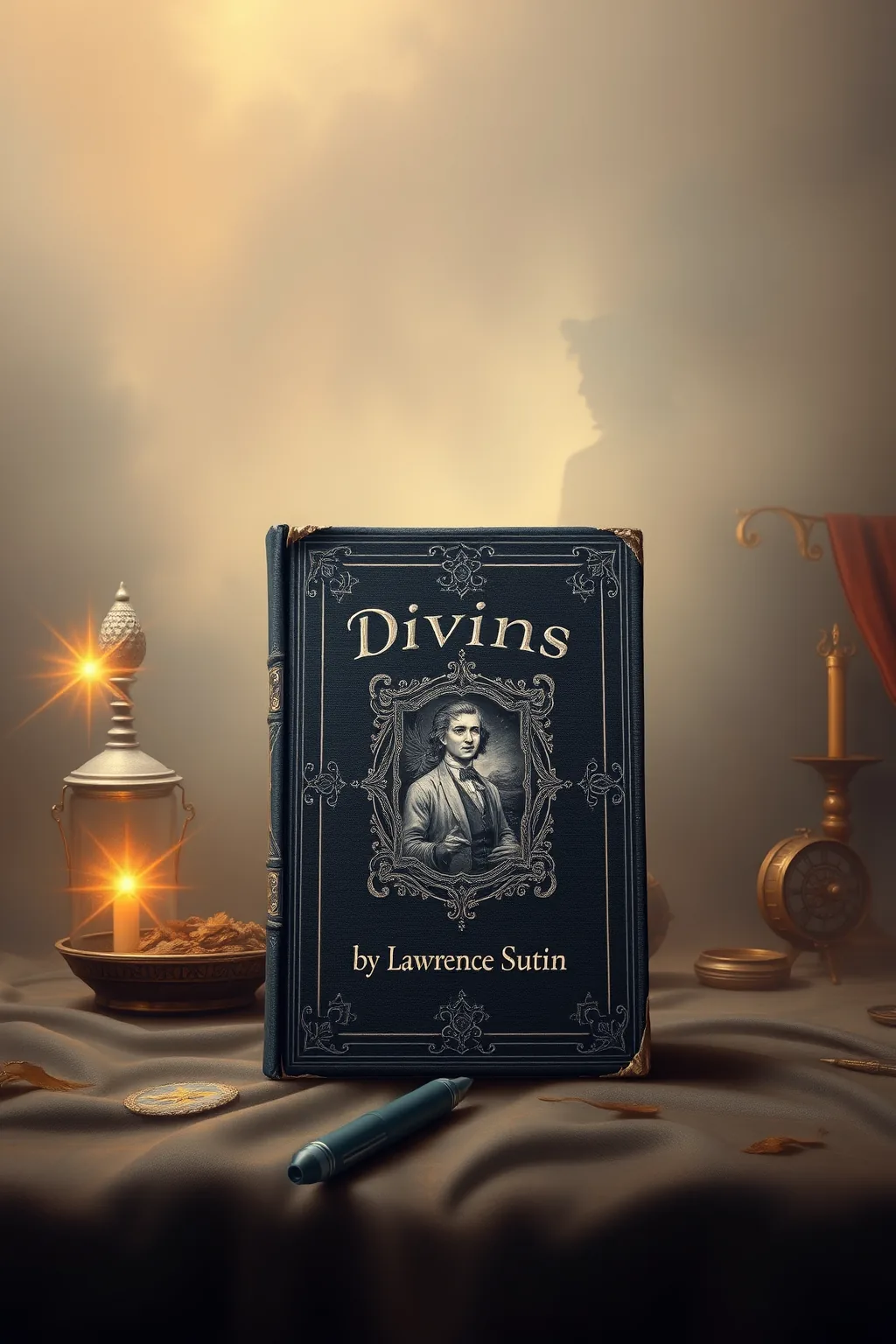
Divine invasions
 70
70

Divine invasions



Alaric Kestrel, Metaphysical Studies Reviewer — Lawrence Sutin's "Divine Invasions" is a seminal work for anyone seeking to understand Philip K. Dick beyond the confines of genre. Sutin masterfully excavates the author's lifelong engagement with Gnostic philosophy, visionary experiences, and the search for ultimate reality. The book reveals Dick not as a mere purveyor of sci-fi tropes, but as a profound spiritual explorer, grappling with questions of divine presence and illusion. For practitioners of esoteric disciplines and scholars of consciousness, this biography offers invaluable context, illuminating the hidden architecture of Dick's universe and its resonance with ancient mystical traditions. A truly illuminating read.
📝 Description
70
Lawrence Sutin's 2000 book, Divine Invasions, examines Philip K. Dick's mystical philosophy.
Lawrence Sutin's "Divine Invasions" scrutinizes the spiritual and Gnostic undercurrents in the work of science fiction author Philip K. Dick. Sutin moves beyond a simple biographical account to analyze how Dick's personal experiences and philosophical inquiries shaped his distinctive literary output. The book details Dick's engagement with concepts like divine intervention, the nature of reality, and the presence of hidden knowledge.
Sutin argues that Dick's often surreal narratives are not mere imaginative flights but are deeply informed by his struggles with theological and metaphysical questions. The author traces Dick's encounters with Gnosticism and his attempts to reconcile these ancient traditions with his own visions. "Divine Invasions" presents Dick as an author whose fiction served as a conduit for exploring complex spiritual themes relevant to the human experience and the wider cosmos.
This book situates Philip K. Dick's literary output within the broader currents of modern esoteric thought, particularly Gnosticism. It connects Dick's explorations of dualism, hidden knowledge (gnosis), and the perceived manipulation of reality to historical Gnostic traditions. Sutin's work suggests that Dick, perhaps unintentionally, tapped into a lineage of thought concerned with escaping illusion and perceiving a higher, albeit often disturbing, truth. The analysis positions Dick's science fiction as a modern manifestation of perennial spiritual quests.
💡 Why Read This Book?
Uncover the hidden esoteric dimensions of Philip K. Dick's visionary science fiction. 'Divine Invasions' reveals how his personal quests for truth and divine encounters shaped his profound narratives. Ideal for seekers of spiritual wisdom, scholars of consciousness, and practitioners interested in the intersection of literature and metaphysics, this book offers a unique lens into a mind that perceived the universe as a living, breathing, and often divine entity.
⭐ Reader Reviews
Honest opinions from readers who have explored this book.
❓ Frequently Asked Questions
What is the primary esoteric focus of this book?
The book primarily focuses on Philip K. Dick's deep engagement with Gnostic philosophy, his personal visionary experiences, and his lifelong search for divine truth and hidden knowledge, which profoundly influenced his literary output.
How does 'Divine Invasions' connect Philip K. Dick's work to mysticism?
It meticulously traces the threads of mystical thought, particularly Gnosticism and dualism, within Dick's novels and personal life, arguing that his science fiction served as a vehicle for exploring esoteric concepts of reality and consciousness.
Is this book suitable for readers unfamiliar with Philip K. Dick?
While a familiarity with Dick's fiction enhances appreciation, Sutin provides sufficient biographical and thematic context. The book serves as an excellent introduction to Dick's esoteric leanings for both established fans and newcomers to his work.
What makes this biography 'esoteric'?
Its esoteric nature lies in its deep dive into Dick's metaphysical beliefs, his perception of divine intervention (VALIS), and his exploration of alternate realities and hidden knowledge, themes often sidelined in conventional literary analysis.
Can this book offer insights for spiritual practitioners?
Absolutely. By examining Dick's search for meaning and his encounters with the 'divine,' practitioners can find resonance with themes of perception, illusion, the nature of reality, and the human quest for spiritual awakening.
🔮 Key Themes & Symbolism
Gnosticism and the Demiurge
This theme studies Dick's profound fascination with Gnostic cosmology, particularly the concept of a flawed creator or 'demiurge' responsible for the material world's imperfections. Sutin explores how Dick translated these ancient ideas into his narratives, portraying societies trapped by oppressive systems and seeking liberation through gnosis – a direct, intuitive knowledge of the divine. The adversarial relationship between humanity and a false god or controlling force is a recurring motif, mirroring Gnostic teachings on escaping the illusory nature of the mundane realm.
The Nature of Reality and Illusion
A central tenet of Dick's work, amplified in 'Divine Invasions,' is the pervasive question of what constitutes true reality. Sutin examines how Dick consistently blurred the lines between the material world, hallucination, divine revelation, and simulated existence. The book highlights Dick's exploration of the idea that our perceived reality might be a sophisticated illusion, a 'simulacrum,' designed to obscure a higher, truer state of being. This theme invites readers to question their own assumptions about the world around them.
Divine Intervention and Prophecy
This theme focuses on Dick's experiences with what he termed 'VALIS' – Vast Active Living Intelligence System – and his belief in moments of divine intervention that altered his perception and inspired his writing. Sutin analyzes how these perceived divine intrusions manifested in Dick's characters and plots, often as cryptic messages or sudden awakenings that challenged the protagonists' understanding of their world. The book posits Dick as a reluctant prophet, channeling insights from a higher source into his visionary fiction.
💬 Memorable Quotes
Direct passages from the work, attributed to the author.
“His fiction was a conduit for gnosis.”
— Suggests that Dick's science fiction was not merely entertainment, but a sacred channel through which profound spiritual and metaphysical knowledge could be transmitted to readers.
“The veil between worlds was thin for him.”
— Implies Dick had a heightened sensitivity to other dimensions of existence, experiencing direct encounters with the supernatural or divine that informed his unique literary vision.
“He sought the authentic within the artificial.”
— Highlights Dick's lifelong quest to find genuine truth and spiritual essence in a world he often perceived as constructed, false, or technologically simulated.
“His visions were divine invasions.”
— Emphasizes the powerful, often overwhelming nature of Dick's insights, suggesting they were external forces 'invading' his consciousness, transforming his perception of reality.
💡 Key Ideas
Editorial paraphrase of the work's core concepts — not direct quotes.
He saw the universe as a cryptogram.
This quote captures Dick's perception of reality as a coded message, filled with hidden meanings and divine secrets waiting to be deciphered by those with the right insight.
🌙 Esoteric Significance
Tradition
This work is deeply rooted in the Gnostic tradition, exploring themes of dualism, the illusory nature of the material world, and the search for liberation through direct spiritual knowledge (gnosis). It also touches upon elements of Neoplatonism and esoteric Christianity, examining Dick's personal interpretations of divine presence, prophecy, and the demiurgic forces that shape human experience.
Symbolism
Key symbols explored include the 'Eye of God' as a symbol of divine surveillance or awareness, the 'simulacrum' representing manufactured reality, and the recurring motif of the 'drug' or 'agent' that facilitates altered states of consciousness and reveals hidden truths. Dick's use of doubles, fragmented identities, and alien intelligences also serves as potent symbolic language for exploring the fragmented nature of the self and the universe.
Modern Relevance
In an age saturated with digital realities, artificial intelligence, and increasing societal control, Dick's concerns about illusion, authenticity, and divine agency are more pertinent than ever. 'Divine Invasions' offers a framework for understanding the 'glitches' in our own perceived reality and encourages a deeper investigation into the nature of consciousness and the potential for spiritual awakening, making it a vital read for contemporary seekers.
👥 Who Should Read This Book
This book is essential for dedicated students of Philip K. Dick's oeuvre, offering a profound reinterpretation of his literary output. It is also highly recommended for scholars of esoteric thought, particularly those interested in Gnosticism, mysticism, and the intersection of philosophy and speculative fiction. Seekers of spiritual wisdom and practitioners of metaphysical disciplines will find valuable insights into the nature of consciousness, divine intervention, and the human quest for ultimate truth. Beginners curious about the deeper, mystical dimensions of science fiction will also find this an informative and accessible entry point.
📜 Historical Context
Published in the late 20th century, a period marked by a resurgence of interest in counter-culture spirituality, esoteric philosophies, and the burgeoning field of consciousness studies, 'Divine Invasions' arrives as a crucial text. The Cold War era fostered a sense of existential anxiety and a questioning of established societal structures, mirroring the thematic concerns within Dick's work. Furthermore, the rise of cyberpunk and a growing appreciation for the philosophical depth of science fiction provided fertile ground for a re-evaluation of authors like Dick, who had long been relegated to genre pulp. Sutin's work taps into this zeitgeist, presenting Dick's life and writings as a profound exploration of metaphysical questions that resonated deeply with a generation seeking alternative truths.
📔 Journal Prompts
Consider a moment in your life where you felt a profound 'invasion' of insight or awareness. How did it change your perception of reality?
If our perceived reality is a construct, what elements do you believe are most artificial, and what might lie beyond them?
Explore the concept of a 'demiurge' in your own life. What forces or systems do you feel limit your spiritual freedom or awareness?
How do you discern 'authentic' experiences from 'simulacra' in your daily life?
Reflect on the idea of 'gnosis' as a path to liberation. What forms of direct spiritual knowledge resonate with you?
🗂️ Glossary
Gnosticism
An ancient religious and philosophical movement characterized by a belief in a transcendent God and the material world as a flawed creation made by a lesser deity (demiurge), with salvation achieved through secret knowledge (gnosis).
Demiurge
In Gnostic and Platonic philosophy, the creator or organizer of the material universe, often depicted as an imperfect or malevolent being distinct from the supreme, transcendent God.
Gnosis
A Greek term meaning 'knowledge,' specifically referring to intuitive, experiential, or spiritual knowledge that leads to salvation or enlightenment, particularly within Gnostic traditions.
VALIS
An acronym coined by Philip K. Dick, standing for 'Vast Active Living Intelligence System.' He used it to describe a perceived divine or cosmic intelligence that communicated with him, influencing his later works.
Simulacrum
A copy of something that has no original or is a poor imitation of the original. In philosophical contexts, it refers to a representation that obscures or replaces reality.
This book appears in 3 collections
🔮 Readers Also Liked
Browse all →







From the “Tarot” Collection
View all →






More Free Divination & Tarot Books
View all →