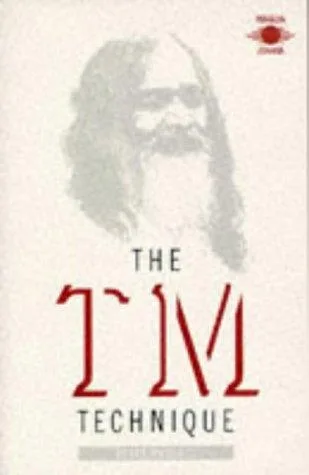
The TM technique
 75
75

The TM technique
Peter Russell's "The TM Technique" serves as a straightforward manual for a specific meditative practice. Its strength lies in its clear, almost procedural, explanation of Transcendental Meditation, stripping away much of the mystique that often surrounds such disciplines. Russell's approach in 1976 was to present TM as a technique, divorced from any required belief system, which was a significant point of appeal for many Westerners at the time. The book’s limitation, however, is its inherent bias; as an early proponent, Russell’s presentation is overwhelmingly positive, with little critical examination of potential downsides or alternative perspectives on meditation. The discussion of 'restful alertness' is particularly compelling, aiming to ground the practice in observable physiological states. While effective as an introduction to TM, its singular focus means readers seeking a comparative study of meditation techniques will need to look elsewhere.
📝 Description
75
Peter Russell's 1976 book details Transcendental Meditation's mechanics and effects.
Peter Russell's "The TM Technique," published in 1976, offers a clear explanation of Transcendental Meditation. The book breaks down the practice's methods and the theories behind it. Russell, an early figure in the TM movement, describes the specific instructions for this mantra-based meditation. He also details the claimed physiological and psychological benefits of consistent practice. The technique is presented as accessible to all, irrespective of their background or personal beliefs.
This work is for those curious about Transcendental Meditation, especially individuals seeking a straightforward, non-sectarian guide. It will appeal to readers interested in the connections between consciousness, psychology, and physical health. Those looking for a structured way to achieve mental quiet will find value here. The book also suits readers investigating different meditation practices or those drawn to the TM movement's global presence and its cited scientific research.
Published in the mid-1970s, "The TM Technique" entered a period of growing Western interest in Eastern spiritual traditions. The Transcendental Meditation movement, led by Maharishi Mahesh Yogi, had already gained significant attention. Russell's book served as a focused guide to the specific TM method, distinguishing it from other meditation systems like those found in Yoga or Buddhism. It met a rising demand in the West for practical tools for stress reduction and personal development.
💡 Why Read This Book?
• Learn the precise mechanics of the TM mantra and 'effortless transcending,' a core concept Russell details to differentiate TM from other methods. • Understand the purported state of 'restful alertness' as described by Russell, offering a specific physiological goal for your practice. • Grasp the historical context of TM's rise in the 1970s, as Russell frames the technique within a period of Western interest in Eastern practices.
⭐ Reader Reviews
Honest opinions from readers who have explored this book.
❓ Frequently Asked Questions
What is the primary goal of the TM technique as described by Peter Russell?
Peter Russell explains the primary goal of the TM technique is to allow the mind to settle down to a state of 'restful alertness' through the effortless use of a specific mantra.
When was Peter Russell's book on the TM technique first published?
The TM Technique by Peter Russell was first published in 1976, reflecting the growing interest in Transcendental Meditation during the mid-1970s.
Does the TM technique require adherence to any specific philosophy or religion?
According to Russell's 1976 exposition, the TM technique is presented as a secular method that does not require adherence to any specific philosophy or religion.
What is a 'mantra' in the context of the TM technique?
In Peter Russell's explanation, a mantra is a specific sound or word given to practitioners that is used during meditation to help the mind settle and transcend thought.
What distinguishes 'effortless transcending' from other meditation practices?
Russell describes 'effortless transcending' as a key feature of the TM technique, suggesting it's distinct from concentration or contemplation, allowing the mind to settle naturally.
Is this book suitable for someone completely new to meditation?
Yes, Russell's book is structured to explain the TM technique to beginners, focusing on the practical application and underlying principles without assuming prior meditation experience.
🔮 Key Themes & Symbolism
Effortless Transcending
Central to Russell's exposition is the concept of 'effortless transcending.' This isn't about forcing the mind into stillness but allowing it to settle naturally through the specific use of a mantra. The technique aims to bypass active concentration, leading the consciousness to quieter levels. This process is described as distinct from other meditative approaches that might involve focus or visualization, positioning TM as a unique method for accessing deeper states of awareness. The book elaborates on how this effortless quality makes the technique universally applicable.
Restful Alertness
Russell frequently discusses the state of 'restful alertness' as a key outcome of practicing the TM technique. This condition is characterized by deep physical relaxation alongside a state of mental wakefulness. Unlike sleep, where alertness diminishes, or intense concentration, where relaxation may be absent, TM is presented as achieving a balance. This unique neurological state is purported to offer profound benefits for stress reduction, mental clarity, and overall well-being, differentiating it from mere relaxation or sleep.
The Role of the Mantra
The book details the specific function of the mantra within the TM technique. Russell explains that mantras are not inherently spiritual words but specific sound vibrations chosen for their unique properties to facilitate the mind's natural tendency to settle. The mantra serves as a vehicle, a gentle anchor that allows the practitioner to move beyond active thinking without effort. The selection and administration of these personal mantras are presented as a crucial element of the TM method, ensuring its effectiveness and individual application.
Personal Growth and Consciousness
Beyond immediate stress relief, Russell touches upon the potential for broader personal development through consistent TM practice. The text suggests that regular engagement with the technique can lead to an 'expansion of consciousness,' fostering greater creativity, better decision-making, and an enhanced sense of inner peace. This perspective frames TM not just as a coping mechanism but as a tool for unlocking latent human potential and achieving a more fulfilling life by harmonizing one's inner state with outer circumstances.
💬 Memorable Quotes
Direct passages from the work, attributed to the author.
“The TM technique is a method for allowing the mind to settle down.”
— This statement expresses the core simplicity Russell emphasizes. It frames meditation not as an arduous task but as a natural process facilitated by a specific tool—the TM technique—designed to guide the mind towards a state of quietude.
“Effortless transcending is the key.”
— This highlights the distinctive characteristic of Transcendental Meditation as presented by Russell. It suggests that the most profound benefits arise not from forceful concentration but from a passive, natural settling of awareness.
“Restful alertness is a unique state of consciousness.”
— Russell uses this phrase to describe the specific physiological and mental condition achieved during TM practice, differentiating it from sleep or waking states and implying significant restorative benefits.
“The mantra is a vehicle for transcending thought.”
— This interpretation clarifies the function of the mantra in the TM technique. It's not the focus itself, but a tool that gently guides the mind away from discursive thinking towards deeper levels of awareness.
“Anyone can practice the TM technique.”
— This emphasizes the universal accessibility Russell attributes to Transcendental Meditation, suggesting its mechanics are independent of the practitioner's background, beliefs, or prior experience with meditation.
🌙 Esoteric Significance
Tradition
While Transcendental Meditation, as presented by Russell, often distanced itself from explicit spiritual or religious dogma, its roots lie in the ancient Vedic traditions of India. Specifically, it draws from the lineage of Vedanta and yogic practices focused on consciousness. The use of a mantra for inner exploration aligns with practices found within various Hindu tantric and meditative schools. Russell's presentation seeks to secularize these elements, framing them within a psychological and physiological context rather than a purely devotional one, making it accessible to a modern, secular audience while retaining an esoteric core related to the nature of consciousness.
Symbolism
The primary 'symbol' or element in TM is the mantra itself. Though often presented as a sound, the mantra functions symbolically as a point of focus designed to evoke a specific state. In esoteric traditions, mantras are often power-laden syllables or phrases, believed to carry vibrational energy that can alter consciousness. The concept of 'effortless transcending' can also be seen as symbolic of a surrender to a higher, inner intelligence or divine spark within, moving beyond the ego's striving and control towards a state of being.
Modern Relevance
The principles outlined in Russell's work continue to influence contemporary approaches to mindfulness, stress reduction, and peak performance. While TM itself remains a distinct practice, the emphasis on 'restful alertness' and 'effortless transcending' has echoes in modern neurofeedback techniques, biofeedback training, and secularized mindfulness programs. Thinkers and practitioners focused on cognitive enhancement, mental well-being, and the science of meditation often reference the foundational research and concepts popularized by TM, including Russell's early explanations, as part of understanding the spectrum of consciousness-altering practices.
👥 Who Should Read This Book
• Individuals seeking a structured, secular method for stress reduction and mental clarity, particularly those intrigued by the TM movement's specific technique. • Students of comparative meditation practices interested in understanding the mechanics and historical context of Transcendental Meditation as detailed in the 1970s. • Personal development enthusiasts looking for practical techniques to enhance focus, creativity, and inner peace through consciousness exploration.
📜 Historical Context
Published in 1976, Peter Russell's "The TM Technique" emerged during a period of intense Western fascination with Eastern spirituality and meditation, particularly the Transcendental Meditation movement founded by Maharishi Mahesh Yogi. This era saw figures like the Beatles and Mia Farrow publicly embracing TM, drawing mainstream attention. Russell’s work contributed to this phenomenon by offering a focused, technical explanation of the specific TM method, distinguishing it from broader yogic traditions or Zen Buddhism, which were also gaining traction. The book was part of a wave of practical self-help and consciousness exploration literature. While TM faced scrutiny and occasional skepticism, its widespread adoption and the scientific research it commissioned (often focusing on stress reduction and EEG patterns) positioned it as a significant cultural and psychological force in the 1970s, with Russell’s book serving as a key primer.
📔 Journal Prompts
The practice of 'effortless transcending' requires a shift from active doing to passive being. How does this contrast with your typical daily approach to tasks?
Reflect on the concept of 'restful alertness.' What does this state imply about the potential for relaxation without loss of awareness?
Consider the role of the mantra in the TM technique. How might a specific sound or word serve as a gateway to deeper consciousness?
Peter Russell emphasizes the universal applicability of the TM technique. What personal or societal barriers might still exist for individuals approaching such practices?
Analyze the historical context of TM's rise in the 1970s. How did the cultural milieu influence the reception and understanding of practices like the one described?
🗂️ Glossary
Mantra
A specific sound or word used in meditation, chosen for its vibrational quality to help the mind settle and transcend thought effortlessly.
Effortless Transcending
The core principle of the TM technique, suggesting a natural settling of the mind to quieter levels of awareness without concentration or contemplation.
Restful Alertness
A state characterized by deep physical relaxation coupled with mental wakefulness, purported to be achieved during TM practice.
Transcendental Meditation (TM)
A specific, mantra-based meditation technique popularized by Maharishi Mahesh Yogi, aiming for stress reduction and expanded consciousness.
Vedic tradition
The ancient corpus of scriptures and traditions originating in India, forming the philosophical and spiritual basis for Hinduism and practices like yoga and meditation.
Consciousness
The state of being aware of and responsive to one's surroundings; in the context of TM, it also refers to the potential for deeper, expanded states of awareness.
Secular technique
A practice presented as practical and universally applicable, independent of religious or spiritual dogma, focusing on observable effects.
🔮 Readers Also Liked
Browse all →









More by Peter Russell
All books →

More Free Spiritual Development Books
View all →