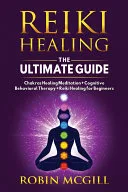
Reiki Healing the Ultimate Guide
 77
77

Reiki Healing the Ultimate Guide
Robin McGill’s *Reiki Healing the Ultimate Guide* attempts to provide a comprehensive manual for a practice that often remains elusive. The strength lies in its systematic approach to explaining Reiki's potential beyond simple relaxation, particularly its assertion of temporal and spatial transcendence for healing. McGill’s explanation of how Reiki can be directed across distance, a concept central to advanced Reiki practice, is particularly well-articulated. However, the book occasionally leans into speculative claims about influencing future events without sufficient grounding, which may alienate more empirically minded readers. The section on historical context, while mentioning Mikao Usui, could benefit from more detailed exploration of the philosophical underpinnings that shaped Usui's system. Overall, it's a functional guide for those new to Reiki, offering practical techniques alongside its more ambitious theoretical framework.
📝 Description
77
Robin McGill's Reiki Healing the Ultimate Guide explains channeling Universal Life Force Energy for well-being.
This book defines Reiki not just as touch therapy but as a system for manipulating energy. It details methods for directing 'Ki' or 'Qi' for physical, emotional, and spiritual health. The text shows how this energy can extend beyond physical presence, allowing for distant healing and influence on future events. McGill aims to clarify the practice, making it usable for personal application and for helping others.
The guide is written for people interested in self-empowerment through energy work, regardless of their background. It appeals to those drawn to alternative healing, stress relief, and personal growth. The book also considers practitioners who want to improve their grasp of energy dynamics and broaden their healing methods. It serves anyone curious about using subtle energies for real effects in their lives and the lives of those around them.
Reiki's roots are traced to Mikao Usui in early 20th-century Japan, a context this book places within older energy healing traditions. While Usui developed a specific methodology, the idea of universal life force energy has precedents in practices like Qigong and Pranic healing. McGill's work examines how these older principles were integrated into the modern Reiki system, linking it to a long history of esoteric practices focused on subtle energies.
💡 Why Read This Book?
• Learn practical self-healing techniques directly from the guide's detailed hand positions, allowing you to manage personal energy imbalances and promote physical restoration starting from chapter 3. • Explore the concept of distant healing, understanding how Reiki energy can be transmitted to others regardless of physical proximity, as explained in the section on transcending time and distance. • Gain insight into the foundational principles of Universal Life Force Energy, as presented by Mikao Usui, to deepen your practice and understanding of energetic flow in the early 20th century.
⭐ Reader Reviews
Honest opinions from readers who have explored this book.
❓ Frequently Asked Questions
Can Reiki healing actually be used to influence future events?
The guide suggests that Reiki energy, being unbound by time, can be directed to influence future outcomes. This concept is presented as an advanced application within the Reiki system, requiring focused intention and understanding of energetic principles.
What is the historical origin of Reiki?
Reiki is attributed to Mikao Usui, a Japanese Buddhist, who is said to have developed the system in the early 20th century, synthesizing various healing traditions and spiritual practices.
How does Reiki healing work across distances?
The book explains that Reiki energy operates on a vibrational level that is not limited by physical space. Through specific techniques and intentions, practitioners can send healing energy to individuals regardless of their geographical location.
Is Reiki suitable for beginners with no prior energy healing experience?
Yes, the guide is designed to be accessible to beginners. It breaks down complex concepts and provides step-by-step instructions for self-healing and basic energy work.
What are the main benefits of practicing Reiki?
The primary benefits discussed include stress reduction, physical healing support, emotional balance, and enhanced spiritual connection. It aims to promote overall well-being by clearing energetic blockages.
Does the book discuss Reiki symbols?
Yes, the guide details several key Reiki symbols, explaining their specific functions and how to utilize them to enhance the potency and focus of healing sessions.
🔮 Key Themes & Symbolism
Universal Life Force Energy
The core of Reiki practice, as presented in the guide, is the channeling of 'Ki' or 'Qi,' a ubiquitous life force energy. This energy is understood to be the fundamental component of all existence and is believed to be the source of healing. The book details how practitioners can learn to access and direct this energy for the benefit of themselves and others, emphasizing its innate capacity for restoration and balance. It suggests this energy is not generated by the practitioner but flows through them, acting as a conduit.
Transcending Time and Distance
A significant aspect explored is Reiki's ability to operate independently of conventional physical constraints. The guide posits that healing energy can be sent to individuals regardless of their location or even to past or future moments. This concept challenges linear perceptions of time and space, offering a framework for understanding how energetic connections can be established and maintained across any distance, facilitating remote healing sessions and influencing energetic patterns across temporal boundaries.
Holistic Well-being
Reiki Healing the Ultimate Guide frames healing as a holistic process that addresses the interconnectedness of the physical, emotional, mental, and spiritual aspects of a person. It proposes that imbalances in one area can manifest in others, and that by clearing energetic blockages, Reiki can facilitate restoration across all levels. The book aims to empower readers to take an active role in their own health and well-being through consistent practice and mindful application of Reiki principles.
Practical Application and Technique
The guide focuses heavily on the practical execution of Reiki. It meticulously outlines specific hand positions for various ailments and energy centers, provides instructions for self-treatment, and details methods for treating others. The inclusion of techniques for distant healing and the use of Reiki symbols are presented as tools to amplify and direct the healing energy more effectively, making the practice tangible and actionable for readers.
💬 Memorable Quotes
Direct passages from the work, attributed to the author.
“Reiki healing energy can reach anything, anytime, and anywhere.”
— This statement expresses the core belief in Reiki's boundless nature. It suggests that the energetic principles at play transcend the physical limitations of space and time, allowing for a universal application of healing.
“When it comes to Reiki, there is no such thing as time and distance.”
— This reinforces the idea that Reiki operates on a non-local, non-linear energetic plane. It highlights the potential for practitioners to connect with and influence the energetic state of individuals irrespective of their physical separation or temporal placement.
“You can use Reiki to influence different events in the future and the past.”
— This suggests an advanced application of Reiki, moving beyond immediate physical healing to influencing causality. It implies a sophisticated understanding of energy's role in shaping temporal experiences and outcomes.
“Get rid of feelings of anxiety or other mental issues as well as healing your own physical body!”
— This points to the holistic approach of Reiki, emphasizing its capacity to address both psychological and physiological concerns. It highlights the interconnectedness of mind and body in the healing process.
“If you ever wanted to have the ability to heal yourself and others around you, then keep reading!”
— This serves as an invitation to the reader, framing the book as a direct pathway to acquiring healing abilities. It appeals to a desire for self-empowerment and the capacity to positively impact others.
🌙 Esoteric Significance
Tradition
Reiki, while often presented as a distinct practice, draws from broader esoteric currents that emphasize the manipulation and channeling of vital life force energy. Its lineage can be loosely connected to traditions that conceptualize a universal energetic field, such as aspects of Taoism (Qi Gong) and certain interpretations within Theosophy that explored subtle bodies and energy systems. While not strictly Hermetic, Gnostic, or Kabbalistic, it shares the Hermetic principle of 'As Above, So Below' in its focus on aligning the individual's energy with universal energies for healing and balance.
Symbolism
Central to Reiki are its sacred symbols, which act as energetic keys or talismans. The 'Cho Ku Rei' symbol, often translated as 'Place Energy Here,' is used to amplify power and is akin to a spiritual 'on' switch. The 'Sei Hei Ki' symbol relates to emotional and mental balance, often invoked for healing psychological distress. The 'Hon Sha Ze Sho Nen' symbol is specifically associated with transcending time and space, enabling distant healing. These symbols are not merely visual aids but are understood as vibrational frequencies that unlock specific energetic potentials.
Modern Relevance
In contemporary practice, Reiki continues to be a popular modality within holistic health centers, wellness retreats, and private healing practices. Thinkers and practitioners in fields like mind-body medicine and complementary therapies frequently incorporate Reiki principles or techniques. Its accessible nature has also led to its integration into hospital palliative care settings in some regions, demonstrating a growing, albeit sometimes cautious, acceptance within mainstream healthcare frameworks seeking to address patient comfort and well-being holistically.
👥 Who Should Read This Book
• Aspiring energy healers seeking a structured introduction to a widely practiced modality, who will learn foundational techniques and the philosophy behind channeling Universal Life Force Energy. • Individuals experiencing stress or seeking complementary methods for physical and emotional well-being, who will discover practical self-healing exercises and methods for energetic balance. • Practitioners of other mind-body disciplines interested in expanding their toolkit, who will gain insights into the unique principles of Reiki, including its non-local healing capabilities.
📜 Historical Context
Published in 2021, *Reiki Healing the Ultimate Guide* enters a contemporary landscape where interest in alternative and complementary therapies has significantly broadened since the late 20th century. The early 1900s, when Mikao Usui developed his system, was a period of intellectual ferment in Japan, with influences from Buddhism, Shinto, and Western esoteric thought. While Usui's work gained traction, it faced competition from established medical practices and other burgeoning spiritual movements. The popularization of Reiki in the West, particularly following figures like Hawayo Takata in the mid-20th century, positioned it within New Age spirituality. This book arrives in an era where energy healing is more accepted, yet still debated, with scientific validation remaining a point of contention, unlike more historically established Hermetic traditions with centuries of documented philosophical discourse.
📔 Journal Prompts
The concept of Universal Life Force Energy: How does the idea of an omnipresent healing energy align with your personal beliefs?
Directing Reiki energy across time and distance: Reflect on a past event you might wish to offer healing energy to, and a future event you wish to imbue with positive energy.
The role of intention in Reiki: Describe a situation where clear intention significantly impacted an outcome in your life.
Personal energy centers (chakras): Identify which energy center you feel is most in need of balance and why.
The use of Reiki symbols: How might the concept of a 'symbol' as an energetic key apply to other areas of your life?
🗂️ Glossary
Ki/Qi
The Japanese (Ki) and Chinese (Qi) term for Universal Life Force Energy, believed to be the fundamental energy that animates all living things and permeates the universe. Reiki practitioners channel this energy.
Chakra
Energy centers within the subtle body, originating from ancient Indian traditions. There are typically considered to be seven major chakras, each associated with different physical, emotional, and spiritual aspects of well-being.
Attunement
A sacred initiation process in Reiki where a trained practitioner, guided by a Reiki Master, channels spiritual energy to open and activate a student's energy channels, enabling them to channel Reiki energy.
Hand Positions
Specific placements of the hands on the body used in Reiki practice to direct energy flow to particular areas or energy centers for healing and balance.
Distant Healing
A Reiki technique that allows the practitioner to send healing energy to individuals who are not physically present, transcending limitations of time and space.
Mikao Usui
The Japanese Buddhist monk and educator credited with founding the system of Reiki in the early 20th century, rediscovering and formalizing its healing principles and practices.
Reiki Symbols
Sacred ideograms used in Reiki practice to focus intention and amplify the energy for specific purposes, such as increasing power, emotional balance, or facilitating distant healing.